Bernard Baudry

Wines from Domaine Bernard Baudry: buy at the best price

From a family of winegrowers in Cravant, Burgundy, Bernard Baudry trained in viticulture at Beaune and subsequently worked as a viticultural consultant at the Tours laboratory. In 1975, he founded Domaine Bernard Baudry, located in the communes of Cravant les Coteaux and Chinon, in the Val de Loire. At the time, the estate comprised only 2 hectares of vines, but by 1982 had grown to 30 hectares. His son Matthieu joined the family estate in 2000 after completing studies in the Mâconnais, the Bordeaux region, and California. Today, the estate spans 32 hectares planted with red (30 hectares) and white (2 hectares) varieties. 

Read more
See more
Filters

Price

€0.00 - €60.00

Appellation

Volume

Parker WA rating

86 - 93

Burghound rating

No choice available on this group

Revue du Vin de France rating

No choice available on this group

Bettane & Desseauve rating

15 - 17

Prices drop

No choice available on this group

Download this list
There are 2 products.
Download this list
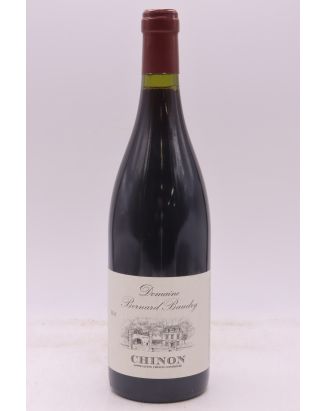
Bernard Baudry Chinon 2016
4 in stock
113993
Red
75cl
88+/100
15.5/20
Add to cart
Loire | Chinon

Bernard Baudry Chinon 2016

€18.00 inc-VAT per bottle
€15.00 ex-VAT
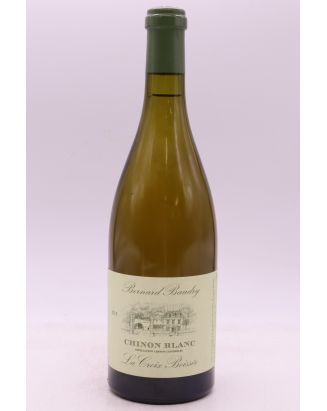
Bernard Baudry Chinon La Croix Boissée 2015 Blanc
3 in stock
119571
White
75cl
Add to cart
Loire | Chinon

Bernard Baudry Chinon La Croix Boissée 2015 Blanc

€42.00 inc-VAT per bottle
€35.00 ex-VAT

History of Domaine Bernard Baudry

Born into a winegrowing family in Cravant-les-Coteaux, Bernard Baudry studied enology in Beaune before joining the Tours laboratory alongside Jacques Puisais, a leading figure in French wine tasting. His experience as a viticultural adviser shaped his understanding of the connection between soil and glass. In 1975, he decided to strike out on his own with just two hectares of vines in the Chinon appellation. Patiently, plot by plot, he expanded the property, choosing acquisitions for the quality of their terroirs rather than their size, until he had assembled some thirty hectares.

The year 2000 marked a turning point with the arrival of Matthieu Baudry, who trained in the Mâconnais and Bordeaux and gained experience through internships in Tasmania and California. Father and son worked together for two decades, refining their plot-by-plot winemaking and steering the estate toward organic certification, obtained in the mid-2000s. Matthieu now runs the property, while Bernard remains involved in both the vineyard and the winery. The estate also cultivates black melanosporum truffles, a natural extension of its affinity for Touraine’s limestone soils.

Terroirs and Vineyards of Domaine Bernard Baudry

Cravant-les-Coteaux accounts for nearly 40% of production in the Chinon appellation and has a rare diversity of geology. The estate’s vineyards stretch from the alluvial soils and gravel near the Vienne River to plateaus of sand and limestone, flint-bearing clays, and slopes of sandy clay over white tuffeau, the soft chalk typical of the Loire Valley in which the aging cellars are carved. This variety of soils alone explains the estate’s plot-by-plot approach: each terroir is harvested and vinified separately to reveal its distinctive character.

Cabernet Franc accounts for 90% of the plantings, complemented by Chenin for the white wines and a small plot of ungrafted Grolleau planted in sand beside the river. The vines range from new plantings to the more than sixty-year-old vines of Les Grézeaux, planted in the 1940s. The soils are worked mechanically and have never been treated with chemical herbicides. Bud thinning helps control yields, and all grapes are harvested by hand into crates.

Winemaking at Domaine Bernard Baudry

Winemaking carries the work in the vineyard forward with a deliberate hands-off approach. Around fifty harvest workers sort the grapes, which enter the winery by gravity after destemming, with a very light addition of sulfur to limit micro-oxidation. The fruit from each terroir is then kept separate in unlined concrete, wood or stainless-steel tanks. Fermentation begins with only the native yeasts present on the berries and in the cellar, without added yeast or thermovinification, and lasts eight to twenty days depending on the richness of the juice. Extraction is limited to simple pump-overs.

Aging sets the more supple cuvées, matured in unlined concrete tanks, apart from the structured cuvées entrusted to barrels in the tuffeau galleries. Racking is kept to a strict minimum, as are sulfur additions during this stage. The wines are bottled without filtration, except for the rosé, the whites and the Les Granges cuvée. For the whites, very gentle pneumatic pressing is followed by twenty-four hours of settling, then slow fermentation in barrels without lees stirring.

The Wines of Domaine Bernard Baudry

Les Granges (red Chinon): from approximately nine hectares of vines planted in 1985 and 1988 on gravel, sand and alluvial soils near the Vienne River. Fermentation and aging in concrete tanks produce a supple, vibrant Cabernet Franc with raspberry, cherry and floral notes. It is the ideal introduction to Baudry’s wines, best enjoyed young with charcuterie or white meat.

Le Domaine (red Chinon): a blend from nearly four hectares of older vines, thirty to thirty-five years old, planted on gravel and a sandy-limestone plateau. Aged in tank, it has more structure and depth than Les Granges, with juicy dark fruit and supple tannins. An exceptionally well-balanced Chinon to drink within two to five years.

Les Mollières (red Chinon): a one-hectare plot in Saint-Louans, west of Chinon, on a windswept rise with heavy clay and yellow limestone. Long included in the Le Domaine cuvée, it has been vinified separately since the 2020 vintage. Slow fermentation in a concrete tank with native yeasts, fifteen to twenty days of maceration, and eighteen months of aging in concrete. The wine charms with its breadth, fine tannins and liveliness.

Les Grézeaux (red Chinon): the historic cuvée, from the first vines acquired in 1975, planted in the 1940s and now among the estate’s oldest. Gravel soils over a clay-limestone and siliceous base lend finesse, density and a mineral backbone. Concentrated and silky, this Chinon is already a pleasure to drink but benefits greatly from a few years in the cellar.

Le Clos Guillot (red Chinon): a four-hectare walled vineyard replanted from 1995 on a previously abandoned site, with yellow limestone, clay, silica and sand, and some ungrafted vines. Fermented in concrete and then aged in barrel, it offers a remarkably pure expression of Cabernet Franc: dark fruit, smoky nuances, violet on the finish, a dense texture and exceptionally fine tannins. A wine made for aging.

La Croix Boissée (red Chinon): the pinnacle of the range, from a fully south-facing slope of sandy clay over white tuffeau, planted with small plots of vines fifteen to forty years old. Fermented for twenty days in concrete tanks, aged for twenty-four months in barrels one to three years old, then nine months in concrete tanks, and bottled without filtration. Complexity, richness, very ripe fruit and firm tannins described as chalky: a fine wine for aging (two to twenty years), produced in limited quantities.

La Croix Boissée Blanc (white Chinon): half a hectare of Chenin planted on the same south-facing slope rich in limestone. Gentle pressing, followed by slow, natural fermentation in barrels deep in the tuffeau cellars, without added yeast or lees stirring. The nose combines citrus, white flowers and spicy exotic notes; the palate is juicy and saline, with tautness from the terroir’s chalky foundation. Considered by many to be the appellation’s greatest white wine.

Le Domaine Blanc (white Chinon): an absolute rarity in Cabernet Franc country, this Chenin comes from approximately one hectare of clay and limestone soils. Lively and crystalline, it offers white peach, citrus and a subtle hint of spice, with a saline finish. Perfect as an aperitif, with grilled fish or with Touraine goat cheeses.

Le Rosé (Chinon rosé): one hundred percent Cabernet Franc, from vines around twenty years old planted on gravel. Made with the same care as the reds, it combines vibrant fruit, a delicate texture and mineral tension—a far cry from generic rosés. A wine for the table as much as for summer enjoyment.

Franc de Pied Grolleau: a small, little-known cuvée from an ungrafted sandy plot beside the Vienne River, planted with Grolleau, a historic Loire grape variety. Whole-cluster fermentation, tank aging and bottling without filtration. Low in alcohol and generously fruity, with wild berries, flowers and spicy freshness, it is served slightly chilled and goes down as easily as a characterful everyday wine.

WHAT THEY SAY ABOUT US

5 good reasons to buy wines on V&M

...

EXPRESS DELIVERY

In a secure polystyrene packaging

...

INTERNATIONAL SHIPPING

Find out more about VAT-EX sale for outside EU deliveries

...

COLLECTION NEAR PARIS & VAT REFUND FOR TOURISTS

Free collection in our warehouse near central Paris (92)

...