Marc Delienne

Domaine Marc Delienne: Beaujolais Fleurie in the spotlight

Domaine Marc Delienne wines: buy at the best price

Located in the heart of Fleurie, within the Château de l'Abbaye Saint-Laurent d'Arpayé, Domaine Marc Delienne has established itself in less than ten years as one of the leading figures of the new wave of Beaujolais. A former Parisian IT professional turned artisan winemaker, Marc Delienne cultivates around fifteen hectares of old gamay vines using biodynamic methods, on the decomposed pink granite soils of the southeastern part of the appellation. His wines, vinified without additives and aged primarily in large oak casks, captivate with their purity, freshness, and precision. 

Read more
See more
Filters

Price

€20.00 - €40.00

Appellation

Color

Vintage

Volume

Parker WA rating

89 - 89

Burghound rating

No choice available on this group

Revue du Vin de France rating

No choice available on this group

Bettane & Desseauve rating

No choice available on this group

Prices drop

No choice available on this group

Download this list
There is 1 product.
Download this list
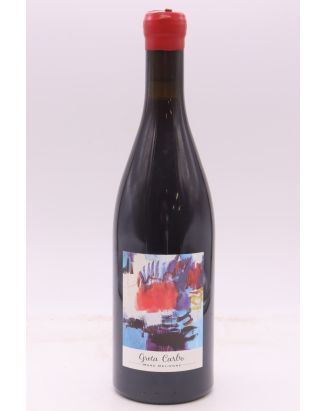
Marc Delienne Fleurie Greta Carbo 2016
3 in stock
114003
Red
75cl
89/100
Add to cart
Beaujolais | Fleurie

Marc Delienne Fleurie Greta Carbo 2016

€30.00 inc-VAT per bottle
€25.00 ex-VAT

History of Domaine Marc Delienne

Nothing in Marc Delienne’s background pointed toward a career as a winegrower. A lifelong wine enthusiast, he spent many years working in the IT sector in the Paris region. In his fifties, he decided to sell his businesses and begin a second chapter devoted entirely to his first passion. He headed south to Provence, where he learned the craft alongside Éloi Dürrbach, the guiding figure behind Domaine de Trevallon, whose exacting standards and rejection of convention would leave a lasting mark on him.

Convinced of Beaujolais’s potential to produce truly fine wines, he began searching for a property and fell in love with the village of Fleurie. In January 2015, he bought Château de l’Abbaye Saint-Laurent d’Arpayé and its 14 hectares of vines, quickly built a winery and released his first vintage that same year. He began converting to organic farming as soon as he arrived, followed a year later by biodynamic farming across the entire vineyard, so as not to interfere with the soil’s memory. The estate is now working toward Demeter certification. This former city dweller’s bold gamble has paid off: in just a few vintages, Marc Delienne has become a leading name in Beaujolais’s natural-wine scene, closely followed by international critics.

Terroirs and vineyards of Domaine Marc Delienne

The plots lie in the southeastern part of the Fleurie vineyard, on predominantly sandy or silty-sandy soils derived from primary granite rock or ancient alluvial deposits. The surface is sometimes very stony and the soils are shallow to moderately deep, forcing the roots to reach down and naturally limiting vigor. These famously weathered pink granites give Fleurie wines their signature finesse, tension and depth, along with the floral elegance the appellation owes to its terroir. Some areas, such as the Chaffangeons lieu-dit, bring more body and generous fruit, while the silty, sandy and clay soils reserved for the rosé offer a different texture.

The Gamay Noir vines, ranging from 40 to more than 80 years old, are planted at very high density—between 10,000 and 11,000 vines per hectare—and traditionally bush-pruned. Marc Delienne has chosen, however, to train the canopy considerably higher than local custom, taking direct inspiration from Lalou Bize-Leroy’s method to increase leaf area and achieve fuller ripeness at moderate alcohol levels. The soils are worked regularly but only at the surface, and particular care is given to the canopy during the growing season. Conditions can be extreme, especially on the vertiginous Madone plot, where working with a winch and pickaxe exhausts the crews. A few Chardonnay plots complete the plantings.

Winemaking at Domaine Marc Delienne

Winemaking is as gentle and natural as possible. The grapes are harvested by hand into small crates, then rigorously sorted at the winery before going into the tanks. Whole clusters go into temperature-controlled concrete tanks, without added yeast or chaptalization. There is no punch-down, only gentle daily pump-overs, allowing restrained extraction while preserving Gamay’s elegance. Maceration is deliberately brief, lasting between six and 12 days depending on the cuvée.

After pressing, most of the wines are transferred to large oak casks. Aging lasts around 11 months, mainly in 30-hectoliter casks, supplemented by a few new 600-liter demi-muids and barrels that have held five previous wines. This refines the tannins without letting oak dominate the wine. Some cuvées follow a specific approach: low-temperature full carbonic maceration for Greta Carbo, aging exclusively in concrete tanks for wines intended for early release, or barrel fermentation in the style of great white wines for the rosé. The wines receive only a minimal dose of sulfur, if any.

The cuvées of Domaine Marc Delienne

The Maurice cuvée is the ideal introduction to the estate’s wines. Created in 2018 in tribute to a neighbor and friend who died that year and had warmly welcomed Marc Delienne when he arrived in Fleurie, it became a regular release thanks to its success. Made from vines in the Chaffangeons lieu-dit, within the Fleurie appellation but sold as Beaujolais, it is fleshy and dense, with aromas of black cherry and strawberry jam. Despite its richness, it remains balanced, with a cheerful, roguish side that makes it the estate’s best value.

Fleurie Avalanche de Printemps is a cuvée made specifically for early bottling. After a short eight-day maceration and aging exclusively in concrete tanks from the moment of pressing, it delivers remarkably vibrant fruit: crisp, refreshing and immediately appealing, perfect for spring and summer dining. The playfully named Fleurie Greta Carbo is made using full carbonic maceration: the grapes are chilled to five degrees in a cold room, gently placed in a concrete tank saturated with carbon dioxide and held at eight degrees for three weeks, then pressed and aged for four months in barrels that have held five previous wines. The result is a spirited, vibrant Fleurie, with lively red-fruit and sweet-spice notes and irresistible generosity and vitality.

Fleurie Abbaye Road, named in tribute to Rue de l’Abbaye, where the property is located, is undoubtedly the estate’s most ambitious cuvée. A blend of different lots aged primarily in 30-hectoliter oak casks, it offers greater concentration than the other wines while retaining the freshness and precision that define the estate. The nose is intense with raspberry, sour cherry, violet, peony, white pepper and warm stone, alongside delicate spice notes. The palate is full and deep, driven by dark fruit and hints of eastern spice, fleshy and concentrated without ever losing its tension. This is a truly fine Beaujolais wine, built to stand the test of time.

Fleurie La Vigne des Fous comes from the tops of the appellation’s steepest slopes, from plots that only dedicated winegrowers are still willing to work. As dizzying as the vineyard that produced it, the wine reveals an unusually distinctive floral and exotic bouquet, with a striking mineral backbone and impressive length. Le Petit Ami is the estate’s rosé, made like a fine white wine: grapes from 50-year-old vines on silty, sandy and clay soils are pressed immediately; the juice is cold-settled for 48 hours, then fermented and aged in barrels that have held four previous wines until bottling. The result is a textured, saline, food-friendly rosé far removed from the usual style. Le Petit Nat, a pétillant naturel made without dosage or liqueur, rounds out the range with lively, spontaneous bubbles.

The estate has also expanded into neighboring crus. Brouilly Pierreux, from a renowned site with stony granite and schist soils, offers a supple, fruity wine with a firm mineral foundation, praised by critics as a welcome addition to the range. Chénas Le Fief explores Beaujolais’s rarest and smallest cru, with a firm structure and floral, lightly woody aromas that call for a few years of aging. Finally, Saint-Amour À la Folie, produced in the region’s northernmost cru, is inviting, elegant and beautifully fragrant, with a bouquet of kirsch, spices and wildflowers carried by a fresh, perfectly balanced palate.

WHAT THEY SAY ABOUT US

5 good reasons to buy wines on V&M

...

EXPRESS DELIVERY

In a secure polystyrene packaging

...

INTERNATIONAL SHIPPING

Find out more about VAT-EX sale for outside EU deliveries

...

COLLECTION NEAR PARIS & VAT REFUND FOR TOURISTS

Free collection in our warehouse near central Paris (92)

...