Chartogne Taillet

Chartogne Taillet Champagne wines: buy at the best price

The Chartogne Taillet House is located in Merfy, 8km from Reims on the Saint-Thierry massif. Alexandre Chartogne took over from his parents Philippe and Elisabeth in 2006, at the age of just 22. The vineyard, benefiting from a south-facing exposure, comprises 11 hectares spread across around fifteen plots. Alexandre Chartogne-Taillet has decided to produce genuine terroir champagnes here, through mastery of the Champenois triptych of Pinot Noir, Pinot Meunier and Chardonnay; he even uses a small amount of Arbanne. The heir to this house has chosen to evolve his style, which he considers "too classical": by adopting a method more in tune with the soils, he carries out a thorough plot-by-plot selection. Having trained under Anselme Selosse, an icon of Champagne, Alexandre has all the qualities needed to lead a great Champenois estate that produces ideal champagnes for lovers of terroir wines! 

Read more
See more
Filters

Price

€40.00 - €100.00

Appellation

Volume

Parker WA rating

90 - 94

Burghound rating

90 - 90

Revue du Vin de France rating

No choice available on this group

Bettane & Desseauve rating

No choice available on this group

Prices drop

No choice available on this group

Download this list
There are 3 products.
Download this list
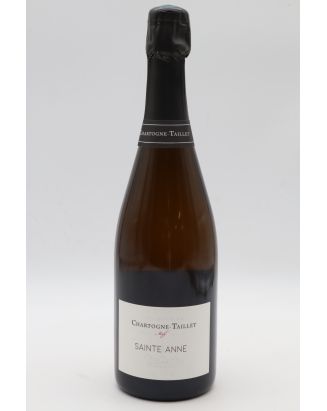
Chartogne Taillet Sainte Anne
15 in stock
129789
White
75cl
2023 harvest - Disgorged 2026
Add to cart
Champagne | Champagne

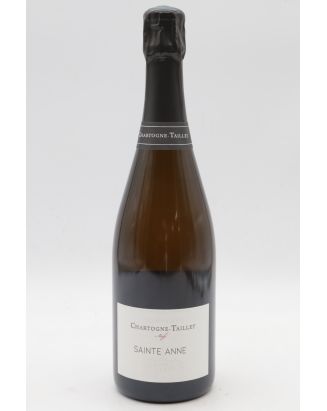
Chartogne Taillet Sainte Anne

€48.00 inc-VAT per bottle
€40.00 ex-VAT
Chartogne Taillet Sainte Anne
New
132 in stock
129886
White
75cl
2023 harvest - Disgorged 2026
Add to cart
Champagne | Champagne

Chartogne Taillet Sainte Anne

€48.00 inc-VAT per bottle
€40.00 ex-VAT
Chartogne Taillet Les Couarres 2022
New
6 in stock
129887
White
75cl
Disgorged 2026
Add to cart
Champagne | Champagne

Chartogne Taillet Les Couarres 2022

€96.00 inc-VAT per bottle
€80.00 ex-VAT

History of Champagne Chartogne-Taillet

The history of the estate has its roots long before the invention of the label. Nicolas Taillet is mentioned at Merfy as early as 1490, and around 1540 Fiacre Taillet engaged in the family's viticultural activity, before appearing among the wine merchants of the reign of François I. Another Fiacre Taillet, born in 1700, kept remarkably precise notebooks, now preserved in the Reims archives, which record more than a century of vineyard work and harvests. There one can read that in 1780, the grapes of Merfy were among the most expensive in the region, alongside the most renowned crus.

The Chartogne family settled in the village in the 17th century and Oscar Chartogne acquired his first vines in 1870. The marriage of Marie Chartogne and Étienne Taillet in 1920 sealed the union of the two family lines and gave birth to the estate as we know it today. Philippe and Élisabeth Chartogne took over its management in 1978, before Alexandre Chartogne succeeded them in 2006, at twenty-two years of age, having been profoundly influenced by a formative placement with Anselme Selosse in Avize. From his very first year, he eliminated herbicides, vinified his first single-plot wines with Les Barres, then created the Hors-Série cuvée in 2018. The estate is today the last récoltant-manipulant in Merfy.

Terroirs and Vines of Champagne Chartogne-Taillet

The vineyard spreads across the southern and south-eastern slope of the Saint-Thierry massif, a limestone plateau often referred to as the little Montagne de Reims, one of the most northerly sectors of the appellation. The terroir there forms a geological mosaic without equal: deep Thanetian sands, clays, chalk, sandstone, active limestone, tuffeau, silica and iron oxides succeed one another sometimes from one row to the next. The analyses conducted by Claude and Lydia Bourguignon confirmed this diversity and reinforced the plot-by-plot approach of the estate.

Each lieu-dit thus has its own identity: deep sands over chalk at Les Barres and Les Orizeaux, sandstone and clayey sands at Heurtebise, damp clays and tuffeau at Les Couarres, iron-rich calcareous sands at Chemin de Reims, active limestones at Les Grands-Champs. A few ares in Avize and Oger, on the Côte des Blancs, complete the ensemble. The vines average thirty-five years of age, with one jewel standing out: the Pinot Meuniers of Les Barres, planted in 1952 and remaining ungrafted, spared by phylloxera thanks to the sand. Half of the plots are ploughed by horse, no herbicides have been used since 2006, the approach draws inspiration from biodynamics without seeking certification, and the harvests are entirely manual.

Vinification at Champagne Chartogne-Taillet

The vinification follows exactly the same logic as the vineyard: each plot is pressed, fermented and aged separately, never brought back to a common profile. Pressing is long and gentle, in order to preserve the purity of the juices, and fermentations are conducted solely with the indigenous yeasts native to each lieu-dit. The Merfy cellar, partly hewn into the chalk, houses a deliberately varied range of vessels: stainless steel vats, Burgundian barrels of 228, 350 and 600 litres, concrete vats, Nomblot eggs and amphorae. This choice is not a catalogue exercise — each wine is directed towards the vessel that suits it best.

Ageing extends from eight to eighteen months for the single-plot cuvées, and up to forty-two months on lees for the Hors-Série. Some plots require regular topping up to limit oxidation, while others benefit instead from a more sustained oxygen exchange that encourages the mineralisation of the wine and allows salinity to take precedence over varietal aromas. Bottling takes place at the estate, without filtration, with minimal use of sulphur, a minimum of three years' ageing in the cellar and deliberately low dosages, most often extra-brut.

The cuvées of Champagne Chartogne-Taillet

Cuvée Sainte-Anne: a tribute to the patron saint of Merfy, this blend of Chardonnay, Pinot Noir and Pinot Meunier brings together all the village's plots and serves as the gateway into the estate's world. Bright robe, fine mousse, a bouquet of white fruits, citrus and flowers lifted by brioche notes, a harmonious and persistent palate. A remarkable lesson in village champagne, to be enjoyed within its first five to eight years.

Le Rosé: a blended rosé composed of Chardonnay and Pinot Noir, complemented by a share of red wine produced at the estate, drawn notably from the Orizeaux. A luminous salmon hue, nose of fresh strawberry, redcurrant and rose petals, a silky and energetic palate. A gastronomic rosé, equally at home with shellfish, delicate poultry and contemporary cuisines.

Saint-Thierry: a genuine geological reading of the massif that gives it its name, this cuvée assembles the plots established on the sands and clays of the sector. It is distinguished by a more ample structure, additional depth and a long finish carried by a delicate salinity. Notes of white fruits, ripe citrus, dried flowers and damp chalk, for a cellaring potential of eight to twelve years.

Les Barres: the founding single-plot wine, from ungrafted Pinot Meunier vines planted in 1952 in nearly three metres of sand before reaching the chalk. Aged in 228-litre barrels, it offers a generous texture in its youth before gaining in mineral finesse. Yellow fruits, pear, dried flowers and a persistent chalky finish.

Les Alliées: one hundred percent Pinot Meunier from a plot planted in 1969 to the west of Merfy, on black sands and heavier clays that retain water and exalt the generosity of the grape variety. Fermentation with indigenous yeasts, ageing in old barrels, long time on lees. A champagne that is exuberant, with notes of ripe apple, hazelnut and gentle spices.

Beaux Sens: a small emblematic plot of the estate, planted with Meunier that has also remained ungrafted thanks to the sandy nature of the soil. Vinified separately, it brings freshness and fruity brilliance, and illustrates the pre-phylloxera plant heritage preserved at Merfy. A rare expression, taut and full of relief.

Les Couarres: a blend of Pinot Noir and Chardonnay planted on a damp clay terroir marked by the presence of tuffeau, south-facing on a gentle slope. Ageing in barrels with regular topping up preserves the balance of juices sensitive to oxygen. Ripe red fruits, cherry, gentle spices and fine smoky notes, an ample palate and a saline finish. Cellaring potential of ten to fifteen years.

Couarres Château: a selection of pure Pinot Noir from within the same group of plots, with a deeper colour and an expressive nose. More full-bodied and vinous than its neighbour, this confidential cuvée demonstrates what the Saint-Thierry massif can produce as a blanc de noirs, combining density of substance with chalky freshness.

Orizeaux: blanc de noirs from Pinot Noir grown in deep sands resting on an underlying chalk subsoil. Ageing in old barrels preserves the legibility of the terroir and imparts a supple texture, balanced by a fine salinity. Ripe fruits, dried flowers, anise and a vibrant finish make this cuvée one of the most sought-after of the estate.

Heurtebise: a blanc de blancs from a plot combining sands, clays and sandstone, planted predominantly with Chardonnay. The wines are aged in Burgundian barrels for nine to eighteen months, then for a lengthy period on laths. Airy elegance, citrus zest, wild flowers and a stony framework of great finesse, ideal with oysters, shellfish and raw fish.

Chemin de Reims: a plot planted with approximately 85% Chardonnay complemented by Arbanne, an accessory grape variety that has become exceedingly rare in Champagne. The sandy, calcareous soil, rich in iron oxides, imparts a very pronounced structure to the wine. Aged in 350 to 600-litre barrels with regular topping up, for a champagne that is precise, spiced, silky and lastingly saline.

Cuvée Fiacre: the house's historic flagship cuvée, named in memory of the ancestors who built the estate. Crafted from Pinot Noir and Chardonnay from the finest old vines and aged in oak barrels, it reveals intense aromas, a silky texture and a depth that calls for the dining table rather than the aperitif.

Hors-Série: created in 2018, this Chardonnay cuvée comes from the Grands Crus of Avize and Oger, at the heart of the Côte des Blancs, and benefits from extended barrel ageing followed by forty-two months on lees. Pale gold colour with silvery highlights, nose of candied citrus, white fruits and chalk, a dense and vertical palate with an interminable saline finish. An exceptional wine for cellaring, capable of evolving over fifteen to twenty years.

WHAT THEY SAY ABOUT US

5 good reasons to buy wines on V&M

...

EXPRESS DELIVERY

In a secure polystyrene packaging

...

INTERNATIONAL SHIPPING

Find out more about VAT-EX sale for outside EU deliveries

...

COLLECTION NEAR PARIS & VAT REFUND FOR TOURISTS

Free collection in our warehouse near central Paris (92)

...