Personalise your experience

Change your country, language and currency here whenever you wish.
|
|
|
Must-See Châteaux |
|
|
|
|
|
|
|
|
The champagnes of the House of Tarlant, an exceptional house run by Mélanie Tarlant and her brother Benoit
Nestled in the heart of the Marne Valley, in Oeuilly, the small Champagne Tarlant house is one of the most dynamic grower estates of its generation in Champagne, with 13 hectares of vines. The Tarlant family has been established in this Champagne terroir since 1687; Benoit and his sister Mélanie Tarlant are the 12th generation to run this family estate. Benoit Tarlant, the winemaker at Domaine Tarlant, vinifies two-thirds of his champagnes in wood and ages them for extended periods, giving them breadth, power, and depth. Tarlant champagnes offer remarkable balance on the palate, with a vinous structure.
The history of Champagne Tarlant begins in 1687, when Pierre Tarlant started cultivating his first vines in the Aisne region. In 1780, the family settled in Oeuilly, in the heart of the Marne Valley, laying the foundations for what would become one of Champagne’s most respected estates.
Louis Tarlant, mayor of Oeuilly and a visionary winegrower, played a key role in the recognition of the Champagne AOC in 1927. Refusing to sell his grapes to the major houses, he made Champagne Tarlant one of Champagne’s first independent producers. Today, Benoît and Mélanie Tarlant, the 12th generation of winegrowers, carry on this family tradition, combining respect for their heritage with innovative practices.
Champagne Tarlant spans 14 hectares across 55 plots in the villages of Oeuilly, Boursault, St-Agnan, and Celles-les-Condés. This mosaic of terroirs reflects an exceptional diversity of soils, from pure chalk and limestone clay to flint and sand.
The traditional grape varieties of Champagne—Pinot Noir, Chardonnay, and Meunier—predominate, complemented by rare varieties such as Pinot Blanc, Arbane, and Petit Meslier. Each plot is tended with meticulous care to preserve biodiversity and bring out the unique characteristics of its soil and microclimate.
For two generations, the estate has used only contact treatments and has been gradually transitioning to organic farming. This approach yields grapes of exceptional quality, essential for producing champagnes of great purity.
At Champagne Tarlant, every step of the winemaking process is designed to bring out the terroir’s full expression. The hand-harvested grapes are gently pressed in traditional basket presses or state-of-the-art presses.
Each plot is vinified separately, often in Burgundy barrels, to preserve the identity of each named vineyard site. Malolactic fermentation is rarely used, allowing the wines to retain their natural acidity and remarkable freshness. Sulfites are used sparingly, and the wines are never filtered.
True to the family legacy, 90% of Tarlant champagnes have no added dosage, a pioneering practice begun in the 1970s. This bold choice fully reveals the wines’ aromatic richness and structure without masking the grapes’ natural characteristics.
These terroir-driven champagnes take an authentic, plot-by-plot approach that brings out the distinctive character of each site. They include Champagne cuvées with very little dosage, such as the Zero cuvée, full of freshness and vibrancy. In fact, Champagne Tarlant was among the pioneers producing champagnes with no added dosage in the 1970s. Champagne Tarlant’s Cuvée Louis, a blend of Chardonnay and Pinot Noir, is undoubtedly a Vins & Millésimes favorite (we’ve tasted it and can vouch for it!). This cuvée includes blends from years such as 1996/1997/1998/1999 and, more recently, 2002/2003. A Champagne cuvée worthy of the finest tables, it offers intensity, vigor, and excellence, with an elegant, creamy texture. Mélanie Tarlant, who oversees sales and marketing at Domaine Tarlant, has helped bring the champagnes of Maison Tarlant to audiences around the world. International guides—including the Parker Guide, Revue des Vins de France, and Bettane & Desseauve—are full of praise.
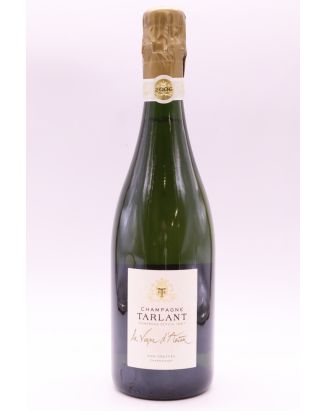
You’ll delight in the white Champagne cuvées Zéro Brut Nature, Brut Réserve, Prestige Millésimé, Blanc de Meuniers - non greffé, Chardonnay, and, of course, Champagne Tarlant Cuvée Louis, as well as the rosé Champagne Zéro Brut Nature. Discover extraordinary cuvées such as Champagne Tarlant L’Aérienne 2004 and Champagne Tarlant Matinale 2003, two vintage champagnes that enthusiasts will love for their power, energy, and expression of terroir…
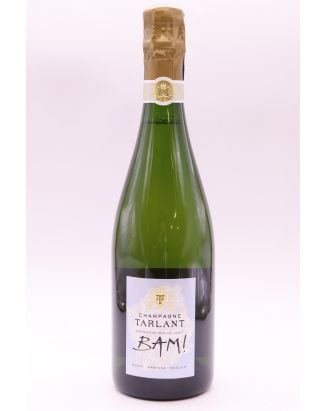
For Mélanie and Benoit Tarlant, caring for the vines and preserving their heritage are equally important. That is why their vineyards are farmed with exceptionally clean practices and include forgotten grape varieties such as Arbane, Petit Meslier, and Pinot Blanc—which go into the Champagne Tarlant B.A.M cuvée—alongside Chardonnay, Pinot Noir, and Meunier. For several years, Benoit Tarlant has also been experimenting with amphora winemaking after falling for the white wines of Domaine Foradori in Italy.
COLLECTION NEAR PARIS & VAT REFUND FOR TOURISTS
Free collection in our warehouse near central Paris (92)