Champagne Taittinger

The Champagne Taittinger: a historic and legendary house

Taittinger Champagne wines: buy at the best price

Located at 9 place Saint-Nicaise in Reims, Maison Taittinger is one of the last great Champagne houses still owned and managed by the family whose name it bears. Heir to a négociant business founded in 1734, it took its current name in 1932 when Pierre Taittinger acquired the Château de la Marquetterie, the cradle of the family venture. Its identity is defined by a single grape variety and a single place: chardonnay, overwhelmingly dominant in its blends and a source of finesse, tension and aromatic elegance, and the Gallo-Roman chalk cellars of the Saint-Nicaise hill, carved out in the 4th century and inscribed on UNESCO's World Heritage List, where the cuvées rest eighteen metres underground. 

Read more
See more
Filters

Price

€80.00 - €280.00

Appellation

Volume

Parker WA rating

89 - 98

Burghound rating

89 - 94

Revue du Vin de France rating

No choice available on this group

Bettane & Desseauve rating

17 - 19

Prices drop

Download this list
There are 4 products.
Download this list
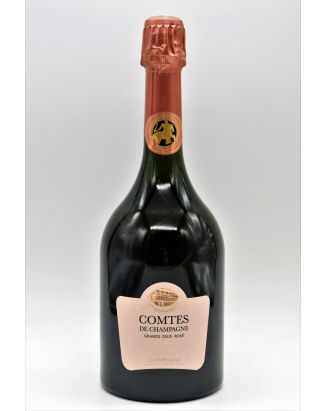
Taittinger Comtes de Champagne Blanc de Blancs 2011 Rosé
3 in stock
89816
Rosé
75cl
Add to cart
Champagne | Champagne

Taittinger Comtes de Champagne 2011 Rosé

€270.00 inc-VAT per bottle
€225.00 ex-VAT
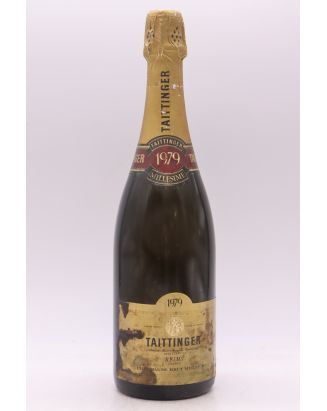
Taittinger Brut Millésimé 1979 -5% DISOUNT !
-5%
2 in stock
106655
White
75cl
Slightly Damaged
Add to cart
Champagne | Champagne

Taittinger Brut Millésimé 1979 -5% DISOUNT !

€228.00 inc-VAT per bottle €240.00 inc-VAT -5%
€190.00 ex-VAT
Taittinger Brut Millésimé 2005
Last one !
1 in stock
120072
White
75cl
93/100
92/100
15/20
17/20
Add to cart
Champagne | Champagne

Taittinger Brut Millésimé 2005

€90.00 inc-VAT per bottle
€75.00 ex-VAT
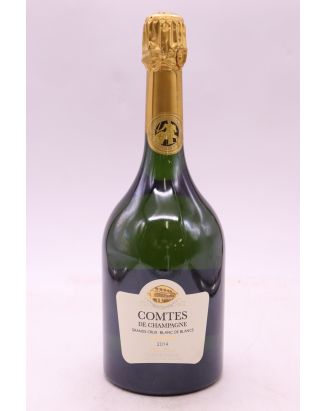
Taittinger Comtes de Champagne 2014
13 in stock
128162
White
75cl
96/100
Add to cart
Champagne | Champagne

Taittinger Comtes de Champagne 2014

€174.00 inc-VAT per bottle
€145.00 ex-VAT

History of Champagne Taittinger

The story begins well before the name. In 1734, Jacques Fourneaux opened a wine trading house in Reims dealing in Champagne wines and worked with the Benedictine abbeys, which were at the time the owners of the finest vineyards in the region. At the beginning of the 19th century, the Fourneaux family joined forces with the Forest family to create Forest-Fourneaux, renowned for its great vintage crus such as the wines of Sillery and Bouzy. Meanwhile, the Taittinger family left Lorraine in 1870 to remain French and settled in the Paris region as wine merchants. In 1911, Pierre Taittinger discovered champagne within the Union Champenoise. Called up during the Great War, he was stationed at a headquarters set up at the Château de la Marquetterie in Pierry, and was lastingly marked by the serenity of the place.

In 1932, in the depths of the economic crisis, he bought this 18th-century château, surrounded by hillsides planted with chardonnay and pinot noir, which was the property of Forest-Fourneaux. Two years later, with his brother-in-law Paul Levêque, he acquired the company in its entirety. From 1945 to 1960, his son François took the helm, assisted by his brothers Jean and Claude: he defined a modern style founded on chardonnay and established the house on the Saint-Nicaise site, where the former 13th-century abbey rests on immense Gallo-Roman chalk cellars. Jean Taittinger would go on to become mayor of Reims and then a government minister, while Claude, from 1960 onwards, gave the house its international renown and created, among other things, Les Folies de la Marquetterie and the Taittinger Collection — a series of bottles dressed by artists such as Victor Vasarely, Roy Lichtenstein and Sebastião Salgado. Following the sale of the family group in 2005, Pierre-Emmanuel Taittinger bought back the house as early as 2006, preserving its independence. Since 2 January 2020, his daughter Vitalie Taittinger has served as its president, alongside her brother Clovis — an extraordinarily rare occurrence for a house of this stature.

Terroirs and Vineyards of Champagne Taittinger

The estate vineyard extends across nearly 288 hectares, one of the most extensive landholdings among the great Champagne houses, spread across around thirty crus spanning the three major zones of the appellation. The Côte des Blancs holds a predominant place, with plots in the Grand Cru villages of Avize, Chouilly, Cramant, Oger and Le Mesnil-sur-Oger, the foundation of the most prestigious cuvées. The Montagne de Reims contributes its pinot noirs from Mailly-Champagne, Ambonnay, Verzenay and Bouzy, while the Vallée de la Marne and the hillsides of Épernay supply the meunier and a portion of the chardonnays. The Château de la Marquetterie, in Pierry, constitutes the historic heart of the estate, with its hillside vines planted in almost equal proportions of chardonnay and pinot noir.

Chalk is the house's other great terroir — underground this time. Taittinger is among the rare houses still to own chalk cellars on the Butte Saint-Nicaise: approximately four kilometres of galleries excavated as early as the 4th century by the Gallo-Romans to extract building stone for Reims. These subterranean cathedrals, located eighteen metres below the remains of the Abbey of Saint-Nicaise, offer a constant temperature and ideal humidity for slow and steady ageing. They are listed as a UNESCO World Heritage Site as part of the hillsides, houses and cellars of Champagne. Both above and below ground, the Campanian chalk plays the same role: a water reserve, a thermal regulator and the source of that saline minerality that is the hallmark of the house's wines.

Winemaking at Champagne Taittinger

The house's philosophy is to preserve the purity and freshness of chardonnay. The grapes are pressed with great care and, for the prestige cuvées, only the first-press juices are retained, guaranteeing structure and ageing potential. Fermentations take place plot by plot and cru by cru, in temperature-controlled stainless steel tanks, which allows the precise expression of each terroir to be preserved before blending. Malolactic fermentation is conducted to bring suppleness and stability. Oak plays only a very limited role: approximately 5% of the wines for the Comtes de Champagne cuvée spend four months in new oak barrels, while Les Folies de la Marquetterie is partially vinified in large oak casks — two touches that add volume and complexity without ever marking the wine.

Then comes the art of blending, which mobilises several dozen still wines each year for the Brut Réserve — around thirty-five crus supplemented by reserve wines intended to guarantee consistency of style. The cuvées then make their way to the chalk cellars for an ageing period always exceeding the appellation requirements: approximately four years for the Brut Réserve, over five years for Prélude Grands Crus and the Brut Millésimé, and nearly ten years on laths for the Comtes de Champagne. Dosage levels remain measured on the bruts, around 9 grams per litre, and deliberately more generous for the Nocturne cuvées, conceived as dry and voluptuous champagnes.

The cuvées of Champagne Taittinger

Brut Réserve: the house's signature champagne, blended from approximately thirty-five different crus with a high proportion of chardonnay (around 40%), complemented by pinot noir and meunier, and a share of reserve wines. Aged four years in the chalk cellars, it displays a brilliant pale gold colour, very fine bubbles, a nose of white peach, pear, brioche, vanilla and white flowers, followed by a fresh, airy and crisp palate with a slightly toasted finish. A perfectly balanced aperitif champagne, equally at ease with seafood as with a delicate starter.

Prestige Rosé: produced by blending, it combines approximately 70% pinot noir and 30% chardonnay, with the addition of 12 to 15% of red wine sourced from the finest pinot noirs of Champagne, which impart its colour and intensity. The colour is a vivid and luminous pink, the expressive nose unfolds cherry, wild strawberry, raspberry and a hint of spice, while the palate combines crispness, vinosity and delicacy. It pairs equally well with salmon tartare, poultry, spiced cuisine or a red fruit dessert.

Nocturne Sec: conceived for festive moments and late evenings, this sec-dosed cuvée plays on voluptuousness and indulgence without sacrificing the house's characteristic freshness. Built on a generous base of chardonnay complemented by pinot noir and meunier, aged four years in the cellar, it offers a nose of candied yellow fruits, honey, vanilla and pastry, and a round, silky and enveloping palate. Its bottle dressed with a shimmering label has made it a classic at grand gatherings.

Nocturne Rosé Sec: the rosé version of the preceding cuvée, obtained by blending with a proportion of red pinot noir wine. The same sec dosage, the same festive vocation, but a more fruit-forward aromatic palette: ripe strawberry, raspberry, redcurrant and notes of candied fruits, on a creamy and indulgent palate. An ideal cuvée with fruit-based desserts and light pastries.

Demi-Sec: one of the house's more intimate cuvées, it pursues the same quest for balance with a higher dosage, conceived for the sweet table. The chardonnay maintains tension and prevents any heaviness, while notes of candied fruits, honey and toasted almond pair naturally with entremets, fruit tarts and foie gras.

Prélude Grands Crus: a rare and exacting selection, a blend in equal parts of chardonnay from the Grand Crus of the Côte des Blancs — notably Avize and Le Mesnil-sur-Oger — and pinot noir from the Grand Crus of the Montagne de Reims, including Ambonnay and Mailly-Champagne. Sourced exclusively from first-press juices and aged for over five years, it stands out for its finely chiselled structure, marked mineral tension and crystalline purity, with aromas of citrus, white flowers and chalk. A champagne of great precision, superb with oysters, shellfish and sushi, with an ageing potential of five to ten years.

Les Folies de la Marquetterie: created by Claude Taittinger in homage to the birthplace of the house, this cuvée is the only one sourced exclusively from the plots surrounding the Château de la Marquetterie, on the hillside. It blends approximately 55% pinot noir and 45% chardonnay, partially vinified in large oak casks. The result is a generous, warm and fleshy champagne, with a nose of ripe fruits, brioche, dried fruits and vanilla notes, and a structured, generous palate. A gastronomic wine crafted for roast white meat or a fish in sauce.

Brut Millésimé: a portrait of a year, this cuvée is produced only when the harvest reaches an exceptional level. A balanced blend of chardonnay and pinot noir from the house's finest crus, it ages for over five years in the chalk cellars before being released. Frank and spirited, it reaches that point of aromatic balance between youthful vivacity and maturity, with notes of candied citrus, white fruits, dried fruits and pastry, on a precise and long palate.

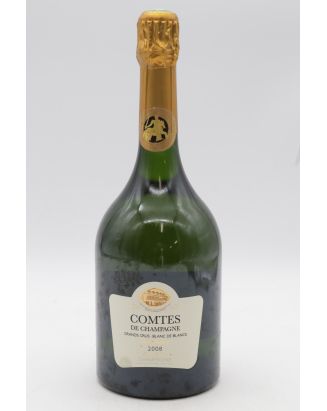
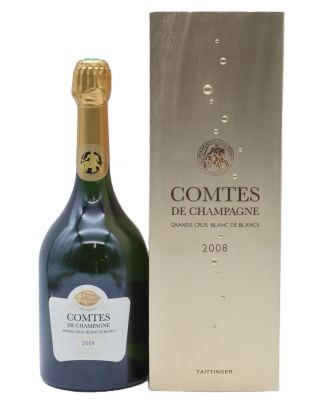
Comtes de Champagne Blanc de Blancs: the absolute flagship of the house, created in homage to Thibaud IV, Count of Champagne and King of Navarre. This 100% chardonnay vintage wine comes exclusively from the five Grand Cru villages of the Côte des Blancs and from first-press juices alone. Approximately 5% of the wines spend four months in new oak barrels, then the cuvée rests for nearly ten years in the Gallo-Roman chalk cellars of Saint-Nicaise. The colour is pale gold animated by minute bubbles, the nose of delicate intensity blends pear, citrus, white flowers, toasted notes, vanilla and fine oak, and the palate combines creaminess with chalky freshness through to a brilliant and seemingly endless finish. One of the greatest expressions of Champagne chardonnay, with an ageing potential of several decades.

Comtes de Champagne Rosé: produced in even more limited quantities than its blanc counterpart and only in exceptional years, this vintage rosé is composed 100% of Grand Cru wines. It combines approximately 70% pinot noir from the Montagne de Reims and 30% chardonnay from the Côte des Blancs, with the incorporation of 12 to 15% of Bouzy pinot noir vinified as a red wine — the secret of its colour and depth. After around ten years on laths, it delivers a deep copper colour, a nose of wild strawberry, cherry, blood orange, rose petal and warm stone, and a refined, chalky and taut palate prolonged by a saline finish of great persistence.

Taittinger Collection: initiated by Claude Taittinger in 1983, this series of limited editions entrusts the design of an exceptional vintage bottle to a renowned contemporary artist. Victor Vasarely, Roy Lichtenstein, Arman, Zao Wou-Ki, André Masson, Hans Hartung, Amadou Sow and photographer Sebastião Salgado have all signed bottles that have become collector's items, displayed at the end of visits to the Saint-Nicaise cellars. Each bottle pairs an original artwork with a great vintage that has been aged for a long time, extending the historic dialogue between the house and artistic creation.

WHAT THEY SAY ABOUT US

5 good reasons to buy wines on V&M

...

EXPRESS DELIVERY

In a secure polystyrene packaging

...

INTERNATIONAL SHIPPING

Find out more about VAT-EX sale for outside EU deliveries

...

COLLECTION NEAR PARIS & VAT REFUND FOR TOURISTS

Free collection in our warehouse near central Paris (92)

...