Personalise your experience
Change your country, language and currency here whenever you wish.
|
|
|
Must-See Châteaux |
|
|
|
|
|
|
|
|
Champagne Ruinart: France's oldest major Champagne house
RUINART was founded by Claude Ruinart in 1729 in Epernay and can therefore claim the title of France's oldest Champagne house. Before then, Champagne did not exist, as King Louis XV did not authorize the transport of wine in bottles until 1728. In 1764, the Ruinart house moved to Reims following the purchase of the chalk cellars beneath the St Nicaise hill, where it still stores all its Champagne.
Ruinart’s story begins with Dom Thierry Ruinart, a Benedictine monk and scholar at the Abbey of Saint-Germain-des-Prés, who recognized the potential of the emerging “sparkling wine” early on. His nephew, Nicolas Ruinart, put that vision into practice on September 1, 1729, founding the first house dedicated to champagne in Reims. Initially given as a gift to customers of the family’s textile business, the sparkling wine proved so successful that by 1735 the family had left the textile trade to devote itself exclusively to champagne.
In the 19th century, Nicolas Ruinart’s descendants brought the house to prominence in the royal courts of Europe and beyond. In 1895, André Ruinart commissioned artist Alfons Mucha to create a poster that became famous, marking the beginning of a close and enduring connection with the arts. Now part of the Moët Hennessy group, the house continues its pursuit of excellence: Frédéric Panaïotis, cellar master from 2007 to 2025, notably introduced the eco-designed “second skin” packaging and the Blanc Singulier cuvée. Since January 2026, Caroline Fiot, a Chardonnay expert who trained within the house itself, has led its cellars.
The Ruinart style rests above all on Chardonnay, the grape variety that forms the backbone of most of its cuvées. The house selects its grapes from the finest terroirs of the Côte des Blancs, including the grands crus of Avize, Chouilly, Cramant and Le Mesnil-sur-Oger, as well as from the Montagne de Reims, notably Sillery and Puisieulx. Pinot Noir, used in smaller quantities, comes from the Montagne de Reims and the Vallée de la Marne, adding structure and fruit to the blends. In these deeply chalky soils, the vines draw the minerality, vibrant acidity and finesse that characterize the house’s wines.
Mindful of climate challenges, the Ruinart house has committed to ambitious sustainable viticulture, notably by developing agroforestry in its vineyards: hedges, trees and cover crops are being reintroduced among the vines to promote biodiversity, protect the soil and strengthen the resilience of the Champagne vineyards.
Ruinart’s winemaking has one constant aim: to preserve Chardonnay’s aromatic freshness. The wines are made in temperature-controlled stainless steel tanks, protected from oxygen to retain the fruit’s purity and the vibrancy of its aromas. The non-vintage blends include reserve wines that ensure a consistent style from year to year, while the prestige cuvées are produced only in vintages deemed exceptional.
Aging takes place in the house’s crayères, former chalk quarries excavated in the Gallo-Roman era to depths of nearly 38 meters beneath Reims. The cool, constant temperature and natural humidity of these underground cathedrals allow the bottles to mature slowly and harmoniously. For Dom Ruinart, the house has revived aging under cork, which encourages the wine to develop greater finesse and complexity.
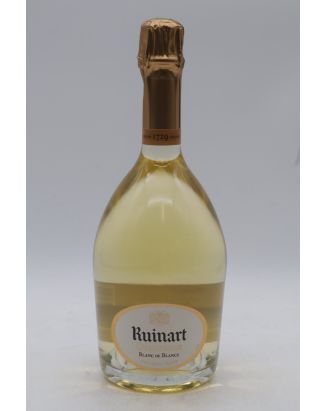
Ruinart Blanc de Blancs: the house’s signature cuvée, this 100% Chardonnay champagne combines grapes from the Côte des Blancs and the Montagne de Reims with reserve wines. Its golden color with green highlights gives way to aromas of fresh citrus, white fruit and flowers, followed by a round, silky palate with vibrant acidity and a saline finish. A refined aperitif, it is also perfect with seafood.
Ruinart Rosé: this blended rosé pairs Chardonnay’s freshness with the fruitiness of Pinot Noir, some of which is vinified as red wine. Its salmon-pink color and aromas of red berries, cherry and guava make it a champagne that is both lively and indulgent, ideal with delicate or spicy cuisine.
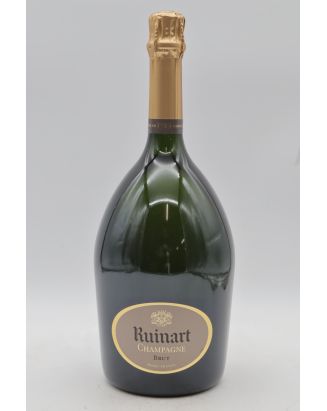
Ruinart Brut: formerly known as “R” de Ruinart, this non-vintage Brut embodies the house’s historic cuvée. A blend of Pinot Noir, Chardonnay and a touch of Meunier, supplemented with reserve wines, it offers notes of fresh fruit, white flowers and brioche, with a balanced, generous palate.
Ruinart Blanc Singulier: the house’s first new cuvée in decades, this blanc de blancs was conceived in response to climate change. Each edition (17, 18, 19, followed by Edition 20, unveiled in 2026) draws on a base year with unusual weather conditions and a dedicated perpetual reserve, with very low or no dosage. The result is a Chardonnay with a new aromatic expression, ripe and sun-kissed, without losing Ruinart’s freshness.
Dom Ruinart Blanc de Blancs: a prestige cuvée paying tribute to Dom Thierry Ruinart, this 100% Chardonnay vintage comes primarily from the grands crus of the Côte des Blancs, complemented by those of the Montagne de Reims.
Dom Ruinart Rosé: the rosé version of the prestige cuvée combines Dom Ruinart’s Chardonnay base with a carefully selected Pinot Noir red wine.
COLLECTION NEAR PARIS & VAT REFUND FOR TOURISTS
Free collection in our warehouse near central Paris (92)