Personalise your experience
Change your country, language and currency here whenever you wish.
|
|
|
Must-See Châteaux |
|
|
|
|
|
|
|
|
The house that embodies the French art of living
Founded in Épernay in 1811 by Pierre-Nicolas Perrier and Rose-Adélaïde Jouët, Maison Perrier-Jouët holds a singular place among the great Champagne houses: that of a resolutely floral, airy and crystalline signature, built around chardonnay. Located at 28 avenue de Champagne, it owns 65 hectares of vineyards classified at more than 99% on the cru scale, the majority planted with chardonnay on the Grands Crus of Cramant and Avize, at the heart of the Côte des Blancs. Since 2020, Séverine Frerson, the eighth cellar master in the house's history and the first woman to hold this position, has been perpetuating this art of floral elegance.
The story begins with a love story. In 1810, Pierre-Nicolas Perrier, the son of a family of cork makers from Épernay who owned vineyards in Dizy, Chouilly and Aÿ, married Rose-Adélaïde Jouët, the daughter of a Normandy calvados producer. A year later, in 1811, the newlyweds founded their Champagne wine merchant house by joining their surnames. Perrier-Jouët began exporting to the United Kingdom as early as 1815, a market that would become central to its expansion. Their son Charles Perrier took over in 1854 and built Château Perrier and vast greenhouses where he pursued his passion for botany, unwittingly laying the foundations of the house's floral style. In 1861, Perrier-Jouët became an official supplier to the British court and Queen Victoria, and later to the French imperial court. The house also distinguished itself by offering low-dosage champagnes early on, including the famous Cuvée K, regarded as one of the first bruts in Champagne.
After Charles Perrier's death in 1878, his nephews by marriage, Henri and Octave Gallice, took up the mantle. Both passionate about art, they embodied the spirit of the Belle Époque: Henri ran the house from Épernay and led the fight against phylloxera, while Octave moved in Parisian circles and met Émile Gallé, a leading figure of the École de Nancy. In 1902, at their request, the artist designed a swirl of enameled white Japanese anemones for four magnums, which were delivered and then forgotten in the cellars. Rediscovered after World War II by cellar master André Baveret, these bottles inspired the Belle Époque prestige cuvée in 1964. It was launched commercially in 1969 and became known in the United States as Fleur de Champagne. The house came under the control of G.H. Mumm in 1959 and today belongs to the Pernod Ricard group. Over two centuries, only eight cellar masters have succeeded one another, ensuring remarkable continuity of style. The house also preserves a unique treasure: a bottle from 1825, the oldest known champagne to date.
The house's own vineyards cover approximately 65 hectares, the vast majority classified as Grand Cru—an unusually high proportion of estate-owned vineyards for a house of this standing—and supply nearly a third of its needs. The heart of the estate lies in the Côte des Blancs, in the Grands Crus of Cramant and Avize, supplemented by Chouilly, and on the Montagne de Reims in Mailly-Champagne and Aÿ. Chardonnay predominates, accounting for around 56% of the planted area, compared with an appellation average of 30%, in vineyards with an average vine age of about twenty-three years. This predominance explains the lightness, precision and floral expression of the house style.
The fine chalk and limestone subsoil of the Côte des Blancs, which provides drainage and regulates temperature, gives its chardonnays their saline tension, minerality and white-flower aromas. Cramant, considered the backbone of every Belle Époque cuvée, produces wines of rare floral finesse and aromatic complexity. The house owns two legendary historic plots there, Bourons Leroy and Bourons du Midi, acquired in the mid-19th century and situated halfway up a southeast-facing slope. On the Montagne de Reims, the cool, chalky slopes of Mailly-Champagne and Verzy yield particularly elegant pinot noirs that accentuate the wine's floral structure rather than masking it, while Aÿ brings greater power. The Vallée de la Marne supplies the meunier grapes, a variety in which the house specializes, bringing roundness and fruit. Perrier-Jouët manages its vineyards with an ambitious commitment to environmental responsibility, aiming to introduce regenerative viticulture across the entire estate by 2030.
The house's skill lies in preserving the delicacy of chardonnay. The grapes are hand-harvested, carefully sorted and gently pressed, with only the first-press juice selected for the cuvées. Alcoholic fermentation takes place separately by grape variety and cru in temperature-controlled stainless-steel tanks, avoiding the influence of oak so the purity of the fruit and floral precision can shine through. Malolactic fermentation is then carried through to completion, bringing suppleness, roundness and aromatic stability.
Then comes blending, the decisive moment when the cellar master composes the final harmony. Grand Brut brings together around fifty still wines from the finest crus of the Montagne de Reims, Vallée de la Marne, Côte des Blancs and sometimes Côte des Bar, enhanced by 12–15% reserve wines up to five years old to ensure consistency from one year to the next. For the rosés, a small proportion of pinot noir vinified as red wine through skin maceration is added to the blend to lend color and fruit intensity. Aging on racks in Épernay's historic cellars far exceeds the appellation's minimum requirements: at least three years for Grand Brut and Blason Rosé, and more than six years for the vintage Belle Époque cuvées. Dosage remains restrained, generally between 8 and 11 grams per liter, just enough to balance the freshness without ever weighing down the wine's structure.
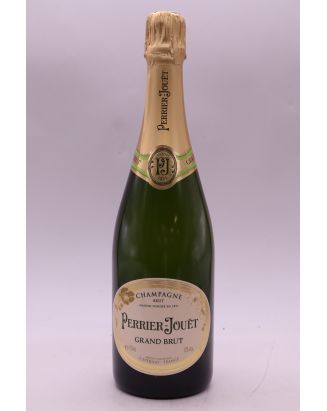
Grand Brut: the house's signature and most widely available cuvée, a direct descendant of the first bruts created in the 19th century. It blends around fifty crus: 20% chardonnay from the Côte des Blancs for finesse, 40% pinot noir from the Montagne de Reims and Vallée de la Marne for structure, and 40% meunier for roundness and fruit, complemented by reserve wines. After at least three years in the cellar, it offers a bright, pale-gold hue and a distinctly floral nose of linden blossom, honeysuckle and orchard flowers, accented by lemon, peach and apricot. Its fresh, harmonious palate develops buttery, brioche and vanilla notes. An ideal champagne for an aperitif, it is perfect with seafood, sushi and delicate fish.
Blason Rosé: the first rosé champagne created by the house, named after its Blason de France range launched in 1956. A subtle blend of around fifty still wines, it combines 25% chardonnay for elegance, 50% pinot noir—some vinified as red wine—for structure and color, and 25% meunier for fruitiness. Enhanced by 12–15% reserve wines and aged for at least three years, it reveals a luminous salmon-pink hue, an expressive nose of strawberry, raspberry and peony, and a generous, vibrant, floral palate. It pairs beautifully with white meats, mildly spiced dishes, lightly cooked salmon or a red-berry dessert.
Blanc de Blancs: the purest expression of the house's spirit, a 100% chardonnay sourced from up to five Grands Crus in the Côte des Blancs. Cramant, Avize and Chouilly form its three pillars, joined in some years by Oger and Vertus. Cramant lends its signature floral character and chalky minerality. Pale gold with green highlights, it has a highly floral nose combining white flowers, fresh citrus and almond. The palate is lively, saline and finely etched, with great purity. A food-friendly blanc de blancs, remarkable with oysters, shellfish, raw fish and mild cheeses.
Belle Époque Vintage Brut: the prestige cuvée, conceived in 1964 and launched in 1969 in the bottle adorned with Émile Gallé's Japanese anemones. Made only in exceptional years, it balances approximately 50% chardonnay from the Grands Crus of Cramant, Avize and Chouilly, 45% pinot noir from Mailly-Champagne, Verzy and Aÿ, and 5% meunier. After more than six years on the lees, it reveals a brilliant golden hue and a crystalline floral bouquet of honeysuckle, hawthorn and anemone, followed by pear, white peach, candied citrus, honey and fresh almond, with a silky, precise palate and a very long finish. It can be cellared for ten to fifteen years, developing notes of brioche, white truffle and candied fruit. It pairs beautifully with foie gras, lobster, sweetbreads and truffle dishes.
Belle Époque Rosé: created in 1978, this distinctly original cuvée is produced only in the most favorable years and in extremely limited quantities. It brings together chardonnay from Cramant and Avize and pinot noir from the Montagne de Reims, notably Mailly-Champagne, Aÿ and Ambonnay. Approximately 11% is pinot noir vinified as red wine through maceration, giving it its characteristic pale, luminous hue. The nose combines strawberry and peony with the lively acidity of kumquat and white currant; the palate weaves together pink grapefruit, mandarin and brioche notes in a subtle interplay of richness and delicacy. Superb with lightly seared tuna or salmon, squab or thinly sliced duck breast.
Belle Époque Blanc de Blancs: the collection's rarest jewel, accounting for barely 1% of Belle Époque production. Created in 1993 by cellar master Hervé Deschamps and produced in just a few thousand bottles, this 100% chardonnay cuvée comes exclusively from two historic plots in the Cramant Grand Cru, Bourons Leroy and Bourons du Midi. Acquired in the mid-19th century, they lie halfway up a southeast-facing slope on limestone soil. Elegant and crystalline, it combines white flowers, citrus, saline notes and remarkably precise saline minerality, carried by exceptionally fine bubbles and an extraordinarily long finish.
Limited editions and artistic collaborations: true to the close relationship the house has maintained with Art Nouveau and contemporary creativity since Émile Gallé, Perrier-Jouët regularly invites renowned artists and designers, from Bethan Laura Wood to Fernando Laposse, to create designs for its cuvées. Produced in very small quantities for the Belle Époque and Blanc de Blancs cuvées, these limited-edition bottles and gift sets have become sought-after collectibles, extending the dialogue between champagne, nature and the decorative arts that makes the house distinctive.
COLLECTION NEAR PARIS & VAT REFUND FOR TOURISTS
Free collection in our warehouse near central Paris (92)