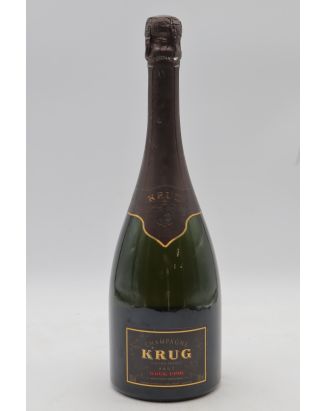
Champagne Krug

Krug, the legendary house of blanc de blancs champagnes that are both vinous and complex

Krug Champagne cuvées: buy at the best price

The history of the Champagne house of Krug, established in Reims, is rich in history and audacity. Indeed, Joseph Krug (born in 1800), a curious and gifted young man, wished to enter the world of Champagne at the beginning of the 19th century. It was then that he took his first steps at Maison Jacquesson, one of the most prestigious houses of the era. He observed and learned, and it was in 1843 that Maison Krug & Co officially appeared. Joseph Krug then had a groundbreaking idea in the world of Champagne: he wished to produce the finest Champagne every year, regardless of the vagaries of the climate. Through a mastery of time, Joseph Krug acquired a large quantity of reserve wines, and so from its very creation, the Champagne house of Krug became the first and only house to craft exclusively prestige cuvées, year after year.

Read more
See more
Filters

Price

€220.00 - €3,220.00

Appellation

Parker WA rating

88 - 100

Burghound rating

87 - 97

Revue du Vin de France rating

No choice available on this group

Bettane & Desseauve rating

18 - 20

Prices drop

No choice available on this group

Download this list
There are 11 products.
Download this list
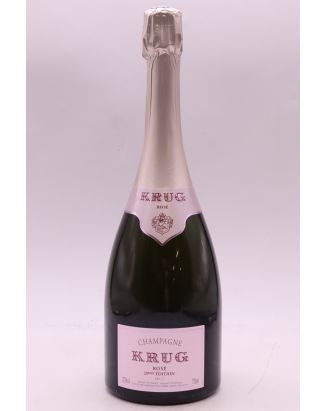
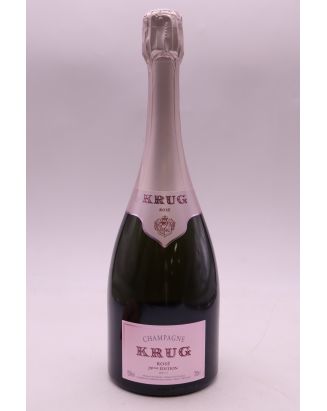
Krug 29th Edition Rosé
4 in stock
124178
Rosé
75cl
Add to cart
Champagne | Champagne

Krug 29th Edition Rosé

€336.00 inc-VAT per bottle
€280.00 ex-VAT
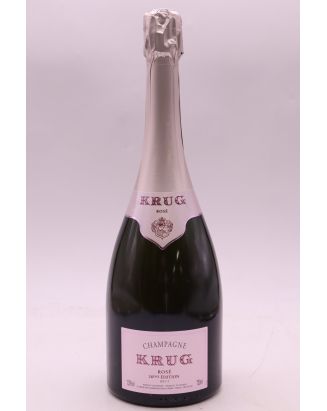
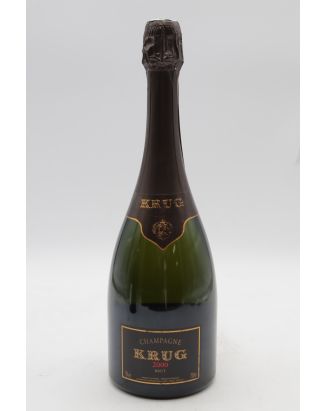
Krug 2008
1 in stock
125334
White
75cl
94/100
99/100
19/20
Add to cart
Champagne | Champagne

Krug 2008

€540.00 inc-VAT per bottle
€450.00 ex-VAT
Krug Grande Cuvée Edition 168 Magnum
Last one !
1 in stock
125327
White
150cl
96/100
95/100
19/20
19.5/20
Add to cart
Champagne | Champagne

Krug Grande Cuvée Edition 168 Magnum

€672.00 inc-VAT per bottle
€560.00 ex-VAT
Krug Grande Cuvée Edition 27 Rosé
2 in stock
125329
Rosé
75cl
96/100
Add to cart
Champagne | Champagne

Krug Grande Cuvée Edition 27 Rosé

€354.00 inc-VAT per bottle
€295.00 ex-VAT
Krug Grande Cuvée Edition 28 Rosé
5 in stock
125330
Rosé
75cl
96/100
Add to cart
Champagne | Champagne

Krug Grande Cuvée Edition 28 Rosé

€336.00 inc-VAT per bottle
€280.00 ex-VAT
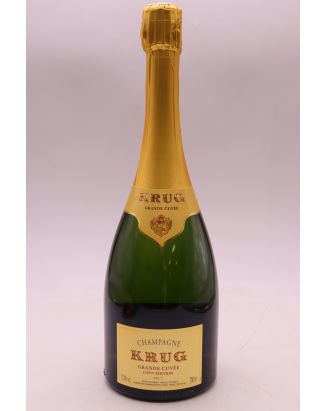
Krug Grande Cuvée Edition 173
31 in stock
126544
White
75cl
94/100
96/100
Add to cart
Champagne | Champagne

Krug Grande Cuvée Edition 173

€264.00 inc-VAT per bottle
€220.00 ex-VAT
Krug 29th Edition Rosé
11 in stock
126545
Rosé
75cl
95/100
Add to cart
Champagne | Champagne

Krug 29th Edition Rosé

€336.00 inc-VAT per bottle
€280.00 ex-VAT
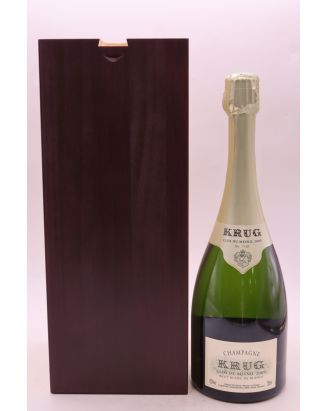
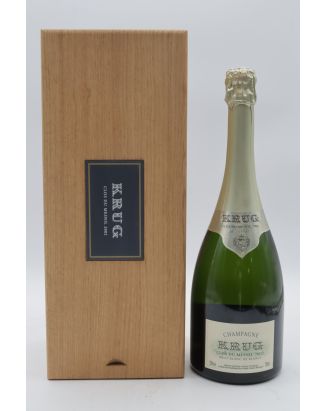
Krug Clos du Mesnil 2009
1 in stock
126648
White
75cl
Original wood case - Sold by 1
97/100
Add to cart
Champagne | Champagne

Krug Clos du Mesnil 2009

€1,500.00 inc-VAT per bottle
€1,250.00 ex-VAT
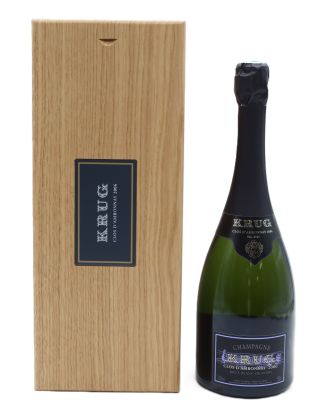
Krug Clos d'Ambonnay 2006
2 in stock
129504
White
75cl
Original wood case - Sold by 1
98/100
Add to cart
Champagne | Champagne

Krug Clos d'Ambonnay 2006

€3,216.00 inc-VAT per bottle
€2,680.00 ex-VAT
Krug Grande Cuvée Edition 172
New
1 in stock
130636
White
75cl
95/100
96/100
Add to cart
Champagne | Champagne

Krug Grande Cuvée Edition 172

€222.00 inc-VAT per bottle
€185.00 ex-VAT
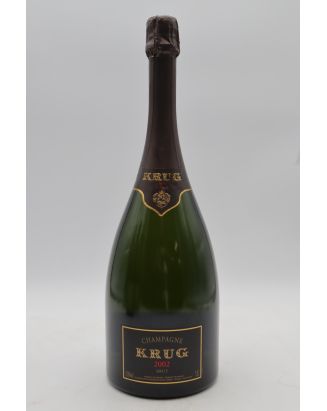
Krug Vintage 2002
New
0 in stock
130658
White
75cl
96/100
19/20
Out of stock
Champagne | Champagne

Krug Vintage 2002

€540.00 inc-VAT per bottle
€450.00 ex-VAT

History of Champagne Krug

Born in Mainz in 1800, the son of a butcher, Johann-Joseph Krug left Germany in 1824 and came to France, where he dropped his first given name. After a spell in Paris, he entered the service of the house of Jacquesson in Châlons-sur-Marne, where he spent eight years travelling across Europe, listening to merchants and enthusiasts, and learning the art of blending. This experience nurtured a singular conviction: the quality of a champagne must not depend on the whim of a single year. In 1843, he founded his own house in Reims and recorded in a cherry-leather notebook the principle of two cuvées — Cuvée No. 1, the finest possible composition each year, and Cuvée No. 2, a reflection of the circumstances of a particular vintage. These two ideas became Krug Grande Cuvée and Krug Millésime.

His son Paul Krug took over and permanently established the house at 5 rue Coquebert, in Reims, in 1868, above the historic cellars and the reserve wine library. The reputation was firmly established from the 1880s onwards. In the twentieth century, the fifth generation marked a decisive turning point: Rémi and Henri Krug took the reins in 1976 and gave birth to Krug Rosé, unveiled in 1983 after seven years of research, then to Krug Clos du Mesnil, revealed in 1979, and finally to Krug Clos d'Ambonnay, whose plot was identified in 1991 and acquired in 1994. The Maison joined the LVMH group in 1999 and, since then, Olivier Krug has embodied the sixth generation. The mid-2010s brought two major innovations for enthusiasts: the Krug iD, a code printed on the back of each bottle allowing its history to be traced, and the numbering of the Éditions of Krug Grande Cuvée. In 2024, the Maison inaugurated Joseph, a new eco-designed winery at the heart of Ambonnay, opening a new chapter in its history.

Terroirs and Vines of Champagne Krug

Krug thinks not in terms of crus but in terms of plots. The Maison owns around twenty hectares of its own, notably in Aÿ, Le Mesnil-sur-Oger, Trépail and Ambonnay, and supplements its needs through a network of partner growers bound by very long-term contracts, sometimes spanning several generations. Each plot is harvested, pressed and vinified separately, as the Maison considers that the same grape variety develops different nuances from one hillside to another, from one soil to another, from one exposure to another. This plot-by-plot approach, compared by the family to an orchestra in which each vine would be a musician, forms the foundation of Krug's distinctive art of blending.

The terroirs mobilised cover the essential great zones of Champagne: the Montagne de Reims and its structured pinot noirs, around Ambonnay, Aÿ, Verzenay and Mailly, the Côte des Blancs and its chalky chardonnays from Le Mesnil-sur-Oger, Oger and Avize, as well as the Vallée de la Marne, where meunier brings its fleshy fruitiness and immediate generosity. The chalk subsoil, a water reserve and natural thermal regulator, imparts to the wines that recognisable saline tension and mineral uprightness. Two historic clos occupy a unique place: the Clos du Mesnil, a 1.84-hectare plot planted with chardonnay and enclosed by walls since 1698, at the heart of the village of Le Mesnil-sur-Oger, and the Clos d'Ambonnay, a tiny 0.68-hectare enclosure planted with pinot noir, protected by its walls since 1766, on the south-east slope of the Montagne de Reims.

Vinifications of Champagne Krug

Krug is the only great house in Champagne to ferment all of its still wines in small 205-litre oak barrels, sourced notably from the Argonne forest and averaging around thirty years of age. The aim is never to impart a woody flavour, but to allow a slow micro-oxygenation that gains in aromatic precision, texture and ageing potential. Each barrel is identified by plot and by cru. Only first-press juices are retained, after natural settling, and the wines spend approximately three months in barrel before being transferred back to stainless steel tanks to continue their ageing on fine lees.

Then comes the Maison's most emblematic step. In the months following the harvest, the Tasting Committee evaluates nearly 400 wines, both young and reserve, recording approximately 5,000 tasting notes. The reserve wine library, a true treasure of the Maison, holds nearly 150 wines from around ten different years, some exceeding fifteen years of age. It is from this palette that Julie Cavil composes each new Édition. The champagnes then rest for a very long time on laths in the Reims cellars — a minimum of six to seven years for Krug Grande Cuvée, more than ten years for the vintages and up to around twelve years for the single-plot cuvées. The dosage remains measured, at around 4 to 6 grams per litre, and each bottle carries a Krug iD allowing its exact composition and disgorgement date to be known.

The Cuvées of Champagne Krug

Krug Grande Cuvée: the absolute signature of the Maison and the direct realisation of Joseph Krug's dream. This is not an ordinary non-vintage brut, but an Édition recreated each year, numbered since the mid-2010s, the first dating back to the 1845 harvest. Each Édition blends more than 120 wines drawn from around ten different vintages, with a significant proportion of reserve wines. The 173rd Édition, composed around the 2017 harvest, thus brings together 150 wines from 13 different years, from the youngest of 2017 to the oldest of 2001, with 31% reserve wines, for a final blend of 44% pinot noir, 34% chardonnay and 22% meunier. The colour is brilliant gold, the expressive nose mingles toasted brioche, stone fruits, candied citrus, dried fruits and honey, the palate is broad, creamy and vibrant, carried by a saline and interminable finish. More than twenty years of patience are required to bring a single Édition to life.

Krug Rosé: born in 1976 from the reflection of Rémi and Henri Krug and unveiled in 1983, this unconventional rosé is also released in successive Éditions. It combines the Maison's art of blending with the contribution of red pinot noir wines traditionally macerated on skins, sourced from specific plots. The 29th Édition, composed around the 2017 harvest, blends 29 wines from 5 different years, with 33% reserve wines, for a composition of 53% pinot noir (including 11% red wine), 28% chardonnay and 19% meunier. The result is a champagne rosé of rare elegance, structured, spiced, with notes of fresh red fruits and citrus, crafted for gastronomy rather than dessert.

Krug Millésime (Krug Vintage): the Cuvée No. 2 conceived by Joseph Krug, the story of a single year told by the Maison. It is created only when the character of a vintage merits being captured, by blending the most expressive wines of that precise harvest, without recourse to reserve wines. Ageing systematically exceeds ten years in the cellar before release. Each Krug Millésime thus possesses its own personality, sometimes taut and saline, sometimes sunny and generous, with the vinosity, density and length that are the hallmark of the Maison.

Krug Collection: the second expression of a Krug Millésime over time. A limited number of bottles is kept in the ideal conditions of the Reims cellars, where they continue their maturation for many additional years before a late disgorgement. These rare bottles offer a different reading of an already known vintage, with deeper tertiary aromas of candied fruits, coffee, wax and truffle, a velvety texture and a preserved freshness that always surprises tasters.

Krug Clos du Mesnil: revealed in 1979, this blanc de blancs is produced 100% from the chardonnay of a single 1.84-hectare plot enclosed by walls since 1698, at the heart of Le Mesnil-sur-Oger, in the Côte des Blancs. The microclimate created by the walls and the south-east exposure yields wines combining the chalky verticality of the Mesnil with an unexpected richness. Harvested, pressed and vinified on site, this vintage single-plot champagne spends approximately three months in barrel and then twelve to fourteen years on lees before disgorgement. The nose unfolds yellow peach, candied lemon, sourdough and white flowers; the palate combines chalky purity, tension and creaminess, on a finish of striking precision.

Krug Clos d'Ambonnay: the pinot noir counterpart to the Clos du Mesnil, and one of the rarest cuvées in Champagne. Produced 100% from the pinot noir of an enclosure of only 0.68 hectares — one third of the surface of the Clos du Mesnil — protected by its walls since 1766 on the outskirts of Ambonnay. It took Rémi and Henri Krug seven years of research to identify this ideal plot. This vintage blanc de noirs, produced in infinitesimal quantities, expresses a remarkable solar intensity: ripe red fruits, soft spices, smoke, cocoa and roasted notes, on a dense, deep and infinitely persistent structure.

Krug Clos d'Ambonnay Rosé: an unprecedented and confidential expression of the same terroir, this single-plot rosé reveals another facet of the intensity of the pinot noir from the Clos d'Ambonnay. The fruit of the Maison's unique expertise in maceration and blending, it combines the power of the cru with aromatic finesse and a silky texture, in a production of extreme rarity reserved for collectors and the most discerning enthusiasts.

WHAT THEY SAY ABOUT US

5 good reasons to buy wines on V&M

...

EXPRESS DELIVERY

In a secure polystyrene packaging

...

INTERNATIONAL SHIPPING

Find out more about VAT-EX sale for outside EU deliveries

...

COLLECTION NEAR PARIS & VAT REFUND FOR TOURISTS

Free collection in our warehouse near central Paris (92)

...