Pascal Cotat

Domaine Pascal Cotat wines: buy at the best price

Domaine Pascal Cotat is based in Sancerre in the Loire and has 2.3 hectares of vines inherited when the family estate was divided between Pascal and his cousin François Cotat. Pascal Cotat produces exceptional wines from two legendary Chavignol terroirs: La Grande Côte and Les Monts Damnés. Domaine Pascal Cotat pioneered a vineyard-by-vineyard approach in Sancerre, vinifying each climat separately. 

Read more
See more
Filters

Price

€60.00 - €80.00

Appellation

Volume

Parker WA rating

90 - 95

Burghound rating

No choice available on this group

Revue du Vin de France rating

No choice available on this group

Bettane & Desseauve rating

16 - 18

Prices drop

No choice available on this group

Download this list
There are 6 products.
Download this list
Pascal Cotat Sancerre La Grande Côte 2021
5 in stock
97254
White
75cl
Add to cart
Loire | Sancerre

Pascal Cotat Sancerre La Grande Côte 2021

€66.00 inc-VAT per bottle
€55.00 ex-VAT
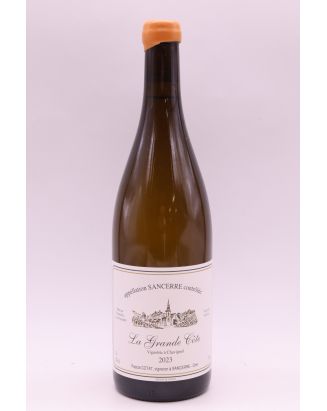
Pascal Cotat Sancerre La Grande Côte 2023
2 in stock
122709
White
75cl
Add to cart
Loire | Sancerre

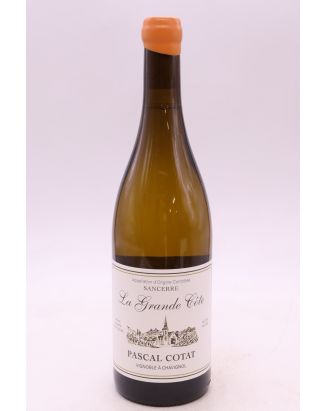
Pascal Cotat Sancerre La Grande Côte 2023

€60.00 inc-VAT per bottle
€50.00 ex-VAT
Pascal Cotat Sancerre Les Monts Damnés 2023
11 in stock
122707
White
75cl
Add to cart
Loire | Sancerre

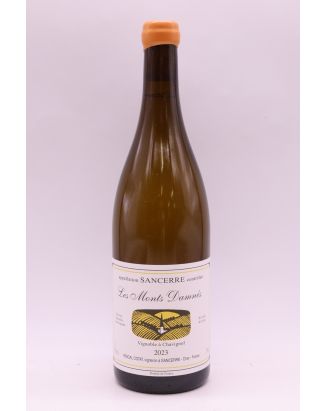
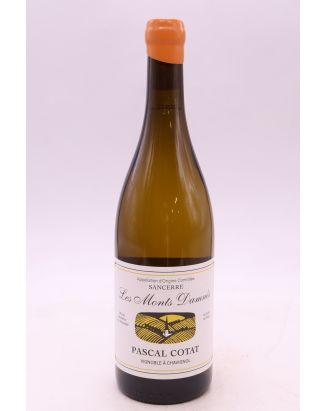
Pascal Cotat Sancerre Les Monts Damnés 2023

€60.00 inc-VAT per bottle
€50.00 ex-VAT
Pascal Cotat Sancerre La Grande Côte 2024
Bio
51 in stock
128250
White
75cl
Add to cart
Loire | Sancerre

Pascal Cotat Sancerre La Grande Côte 2024

€62.40 inc-VAT per bottle
€52.00 ex-VAT
Pascal Cotat Sancerre Les Monts Damnés 2024
52 in stock
128251
White
75cl
Add to cart
Loire | Sancerre

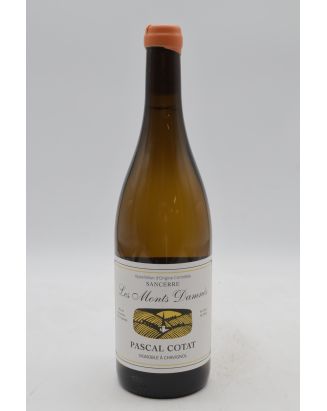
Pascal Cotat Sancerre Les Monts Damnés 2024

€62.40 inc-VAT per bottle
€52.00 ex-VAT
Pascal Cotat Sancerre Les Monts Damnés 2024
90 in stock
131743
White
75cl
Add to cart
Loire | Sancerre

Pascal Cotat Sancerre Les Monts Damnés 2024

€62.40 inc-VAT per bottle
€52.00 ex-VAT
Frequently Asked Questions

Domaine Pascal Cotat covers just 2.3 hectares, situated on the steep slopes of Chavignol, making it one of the smallest producers in the Sancerre appellation. Harvesting is done by hand using a winch-cart system adapted to the steepest gradients, and the wines are aged in demi-muids, without fining or filtration, guaranteeing wines of remarkable purity and authenticity.

The wines of Domaine Pascal Cotat are built to age. Their aging potential is estimated at 15 to 20 years, exceptional for a Sancerre. Often restrained in youth, with notes of almond, lemon and hawthorn, they blossom after at least two or three years. It is therefore best not to open them too early if you want to fully enjoy their aromatic complexity.

Both estates share the same family origins. From 1947 until the early 1990s, the Cotat family, under the direction of brothers Francis and Paul, produced their wines in a shared cellar before bottling them under two distinct labels. Upon their retirement, the brothers passed their vineyards on to their respective sons: Pascal, son of Francis, and François, son of Paul. Today, the two cousins vinify completely independently, with slightly different styles, but the same passion for the great terroirs of Chavignol. 

Domaine Pascal Cotat offers two signature white Sancerre cuvées, "La Grande Côte" and "Les Monts Damnés", both made from Sauvignon Blanc. La Grande Côte, grown on predominantly clay-limestone soil, produces full-bodied, mineral wines, while the south-facing Monts Damnés, on a remarkably steep hillside, yields wines with smokier notes and pronounced acidity. They are two distinct expressions of terroir, both considered among the Loire’s greatest white wines.

Domaine Pascal Cotat is not certified organic, but it cultivates its vines according to principles close to organic farming: no pesticides are used on the vines, only indigenous yeasts are involved in fermentation, and the lunar calendar guides racking. Careful soil management and particularly meticulous pruning yield grapes of exceptional quality. Above all, this philosophy aims to faithfully reveal the character of Chavignol’s terroir.

The wines of Domaine Pascal Cotat are distinguished by aromas of candied citrus and exotic fruit, along with a saline, chalky finish, making them ideal companions for a wide variety of dishes. They pair beautifully with fine fish such as sole meunière or pike-perch with beurre blanc, seafood and aged goat cheese. Crottin de Chavignol, the signature cheese of the very village where these wines originate, is a classic pairing. Their mineral tension and freshness also make them excellent wines for the table.

History of Domaine Pascal Cotat

The Cotat family has grown vines on the slopes of Chavignol since the end of World War II. Beginning in 1947, brothers Francis and Paul Cotat worked together in the same cellar, making their wines jointly before bottling them under two separate labels. Long before anyone else, they introduced a then-revolutionary idea to Sancerre: vinifying each parcel separately and naming the wines after their vineyard sites. The Cotats thus pioneered single-vineyard cuvées in the appellation, a practice common today but strikingly unusual at the time in a region focused on blending.

In the early 1990s, the two brothers passed their vines on to their respective sons: Pascal, Francis's son, and François, Paul's son. The family estate was split in two, with each cousin now making wine in his own cellar under his own name. Pascal Cotat inherited just over two hectares on Chavignol's finest slopes. Passionate about mechanics and vintage cars before devoting himself fully to the vines, he faithfully continues the methods he learned from his father, never yielding to trends. His wines are so distinctive that some have been denied appellation approval for being atypical and sold as Vin de France. Today, they rank among the world's most sought-after Sancerres, alongside those of his cousin François and Edmond Vatan.

Terroirs and Vines of Domaine Pascal Cotat

Chavignol owes its reputation to a subsoil unique within the appellation: Kimmeridgian marl, the calcareous white earth rich in tiny fossilized oysters that is also found in Chablis. This bedrock gives Sauvignon Blanc wines a chalky verve, salinity and aging potential that set them sharply apart from Sancerres grown on flint or caillottes limestone. Les Monts Damnés, perhaps the most famous vineyard site in the entire Loire Valley, takes its name from its truly vertiginous slope: the layer of soil is so thin that the rock breaks the surface, and working the land requires a winch and cart to haul people and equipment up the hillside. Neighboring La Grande Côte has more clay-rich soils, which bring body, richness and breadth to the wines.

On these two slopes, Pascal Cotat grows about two and a half hectares of Sauvignon Blanc, with vines averaging 35 to 45 years old, as well as a parcel of very old Pinot Noir vines, some nearly a century old. His approach to farming is entirely natural: no synthetic chemicals, fertilization with natural preparations made from seaweed and organic matter, and hand cultivation of the soil on the steepest slopes. Yields are low and harvesting is always done by hand. Most striking is the harvest date: Pascal Cotat often picks more than a week after all his neighbors, seeking full ripeness, sometimes with a touch of botrytis.

Winemaking at Domaine Pascal Cotat

In the cellar, the method has remained unchanged for three generations, and that is precisely what makes the house distinctive. Whole clusters are pressed slowly, then the musts ferment solely with native yeasts, without added yeast, enzymes or chaptalization. Fermentation can be lengthy and leave a few grams of residual sugar, a much-discussed trait that, far from weighing the wines down, softens their finish in youth and plays a decisive role in how they age.

The wines are then aged on their lees in old demi-muids and large oak casks, often for more than a year, with no new oak. They are bottled without fining or filtration, with minimal sulfites. The resulting style stands apart in the appellation: far from exuberant, varietal Sauvignon Blanc, these wines are restrained, dense and almost austere in their youth, with notes of almond, lemon, hawthorn and chalk. They open up after two or three years, developing an almost Burgundian creaminess over time. Bottles aged ten, fifteen or twenty years offer some of the most astonishing experiences Sauvignon Blanc can provide.

The Cuvées of Domaine Pascal Cotat

Sancerre Les Monts Damnés is the estate's most finely etched and profound cuvée, born on Chavignol's steepest slope, where topsoil is almost nonexistent and limestone bedrock shapes everything. Initially restrained, the nose combines oyster shell, lemon, anise, struck flint, white flowers and a characteristic hint of smoke. The palate is ripe, with a touch of richness enveloping sharp acidity, tactile minerality and a long, saline finish. Superb with oysters, pike-perch in beurre blanc or Crottin de Chavignol, it reveals its true character after several years in the cellar, developing exotic and honeyed notes.

Sancerre La Grande Côte comes from the neighboring vineyard site, where more clay-rich soils give the wine greater body, richness and stature. Its aromas open with ripe white fruit, candied citrus, white truffle and a hint of brioche, while the palate shows remarkable breadth, underpinned by a powerful Kimmeridgian mineral core and vibrant salinity. It is the estate's most generous wine, both sun-drenched and incisive, built to age and magnificent with lobster, chicken in cream sauce or sweetbreads.

Rosé is one of Europe's rarest and most sought-after rosés, made from a parcel of Pinot Noir planted in Chavignol, with vines approaching a century old. Vinified like a great white wine, with direct pressing and slow aging, it is no simple quaffing rosé: pale and luminous in color, with aromas of red berries, spice and chalk, and a vinous, textured, saline palate with unexpected length. Depending on the vintage, it is released as Sancerre or Vin de France, and at the table it behaves like a true gastronomic wine, one that can also age.

La Grande Côte Cuvée Spéciale is the house's little-known bottling, made only in vintages when botrytis develops on grapes harvested very late. This sweet Sauvignon Blanc is rich and luscious, with aromas of candied fruit, quince, honey and saffron; its sweetness is always balanced by acidity and the terroir's chalky minerality. Extremely rare and sought after by collectors, it pairs beautifully with homemade foie gras, blue cheese or apricot tart.

WHAT THEY SAY ABOUT US

5 good reasons to buy wines on V&M

...

EXPRESS DELIVERY

In a secure polystyrene packaging

...

INTERNATIONAL SHIPPING

Find out more about VAT-EX sale for outside EU deliveries

...

COLLECTION NEAR PARIS & VAT REFUND FOR TOURISTS

Free collection in our warehouse near central Paris (92)

...