Personalise your experience
Change your country, language and currency here whenever you wish.
|
|
|
Must-See Châteaux |
|
|
|
|
|
|
|
|
The domaine de l'Ecotard in the Loire: Saumur wines of haute couture
Nestled on the hillsides of the Saumurois, in the Loire Valley, the Clos de l'Écotard is one of the best-kept secrets of the Saumur appellation. Founded by Michel Chevré, who was long the vineyard manager at the Domaine des Roches Neuves under Thierry Germain, this family estate crafts dry chenins of striking purity, now joined by reds, a chardonnay, and rare sparkling wines made by the traditional method. Fifteen hectares farmed organically and according to biodynamic principles, with soil work done by horse, and winemaking free of artifice.
It all began in 1992, when Michel Chevré made his first wines alongside his father Maurice, a winegrower. A passionate self-taught grower, he entered viticulture in 1996 and became vineyard manager at Domaine des Roches Neuves in Saumur, where he helped guide the move to organic farming in 2002 and contributed to the creation of the single-parcel Chenin cuvée that made the property’s reputation. In 2007, he took over family farmland and began the story of Clos de l’Écotard, gradually transforming the parcel into an ecosystem planted with fruit trees and young vines.
The first vintages were vinified and marketed with Thierry Germain’s support, before the estate acquired its own winemaking facilities. Thibaud Chevré, the younger son, joined his father in 2017 and took the helm in 2024, supported by Guillaume. Starting with three hectares of Chenin, Clos de l’Écotard now covers fifteen hectares in Maine-et-Loire, mainly around Courchamps, with scattered parcels in Fosse-Bellay and Saumur. The range expanded to include sparkling wines in 2017, then reds from 2021.
The vineyards encompass a range of soils: clay-limestone, sometimes with limestone at the surface, sandy clay and pure sand. This mosaic underpins the parcel-by-parcel approach to the cuvées, with each terroir harvested and vinified separately. Chenin remains the estate’s signature grape, complemented by Cabernet Franc, Grolleau Gris, Grolleau Noir, Gamay, Chardonnay and Sauvignon. Planting densities range from 4,000 to 8,000 vines per hectare depending on the parcel, with single Guyot pruning and all grapes harvested by hand.
Farmed organically since 2011, with techniques drawn from biodynamics, the estate favors cover crops, earthing up, removing soil from around the vines and horse-drawn cultivation on its finest parcels. One unusual feature: shoots are wound rather than trimmed, a practice that limits the growth of lateral shoots and lets the vine find its natural balance. Yields are deliberately low, in keeping with Michel Chevré’s philosophy: from the outset, he has believed that grape clusters need space to reach their full potential.
In the winery, restraint is the guiding principle. Grapes arrive after hand sorting, sometimes in three stages (in the vineyard, as clusters on a sorting table, then as individual berries), and fermentations start naturally at low temperatures to preserve the fruit’s energy. Depending on the cuvée, the whites ferment and age in stainless steel tanks, barrels, 600-liter barrels, large Austrian oak casks or stoneware jars, on fine lees, with very little racking. Malolactic fermentation is not routinely encouraged, preserving the tension characteristic of Saumur Chenin.
The reds are extracted very gently, by infusion, with short macerations of around twenty days and infrequent pump-overs, then aged for just a few months in tanks, barrels and stoneware jars to favor fruit, fine texture and immediate drinkability. The sparkling wines are made by the traditional method, with no dosage and extended aging on racks that can exceed four years. Every cuvée is bottled at the estate.
La Haie Nardin (white Saumur): an introduction to the estate’s range, from a 70-are parcel in Courchamps on sandy clay soils, planted at 5,500 vines per hectare with vines thirty to sixty years old. First vintage in 2017. Fermented and aged for eleven months, half in barrels and half in tanks. A focused, floral Chenin with white-fruit notes and remarkable drinkability.
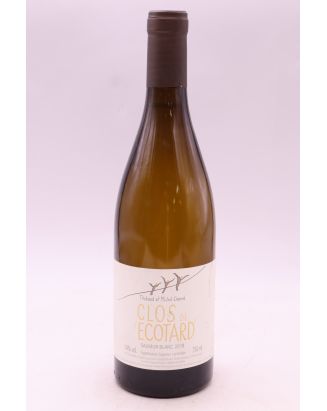
Clos de l’Écotard (white Saumur): the signature cuvée, from two hectares of south-facing clay-limestone soils in Courchamps, planted between 2009 and 2013 at an unusually high density of 8,000 vines per hectare, including plant material from François Chidaine’s massal selections. Grapes are selected from the lower part of the parcel, the soil is worked by horse, and the wine is aged for eighteen months in barrels (around 10% new) and, depending on the vintage, stoneware jars. Yellow fruit, pear, chalk, vibrant minerality and beautifully defined acidity.
Les Pentes (white Saumur): the estate’s most complex cuvée, from the upper part of the Courchamps parcel, where limestone reaches the surface on a steep south-facing slope. Fermented in a 25-hectoliter Stockinger oak cask, then aged for eighteen months. An impressive nose of flint and citrus, a broad opening, a powerful yet finely etched body, and a saline, very fresh finish. A great Loire white for cellaring.
Le Chardonnay (white Vin de France): a small-production cuvée from half a hectare in Courchamps, on north-facing clay-limestone soils planted with vines thirty to sixty years old. Fermented and aged for twelve months in barrels, without malolactic fermentation. The result is a taut, fine Loire Chardonnay with citrus and fresh almond notes, far removed from opulent styles.
Saumur Rouge: the estate’s first red, launched in 2021, blending three parcels in Fosse-Bellay and Courchamps on sandy and clay-limestone soils, planted with Cabernet Franc vines fifty to sixty years old. Three rounds of hand sorting, around twenty days of gentle infusion-style maceration with very little extraction, then five months of aging in tanks (67%), barrels (30%) and stoneware jars. A floral, juicy Cabernet Franc with fine tannins, to serve slightly chilled.
Gamay (red Vin de France): an inviting micro-cuvée from ten ares of sixty-year-old vines planted on sand in Fosse-Bellay. Carbonic maceration, low alcohol and no embellishments. Crisp, floral and refreshing, this is Clos de l’Écotard’s wine for immediate enjoyment, perfect with a charcuterie board or bistro fare.
Les Quarts Saint Vincent (sparkling Saumur): the historic sparkling cuvée, born from the first harvest for sparkling wine in 2017. One hundred percent Chenin from a 30-are west-facing clay-limestone parcel in Saumur, planted with fifty-year-old vines whose shoots are wound rather than trimmed. Fermentation in large oak casks, nine months on lees in tanks, traditional-method production with no dosage and very long aging on racks (up to 54 months for the 2018 vintage). Honey, brioche, candied apple and saline tension.
Saumur Brut: a sparkling wine made from Chenin, Grolleau Gris and Cabernet Franc, from two south-facing sandy clay parcels in Fosse-Bellay planted with vines around fifty years old. Traditional-method production, no dosage and around twenty months of aging on racks. Fine, vinous bubbles and a food-friendly character, both ripe and full of energy.
Skin-contact white Saumur: a small-production cuvée vinified with extended contact between juice and skins, revealing another side of the estate’s white grape varieties. Texture and refined bitterness, aromas of herbal infusions, citrus zest and dried fruit: a wine of discovery for lovers of characterful wines.
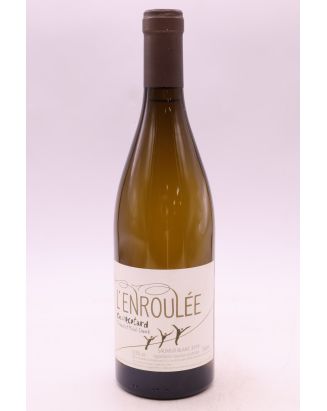
L’Enroulée: an exceptional cuvée born of the devastating frost of 2019, which left the estate with just a third of its crop. To make up for the losses, grapes from La Haie Nardin were brought together with those of Les Quarts Saint Vincent, producing a one-of-a-kind Chenin, both vibrant and enveloping, that has become a rarity highly sought after by collectors of Loire wines.
COLLECTION NEAR PARIS & VAT REFUND FOR TOURISTS
Free collection in our warehouse near central Paris (92)