Nicolas Joly Savennières Clos de la Bergerie 2024
Personalise your experience

Change your country, language and currency here whenever you wish.
|
|
|
Must-See Châteaux |
|
|
|
|
|
|
|
|
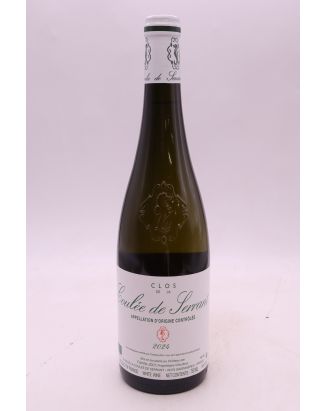
Clos de la Coulée de Serrant: a legendary monopole owned by Nicolas Joly
The historic Clos de la Coulée de Serrant vineyard, an emblem of the Loire Valley and Savennières, was planted by Cistercian monks in 1130. Nicolas Joly holds it as a monopole, and it covers 7 hectares. Ably assisted by his daughter Virginie, Domaine de la Coulée de Serrant adopted a more natural approach as early as 1984, and the entire vineyard is farmed according to the principles of biodynamics. The Chenin vines planted here are 40 to 80 years old and grow beside the Loire on south- and southeast-facing slopes, some of them spectacularly steep.
Domaine Nicolas Joly – Coulée de Serrant occupies a distinctive place in French winemaking. Coulée de Serrant is an appellation in its own right, covering just 7 hectares, with vines first planted by Cistercian monks in 1130. This family-owned monopole, perched on steep slopes overlooking the Loire, produces only Chenin Blanc on red schist soils. Its rarity, history and singular terroir make it an extraordinary Loire white wine, celebrated by discerning wine lovers for centuries.
Domaine Nicolas Joly covers 15 hectares in total and produces only white wines from Chenin grapes. Three cuvées are made there in small quantities: Coulée de Serrant (AOC Savennières Coulée de Serrant), Clos de la Bergerie (AOC Savennières Roche-aux-Moines), and Les Vieux Clos (AOC Savennières). Each expresses a different facet of this exceptional terroir, with aromatic complexity ranging from candied citrus and honey to beeswax and mineral notes of schist.
The wines of Domaine Nicolas Joly – Coulée de Serrant are among France’s most age-worthy dry whites. Their aging potential is remarkable: 10 to more than 30 years, depending on the vintage, as they develop notes of truffle, smoke, and honey. In the cellar, they gradually gain depth and complexity, moving beyond their youthful aromas to reveal the full mineral power of the schist terroir. Patience and aeration are key to enjoying them fully.
Nicolas Joly was one of the first winemakers to introduce and champion biodynamic farming in France as early as the 1980s. Since 1984, the entire estate has been cultivated according to biodynamic agriculture methods. This approach, inspired by the work of Rudolf Steiner, excludes all chemical fertilisers, pesticides, and synthetic herbicides. It aims to keep the soils alive and to allow the terroir to express itself without constraint, making Nicolas Joly a world reference in natural viticulture.
The vineyard is managed in a deliberately artisanal and respectful manner. The chenin vines, aged between 40 and 80 years, are located on the banks of the Loire on hillsides with south/south-east exposure and sometimes spectacular slopes. The vineyard is cultivated partly by hand and by horse, with an average yield of only 20 to 25 hectolitres per hectare. The harvest is carried out in several successive passes to achieve optimal ripeness of the grapes, including a proportion of botrytised grapes which gives the wines their characteristic complexity.
The richness and mineral tension of the wines from Domaine Nicolas Joly – Coulée de Serrant call for generously flavored dishes. This complex wine pairs beautifully with dishes rich in texture and flavor: roast poultry, mushroom risotto, river fish in sauce, truffle dishes, or full-flavored cheeses. With more mature vintages, which develop notes of wax and spice, pairings with foie gras preparations or seared scallops reveal a particularly elegant harmony.
The site’s history begins in 1130, when Cistercian monks settled on this promontory overlooking the Loire, built a monastery and planted vines. Their intuition proved sound: the Coulée de Serrant hillside has remained under cultivation ever since, representing nearly nine centuries of uninterrupted viticulture. Its wines have been celebrated through the centuries, notably by Louis XI and later Louis XIV. In the 20th century, Coulée de Serrant gained the exceptionally rare status of a single-owner appellation d’origine contrôlée, alongside a few celebrated sites such as Romanée-Conti, La Tâche and Château-Grillet.
The Joly family acquired Château de la Roche aux Moines and its enclosed vineyards in the 1960s. Nicolas Joly began in an entirely different career, working in international finance in North America and London before leaving it all behind in the late 1970s to take over the family estate in 1978. After a few vintages farmed conventionally, he observed the deterioration of his soils and discovered biodynamics, which he applied across the entire property from the early 1980s. He became one of the subject’s most influential thinkers, wrote numerous books and lectured tirelessly. He also founded Renaissance des Appellations, a movement bringing together winegrowers from around the world committed to wines that express their terroir. For several years now, his daughter Virginie Joly has run the estate day to day, gradually making her mark while remaining entirely true to that philosophy.
The vineyard occupies a spectacular, steep, south- and southeast-facing amphitheater that drops toward the Loire. Its bedrock forms part of the foothills of the Armorican Massif: schist and quartz, sometimes exposed, with very little topsoil and no water reserves. The roots have no choice but to reach deep into the rock, yielding wines of uncommon concentration and minerality. Three sites make up the property: Clos de la Coulée de Serrant, a seven-hectare monopole in the Savennières Coulée de Serrant appellation; Clos de la Bergerie, immediately next door in the Savennières Roche-aux-Moines appellation; and the plots in the Savennières appellation that produce Les Vieux Clos.
Chenin Blanc reigns alone across the fifteen hectares, with vines propagated through massal selection, some of them more than eighty years old. Biodynamic practices have been followed throughout since the early 1980s: preparations, herbal infusions, compost, lunar and planetary cycles, and soil cultivation done partly by hand and horse on the steepest slopes. Yields are deliberately tiny, around 20 to 25 hectoliters per hectare for Coulée de Serrant and 30 to 35 for Les Vieux Clos. The estate’s total production is limited to 45,000 or 50,000 bottles a year across all cuvées.
Harvesting here is an exercise in patience. The harvest runs from late September to early November, with three to five passes by hand over three to five weeks, so that only fully ripe grapes are picked—golden and sometimes lightly affected by botrytis. Nicolas Joly has often said that harvesting too early produces easy freshness and fruit aromas that scarcely reflect a great terroir. It is therefore grapes ripened by the sun, picked at full maturity, that enter the cellar.
Winemaking is intended to be as hands-off as possible: slow pressing, spontaneous fermentation using only native yeasts, no added yeast, no chaptalization and no enological additives. The wines ferment and age slowly on their lees for many months in large oak casks and old barrels, with minimal sulfur additions. Despite the ripeness of the grapes, the wines finish dry, with residual sugar rarely exceeding a few grams per liter. This rich, textured style, sometimes marked by deliberately embraced oxidative nuances, can be disconcerting at first and takes time to appreciate. The estate recommends opening and decanting its bottles several hours ahead, or even the day before, to give them time to reveal themselves fully.
Clos de la Coulée de Serrant is the estate’s iconic wine and one of France’s finest dry whites. It comes from the family’s seven-hectare monopole in the Savennières Coulée de Serrant appellation, on a steep hillside planted with vines since 1130, some of which are now more than eighty years old. Its exceptionally rich aromatic range brings together honey, acacia blossom, candied citrus, quince, beeswax, sweet spices and warm stone. The palate unfolds with a broad, enveloping texture, sustained by vibrant mineral tension and an exceptionally long saline finish. Its aging potential is virtually limitless: the best vintages improve for thirty years or more, developing notes of truffle, smoke and honey. A wine for fine dining, it benefits from extended decanting and can be served with lobster, Bresse chicken with morels or aged Comté.
Clos de la Coulée de Serrant Moelleux is one of the Loire’s rarest bottles: only a handful of vintages in forty years have produced a sweet version of the Coulée, when noble rot developed sufficiently. Made from successive selections of botrytized grapes grown on this singular terroir, the cuvée combines a luscious richness of candied apricot, honey, saffron and citrus peel with the site’s characteristic schist minerality and incisive acidity. A collector’s bottle to open with foie gras or Roquefort, or simply to enjoy on its own after several decades in the cellar.
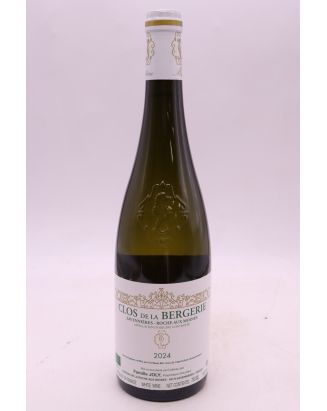
Clos de la Bergerie comes from the estate’s plot in the Savennières Roche-aux-Moines appellation, immediately beside the Coulée. Farmed in exactly the same way, harvested in successive passes and aged with the same restraint, this Chenin emphasizes elegance and finesse rather than power. The nose opens with ripe yellow fruit, white flowers, a touch of honey and stone. The palate is focused and savory, with a long saline finish. More approachable in its youth than the Coulée, it can nevertheless age comfortably for around fifteen years and pairs beautifully with fish in sauce, sweetbreads or lightly spiced dishes.
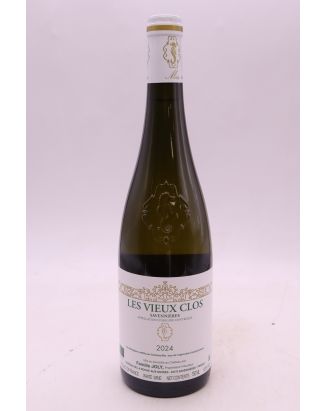
Les Vieux Clos is the estate’s introductory cuvée, produced in the Savennières appellation from plots with the youngest vines, though yields are still limited to 30 or 35 hectoliters per hectare. It combines the depth of its schist terroir with a more immediately expressive, fruit-driven side of Chenin, showing citrus, pear and floral notes, a pronounced mineral thread and the saline finish that is the estate’s hallmark. It is an ideal introduction to the Joly style at a more accessible price, and a bottle that also benefits greatly from ten years or more of aging. It is sold as Les Clos Sacrés in some export markets.
COLLECTION NEAR PARIS & VAT REFUND FOR TOURISTS
Free collection in our warehouse near central Paris (92)