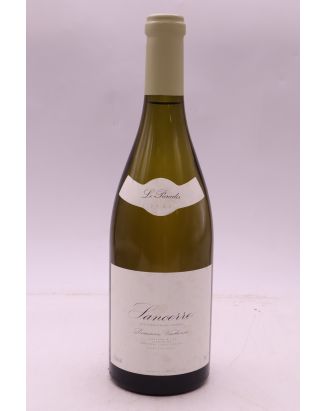
Vacheron Sancerre Le Paradis 2021
Personalise your experience
Change your country, language and currency here whenever you wish.
|
|
|
Must-See Châteaux |
|
|
|
|
|
|
|
|
Domaine Vacheron, based in Sancerre in the Loire, has been certified biodynamic since 2006. While Domaine Vacheron had just 1 hectare of vines at the start of the 20th century, and then 3 hectares in the 1960s, it expanded considerably from 1965 onward through the acquisition of numerous plots. It now has nearly 50 hectares of vines, including 37 hectares for the production of white Loire wine.
The story begins in the early 20th century, when Maurice Vacheron ran a mixed farm of around 40 hectares on the outskirts of Sancerre, with just one hectare planted to vines. His son Jean made the decisive choice to move gradually away from grain crops and focus on vines, particularly Pinot Noir, at a time when the appellation was turning overwhelmingly toward Sauvignon. In 1966, the estate still had only three hectares of vines. The next generation, Jean-Louis and Denis Vacheron, continued expanding the vineyard and acquiring the finest named sites around the Sancerre hill.
The real cultural shift came with the arrival of cousins Jean-Dominique and Jean-Laurent Vacheron, who trained in Burgundy. They converted the entire vineyard to biodynamics around the turn of the 2000s and obtained certification midway through the decade, making the estate the first in Sancerre to be certified for biodynamic viticulture. Above all, they continued and expanded the site-by-site approach begun by their fathers: the red Belle Dame from 1995, the white Les Romains from 1997, then Le Paradis in 2009, Les Marnes in 2010 and Le Pavé in 2014, followed by Chambrates, Guigne-Chèvres and L’Enclos des Remparts.
The property now covers about 70 hectares, including some 50 hectares in the Sancerre appellation, five in Menetou-Salon and around 20 hectares of meadows and woodland that contribute to the estate’s balance. The vineyards are clustered closely around the town of Sancerre, spread across some 20 named sites, allowing for a geological interpretation as nuanced as that of Burgundy’s climats. All three major soil types of the Sancerre area are represented: flint, which yields smoky, taut wines; caillottes and limestone, sources of finesse and precision; and marly terres blanches, rich in oyster fossils, which bring power and longevity.
Sauvignon accounts for about three-quarters of the vineyard plantings, with Pinot Noir making up the rest, and the vines are tended with soil vitality in mind. Pruning follows the Poussard Guyot method to preserve sap flow; the soils are grassed over, then worked with a plow or, on the steepest plots, a pickaxe. Compost replaces all fertilizer, while biodynamic preparations are applied using high-precision equipment to reduce the quantities needed. Harvesting and sorting are done entirely by hand.
The cellar, excavated beneath the town of Sancerre, provides ideal natural conditions for extended aging. The whites are gently pressed, settled and then fermented using only indigenous yeasts, mainly in tanks to preserve a clear expression of terroir. The single-vineyard cuvées then spend an extended period on fine lees in tanks, large oak casks, 600-liter barrels or standard barrels, with oak kept deliberately subtle and never showy: the aim is for the flint or limestone to speak before the grape variety.
The reds are made in a distinctly Burgundian style, reflecting the two cousins’ training. Extraction is kept to a minimum, with gentle infusions that favor aroma and texture over power, now carried out in large, tapered wooden vats that have brought even greater definition to the wines. Aging continues in barrels, without excessive new oak. Intervention and sulfur use are limited to the bare minimum. Though immediately appealing in their youth, the estate’s single-vineyard cuvées have the stature to age for 20 years.
Sancerre Blanc (Domaine cuvée): a blend of the property’s different terroirs, bringing together flint, caillottes and terres blanches. Vinified in tanks to preserve the brightness of the fruit, it offers a pure, appetizing expression of Sauvignon, with citrus, white flowers and an already pronounced minerality. One of the appellation’s best values, to drink within five years.
Sancerre Les Romains: the estate’s historic cuvée, bottled separately from 1997 as its first predominantly flint-soil site to be vinified on its own. The wine is vigorous, subtly austere in its youth, with stony and smoky notes, a striking structure and rare depth. Compared by some to great white Burgundies for its aging potential, it needs a few years in the cellar and can readily keep for 15 years.
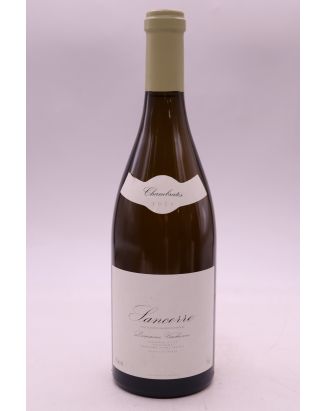
Sancerre Chambrates: from a clay-limestone plot younger than Les Romains, producing the most expressive of the single-vineyard whites. Ripe citrus, exotic and floral notes, and a generous, lingering texture, with a limestone finish that brings everything into focus. Often the cuvée that wins you over fastest, without sacrificing any precision.
Sancerre Guigne-Chèvres: from very poor, north-facing chalky soil, this finely etched, saline Sauvignon favors restraint over showiness. Exceptionally mouthwatering and discreet at first, it reveals its energy and tension over the years. A food-friendly wine for lovers of focused, mineral-driven whites.
Sancerre Le Paradis: first produced in the 2009 vintage, this named site has almost no topsoil, with vines reaching straight into the chalk, which is porous enough for their roots to penetrate. Yields are tiny, and the wine combines concentration with brightness: citrus zest, spicy floral aromas, breadth and invigorating focus, underpinned by vibrant acidity.
Sancerre Le Pavé: a cuvée created in 2014 from a cooler site with clay-limestone soils. It produces a remarkably clear-cut Sancerre, classic and bright, with precise aromas of lemon and white flowers and a chalky finish. A balanced white, approachable in its youth yet capable of aging well.
Sancerre L’Enclos des Remparts: a limited-production cuvée from a young plot of own-rooted, ungrafted vines planted on flint soils. This rare distinction yields a wine of striking aromatic purity, in which the flint’s smoky, spicy character comes through unfiltered. A sought-after bottle made in very small quantities.
Sancerre Rosé: Pinot Noir made with the same care as the great whites, in a taut, saline style rather than a fruit-forward one. Flint and limestone lend spice and character to a rosé that is refreshing yet thought-provoking, perfect at the table with refined cuisine.
Sancerre Rouge (Domaine cuvée): a blend of Pinot Noir from the estate’s different terroirs, gently infused during vinification and aged without an overt oak influence. Generous and fragrant, it reveals tart cherry, cherry pit, flowers and a hint of mint over a supple, juicy body. A benchmark Loire Pinot Noir at a still-reasonable price.
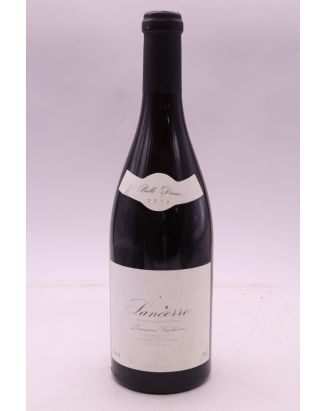
Sancerre Belle Dame: the estate’s flagship red cuvée, bottled separately since 1995, from 50-year-old vines planted on pure flint. Aged in barrels in the Burgundian tradition, it offers a silky, spicy texture, remarkably fine tannins and a depth of fruit unusual for Sancerre. A wine that stands comparison with fine Burgundy village wines and ages beautifully for 15 to 20 years.
Sancerre Les Marnes: a red cuvée introduced in 2010, born of marly terres blanches packed with shellfish fossils, where Pinot Noir develops greater concentration and energy. Tighter-knit and more saline than Belle Dame, it combines a pronounced mineral structure with deep dark fruit; extended aging gives it excellent cellaring potential.
COLLECTION NEAR PARIS & VAT REFUND FOR TOURISTS
Free collection in our warehouse near central Paris (92)