


 Sign in
 Cart
0
Cart
0


The Selosse estate: Champagne de vigneron d'exception

The history of the Domaine Jacques Selosse
Discover the history of this estate, passed from father to son since the Second World War: a true grower's Champagnes that is synonymous with excellence!
It all begins with the creation by Jacques Selosse of the eponymous estate located in Avize in the Côte des Blancs. Although he had no winemaking roots, Jacques settled in Avize in 1947 and worked in several vineyards, helping primarily widows to manage their estates during and after the war, as he had not been called up due to his deafness. He started with a few hectares of vines, selling his grapes to the cooperative for several years. In 1959, he carried out his first winemaking trials and, in 1964, began producing his own Champagne, while continuing to sell a portion of his harvest to négociants in order to maintain financial stability.
His son Anselme then took over the reins of the estate after studying viticulture and oenology. He also honed his skills at great Burgundian estates and with highly acclaimed winemakers: Coche Dury, Leflaive and Comtes Lafon. He also travelled to Spain to study the wines and techniques used there. A truly formative experience.
He drew inspiration from Burgundian methods and approaches, from the vines to the cellar, as well as from some Spanish techniques, such as the solera method, which allows for oxidative ageing.
He took over the running of the estate in 1980 and imposed his style with innovative practices for the time — some even quite surprising — most notably with the cuvée Substance, obtained by solera and marked by an oxidative, subtle and precise style!
This is followed by biodynamic wines, agroecology, and permaculture between the 1990s and 2000s.
It is now Guillaume's turn — grandson of Jacques and son of Anselme — to take the helm of the family estate. He assumed control in 2019 and does not necessarily replicate all of his father's practices, but he is no less talented for it. After a smooth transition, he has benefited from excellent guidance, with his talent and genius unanimously recognised by wine professionals!
Terroirs, the Vine and the Methods
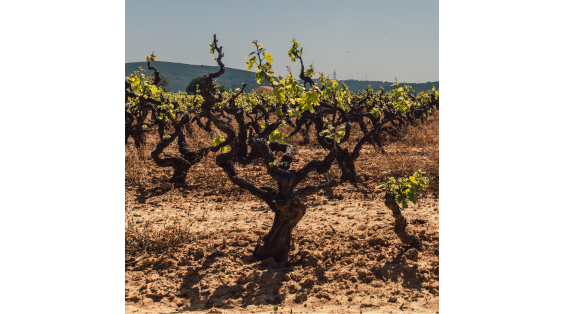
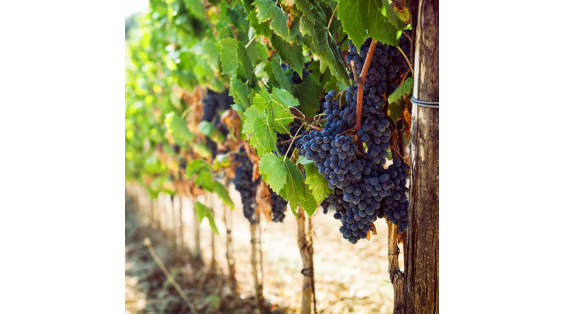
The vineyard of Domaine Jacques Selosse spans just over 8 hectares, divided into around fifty plots, almost all classified as Grand Cru, at the heart of the Côte des Blancs. The vines are located in Avize, Cramant, Oger and Le Mesnil-sur-Oger for the chardonnay, which makes up the vast majority of the estate's grape varieties (7.3 hectares). The rest of the vineyard comprises one hectare of pinot noir in Aÿ, Mareuil-sur-Aÿ (Premier Cru at 99%) and Ambonnay. The vines average over 60 years of age.
Although the Selosse family was for a time inspired by biodynamics, they abandoned this practice in 2003 in favour of the principles of permaculture (Masanobu Fukuoka). The estate is constantly evolving and follows no fixed method. Although not certified organic, the estate adheres to organic standards: no chemical fertilisers, pesticides or herbicides are used. The Selosse family compares the vine to a forest, advocating the nurturing of natural balances without excessive constraint. "The forest is the most beautiful ecosystem; it is not exploited — one simply gathers what it offers", as can be read on their website.
The estate's soils are worked by plough and horse, encouraging biological activity in the soils, notably thanks to the advice of Claude Bourguignon and the use of compost. The vines are grassed over and yields are limited through very short pruning.
The harvest takes place at full physiological maturity, with grapes often reaching 13 or 14 degrees of potential alcohol, meaning that harvesting occurs later than the regional average. The harvesting team is made up of long-standing loyal members, perfectly familiar with the estate's philosophy and sorting requirements. A portion of the grapes is left to ripen further in order to develop botrytis, thus adding additional complexity to the juices.
At Domaine Jacques Selosse, cellar vinifications are designed to respect the wine and its terroir, with minimal intervention. Guillaume Selosse seeks to preserve the identity and expression of his wines' terroir without disturbing, masking or altering them.
The musts are transferred into barrels immediately after pressing, on total lees (without racking, so as to retain only the fine lees). There is very little, if any, settling. The musts begin their fermentation naturally, by gravity, with minimal use of the pump, which intervenes only once during bottling. Vinifications are carried out plot by plot and fermentations proceed spontaneously, initiated by indigenous yeasts. Although several types of containers are used, the majority of fermentations take place in 228-litre Burgundian barrels. Alcoholic fermentation is accompanied by bâtonnage (stirring of the lees) and runs its course without haste. Malolactic fermentation occurs according to conditions, neither sought nor prevented.
Bottling takes place in summer, followed by a secondary fermentation that lasts approximately three months. Ageing on lees in the bottle extends for a minimum of two and a half years, or longer for vintage cuvées. Riddling is followed by storage on points until disgorgement, carried out to order, with the date specified on the labels. Disgorgement is done by hand and dosages are very discreet.
The estate also offers a cuvée, Substance, produced using the solera method. This is a perpetual wine reserve begun in 1986, where each year the wines drawn off for this cuvée are replaced by the wines from the latest harvest, thereby allowing the older vintages to "educate" the younger ones, following a system similar to that of Jerez.
Regarding the addition of sulphur, the estate uses very little, or even none at all for certain cuvées and certain vintages. For example, for the 2021 vintage, no sulphur was added until bottling, and in 2023, no sulphur was used on the chardonnays.
Vinification and ageing take place in casks, with approximately 20–25% new oak. The estate uses fairly high toasting levels (medium to medium-plus) because the ageing periods are relatively short (approximately 10 months) and lighter toasting levels only impart their patina after at least 15 months. Wood therefore plays an important role in the balance of the wine. "We love the impact of wood," summarises Guillaume Selosse. However, the ageing is finely adjusted. In years when flowering is excellent and almost all the pips are present in the grape, they reduce contact with the wood by using larger barrels (425 litres) to avoid excessive tannin extraction.
The Selosses thus leave a subtle imprint on the Champagne while allowing the terroir to express itself freely — that is their greatest philosophy!
The Cuvées of Domaine Jacques Selosse
Its cuvées, including Selosse Initial, Selosse Version Originale (also known as Selosse VO), Selosse Substance (a solera begun in 1986), Selosse Contraste, Selosse Exquise (a Champagne dosed at approximately 20g/L), and Selosse Rosé, position this haute couture winemaker among the elite of the region, alongside prestigious houses such as Krug and Salon.
A range of rare single-plot cuvées is added to this confidential production. These are lieux-dits that Anselme Selosse vinifies in isolation:
- Selosse Sous le Mont, in Mareuil-sur-Aÿ, Blanc de noirs
- Selosse La Cote Faron, in Aÿ, Blanc de noirs
- Selosse Le Bout du Clos, in Ambonnay, Blanc de noirs
- Selosse Les Carelles, in Le Mesnil-sur-Oger, Blanc de blancs
- Selosse Les Chantereines, in Avize, Blanc de blancs
- Selosse Chemin de Chalons, in Cramant, Blanc de blancs
These last 2 are exclusively available in a highly original case containing these 6 lieux-dits, bearing the name "Collection Lieux-dits".
Can you imagine? 2 cuvées available only in this gift set! Truly rare wines that enthusiasts are eager to get their hands on!
Finally, a handful of rare vintage Champagne are added, including such outstanding successes as Selosse 1996, Selosse 1999, Selosse 2002, Selosse 2003, Selosse 2005, Selosse 2007, Selosse 2008, Selosse 2009.
A Champagne to savour in one's lifetime!


COLLECTION NEAR PARIS & VAT REFUND FOR TOURISTS
Free collection in our warehouse near central Paris (92)