Chinon

All wines from the Chinon appellation in the Loire

In Touraine, this appellation covers 2,100 ha, planted primarily with Cabernet Franc and Cabernet Sauvignon — up to 25% of the vineyard permitted since 2000 — for red wines and rosé wines, and with Chenin for the small proportion of white wine produced. Depending on the terroir from which it originates, Chinon can be light and delicate, highly aromatic (with red fruit notes), if produced on the gravel soils along the Vienne riverbanks, or full-bodied and structured, with complex aromas of stewed dark fruits, gentle spices and game, if it comes from the tuffeau hillsides or flint-clay plateaux. All have an intense cherry to violet-hued robe, which evolves towards brown tones with purple highlights. Among the finest producers of this Loire appellation, you will find Alain Lenoir, Bernard Baudry, Charles Joguet, Chateau de Coulaine, Couly Dutheil, Grosbois, Olga Raffault, Philippe Alliet... 

Read more
See more
Filters

Price

€0.00 - €340.00

Appellation

Parker WA rating

86 - 94

Burghound rating

No choice available on this group

Revue du Vin de France rating

No choice available on this group

Bettane & Desseauve rating

15 - 18

Prices drop

Download this list
There are 13 products.
Download this list
Philippe Alliet Chinon Tradition 2020
14 in stock
97260
Red
75cl
15/20
Add to cart
Loire | Chinon

Philippe Alliet Chinon Tradition 2020

€16.80 inc-VAT per bottle
€14.00 ex-VAT
Philippe Alliet Chinon Vieilles Vignes 2019
4 in stock
97261
Red
75cl
16/20
Add to cart
Loire | Chinon

Philippe Alliet Chinon Vieilles Vignes 2019

€21.60 inc-VAT per bottle
€18.00 ex-VAT
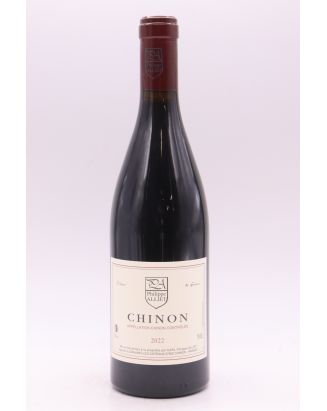
Philippe Alliet Chinon 2022
1 in stock
104278
Red
75cl
Add to cart
Loire | Chinon

Philippe Alliet Chinon 2022

€15.00 inc-VAT per bottle
€12.50 ex-VAT
Thomas Pichet Chinon Haut Midi 2023 Rouge
8 in stock
108077
Red
75cl
Add to cart
Loire | Chinon

Thomas Pichet Chinon Haut Midi 2023 Rouge

€16.00 inc-VAT per bottle
€13.33 ex-VAT
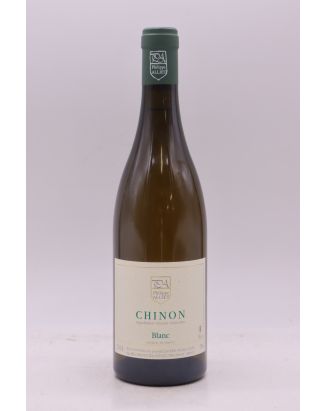
Philippe Alliet Chinon 2018
3 in stock
109451
White
75cl
16/20
Add to cart
Loire | Chinon

Philippe Alliet Chinon 2018 blanc

€30.00 inc-VAT per bottle
€25.00 ex-VAT
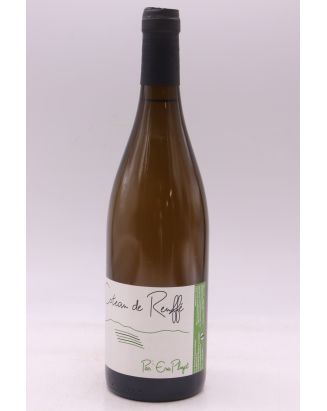
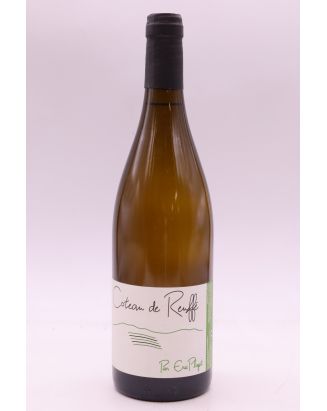
Alcofribas Chinon Coteau de Reuffé 2022 blanc
5 in stock
112174
White
75cl
Add to cart
Loire | Chinon

Alcofribas Chinon Coteau de Reuffé 2022 blanc

€15.60 inc-VAT per bottle
€13.00 ex-VAT
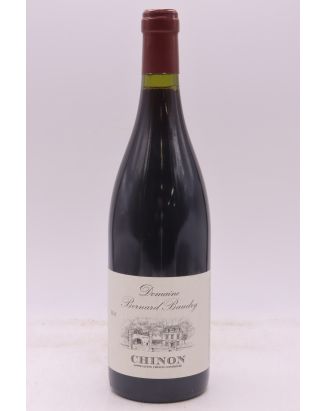
Bernard Baudry Chinon 2016
5 in stock
113993
Red
75cl
88+/100
15.5/100
Add to cart
Loire | Chinon

Bernard Baudry Chinon 2016

€18.00 inc-VAT per bottle
€15.00 ex-VAT
Philippe Alliet Chinon Vieilles Vignes 2020
2 in stock
114400
Red
75cl
Add to cart
Loire | Chinon

Philippe Alliet Chinon Vieilles Vignes 2020

€19.20 inc-VAT per bottle
€16.00 ex-VAT
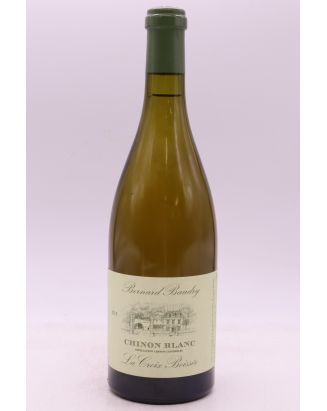
Bernard Baudry Chinon La Croix Boissée 2015 Blanc
3 in stock
119571
White
75cl
Add to cart
Loire | Chinon

Bernard Baudry Chinon La Croix Boissée 2015 Blanc

€42.00 inc-VAT per bottle
€35.00 ex-VAT
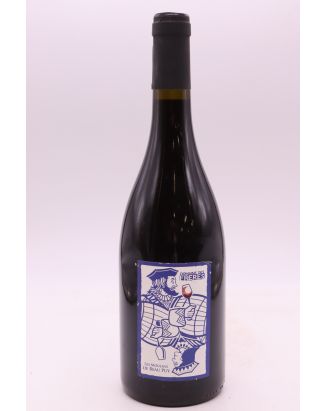
Domaine des Frères Chinon Les Moulins de Beau Puy 2020
2 in stock
120864
Red
75cl
Add to cart
Loire | Chinon

Domaine des Frères Chinon Les Moulins de Beau Puy 2020

€18.00 inc-VAT per bottle
€15.00 ex-VAT
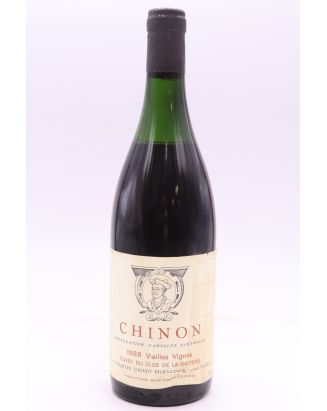
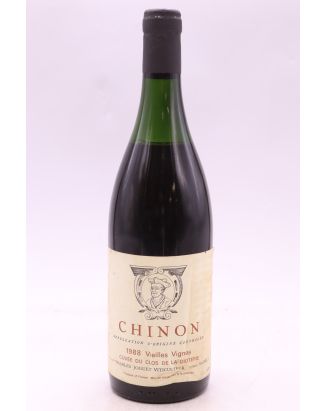
Joguet Chinon Clos de la Dioterie Vieilles Vignes 1988 -15% DISCOUNT !
-15%
Last one !
1 in stock
121866
Red
75cl
Slightly Damaged
-4cm
Add to cart
Loire | Chinon

Joguet Chinon Clos de la Dioterie Vieilles Vignes 1988 -15% DISCOUNT !

€326.40 inc-VAT per bottle €384.00 inc-VAT -15%
€272.00 ex-VAT
Alcofribas Chinon Coteau de Reuffé 2022 blanc
1 in stock
123298
White
75cl
Add to cart
Loire | Chinon

Alcofribas Chinon Coteau de Reuffé 2022 White

€15.60 inc-VAT per bottle
€13.00 ex-VAT
Charles Joguet Chinon Clos de la Dioterie 1988 - PROMO -15% !
-15%
1 in stock
127850
Red
75cl
Slightly Damaged
-4cm
Add to cart
Loire | Chinon

Charles Joguet Chinon Clos de la Dioterie 1988 - PROMO -15% !

€326.40 inc-VAT per bottle €384.00 inc-VAT -15%
€272.00 ex-VAT

Where is the Chinon appellation located?

The appellation lies in Indre-et-Loire, at the western end of Touraine, along the Vienne Valley and on the left banks of the Indre and Loire rivers. Its designated area covers 26 communes, including Chinon, Cravant-les-Coteaux, Panzoult, Ligré, Beaumont-en-Véron, Savigny-en-Véron, Sazilly, Anché, Huismes, Rivière, La Roche-Clermault, Candes-Saint-Martin and L’Île-Bouchard. The vineyards occupy hillsides and plateau edges on both sides of the Vienne, as well as the more open landscape of Véron, a tongue of land at the confluence of the two rivers.

This wine region covers approximately 2,350 hectares farmed by just over 200 winegrowers, with average production of around 125,000 hectoliters. Neighboring appellations include Bourgueil and Saint-Nicolas-de-Bourgueil on the other side of the Loire, Saumur-Champigny to the west in Maine-et-Loire, and Touraine and Touraine Azay-le-Rideau to the east. The entire area lies within the Loire-Anjou-Touraine Regional Natural Park and the UNESCO World Heritage-listed Loire Valley.

History of the Chinon appellation

The history of these vineyards dates back to the Gallo-Roman era, when Chinon was already a major road and river crossroads at the mouth of the Vienne. In the 11th century, an account of Saint Mexme mentions a Chinon landowner transporting his wine downriver to Nantes to obtain a better price. Under the Plantagenets, the town became the center of a vast feudal domain, and its wines were served at court. It was during this period that Cabernet Franc, already established in southwestern France, traveled up the Loire from Nantes, earning its local nickname, Breton.

François Rabelais, born around 1490 at La Devinière in Seuilly, celebrated these wines in Gargantua in 1534, giving them lasting literary fame. In the 18th century, Dutch wine traders operating through the port of Nantes made them highly sought-after wines for export by sea. After the phylloxera crisis, winegrowers replanted the historic vineyard areas with their favored grape variety. A growers’ association to defend the appellation was founded on May 24, 1937, and appellation d’origine contrôlée status was granted on July 31 of the same year. From 550 hectares in 1937, the vineyard area has more than quadrupled, supported by the Confrérie des Entonneurs Rabelaisiens, founded in 1961, and a generation of growers focused on individual vineyard plots who emerged in the 1980s.

What are the terroirs of the Chinon appellation?

The terroirs fall into three broad groups, explaining the diversity of styles. The free-draining sandy-gravel terraces of the Vienne floodplain yield fruity, supple wines that are ready to drink young. The clay-limestone hillsides over tuffeau—the soft Turonian chalk into which countless cellars have been dug—produce the most structured reds and those best suited to aging. The clay-silica plateaus of Senonian origin, rich in flinty clay, contribute body and depth.

The climate, ranging from oceanic to semi-continental, is warmer and drier than in the rest of Touraine—so much so that fig, magnolia and palm trees thrive in local gardens. Air currents generated by the Loire and Vienne naturally drain away cold air and encourage an early start to the growing season, a valuable advantage for Cabernet Franc, which is close to its northern growing limit here. Certain named vineyard sites have long enjoyed renown, notably Clos de l’Écho beside the fortress, Les Picasses, Le Chêne Vert, La Dioterie, Les Grézeaux and Coteau de Noiré.

Which grape varieties are permitted in the Chinon appellation?

The permitted grape varieties are Cabernet Franc as the principal variety for reds and rosés, supplemented by Cabernet Sauvignon, which may account for no more than 10% of plantings, and Chenin, the only variety allowed for whites. In practice, the vast majority of red cuvées are pure Cabernet Franc, a grape to which Chinon growers feel a near-defining attachment.

On sandy and gravelly soils, Breton—the local name for Cabernet Franc—offers crisp raspberry and red currant fruit with hints of violet and sweet bell pepper. On tuffeau, it develops greater tannic density and depth, with notes of black currant, pencil lead and tobacco. Chenin, still a minority grape but increasingly planted, produces lively dry whites with white-flower and citrus notes that develop toward quince, honey and toasted almond over time. The minimum planting density is 4,500 vines per hectare, the permitted yield is 55 hectoliters per hectare, and Chenin may only be short-pruned.

What are the different styles of Chinon wine?

Three wine colors are produced, with reds clearly dominant at around 85–90% of volume, followed by rosés at close to 8% and a smaller quantity of whites. Reds from gravel soils, made with short macerations and aged in tanks, have a ruby color, a nose of small red berries and a light palate; serve them cool and drink them within three years. Hillside reds, made at lower yields and often aged for 12 to 18 months in large oak casks, demi-muids or barrels, show a deep garnet color, integrated tannins and the potential to age for decades. The dry, direct rosés emphasize fresh red fruit and a peppery hint, while the Chenin whites combine tension with texture.

The appellation rules require reds to be aged until at least December 14 of the harvest year, with sales beginning the following January 1; the finest cuvées are held back much longer. For food pairings, fruit-forward wines go well with Touraine charcuterie, rillons, rillettes, andouillette or a board of Sainte-Maure-de-Touraine cheese. Age-worthy cuvées pair with roast Géline chicken, leg of lamb, hare stew, pigeon or beef with morels. The whites are well suited to zander with beurre blanc, river fish and fresh goat cheeses.

What are the best Chinon vintages?

The benchmark vintages of the past 30 years are those in which Cabernet Franc reached full ripeness without excessive heat. Key years include 1996, 2002, 2005, 2009, 2010, 2015, 2018, 2019, 2020, 2022 and 2023: 2005 and 2010 for their classic character and length, 2015 and 2019 for their density, and 2022 and 2023 for their balance of full ripeness and renewed freshness.

More challenging years call for careful estate selection: 2003 suffered from the heat wave; 2007, 2011 and 2013 yielded more dilute wines; 2017 and 2021 were hit by spring frost but produced small quantities of vibrant, easy-drinking wines; and 2024 faced exceptional downy mildew pressure. In practical terms, cuvées from sandy and gravelly soils in the 2022 and 2023 vintages are ready to drink now, while old-vine hillside wines from 2018, 2019 and 2020 will clearly benefit from a few more years in the cellar.

What are the best estates in the Chinon appellation?

Historically, the most emblematic estate is Domaine Charles Joguet, founded in 1957 in Sazilly by a winegrower who was also a sculptor and painter. He was among the first in the Loire to vinify plots separately rather than blend them. Its 40 hectares produce cuvées that have become classics: Clos de la Dioterie, from very old vines; Clos du Chêne Vert, planted on tuffeau; and Les Varennes du Grand Clos, whose finest vintages are prized by collectors. Domaine Bernard Baudry, established in 1975 in Cravant-les-Coteaux with two hectares and now extending to around 30 hectares farmed organically, is an undisputed benchmark of the appellation. Les Granges for its fruit, Les Grézeaux on gravel, Le Clos Guillot and, above all, La Croix Boissée, made in both red and white, are among Touraine’s most sought-after bottles.

Domaine Philippe Alliet, also based in Cravant, brought Bordeaux-inspired rigor to the Chinon area, with controlled extraction and barrel aging. Its Vieilles Vignes, L’Huisserie and Coteau de Noiré cuvées—the last from a steep hillside replanted on a tuffeau slope—are benchmarks regularly cited among the finest Cabernet Francs. Couly-Dutheil, founded in 1921, embodies the appellation’s heritage through its single-owner vineyards beside the town: Clos de l’Écho, whose vines border the fortress and are said to have belonged to Rabelais’s family, and Clos de l’Olive, supplemented by the Crescendo cuvée in great years. Domaine Olga Raffault, in Savigny-en-Véron, maintains a rare Loire tradition of late releases: its Les Picasses cuvée is aged for an extended period and then kept at the estate. Enjoyed after 15 or 20 years in bottle, it demonstrates the aging potential of the clay-limestone terroir.

How long can you cellar a Chinon wine?

How long a wine can be kept depends directly on its terroir and cuvée style. Tank-aged reds from sandy and gravelly soils are best enjoyed within two to five years for their crisp fruit. Reds from clay-limestone hillsides come into their own after eight to 15 years, while the finest old-vine cuvées grown on tuffeau can easily last 20 to 25 years in warm vintages, developing notes of undergrowth, leather and cocoa. Rosés should be enjoyed within the year; Chenin whites can be kept for three to eight years, with the best lasting ten to 12 years.

A stable cellar temperature of 10–14°C and humidity of around 70%, with bottles stored on their sides away from light and vibration, ensures harmonious development. For serving, lighter cuvées benefit from being cooled to 14–15°C; there is no need for prolonged decanting, as 15 minutes is enough to open up the fruit. Age-worthy wines should be served at around 16°C and can spend an hour in a decanter when young, while bottles over 15 years old should be decanted gently just before the meal to separate the sediment without disturbing their aromas.

WHAT THEY SAY ABOUT US

5 good reasons to buy wines on V&M

...

EXPRESS DELIVERY

In a secure polystyrene packaging

...

INTERNATIONAL SHIPPING

Find out more about VAT-EX sale for outside EU deliveries

...

COLLECTION NEAR PARIS & VAT REFUND FOR TOURISTS

Free collection in our warehouse near central Paris (92)

...