Labet

The wines of Domaine Labet, beautiful wines from the Jura grown organically

Wines from Domaine Labet: buy at the best price

Based in Rotalier, at the southern tip of the Jura vineyard, Domaine Labet has established itself over a few decades as one of the absolute references for Jura wines. Across 13.5 hectares divided into 45 plots spread over four communes and thirteen named sites, the Labet family cultivates a mosaic of terroirs with a precision worthy of Burgundy. Chardonnay, savagnin, poulsard, pinot noir, trousseau and gamay give rise to around thirty cuvées each year, most of them single-vineyard wines, sourced from old vines grown through mass selection and farmed organically. A pioneer of the ouillé style in a region dominated by sous voile ageing, the estate produces wines of crystalline purity, underpinned by the calcareous minerality of the southern Revermont, sought after worldwide for their rarity and ageing potential. 

Read more
See more
Filters

Price

€100.00 - €280.00

Region

Parker WA rating

90 - 95

Burghound rating

No choice available on this group

Revue du Vin de France rating

No choice available on this group

Bettane & Desseauve rating

15 - 16

Prices drop

No choice available on this group

Download this list
There are 7 products.
Download this list
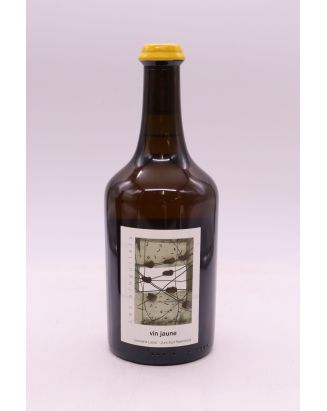
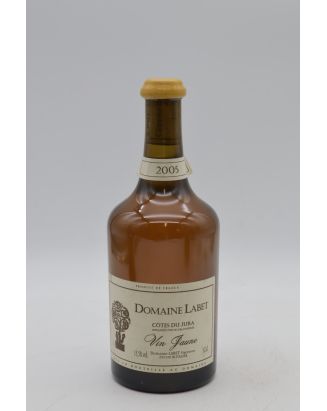
Julien Labet Côtes du Jura Vin Jaune 2014 62cl
Bio
1 in stock
121341
White
62cl
Add to cart
Jura | Côtes du Jura

Labet Côtes du Jura Vin Jaune 2014 62cl

€264.00 inc-VAT per bottle
€220.00 ex-VAT
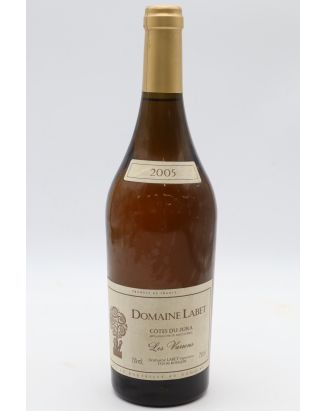
Julien Labet Côtes du Jura Les Varrons 2005
Bio
1 in stock
129592
White
75cl
Add to cart
Jura | Côtes du Jura

Labet Côtes du Jura Les Varrons 2005

€252.00 inc-VAT per bottle
€210.00 ex-VAT
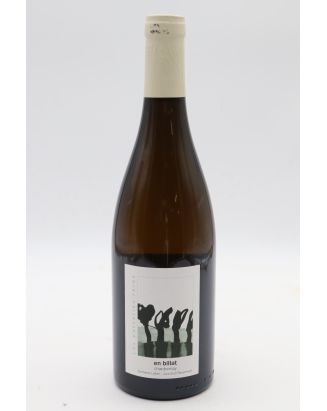
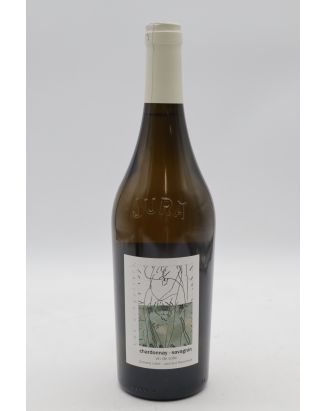
Julien Labet Côtes du Jura Chardonnay En Billat 2020/2023
Bio
51 in stock
129688
White
75cl
Add to cart
Jura | Côtes du Jura

Labet Côtes du Jura Chardonnay En Billat 2020/2023

€138.00 inc-VAT per bottle
€115.00 ex-VAT
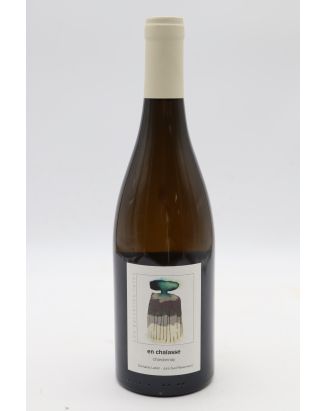
Julien Labet Côtes du Jura Chardonnay En Chalasse 2023
Bio
8 in stock
129691
White
75cl
Add to cart
Jura | Côtes du Jura

Labet Côtes du Jura Chardonnay En Chalasse 2023

€114.00 inc-VAT per bottle
€95.00 ex-VAT
Julien Labet Côtes du Jura Chardonnay En Chalasse N°3 2020
Bio
45 in stock
129689
White
75cl
Add to cart
Jura | Côtes du Jura

Labet Côtes du Jura Chardonnay En Chalasse N°3 2020

€138.00 inc-VAT per bottle
€115.00 ex-VAT
Julien Labet Côtes du Jura Chardonnay Lias 2022
Bio
7 in stock
129690
White
75cl
Add to cart
Jura | Côtes du Jura

Labet Côtes du Jura Chardonnay Lias 2022

€114.00 inc-VAT per bottle
€95.00 ex-VAT
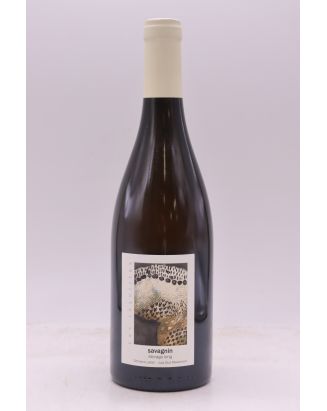
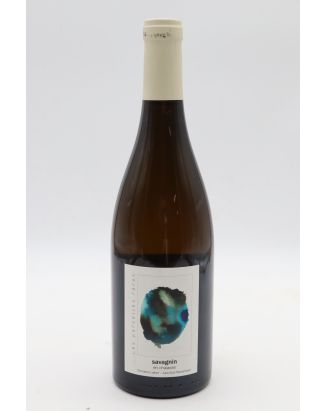
Julien Labet Côtes du Jura Savagnin En Chalasse 2023
Bio
25 in stock
129687
White
75cl
Add to cart
Jura | Côtes du Jura

Labet Côtes du Jura Savagnin En Chalasse 2023

€126.00 inc-VAT per bottle
€105.00 ex-VAT

History of Domaine Labet

The adventure began in 1974 when Alain and Josie Labet took over 9 hectares of vines in Rotalier, a small village situated fifteen kilometres south of Lons-le-Saunier. At a time when the entire Jura was vinifying under a yeast veil, Alain Labet made an almost heretical choice: he observed that oxidative ageing masked the nuances of terroir revealed by fermentation, and decided to top up his barrels — that is, to fill them regularly to prevent the yeast veil from forming. Together with a handful of rare winemakers of the same generation, including Pierre Overnoy, he thus opened the door to a whole generation of topped-up Jura wines, now celebrated far beyond the region's borders. In the same movement, he created the cuvée name Fleur de Marne, intended to identify his old-vine chardonnays planted on the Lias marls.

Julien Labet, the eldest son, trained alongside his father before going to perfect his craft at Ramonet in Burgundy and at Hamilton Russell in South Africa. In 2003, he founded his own estate on three hectares, managed from the outset under organic farming, while continuing the family's plot-by-plot approach. In 2013, the two estates merged into a single entity run by the siblings: Julien overseeing winemaking, Romain managing the vineyard, and Charline working alongside her brother in the cellar, particularly on the veil wines. Ecocert organic certification validated work that had begun long before, as Alain Labet had abandoned synthetic fertilisers and insecticides decades earlier. The estate now ranks among the most sought-after names in the Jura, acclaimed by critics as the archetype of the artisan winemaker.

Terroirs and Vines of Domaine Labet

The Sud-Revermont, where the entire vineyard is situated, presents a geology quite distinct from that of Arbois. Backed against the limestone cliff that closes the vineyard to the east, the hillsides combine blue and black Lias marls, red or ochre decalcification clays, scree, siliceous chailles and Bajocian and Bathonian limestone slabs. This diversity, combined with altitudes ranging from 230 to 350 metres and varied exposures, explains the personality of each plot. The wines gain a frank acidity and a mineral bite that constitute their signature. Alain Labet has moreover mapped these micro-terroirs in the manner of Burgundian climats, with each single-vineyard cuvée bearing the name of the lieu-dit from which it originates.

The grape variety breakdown comprises approximately 66% chardonnay, 17% savagnin (jaune, vert and gros vert), 8% poulsard, 6% pinot noir, with the remainder shared between trousseau and gamay. The plots, minuscule in size, range from 5 to 80 ares and are predominantly planted with old vines of 50 to 100 years, sourced from massal selections whose complex genetic diversity naturally adds complexity to the wines. The soils are dug over in spring, hilled up and then de-hilled, and scratched from May to July to control grass growth. Treatments are limited to sulphur, copper, whey and herbal teas (nettle, horsetail, willow), supplemented by biodynamic preparations. Yields remain moderate, from 15 to 40 hectolitres per hectare on the oldest vines.

Winemaking at Domaine Labet

Winemaking follows a logic of interpretation rather than intervention. All fermentations are spontaneous, conducted by the indigenous yeasts native to each vine, which fully contributes to the aromatic identity of each cuvée. The wines are aged on fine lees in 228-litre Burgundian barrels between 4 and 15 years old, very rarely stirred and almost never racked. No fining, no chaptalization, no acidification: the sole additive is sulphur, used in infinitesimal doses, and most cuvées are bottled without filtration, in spring, between March and June.

Three styles coexist in the cellar. The topped-up whites, the heart of production, have their barrels filled every week to preserve freshness and the legibility of the terroir. The veil wines, by contrast, are aged in old, untopped barrels, allowing the famous yeast veil to form, which brings the aromas of walnut, hazelnut, curry and spices characteristic of Jurassian tradition. Added to these are maceration cuvées made from whole clusters, aged in barrel or amphora, as well as sweet wines made from dried grapes left to desiccate on straw beds in an old hayloft, following the method passed down by the great-grandfather.

The cuvées of Domaine Labet

The blended chardonnays form the entry point of the estate. The cuvée Fleur brings together vines planted between 1950 and 1985 on Lias blue marls (La Bardette, La Pèlerine, Le Clos, Le Monceau, En Billat, Le Crêt), aged separately then blended before bottling: a floral, saline and immediately appealing chardonnay. The cuvée Lias gathers the marly plots in a chalky and vertical register, while Bajocien, from shallower limestone soils, plays on tension and linearity. Les Juvéniles comes from the youngest vines of the estate and offers a generous chardonnay with notes of white fruit and acacia blossom.

Next come the single-vineyard chardonnays. Les Varrons, in both its classic version (vines from the 1940s) and its massal selection (1932 and 1940 vines on red-orange decalcification clay), yields a broad, almost buttery wine of remarkable depth. En Billat, a tiny 14-are plot planted in 1898 and 1940 on cardboard schist, produces an electric and smoky white. La Reine, on red clays and Bathonian silica, captivates with its finesse and notes of candied citrus. En Chalasse, on marl scattered with geodes, combines roundness and salinity. Les Champs Rouges, planted with chardonnay and melon à queue rouge in 1967, offers a broad and sun-drenched wine from a south-west-facing inclined plateau.

The Fleurs de Marne form the historic range, reserved for chardonnays over sixty years old planted on Lias marls, always in the topped-up style. Fleur de Marne La Bardette, on blue clay and marine fossils, stands out for its richness and iodine-tinged length. Le Monceau, a sheltered south-facing hollow, yields a dense and luminous wine. En Chalasse, on deep blue marl, develops a silky texture and a saline finish. La Beaumette, planted in the 1960s on deep blue clay, is the most austere and most structured for ageing.

Savagnin first expresses itself in Fleur de Savagnin, a blend of jaune, vert and gros vert savagnins from plots on Lias marls, topped up, taut, marked by candied lemon and fresh hazelnut. Fleur de Savagnin En Chalasse, a 50-are single-vineyard plot with south-facing exposure, is the most concentrated and most saline version. La Bardette in macerated savagnin, vinified on skins, offers a so-called orange wine, spiced and textured, while the long-aged versions gain in depth and complexity. The macerations complete this family: Les Chaseaux in chardonnay, macerated for sixteen days as whole clusters and aged for twenty-four months, and Macération Sur Charrière, more infused and floral.

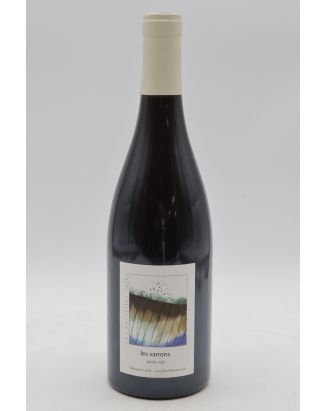
Among the reds, Pinot Noir Les Varrons exists in a clonal selection (1985 vines on chailles and Bajocian limestone) and in a massal selection (1984 vines on decalcification clay), two fine, spiced wines of very Burgundian elegance. Poulsard En Billat, from 1898 vines on cardboard schist, is one of the rarest and most delicate cuvées of the estate. Poulsard Sur Charrière, on deep west-facing marl, plays on freshness and small red fruits, while Poulsard Le Pré du Bief shows a more tender and floral character. Trousseau En Chalasse and Trousseau Le Pré du Bief offer the structure and peppery dark fruit of the variety, while Les Chaseaux, a trousseau à la dame planted in 2016, stands out for its aromas of cherry and pepper. Gamay La Reine, vinified by carbonic maceration then aged nine months in barrel, surprises with its silkiness and depth. Métis, finally, blends equal parts of poulsard, pinot noir and trousseau aged separately, brought together just before bottling.

The veil wines perpetuate the Jurassian tradition. The Chardonnay de voile, aged in old barrels, develops hazelnut and curry notes on a lively framework. La Cuvée de Garde combines chardonnay with 20 to 30% savagnin, aged under the veil for 24 to 48 months, in a broad and savoury register. La Cuvée du Hasard, a selection of the finest yeast veils from old-vine chardonnay, remains 36 to 48 months in barrel and counts among the most sought-after bottles of the estate. Le Savagnin de voile, aged for up to 72 months, precedes the Vin Jaune, produced from savagnin aged for a minimum of 75 months under the veil and bottled in a clavelin.

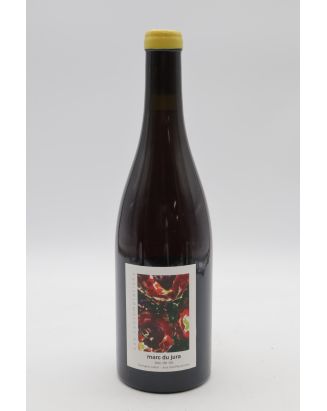
The sweet wines made from dried grapes come in two cuvées. Passerillé d'Ambre, never topped up, adds rare notes of rancio, madeira and spices to the dried fruit aromas (apricot, fig, prune). La P Perdue, topped up from the moment of filling, retains a fresher and more fruity aromatic profile for a sweet wine. The Macvin du Jura marries two thirds of unfermented grape juice with one third of Marc du Jura distilled at the estate in an old pot still, then ages for at least eighteen months in barrel, to be served chilled as an aperitif or alongside a dark chocolate dessert. The Marc du Jura, a marc spirit with a minimum alcohol content of 52%, completes this family. On the sparkling side, the white Crémant du Jura, extra-brut or brut nature, combines 80 to 100% chardonnay with a touch of pinot noir, with a portion aged in old barrels for complexity, while the rosé Crémant du Jura, dominated by pinot noir complemented with poulsard, wins over with its vinosity and crunchy fruit.

WHAT THEY SAY ABOUT US

5 good reasons to buy wines on V&M

...

EXPRESS DELIVERY

In a secure polystyrene packaging

...

INTERNATIONAL SHIPPING

Find out more about VAT-EX sale for outside EU deliveries

...

COLLECTION NEAR PARIS & VAT REFUND FOR TOURISTS

Free collection in our warehouse near central Paris (92)

...