Vouette et Sorbee Fidèle R22
Personalise your experience
Change your country, language and currency here whenever you wish.
|
|
|
Must-See Châteaux |
|
|
|
|
|
|
|
|
Domaine Vouette et Sorbée: highly sought-after Champagnes
Domaine Vouette et Sorbée is located in the Aube department, in Buxières-sur-Arce, in the Côte des Bar. Bertrand and Hélène Gautherot, the founders of Vouette & Sorbée, have produced their Champagne cuvées using certified organic methods since 1998.
Champagne Vouette & Sorbée is the work of Bertrand Gautherot, based in Buxières-sur-Arce, in the heart of the Côte des Bar in the Aube. After an initial professional experience in Paris in the luxury sector, he joined the family vines in the early 1990s. Disappointed by the cuvées produced through the local cooperative, he chose to take full control of his terroir. In 1998, he converted the entire estate to organic farming and then to biodynamics, obtaining Demeter certification. His first champagne was released in 2001. Today, Hélène and their daughter Héloïse actively participate in this family and artisanal venture.
Domaine Vouette & Sorbée draws primarily on two types of Jurassic soil characteristic of the Côte des Bar: Kimmeridgian, a fossil-rich marl containing oysters that the area shares with Chablis, and Portlandian, found notably in the Sorbée plot at the top of the slope. Pinot Noir dominates the vineyard and is grown in the Sorbée, Biaunes and Tirmy lieux-dits. Chardonnay, sourced mainly from Biaunes, gives rise to the emblematic Blanc d’Argile cuvée. The exceptionally rare Textures cuvée is made from Pinot Blanc, vinified in a Georgian amphora (qvevri) and in barrel.
The winemaking philosophy at Vouette & Sorbée is based on minimal human intervention. The grapes are fermented with their own indigenous yeasts, without any addition of sugar (chaptalization), without filtration or acidification. Bertrand Gautherot adds a very small dose of sulphur (SO₂) only at pressing, in order to protect the juice, but the wines remain close to natural elaboration. No dosage liqueur is used at disgorgement, since the very first bottle. This rigour in the cellar logically extends the estate's biodynamic commitment in the vineyard, producing Champagnes that express their terroir without artifice.
Champagne Vouette & Sorbée is among the pioneering estates of biodynamic viticulture in the Aube. Certified Demeter since 1998, Bertrand Gautherot cultivates his five hectares of vines without pesticides, using compost produced on site and his own cows, which contribute to the natural fertilisation of the soils. The harvest is carried out by hand with successive passes through the vines according to the ripeness of each plot, which can extend over several weeks. Fermentation takes place exclusively with indigenous yeasts, with no chaptalization, filtration, or acidification. This rigorous approach makes the estate a model for many winemakers in the region.
The range of Champagne Vouette & Sorbée comprises several exclusive cuvées, all crafted without dosage liqueur (Brut Nature). The Fidèle cuvée is a blanc de noirs made from 100% Pinot Noir, a direct expression of the estate's lieux-dits. Le Blanc d'Argile is a blanc de blancs made from 100% Chardonnay, renowned for its minerality and precision. La Saignée de Sorbée is a rare saignée rosé, made from whole-cluster fermented Pinot Noir, with great aromatic depth. Finally, Textures is an atypical cuvée of Pinot Blanc vinified in amphora. The very limited production of these champagnes makes them highly sought-after references among lovers of terroir-driven wines.
Production at Domaine Vouette & Sorbée remains extremely limited because its vineyard covers only about five hectares. Some cuvées, such as Extrait and Sobre, are produced in quantities of just a few hundred bottles. This rarity, combined with the estate’s international reputation, explains why its Champagnes sell out so quickly. To buy bottles of Vouette & Sorbée online, consider a wine retailer specializing in Champagnes from independent growers, such as Vins & Millésimes.
The story of Vouette & Sorbée is one of returning to its roots, combining a passion for the land with a break from convention. It begins in 1986, when Bertrand Gautherot, then a young man from a family engaged in mixed farming, takes over the family vineyards in Buxières-sur-Arce. After working in the luxury sector in Paris, where he designed products for houses such as Chanel and Dior, Bertrand returned home in 1993, determined to transform his father’s legacy. At the time, the estate was still delivering its grapes to a cooperative, but Bertrand was disappointed by the bland character of the resulting cuvées. Fascinated by soil science and the living world, he dreamed of wines that "taste of the earth".
The turning point came in 1998: under Bertrand’s leadership, the estate switched entirely to organic farming and then to biodynamics, earning Demeter certification. Inspired by figures such as Anselme Selosse, Jérôme Prévost and Pierre Larmandier, this pioneering choice made Vouette & Sorbée a forerunner in Champagne. Soils once treated with chemicals came back to life: vine roots reached deep down, drawing on limestone minerals for greater vitality. In 2001, encouraged by Selosse, Bertrand vinified his first cuvée, Fidèle, from that difficult vintage. The first bottles were released in 2004, marking the estate’s official beginning.
Since then, Bertrand’s partner Hélène Gautherot and their daughter Héloïse have taken an active part in the venture. Héloïse is even exploring new directions, such as still wines from Champagne. Named after the emblematic Vouette and Sorbée plots, the estate has grown modestly: from selling grapes to making wine on an artisanal scale, it has become a model for the Aube. Recognized by experts such as Peter Liem and Richard Juhlin—the latter ranks it among the few four-star estates outside the Marne—Vouette & Sorbée challenges champagne’s festive image, presenting it instead as a wine of pleasure, terroir and patience. Today, these biodynamic champagnes attract enthusiasts worldwide, from Michelin-starred restaurants to private cellars, proving that quality matters more than quantity.
Terroir is the soul of Vouette & Sorbée, a geological gem that sets the Côte des Bar apart from the chalk cellars of the Marne. Located halfway between Épernay and Dijon, just northeast of Chablis, the estate spans 5 hectares of steep hillsides formed 145 to 161 million years ago during the Late Jurassic. Shaped by epeirogenic movements—the uplift and subsidence of the Earth’s crust—these soils alternated between sea and dry land, creating distinctive geological formations: Kimmeridgian marls rich in oyster fossils (Exogyra virgula) across three-quarters of the plots, and hard Portlandian limestone across the remaining quarter.
The Vouette plot, just behind Bertrand’s house, is a south-facing hillside, with Kimmeridgian soil at the bottom and Portlandian soil at the top. Once planted with Pinot Noir, it was partly replanted with Chardonnay after 2014 to better express its proximity to Chablis, with similar soils, climate, fauna and flora. Sorbée, at the top of the hill, is a slightly southwest-facing plateau of pure Portlandian soil, with Pinot Noir vines aged 30 to 45 years from Burgundian selections made in the 1950s. Biaunes (or Briaunes), the largest plot at 2 hectares, faces west and stays cool despite the afternoon sun. It combines Kimmeridgian and Portlandian soils; its young vines, mainly Pinot Noir with a little Chardonnay, ripen late thanks to exceptional moisture retention.
Other plots complete the picture: Tirmy, to the west, with Pinot Noir vines over 30 years old on land that was wooded until the 1960s; Chatel, in Ville-sur-Arce, rocky and dry, with sun-drenched Pinot Noir; and the warmer Fonnet, which supplies the Pinot Blanc for Textures. The vines average 35 years of age, and the planting density encourages deep root growth. Chablis, 60 km to the southeast, helps explain the move toward more Chardonnay: these clay-limestone soils, with their large internal surface area, store distinctive trace elements, lending the wines salinity and striking minerality. In keeping with biodynamic principles, the estate incorporates cows, chickens and fruit trees to maximize biodiversity, enriching the soil with calcium carbonate through slow runoff.
Winemaking at Vouette & Sorbée is a minimalist art, guided by gravity and respect for the fruit to reveal the terroir with complete clarity. It begins with hand-picking spread over three weeks to match the ripeness of each plot, a rare luxury in Champagne. Carefully sorted clusters are pressed in a traditional vertical wooden Coquard press without pumping: the juice flows naturally, preserving purity and balance. After static settling in tanks, it moves by gravity into 400-liter barrels (Burgundian pièces), Georgian amphorae or neutral barrels up to eight years old.
Alcoholic and malolactic fermentations begin spontaneously, thanks to native yeasts on the bloom of the grapes, without chaptalization (apart from very rare exceptions, such as 2001). A touch of SO2 is added to the harvested grapes, then nothing: no filtration, fining, acidification, decolorization or cold stabilization. Aging in wood lasts for months, allowing subtle oxygen exposure and contact with fine lees to develop a complex texture. Secondary fermentation uses an organic tirage liqueur or natural sugars (as with Sobre), with vintage-specific yeasts. The bottles rest on racks for 18 to 24 months before being manually disgorged à la volée, without a gyropalette or freezing, then receive no dosage for a pure Brut Nature.
This approach, shaped by advice from Italian and Croatian friends on maceration and by a solera system supplying 5% reserve wines, produces champagnes vinified like fine still wines, with delicate bubbles as a bonus. Patience and attentiveness guide every step: "Listening, doubt and life as daily companions," as Fabrice Gautherot puts it. The result? Wines of rare vitality, in which natural winemaking amplifies the terroir without masking it.
Vouette & Sorbée’s cuvées faithfully reflect their individual plots, offering pure expressions in which Pinot Noir, Chardonnay and Pinot Blanc engage with Jurassic soils. Produced in small quantities, they are Brut Nature wines without a stated vintage, but with disgorgement dates and a base vintage for traceability.
Fidèle Extra Brut
At the heart of the estate’s range, this 100% Pinot Noir blanc de noirs comes from the Sorbée, Tirmy, Biaunes, Chatel and Fonnet plots (Kimmeridgian and Portlandian soils, 40-year-old vines, a northeastern exposure at 250 m). Made with 5% solera wine, it offers intense, vinous flavors of dried cherry and wild herbs, with clear limestone notes from pure Kimmeridgian soil. Powerful and muscular, it recalls a fine sparkling Burgundian Pinot, with lively acidity and a saline finish.
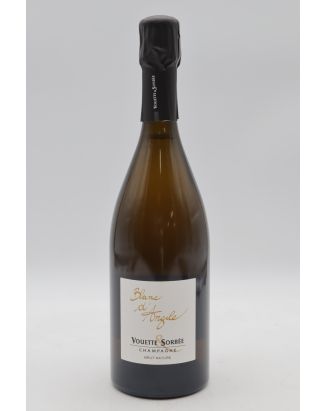
Blanc d’Argile Extra Brut
An ode to Chardonnay, this blanc de blancs was first made in 2004 from the cool Biaunes plot (2 ha of Kimmeridgian clay-limestone KM3, 25-year-old vines, a cool western exposure). Aromas of green pear, citrus and white flowers; an intense, mineral and precise palate, like a fine Chablis. Silky texture.
Saignée de Sorbée Extra Brut
An iconic infusion-style rosé since 2003, made from 100% Pinot Noir grown on pure Portlandian soil from 30-year-old vines. A long carbonic maceration and early bleeding give it a deep color; it is vinified in oak barrels with native yeasts. A floral hibiscus-tea character meets strawberry, white pepper and complex red fruit, with framing acidity and ferrous notes from the finely layered clay soil. Powerful and full-bodied, it rivals red Burgundies. Production is limited, with two picking passes, and it is not made every vintage.
Textures Extra Brut
An experimental cuvée made since 2013 from 100% Pinot Blanc grown in the warm Kimmeridgian soils of Fonnet. Ten months of skin contact in a buried Georgian amphora and a barrel, with skins, seeds and pulp, bring out the character of this naturally understated grape. Aromas of orange peel and green pear; a velvety, mineral, structured mouthfeel with integrated bubbles. Inspired by a brotherly legacy and advice from Italian and Croatian friends, it is a unique orange champagne. Produced in small quantities.
Extrait Extra Brut
Exceptionally rare (200 bottles), made from Pinot Noir, sometimes with a touch of Chardonnay, and aged for an extended period on the lees for astonishing complexity. Initially reserved for the family, it has been available since 2005. Depth and terroir in a bottle.
Sobre
Experimental (200 bottles), 100% Chardonnay with no tirage liqueur; secondary fermentation relies on natural sugars. Vibrant, textured and fresh, like the still-memorable 2008. For connoisseurs.
All aged in wood, these cuvées embody the estate’s philosophy: fidelity to terroir and patience.
COLLECTION NEAR PARIS & VAT REFUND FOR TOURISTS
Free collection in our warehouse near central Paris (92)