De Sousa

The Champagne De Sousa: A Champagne house in Biodynamics

The Champagne from Maison De Sousa: purchase at the best price

The story of Maison DE SOUSA, in Avize in the Côte des Blancs, begins in 1948 with the marriage of Zoémie Bonville and Antoine De Sousa. Zoémie's father, Alfred Bonville, contributed vineyard plots, founding the De Sousa & Fils estate on 2 ha. The son of a Portuguese "Poilu" from Verdun, Antoine joined Zoémie's ancestral know-how on chalky soils. Their son Erick took over in 1986, a biodynamic pioneer from 1999 (organic certification 2010, Demeter 2013), expanding to 14 ha. The 3rd generation — Charlotte (commerce), Julie (vines/horse), Valentin (winery) — perpetuates vibrant and mineral champagnes from Avize. 

Read more
See more
Filters

Price

€40.00 - €80.00

Vintage

Volume

Parker WA rating

89 - 94

Burghound rating

89 - 89

Revue du Vin de France rating

No choice available on this group

Bettane & Desseauve rating

16 - 19

Prices drop

Download this list
There are 4 products.
Download this list
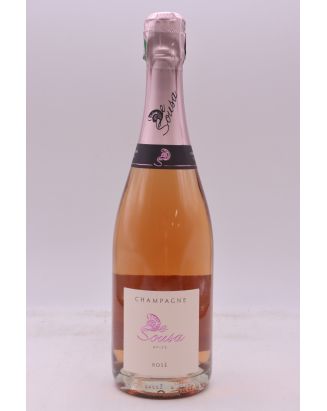
De Sousa Brut Rosé
-5% by 3
DISCOUNT
Bio
Biodynamie
5 in stock
104967
Rosé
75cl
Add to cart
Champagne | Champagne

De Sousa Brut Rosé

€45.60 inc-VAT per bottle
€38.00 ex-VAT
De Sousa Brut Rosé
7 in stock
113830
Rosé
75cl
Disgorged july 2024
90/100
Add to cart
Champagne | Champagne

De Sousa Brut Rosé

€45.60 inc-VAT per bottle
€38.00 ex-VAT
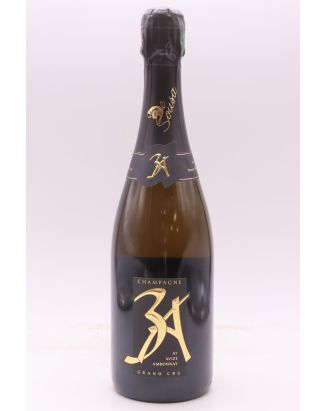
De Sousa Cuvée 3A
12 in stock
113833
White
75cl
Disgorged novembre 2023
17.5/20
Add to cart
Champagne | Champagne Grand cru

De Sousa Cuvée 3A

€60.00 inc-VAT per bottle
€50.00 ex-VAT
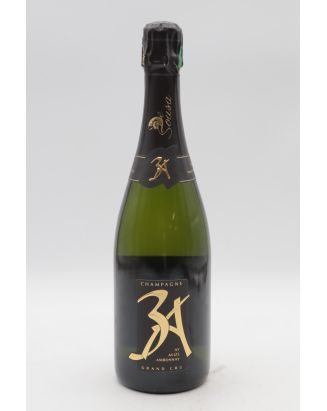
De Sousa Cuvée 3A
2 in stock
119625
White
75cl
Add to cart
Champagne | Champagne Grand cru

De Sousa Cuvée 3A

€60.00 inc-VAT per bottle
€50.00 ex-VAT

History of Champagne De Sousa

The history of Champagne De Sousa is a family novel woven from intertwined destinies and resilience, rooted in the upheavals of the 20th century. It all begins with Manuel De Sousa, a Portuguese "Poilu" from the province of Braga, near Porto. Sent to France with the Portuguese Expeditionary Corps during the First World War, he fought alongside the Allies, notably at Verdun. When peace returned in 1918, economic hardship in Portugal led him to settle permanently in Avize, in Champagne, with his wife and newborn son, Antoine. Manuel, a hard worker, hired himself out as an agricultural labourer, transporting iron-rich yellow earth to enrich the vineyards. Tragically, a brain tumour took him prematurely at the age of 29, leaving behind a widow and four children.

Antoine, the eldest, grew up in this harsh context and found his path by marrying Zoémie Bonville in 1948. From a lineage of winegrowers established in Avize for generations — her father Alfred Bonville had acquired the first plots after the Great War — Zoémie brought viticultural land as her dowry. Together, they founded the Domaine De Sousa & Fils, growing from 2 to 5 hectares during the 1950s. Their production, initially sold to négociants, enjoyed early success thanks to clever advertising in magazines such as Le Chasseur Français. Antoine, trained in the cellars from the age of 14, and Zoémie, heir to ancestral know-how, laid the foundations of a "success story" that defied prejudice — a Portuguese name in the elitist world of Champagne was not without its obstacles.

It was in 1986 that Erick De Sousa, son of Antoine and Zoémie, took over the reins. Trained at a viticultural college, he expanded the vineyard and, from 1999, initiated a conversion to biodynamics — well before it became a trend. A pioneer in a sceptical region, Erick initially refused certifications, seeing organic farming not as a religion but as a tool to elevate grape quality. Organic certification arrived in 2010, followed by Demeter in 2013. Under his leadership, the estate grew to nearly 14 hectares, with an average vine age reaching 45 years. Erick, described as one of the most brilliant winemakers on the Côte des Blancs by experts such as Bettane & Desseauve and Andreas Larsson (best sommelier in the world 2007), established a powerful and precise style, marked by barrel vinification for the oldest plots.

Tragedy struck in 2023 with the premature passing of Erick at the age of 59, following an illness. But the legacy lives on thanks to the third generation: Charlotte, Julie and Valentin De Sousa, who have been at the helm since 2020. Charlotte manages sales and marketing with an MBA in wines from the OIV, Julie looks after the vines and horse ploughing — a passion she has nurtured since childhood — while Valentin excels as cellar master. Supported by their mother Michelle, they perpetuate the family spirit: "nature first always", as Julie puts it. This passionate transition ensures the continuity of an estate that, from modest beginnings of 2 hectares, has become a world reference, exported as far as Japan, where the Umami cuvée has won over chefs such as Pierre Hermé. 

Terroirs and Vines of Champagne De Sousa

At the heart of the Côte des Blancs, the Avize terroir is the soul of Champagne De Sousa. This Grand Cru, nestled between Cramant to the north and Oger to the south, stretches across a narrow ribbon of less than 2 km, with an east-south-east exposure ideal for optimal sunshine. The soils, 100% chalky — a "belemnite chalk" scattered with cuttlefish fossils, the purest in Champagne — offer perfect drainage and exceptional permeability. This geology imparts a deep minerality and distinctive elegance to the wines, while the gentle slope (from 220 m to 110 m in altitude) protects the vines from excess moisture, despite the prevailing cold winds.

The estate spans 14 hectares divided into 92 plots, of which 42 are principal plots, the oldest planted before 1890. The grape variety breakdown is balanced: 60% Chardonnay for floral finesse, 30% Pinot Noir for structure and roundness, and 10% Pinot Meunier for vinosity. The average vine age of 45 years is a major asset: 70% are over 45 years old, some dating back to the 1930s–1950s, with taproot systems descending up to 25–30 metres. These deep root systems, encouraged by biodynamics, extract mineral salts and trace elements from the chalk, amplifying the terroir's imprint beyond the grape variety. The planting density of 8,000 vines per hectare, and training by Chablis or Cordon de Royat pruning, ensures low but concentrated yields.

Since 1999, biodynamic practices — preparations 500 and the Maria Thun calendar — have been regenerating the soil, boosting microbial diversity and mycorrhizae, those symbiotic fungi that dissolve rock to nourish the roots. Julie De Sousa ploughs by horse on certain plots, minimising compaction and encouraging biodiversity: "With more life in the soil, the vines are healthier and the grapes of higher quality." Late manual harvests, timed for optimal physiological ripeness, capture this vibrant energy. Complementary plots of Pinot Noir in Aÿ and Ambonnay (Montagne de Reims), and Chardonnay in Grauves (1er Cru) and Mardeuil (Vallée de la Marne), enrich the terroir palette. These old vines guarantee cuvées of rare purity, where the Avize terroir prevails with its saline freshness and mineral tension.

Winemaking at Champagne De Sousa

Winemaking at Champagne De Sousa is a subtle art, guided by respect for the fruit and the expression of terroir. Under the guidance of Valentin De Sousa, cellar master, each step prioritises authenticity: indigenous yeasts sourced from the oenotechnical station for a natural fermentation of 15 to 20 days at 18°C, preserving primary aromas. Chaptalization, rare and measured, targets 11% vol for a balanced ripeness, without compromising finesse.

Enamelled steel tanks preserve the freshness of the juice, while since 1995, old vines (>60 years) ferment in small oak barrels or ovoid eggs, adding richness and complexity. The cuvée wine dominates at 75%, with systematic malolactic fermentation to soften the acids. No filtration or fining takes place, preserving the lively texture; only a small amount of sulphur is added at bottling. Ancestral techniques such as barrel lees stirring and manual bottle riddling — a remuage on lees to concentrate the flavours — elevate the cuvées. The blends incorporate reserve wines (up to 25% for the Réserve), and ageing in a chalk cellar at 10°C ensures slow maturation, with a stock of 2.5 years' worth of bottles.

This biodynamic approach — without insecticides or chemical botryticides, and using EEC organic fertilisers — produces non-chaptalised Champagnes for the Blancs de Blancs, underscoring the purity of the Chardonnay. The result: velvety, savoury wines with a length in caudalies that evokes umami, depth, minerality and relief. 

The Cuvées of Champagne De Sousa

The range of cuvées from Champagne De Sousa is an ode to the diversity of terroirs, each one revealing a unique facet of the estate. All produced using organic and biodynamic methods, they shine through their freshness, minerality and complexity.

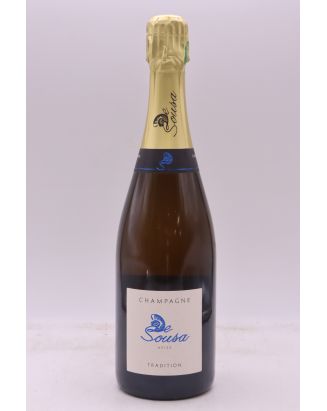
The Brut Tradition is the perfect introduction: a multi-vintage blend of 50% Chardonnay (floral freshness), 40% Pinot Noir (roundness) and 10% Pinot Meunier (vinosity), from vines of 25–30 years in the Vallée de la Marne, Côte des Blancs and Épernay. Clay-chalk terroir, 12.5% vol. Notes of white flowers, citrus, ripe pears and red fruits; lively and balanced palate, ideal as an aperitif. An accessible cuvée that demonstrates the estate's mastery.

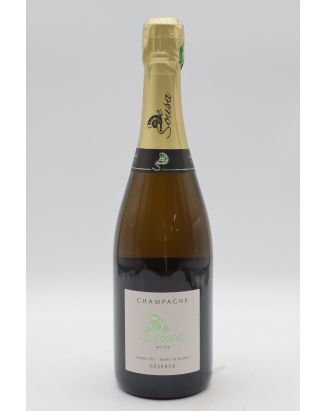
The Extra-Brut Réserve, a Blanc de Blancs 100% Chardonnay from Grand Crus (Avize, Cramant, Le Mesnil-sur-Oger, Oger, Chouilly), from 43-year-old vines on pure chalk. Unchaptalised for total authenticity, a 2–3 year blend with 25% reserve wine, vinified in tanks. At 12.5% vol, it offers a golden colour, a nose of brioche, butter and ripe citrus; fresh, refined and mineral palate with elegant savouriness. Perfect for connoisseurs seeking a precise Grand Cru wine purchase.

The Brut Rosé stands out for its unusual blend: 92% Chardonnay from Grauves (1er Cru, freshness and finesse) and 8% Pinot Noir from Aÿ (Grand Cru, red fruits). Vines of 25–30 years on chalk, 12.5% vol. Orange-pink colour, aromas of white flowers, minerals and small fruits (strawberry, raspberry); generous, fruity and balanced palate. A subtly blended rosé, ideal with fruity desserts or light meals.

The 3A cuvée (Avize-Aÿ-Ambonnay) unites 50% Chardonnay from Avize (pure chalk) and 25% Pinot Noir each from Aÿ and Ambonnay, from vines of 25–30 years planted in 1950 for remarkable concentration. Vinification 50% in ovoid barrels/50% tanks, 12.5% vol. Citrus and red fruit nose; rich, crunchy palate with power and a persistent, refined finish. A prestige cuvée for exceptional enthusiasts, highlighting the diversity of the Grand Crus.

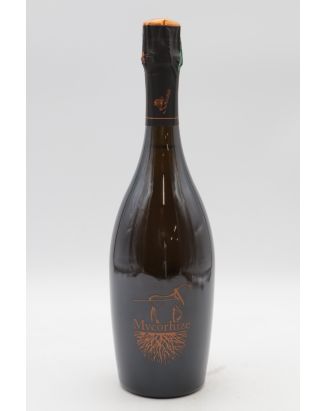
Mycorhize, 100% Chardonnay from Hauts Nemery in Avize (>80 years), ploughed by horse to boost mycorrhizae. Pure chalk, 12.5% vol. Precise aromas of nuts, acacia, linden, honey and subtle raspberry; vibrant energy and Avize minerality on the palate. A unique cuvée celebrating soil life, for a profound biodynamic wine purchase.

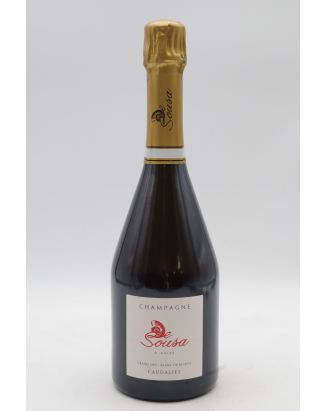
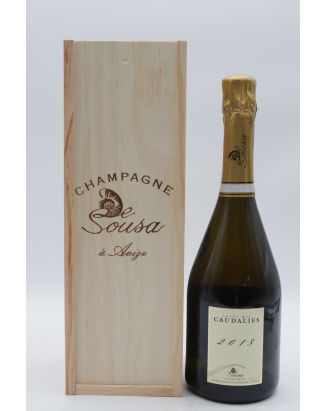
La Cuvée des Caudalies, the iconic Blanc de Blancs 100% Chardonnay from the Côte des Blancs (>60 years, plots such as La Justice and Noyerot), in solera since 1995 (22 vintages up to 2017). Aged 100% in oak barrels, late manual harvests, 12.5% vol. Pale gold colour, integrated woody nose; harmonious, brioche-like and chalky palate, balanced between youth and maturity. Ideal with noble fish dishes.

La Cuvée des Caudalies Rosé blends 90% Chardonnay from Avize and 10% Pinot Noir from Aÿ (>60 years), Chardonnay stirred for 6 months in barrels (2–8 wines), Pinot Noir aged 1 year in barrique. Grand Cru chalk, salmon-hued colour; aromas of fresh small red fruits (raspberry, kirsch cherry), buttery and toasty. Elegant finesse for fine dining.

Finally, Umami (60% Chardonnay, 40% Pinot Noir from the Côte des Blancs and Montagne de Reims) evokes the fifth Japanese flavour: length, velvety texture and savouriness. Vinified in barrels with lees stirring, old vines for concentration, 12.5% vol. Evolved notes of linden, honey, gingerbread, raspberry and cherry; pure minerality and floral pleasure. A tribute to biodynamics, won over by Michelin-starred chefs.

From the freshness of the Brut Tradition to the umami depth of the eponymous cuvée, these biodynamic bubbles illuminate tables and palates with elegance and authenticity. Discover other grower Champagnes such as those from Egly Ouriet, Larmandier Bernier, Agrapart, Laherte, Dehours, Ruppert Leroy, Françoise Bedel, R. Pouillon, Eric Rodez, Chartogne Taillet, Selosse, Jacques Lassaigne, Leclerc Briant...Vins & Millésimes invites you to buy online the finest bottles and magnums of wines, old vintages, and grand crus. All our wines are in stock and available for fast delivery! Feel free to explore the full breadth of our Champagne range including sweet wines, prestige Champagne and vintage Champagnes, and in particular the cuvées from Champagne De Sousa, available to purchase!

WHAT THEY SAY ABOUT US

5 good reasons to buy wines on V&M

...

EXPRESS DELIVERY

In a secure polystyrene packaging

...

INTERNATIONAL SHIPPING

Find out more about VAT-EX sale for outside EU deliveries

...

COLLECTION NEAR PARIS & VAT REFUND FOR TOURISTS

Free collection in our warehouse near central Paris (92)

...