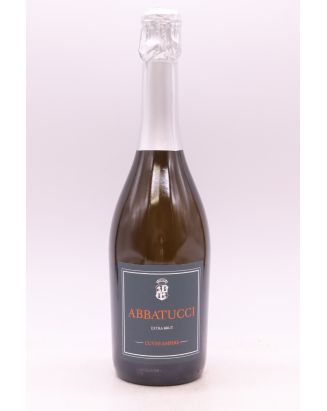
Abbatucci Empire Extra Brut 2022
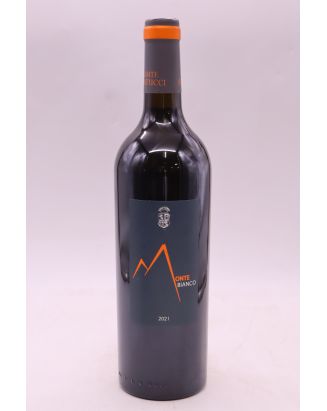
Abbatucci Monte Bianco 2021
Personalise your experience
Change your country, language and currency here whenever you wish.
|
|
|
Must-See Châteaux |
|
|
|
|
|
|
|
|
At the heart of the Taravo valley, in Southern Corsica, Domaine Comte Abbatucci is far more than a vineyard: it is a living museum of the island's viticultural history. Across 21 hectares of granitic arena hillsides farmed biodynamically, Jean-Charles Abbatucci and his daughter Faustine cultivate a unique ampelographic collection of eighteen endemic grape varieties rescued from oblivion by Antoine Abbatucci in the 1960s. Sciaccarellu, vermentinu, niellucciu as well as bianco gentile, carcajolu neru, morescola and aleatico give birth to wines of a deeply moving identity — refined, mineral and soulful.
The Abbatucci family left its mark on French history long before it did on wine: General Jean-Charles Abbatucci was a hero of the Revolution and a comrade-in-arms of Napoleon Bonaparte, while his descendants included diplomats and ministers under the Second Empire. The family’s winemaking story began in the 1920s, when Jacques Abbatucci planted five hectares of sciaccarellu, niellucciu, barbarossa and carcajolu on land that would become the estate. The names of its leading cuvées would later pay tribute to these illustrious ancestors.
The decisive turning point came in the 1960s. Antoine Abbatucci, then president of the Corsican Chamber of Agriculture, saw life draining from the mountain villages and the island’s traditional grape varieties disappearing in favor of mainland varieties. He decided to establish a preservation vineyard for native Corsican grapes, planting eighteen varieties together on a plot of decomposed granite. His son Jean-Charles took over the estate in 1992, sixteen years after his father’s death, aware of the treasure he had inherited. Around 2000, he converted the entire vineyard to biodynamics, refined the massal selections, chose rootstocks suited to the soil and climate, and in 2006 created the first Cuvées Collection from these old varieties. His daughter Faustine now works alongside him.
The vineyard covers 21 hectares around Casalabriva in the Taravo Valley, south of Ajaccio, at an elevation of 100 to 150 meters. The soils consist of decomposed granite—free-draining, nutrient-poor sands formed as granite breaks down—which gives the wines great finesse and a distinctive saline minerality. The Mediterranean climate is moderated by sea breezes and the nearby mountains, creating valuable day-to-night temperature swings that help preserve freshness in the grapes. The surrounding maquis lends the wines aromas of immortelle, myrtle and rockrose.
The collection of grape varieties is the estate’s true signature. Alongside sciaccarellu, niellucciu and vermentinu are exceptionally rare whites such as bianco gentile, biancone, brustianu, carcajolu biancu, genovese, paga debiti, rossola brandinca and riminese, as well as forgotten reds such as aleatico, carcajolu neru, minustello, morescola, morescono and montanaccia. All work is done by hand; the soil is plowed by horse to preserve microbial life, a flock of sheep naturally maintains the spaces between rows, and vineyard work follows the lunar cycles. Jean-Charles Abbatucci even plays Corsican polyphonic songs among the vines, a personal conviction that has become an emblem of the estate.
The grapes are hand-harvested and rigorously sorted, and each variety is vinified separately before blending. Fermentation begins exclusively with native yeasts, with no added yeast, chaptalization or adjustments. Rejecting excessive intervention, particularly heavy extraction, yields fine, easy-drinking, vibrant wines far removed from the cliché of powerful, high-alcohol Mediterranean wines. Sulfur additions are kept to the bare minimum.
Aging has become considerably more refined over the years with the introduction of large vessels: foudres, 500-liter demi-muids, concrete eggs and stainless steel tanks, with the whites spending extended periods on their full lees. The estate also pursues ongoing research, even experimenting with a cultivation method that applies seawater directly to the vines, giving rise to its maritime range. Notably, because the INAO allows no more than 10% old grape varieties in appellation wines, most production is labeled Vin de France—a deliberate choice in service of the island’s viticultural heritage.
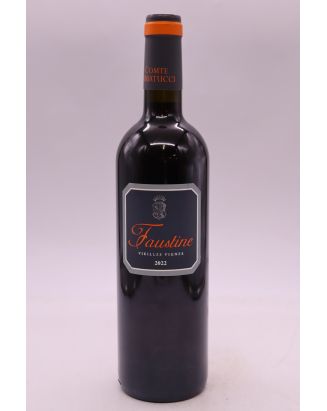
Faustine Blanc: created to mark the birth of Jean-Charles’s daughter, this cuvée of old-vine vermentinu is at the heart of the estate. Salty sea spray, maquis herbs, luscious white fruit and lively clementine acidity make for a distinctly Mediterranean white that offers immediate pleasure yet can also age, depending on the vintage.
Faustine Rosé: made primarily from old-vine sciaccarellu, this food-friendly rosé has a pale color and a taut profile. Red berries, citrus and floral notes of the maquis lead into a dry, saline finish, far removed from sweet southern rosés.
Faustine Rouge: old-vine sciaccarellu vinified with great delicacy. Pale and translucent in color, with a nose of sour cherry, cherry and sweet spice, and a fine, appetizing palate that makes it remarkably easy to drink. An ideal introduction to the estate’s wines.
Monte Bianco: a single-plot red made from sciaccarellu that expresses the variety’s airy character. A little austere in its youth, this understated red later opens up with intensity and length, its remarkably slender profile supported by a structure of great precision.
Alte Rosso: another single-plot red cuvée from the estate, grown on its highest slopes, blending native varieties in a denser, spicier style. Black fruit, garrigue and pepper are underpinned by fine tannins and persistent granitic freshness.
Valle di Nero: sourced from plots in the valley, this cuvée is made as a red and, in some vintages, a rosé. It emphasizes depth of fruit and savory character, with a silky texture and a saline finish bearing the imprint of granite.
Empire: the estate’s sparkling wine, a rare cuvée from the Insolites range made from neglected native grape varieties. Fine bubbles, a dry, vinous profile, and notes of citrus and white flowers make for an unexpected and highly successful expression of Corsica’s viticultural heritage.
Dolce Rosso: a sweet cuvée made entirely from aleatico, a native red grape revived by Jean-Charles Abbatucci. Depending on the vintage, the grapes are either late-harvested or dried off the vine in small crates. Muscat, cocoa and rose come together in a luscious wine with perfectly balanced sweetness, produced in a run of only around 500 bottles.
Général de la Révolution: the first of the Cuvées Collection, honoring the family hero, blends old white grape varieties from the preservation vineyard. Initially restrained, it charms with its elegance, measured richness, spice and saline freshness that carries through a long finish.
Ministre Impérial: a blend of more than seven old red grape varieties, including sciaccarellu, niellucciu, carcajolu neru, montanaccia, morescono, morescola and aleatico. Powdery tannins, pomegranate and cinnamon flavors, black olive and smoky notes, and a long, juicy, caressing finish: an exceptional wine produced in a run of around 2,000 bottles.
Diplomate d’Empire: made in both white and red versions, this Collection cuvée spends around nine months on its full lees in demi-muids, then six to seven months in stainless steel tanks after the best lots are blended. Fleshy and forthright, it pairs beautifully with lobster, white-fleshed fish and risotto.
Valle di Mare: part of the experimental Insolites range, this red cuvée is made entirely from carcajolu neru and aged in foudres and 500-liter demi-muids. Hints of blackberry and blueberry, concentration, depth and distinction: a rarity produced in just a few hundred bottles.
Monte Mare: the second part of the maritime trilogy, sourced from upper plots treated using the seawater method. This red combines saline tension with vibrant fruit in a focused, mineral style that reflects the distinctive nature of this research.
Chiesa di Mare: the final part of the maritime trilogy, made entirely from vermentinu grown in the historic Casalabriva vineyard. Airy and graceful, it offers an almost ethereal floral delicacy, accented by subtle hints of maquis herbs and sweet spice, evoking the open air of the Corsican coast.
COLLECTION NEAR PARIS & VAT REFUND FOR TOURISTS
Free collection in our warehouse near central Paris (92)