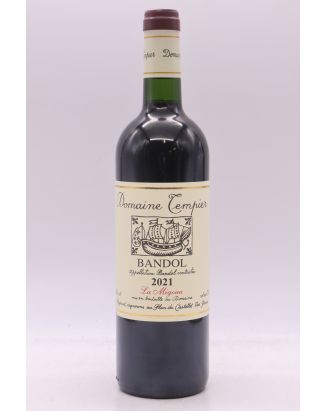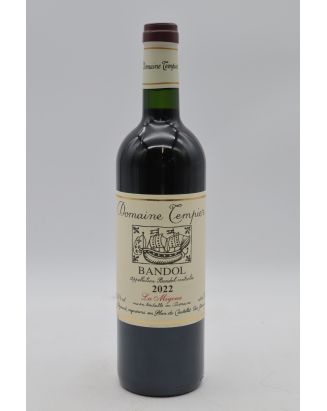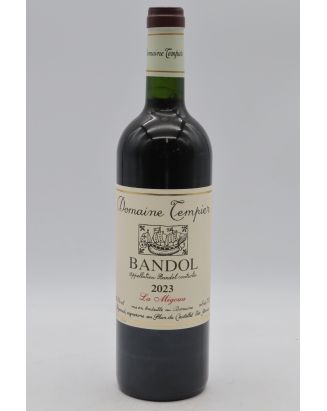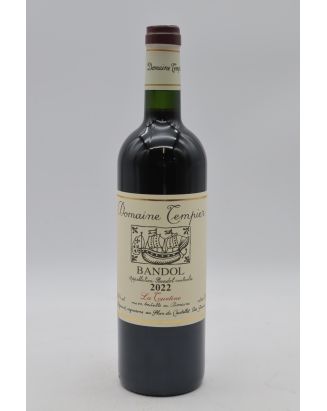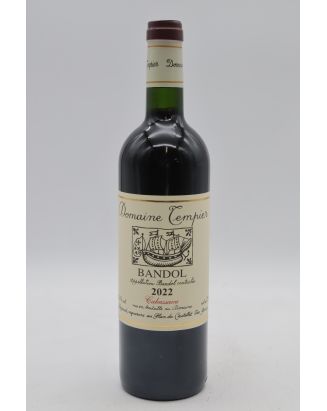
Tempier Bandol La Migoua 2021 Magnum
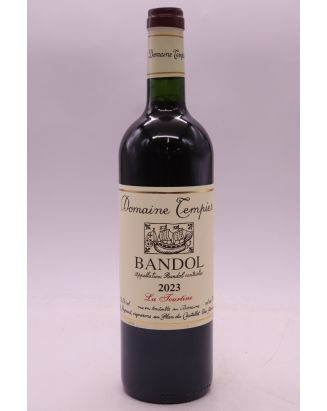
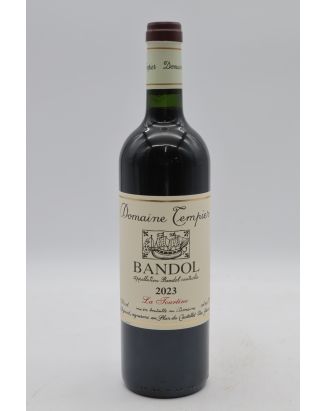
Tempier Bandol La Tourtine 2023
|
|
|
Must-See Châteaux |
|
|
|
|
|
|
|
|
It is the reference estate in Bandol, considered the finest of its appellation. This family property has existed since 1834 and, under the impetus of Lucien Peyraud, who ran the estate between 1941 and 1982, managed to reach the same level as the great Burgundies or Bordeaux. Today, the estate, led by Daniel Rouvier, encompasses nearly 40 hectares of vines spread across beautiful terroirs such as La Migoua, La Tourtine, Cabassaou and La Bastide.
Domaine Tempier is one of the most emblematic wine estates in Provence. Its bastide was built in 1834, and the estate earned its first gold medal as early as 1885. The great modern chapter of its history begins in 1940, when Lucie Tempier married Lucien Peyraud, who wished to become a winemaker. The young couple settled at the estate and undertook the replanting of the vines with noble grape varieties: Mourvèdre, Cinsault, Grenache. Lucien Peyraud would become a central figure of the Bandol appellation, tirelessly campaigning for the recognition of Mourvèdre as a grape variety of excellence.
Domaine Tempier offers a complete range across three colours. In Bandol rouge, there are four cuvées: the Cuvée Classique (renamed "Lulu & Lucien" from the 2020 vintage onwards), La Tourtine, La Migoua, and Cabassaou. The rosé stands out for its complexity and structure, while the white, made primarily from Clairette, represents approximately 3% of the estate's total production. Each cuvée expresses the identity of a specific terroir, in the manner of a parcel-by-parcel approach inspired by the great Burgundian vineyards.
The red Bandol wines of Domaine Tempier are renowned for their exceptional longevity. These are wines imbued with powerful notes of tobacco and leather, which require several years of ageing in order to gain suppleness and reveal the full breadth of their finesse. For the single-parcel cuvées such as La Migoua, La Tourtine, or Cabassaou, patience of ten to fifteen years after the harvest is generally recommended.
The Tempier estate relies on an exceptional Var terroir and a rigorous selection of grape varieties. The vines are composed of very old varieties of Mourvèdre, Carignan, Cinsault and Grenache for the reds and rosés, while the white is made predominantly from Clairette, complemented by Ugni Blanc, Bourboulenc, Rolle and Marsanne. Mourvèdre is the estate's king grape variety, bringing the reds their power, structure and remarkable ageing potential.
Yes, Domaine Tempier has been committed for several years to a form of viticulture that respects living ecosystems. Organic and biodynamic principles are applied in the vineyards: pruning and harvesting are carried out by hand and in accordance with the lunar calendar, homemade herbal teas strengthen the vines and limit the development of pests, and sheep provide natural weeding between the rows. The estate has officially been farmed biodynamically since 2013. This holistic approach aims to preserve biodiversity and to express as fully as possible the authentic character of each plot.
The wines of Domaine Tempier, anchored in the Provençal tradition, pair naturally with Mediterranean cuisine. The Bandol rouge from Tempier pairs well with poultry terrines, grilled meats, a shoulder of lamb, a Provençal daube, or tomme cheeses. The rosé, structured and fruity, will elegantly accompany grilled fish, shellfish, or a bouillabaisse. As for the Bandol blanc from Domaine Tempier, its skillful blend dominated by Clairette yields a refined, structured, and intense wine with aromas of garrigue, ideal with scallops, aged goat's cheeses, or dishes based on white truffle.
The history of Domaine Tempier is intimately linked to that of the Bandol AOC, dating back to the Phocaeans over 2,500 years ago, but it was in the 19th century that the estate emerged as a vital force. Built in 1834 under the reign of Louis XV, it received its first gold medal in 1885, an early sign of its excellence. The phylloxera crisis ravaged the vines, but Léonie Tempier, great-grandmother of the current family, courageously replanted the vineyard on resistant rootstocks and built in 1880 the cellar with large oak casks that still houses the alchemy of wines today.
It was in 1940 that Lucie "Lulu" Tempier, heiress to the estate, and her husband Lucien Peyraud, originally from Saint-Étienne and passionate about viticulture, settled to revive the venture. Inspired by a pre-phylloxera bottle, Lucien led a crusade for Mourvèdre, the king grape of Bandol, and contributed to the creation of the AOC in 1941. As President of the Bandol Wine Syndicate until 1982, he championed this emblematic varietal, imposing a minimum of 50% in the reds. Lulu, for her part, became the charismatic ambassador, hosting figures such as Richard Olney and Alice Waters, whose exchanges inspired the Californian culinary revolution through Chez Panisse.
In the 1960s, their sons Jean-Marie and François took over: François in the vineyard, Jean-Marie in the cellar. They innovated by creating the parcel cuvées, La Migoua, La Tourtine, and Cabassaou, showcasing distinct terroirs, and conquered export markets, particularly in the United States through Kermit Lynch. After their retirement in 2000, Daniel Ravier, an agronomist engineer from Savoie who arrived in 1999, took over daily management. Under his leadership, the estate transitioned to biodynamics in 2013 and expanded in 2016 with the 18 hectares of La Laidière. The Peyraud family, meeting in council five times a year, still oversees this heritage, where Lulu, who passed away in 2020 at 103, left a legacy of legendary hospitality. Today, Tempier remains the benchmark estate of Bandol, a name synonymous with exceptional terroir wines.
The terroirs of Domaine Tempier form a fascinating geological mosaic over 60 hectares, where varied soils, exposures, and altitudes sculpt wines of rare complexity. Dominated by clay-limestone dating from the Triassic (200 Ma) to Santonian marls (85-90 Ma), these parcels benefit from a Mediterranean climate: generous sunshine, protective Mistral winds, and refreshing marine influences.
La Bastide, the historic heart of 7 hectares at Plan du Castellet, houses century-old vines of Mourvèdre, Grenache, Cinsault, and Carignan, surrounded by majestic cypresses. South-facing, it infuses freshness and structure into the classic cuvées. La Tourtine, on 5.5 hectares near the village of Castellet, peaks on a windy hillside facing full south: deep soils of sandstone, marl, and clay with traces of gypsum favor harmonious Mourvèdre maturity (45-50 year old vines). La Migoua, at 300 meters altitude on the Beausset-Vieux massif, extends over 11 hectares of wild garrigue. A geological accident, thrust sheet and Triassic clay-limestone outcrops, creates unique diversity, ideal for intense and fresh wines (40-year-old vines).
Cabassaou, a small 1.5-hectare amphitheater protected from the Mistral, heats under thermal winds on shallow terraces: here, Mourvèdres and Syrah over 60 years old express quintessential density. Finally, La Laidière, acquired in 2016 on 18 hectares facing east with 300 meters of elevation change, brings welcome freshness to whites and rosés, on marly-sandy soils.
The old vines (average ages of 20 to 60 years) are worked manually: pruning and hand harvesting according to lunar phases, mechanical and manual plowing, sheep as natural weeders. Seven permanent staff, led by Jean-Philippe Fourney, head of cultivation, spray homemade homeopathic teas to invigorate soils and limit pests. Sulfur and Bordeaux mixture protect against powdery and downy mildew, while worms, springtails, and ladybugs thrive, evidencing flourishing biodiversity. Adapted rootstocks and mass selections ensure complexity and adaptation to terroir, in a biodynamic philosophy that values natural energy and peasant observation.
In the cellar of Domaine Tempier, directed by Jennifer Chabin, vinification honors fruit and terroir with artisanal precision. Manual harvests, sorted by parcel, arrive at the winery for a second meticulous sorting, followed by gentle destemming and crushing. Fermentations occur with indigenous yeasts: 3-4 weeks for reds in tanks, skin maceration and direct pressing for rosés, cold settling and vinification in stainless steel or concrete for whites.
Aging, the beating heart of Tempier's identity, takes place in an underground cellar with century-old and new large oak casks, where a minimum of 18 months for reds infuses complexity and elegance without dominant wood. Whites rest for 10 months, rosés for 6-8 months. Without fining or filtration, the wines retain their vitality, ready for complete estate bottling. This natural approach, rooted in biodynamics since 2013 and certified organic in 2022, produces living, expressive wines, where each vintage reveals unique emotions, fruity in youth, tertiary (undergrowth, tobacco) for aging.
The cuvées of Domaine Tempier, true parcel expressions, invite you to explore the terroirs of Bandol.
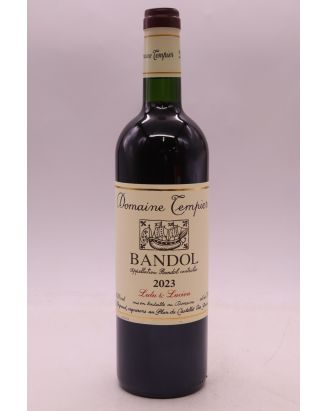
Lulu & Lucien Rouge: Signature cuvée, blending the discreet power of Mourvèdre (~75%) with Grenache, Cinsault, Carignan, and Syrah from 35-40 year old vines. From varied clay-limestone soils (sandy calcareous marls to Triassic), it offers complexity combining fruit and elegance. Vinification: parcel and cellar sorting, destemming, crushing, 3-4 week fermentation with indigenous yeasts. Aging: 18 months in large oak casks. Cellaring potential: 4-15 years, evolving towards tobacco and leather notes.
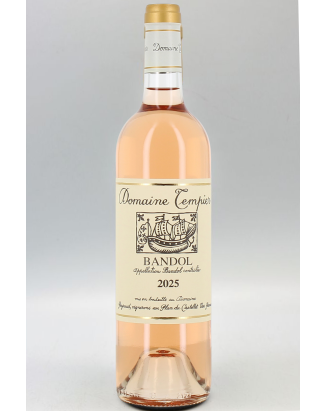
Bandol Rosé: Perfect balance of complexity and freshness, without marked tannins, dominated by 50% Mourvèdre, Grenache, and Cinsault from 20-year-old vines. Diverse terroirs (Santonian limestones to Triassic dolomites) provide authentic aromatic intensity. Vinification: skin maceration, direct pressing, cold settling, fermentation in stainless steel/concrete. Aging: 6-8 months. Cellaring potential: 1-5 years, or longer for candied citrus and rose aromas.
Bandol Blanc: Southern freshness preserved by late parcels (Laidière, Migoua, Petit Moulin): 60% Clairette, 30% Ugni Blanc, plus Rolle, Bourboulenc, and Marsanne from 25-30 year old vines. Vinification: in tank and large oak casks. Aging: 10 months. Cellaring potential: 1-5 years, up to 10 for honeyed marine notes. A structured and floral white wine.
La Tourtine Rouge: Powerful and elegant parcel wine from 5.5 hectares facing full south with wind exposure: ~85% Mourvèdre, Grenache, Cinsault from 45-50 year old vines, sandy clay soils. Vinification: sorting, destemming, 3-4 week fermentation with indigenous yeasts. Aging: 18 months in large oak casks. Cellaring potential: 5-20 years. Dense and refined wine.
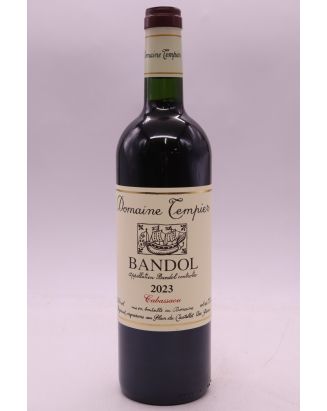
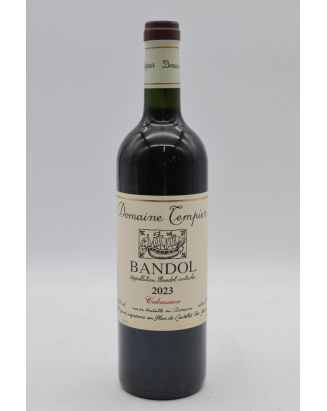
Cabassaou Rouge: Quintessence of Mourvèdre (92-94%), Syrah, and Cinsault from vines minimum 60 years old, in a sheltered 1.5-hectare amphitheater. Warm and airy microclimate yields density and exceptional potential. Vinification: identical to reds, fermentation with indigenous yeasts. Aging: 18 months in large oak casks. Cellaring potential: 10 years or more.
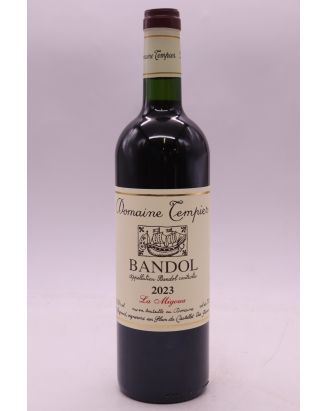
La Migoua Rouge: From 11 alpine and wild hectares: 55% Mourvèdre, 25% Cinsault, 15% Grenache, Syrah from 40-year-old vines, complex Triassic soils. Vinification: sorting, destemming, 3-4 week fermentation. Aging: 18 months in large oak casks. Cellaring potential: 5-20 years. Intense and fresh, combining smoothness and length.
Order your bottles from Domaine Tempier and let the Mistral transport you to an unforgettable tasting experience. Discover other estates in the Bandol appellation such as Pibarnon and Sainte-Anne at Vins & Millésimes, which offers you the opportunity to purchase the finest wines and grand crus online. All our wines are in stock and available for fast delivery! Discover the bottles and Magnums from Domaine Tempier available for purchase!
COLLECTION NEAR PARIS & VAT REFUND FOR TOURISTS
Free collection in our warehouse near central Paris (92)