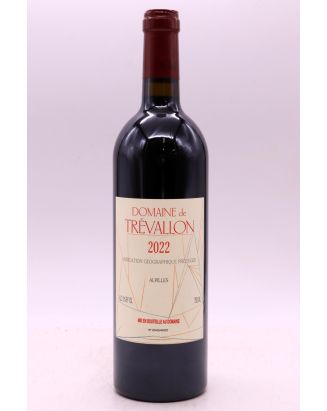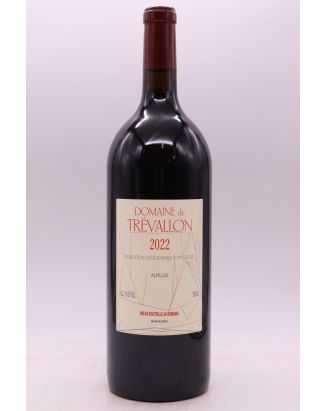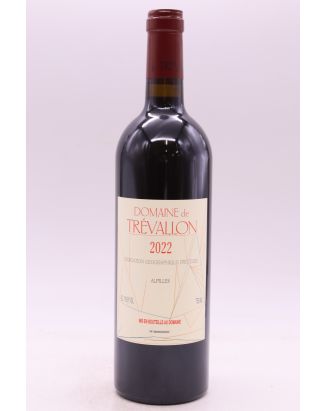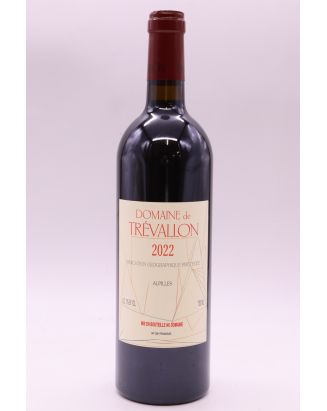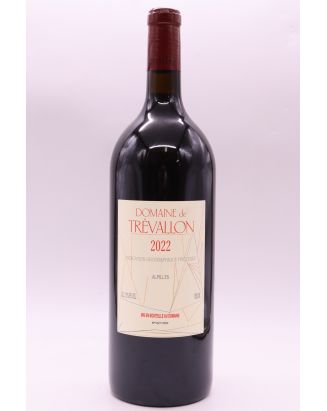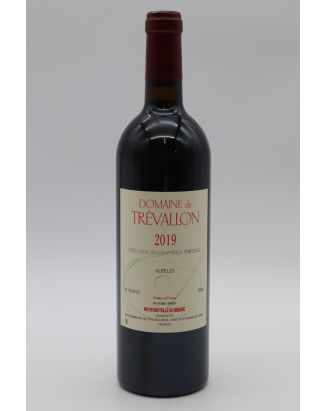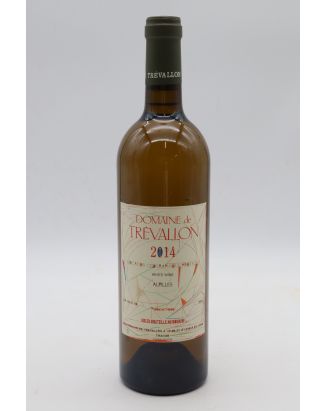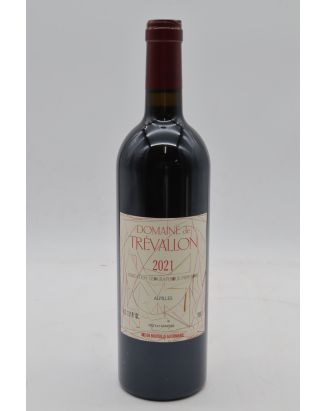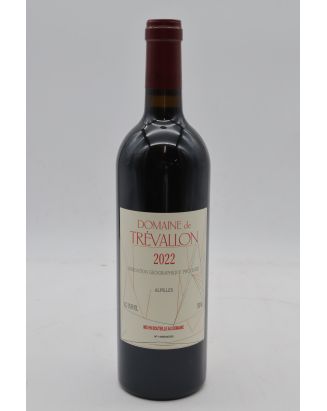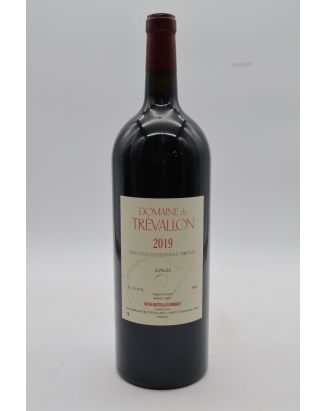
Trévallon 2022 Magnum
Domaine de Trévallon produces its red wines from an exclusive blend of Cabernet Sauvignon and Syrah, planted in equal parts across its 17 hectares of vines. This choice is directly inspired by what was practiced in Provence before phylloxera, and it is precisely this atypical blend, combined with the limestone terroir of the Alpilles, that forges Trévallon's unique and recognizable style. The proportion between the two grape varieties varies slightly from one vintage to the next, in order to seek the most balanced expression according to the climatic conditions of each year.
Created in the early 1990s, the white wine from Domaine de Trévallon showcases the Rhône grape varieties marsanne and roussanne, complemented by chardonnay. From the 2022 vintage onwards, the blend was further enriched with a homeopathic touch of muscat blanc à petits grains, sourced from a small early-ripening plot, which adds further complexity to the wine's aromatic palette. This white wine, renowned for its tension and remarkable aging potential, is produced in very limited quantities.
The history of Domaine de Trévallon dates back to the 1950s, when René and Jacqueline Dürrbach settled in the Alpilles, before their son Éloi truly launched the wine-growing project in 1973. Following Éloi's sudden passing in November 2021, the new generation — his children Ostiane and Antoine — carries on the family legacy, supported by a loyal team that has been present for several decades. The estate thus remains deeply rooted in its family and artistic history.
When the Baux-de-Provence AOC was created, Cabernet Sauvignon — which accounts for half of Trévallon's grape varieties — was only permitted up to 20%. Rather than compromise his convictions and revise his blend, Éloi Dürrbach chose to step outside the appellation in order to preserve the integrity of his wines. Since 2009, the estate has claimed the IGP Alpilles designation, a decision that has in no way diminished the worldwide reputation of its cuvées.
Yes, and from the very beginning. The vines have been cultivated organically since 1973, without herbicides, insecticides or chemical fertilisers — only sheep manure and deep ploughing are used. This approach, adopted long before organic viticulture became a trend, reflects the founding philosophy of Éloi Dürrbach: to let the terroir express itself with as little intervention as possible, both in the vineyard and in the cellar.
The reds from Domaine de Trévallon are among the most age-worthy wines in Provence. These splendid wines for the cellar require a minimum of ten years to fully reveal their complexity, with notes of dark fruit, spices and garrigue that gradually meld on the palate. The deliberately modest yields, below 25 hl/ha, and the longevity of the vines, aged between 20 and 50 years, contribute to the concentration and depth that are the signature of the estate's vintages. For enthusiasts wishing to discover these wines at their peak, a patience of fifteen to twenty years is often rewarded.
The history of Domaine de Trévallon begins in the 1950s, when Éloi Dürrbach's parents, painter and sculptor René and tapestry artist Jacqueline de La Baume, settled in the Alpilles. Close to figures such as Picasso, Léger and Delaunay, they acquired Mas Chabert in 1950, then the adjacent Trévallon estate in the early 1960s, financed in part by the sale of a tapestry inspired by Guernica to Nelson Rockefeller. What was then just a plot of wild garrigue became, under Éloi's impetus in 1973, a bold viticultural project: at 21 years old, abandoning his architecture studies in Paris, he dynamited the limestone hills to plant his first vines, convinced by 19th-century writings of Jules Guyot that Cabernet Sauvignon and Syrah could thrive there.
A passionate self-taught man, Éloi transformed these hostile lands into a harmonious ecosystem, integrating vines, olive trees and garrigue. The first vintages, vinified in the open air in 1976, quickly seduced: Aubert de Villaine of Romanée-Conti, importer Kermit Lynch and Robert Parker acclaimed them, propelling Trévallon onto the international stage. Refusing the constraints of the AOC Baux-de-Provence in 1993, which limited Cabernet to 20%, Éloi opted for Vin de Pays status, then IGP Alpilles in 2009, thus preserving the integrity of his blends. Organic without compromise, natural before its time, the estate became an absolute reference. Upon his sudden passing in November 2021, Éloi left the torch to his wife Floriane and his children: Antoine, trained with Laurent Vaillé and Jean-Louis Chave, manages the vineyard; Ostiane, who returned 15 years ago after oenology studies, excels in observing the vines and evolving cellar practices. With a loyal team, Jean-Luc in cultivation for 30 years, Aimeric in the cellar for 15, the new generation perpetuates this family saga, enriching the heritage with subtle innovations to face climatic challenges.
At the foot of the Alpilles massif, on the north-facing slope, the Trévallon terroir is a preserved jewel: arid and rocky hills, where white limestone, blue marl and a carpet of stones from erosion create a filtering and mineral soil, ideal for deeply rooted vines. These 17 hectares, 15 for reds, 2 for whites, are scattered in small parcels within a two-kilometer radius, integrated into a grandiose landscape of holm oaks, ancient olive trees and wild thyme. The altitude tempers the Provençal heat, conferring a northern freshness rare in southern France, while the north orientation protects from excessive sun.
Cultivated in certified organic since 1973, without herbicides, insecticides or chemical fertilizers, only sheep manure and deep plowing, the vines benefit from short pruning for modest yields (below 25 hl/ha) and increased longevity of 20 to 50 years. Éloi planted equal parts Cabernet Sauvignon and Syrah for reds, inspired by pre-phylloxera varieties; for whites, Marsanne and Roussanne dominate, complemented by Chardonnay and, since 2022, a homeopathic touch of Muscat à Petits Grains for increased aromatics. Regenerated through massal selection with nurseryman Lilian Bérillon, this vineyard expresses a serene ecosystem, where the Alpilles terroir infuses minerality and garrigue typicity into each cuvée.
In the cellar, Trévallon's philosophy remains faithful to Éloi's minimalist spirit: "The less we do, the better." Self-taught, he favored artisanal, intuitive winemaking that respects the fruit, without oenological dogmas. The grapes, harvested at optimal maturity in wicker baskets, ferment with indigenous yeasts only, in whole clusters for reds (100% whole cluster), favoring gentle extractions and silky tannins. No temperature control, no systematic additions: the magic operates naturally, with light pump-overs and punch-downs to preserve freshness.
The reds are aged for two years in large oak casks (95%) and barrels (5%), while the whites spend one year in barrels, demi-muids and, now, terracotta amphorae for a more nuanced texture. Under Ostiane's guidance, practices evolve subtly: less new oak, less bâtonnage to avoid excessive creaminess, and reduced racking to preserve antioxidant particles. Unfiltered and with little or no sulfites, these wines are born from a "biblical" approach, simple and patient, where terroir and vintage dictate the rhythm. The result: taut, dense and refined cuvées, ready for cellaring of 10 to 25 years, rivaling the great Bordeaux or Rhône crus.
Trévallon's cuvées are two exceptional gems, perfect for enriching your cellar or elevating your meals.
The Rouge IGP Alpilles, the beating heart of the estate, blends 50% Cabernet Sauvignon and 50% Syrah, capturing the soul of the Alpilles: a complex nose of garrigue, spices (cinnamon, pepper), black fruits and truffle; a structured palate, stretched by limestone minerality, with velvety tannins and a peppery finish. Tannic in youth, it opens after 4-5 years, revealing Mediterranean freshness and northern structure for exceptional aging (up to 25 years). Flagship vintages: 2009 (ripe fruits, silky tannins), 2005 (spicy balance), 2000 (truffled and smoky notes).
The Blanc IGP Alpilles, a confidential production on 2 hectares, blends 45% Marsanne, 45% Roussanne, 10% Chardonnay and a pinch of Grenache Blanc (and Muscat since 2022 for increased floral complexity): a robe with green reflections, aromas of white fruits, flowers, honey and saffron; an unctuous, vinous palate, chiseled with fine bitterness and persistent saline minerality. Aged for balanced texture, it excels young on its freshness or after 5-10 years on its evolving length. Examples: 2016 (fruity intensity, lively minerality), 2014 (vanilla, apple tarte tatin).
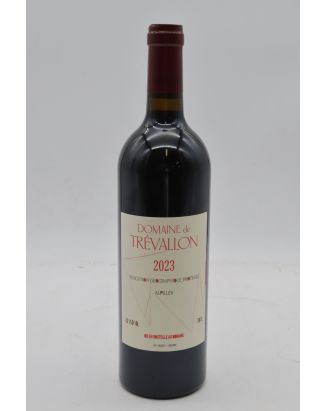
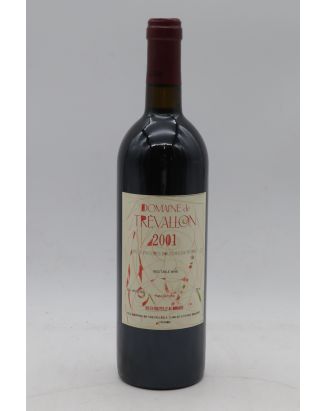
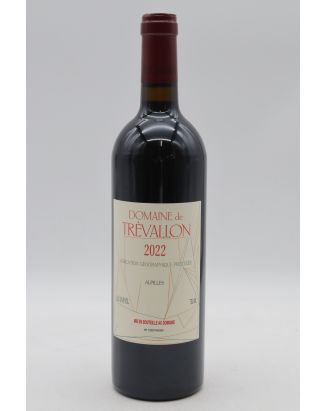
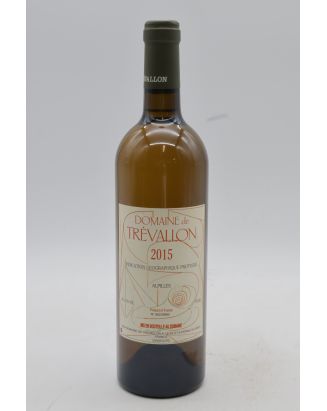
These wines, with unique labels designed by René Dürrbach, colorful drawings evoking each vintage, are myths of the great Provençal terroirs.
For Provence enthusiasts, it's an opportunity to acquire legendary bottles, ideal for patient cellaring or sophisticated food and wine pairings. Take advantage of our selection now to purchase at the best price: order and let the Provençal magic enchant you. Discover other Provence estates such as Domaines Bastide du Claux, Hauvette, Mas de la Dame and Pibarnon at Vins & Millésimes, which offers you the opportunity to purchase online the finest bottles of wines and great vintages. All our wines are in stock and available for fast delivery! Discover the bottles and Magnums from Domaine de Trévallon available for purchase!
COLLECTION NEAR PARIS & VAT REFUND FOR TOURISTS
Free collection in our warehouse near central Paris (92)