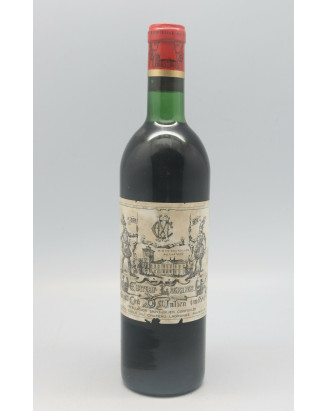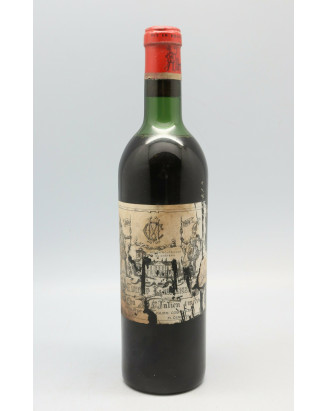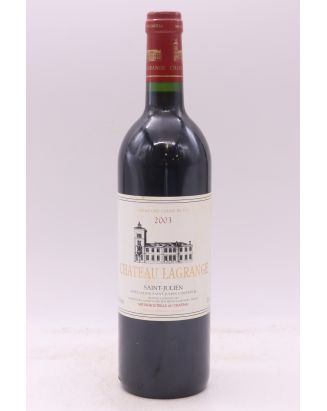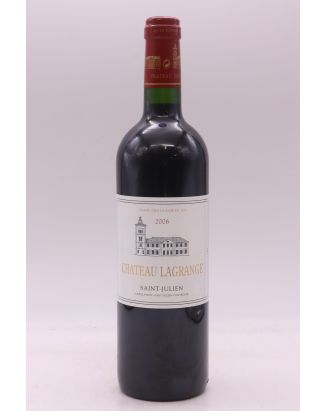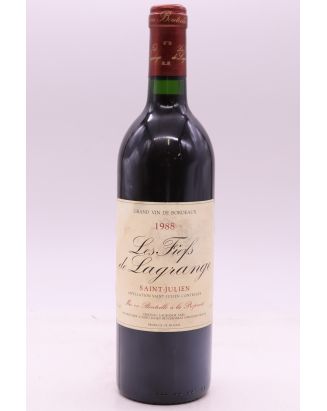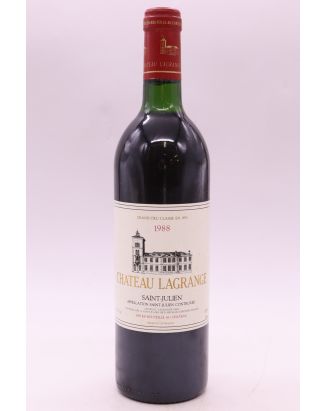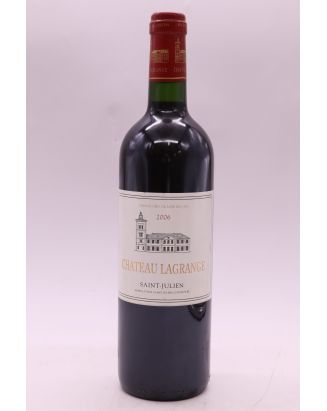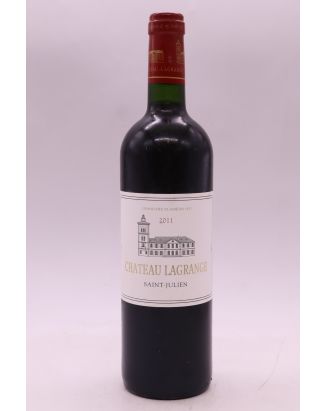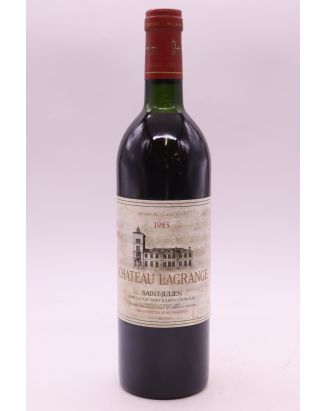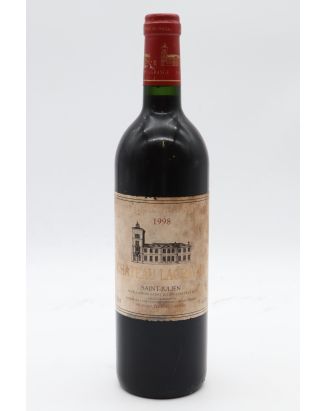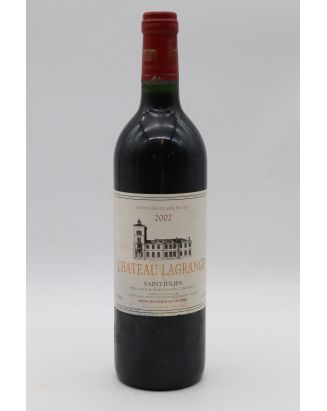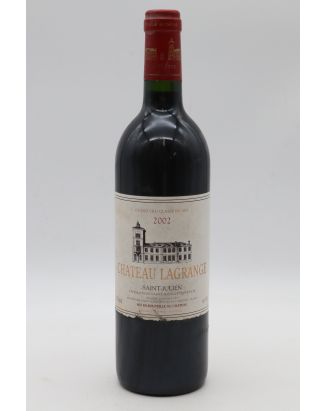
Lagrange 1964 -15% DISCOUNT !
Lagrange 1998 - PROMO -5% !
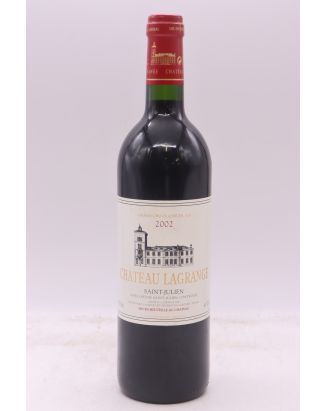
Lagrange 2002 - PROMO -10% !
The red wines of Château Lagrange stand out for their typically Médoc elegance, combining tannic structure with aromatic finesse. Made primarily from Cabernet Sauvignon, complemented by Merlot and Petit Verdot, they offer complex aromas of dark fruits, cedar, and gentle spices. Their velvety texture and beautiful length on the palate make them wines of exceptional ageing potential, particularly appreciated by lovers of Saint-Julien.
Château Lagrange holds the prestigious classification of Troisième Grand Cru Classé du Médoc, obtained during the famous 1855 classification. Located in the Saint-Julien appellation, it is among the most renowned properties on the left bank of the Gironde. This status reflects the consistency and excellence of its wines over the long term, guaranteeing wine lovers an internationally recognised quality.
The wines of Château Lagrange lend themselves admirably to refined gastronomic pairings. A mature vintage will express itself magnificently with herb-roasted milk-fed lamb, beef wellington, or feathered game. Lovers of French cuisine will also appreciate its pairing with hard cheeses such as an aged Comté. For younger vintages, decanting for one to two hours is recommended in order to reveal the full aromatic complexity of the wine.
Among the great vintages of Château Lagrange, the years 1982, 1986, 1990, and 2000 are unanimously praised by critics and enthusiasts alike. The 1982 vintage is notably considered exceptional, embodying all the power and generosity of the estate at its finest. The years 1996 and 2005 are also among the essential references for building a fine cellar with bottles of this Troisième Grand Cru Classé.
The second wine of Château Lagrange, Les Fiefs de Lagrange, comes from younger vines and blends not retained for the fine wine. It shares the same clay-gravelly terroir of Saint-Julien and the same rigorous winemaking methods, but reveals itself to be more approachable in its youth, with a more supple structure and more direct fruity aromas. It is an excellent entry point to discover the estate's style at a more affordable price.
A Château Lagrange generally requires a cellaring period of seven to twelve years after bottling before it begins to reveal its full complexity. Great vintages such as 1990 or 2000 can flourish over twenty years and beyond, progressively developing tertiary notes of truffle, leather, and undergrowth. For lighter vintages, opening from five to six years can offer immediate pleasure, provided sufficient aeration is allowed before tasting.
The earliest traces of the Lagrange estate date back to the Middle Ages, when it bore the name "Maison Noble de Lagrange Monteil." It was a vast estate comprising agricultural land, a church, and communal buildings. It was not until the 17th century that the estate adopted its current name, with the union of two terroirs that would form the wine estate we know today.
The modern history of Château Lagrange truly begins in the 18th century under the Branne family, who developed the vineyard and allowed it to make a name for itself in the region. The estate was visited in 1787 by Thomas Jefferson, then Ambassador of the United States to France, who included it in his own classification of the great Bordeaux classified growths.
One of the decisive turning points for the estate came in 1842, with the acquisition of the Château by Count Tanneguy Duchâtel, Minister of the Interior under Louis-Philippe. Duchâtel undertook major renovations and modernised viticulture techniques by installing an innovative drainage system, which helped improve the quality of the wines. Under his leadership, Château Lagrange was classified as a Third Grand Cru in 1855, during the famous Médoc classification.
Despite this recognition, the end of the 19th century was marked by economic difficulties and the ravages of phylloxera. The estate went through a long period of decline until its acquisition by the Cendoya family in 1925. In 1983, the Japanese group Suntory purchased the estate and invested heavily to renovate it. Today, thanks to Suntory's investments and rigorous management, Château Lagrange has reclaimed its place among the great classified growths of Bordeaux.
The vineyard of Château Lagrange extends over 118 hectares on the left bank, making it the largest of the classified growths of 1855. Located to the west of Beychevelle, in the Saint-Julien appellation, the estate benefits from an exceptional terroir composed of two ridges of Günzian gravel. These soils of gravel mixed with sand and ferruginous clay offer ideal conditions for growing Bordeaux grape varieties.
The red grape varieties are dominated by Cabernet Sauvignon (68%), followed by Merlot (25%) and Petit Verdot (7%). This composition gives the wines of Château Lagrange a solid structure, a beautiful aromatic complexity, and an impressive ageing potential. The vines are planted at a density of 8,500 plants per hectare, a practice that limits yields and concentrates the quality of the grapes.
The estate is also committed to sustainable and environmentally responsible management, adopting practices such as natural ground cover, the elimination of chemical herbicides, and the use of solar panels for better energy resource management. In addition, a precise mapping of the vineyard enables optimal plot-by-plot management, with each plot vinified separately to express the best of the terroir.
Winemaking at Château Lagrange combines tradition and modernity, with particular care given to each stage of production. The grapes are harvested by hand and then sorted using optical sorting technology, which enables the best fruit to be selected with optimal precision. The wines are then fermented in stainless steel tanks of various sizes, adapted to the specific characteristics of each plot.
The fermentation process is carried out by co-inoculation, with a long maceration to extract the full aromatic and tannic richness of the grapes. After fermentation, the wine is aged in French oak barrels, 60% of which are new, for a period of 20 to 21 months. This ageing method imparts a finesse and complexity to the wines of Château Lagrange that gives them a great capacity for ageing.
Since 1985, the estate has also produced a second wine, "Les Fiefs de Lagrange", sourced from the youngest vines and designed to offer a more accessible version of the fine wine, while remaining true to the spirit of the estate. In 1996, Château Lagrange ventured into white wine production with "Les Arums de Lagrange", a bold initiative for an estate in the Médoc traditionally focused on red wines.
Château Lagrange offers several cuvées, each reflecting the unique identity of the estate and its winemaking expertise.
Château Lagrange (Fine Wine)
The fine wine of Château Lagrange is a powerful and elegant wine, vinified from the estate's oldest vines. Composed primarily of Cabernet Sauvignon, it is distinguished by its complex structure, its beautiful freshness, and its exceptional ageing potential. This wine is a true ambassador of the Saint-Julien appellation, offering aromas of blackcurrant, dark fruits, cedar, and spiced notes. Its ageing in barrels for 21 months imparts a silky texture and a remarkable length on the palate.
Les Fiefs de Lagrange
This second wine of the estate is crafted from the youngest vines. It is characterised by greater accessibility, while retaining the precision and elegance that are hallmarks of Château Lagrange. Aged in barrels for 13 months, "Les Fiefs de Lagrange" is appreciated for its suppleness and depth. It offers aromas of red fruits and liquorice, with well-integrated tannins and a beautiful freshness on the finish.
Les Arums de Lagrange
"Les Arums de Lagrange" is one of the rare white wines produced in the Médoc. This wine is a blend of Sauvignon Blanc, Sémillon, and Sauvignon Gris. It captivates with its balance between vivacity and richness, with aromas of citrus, tropical fruits, and white peach. Aged in half-barrels for six months, this white wine is distinguished by its freshness and tension, while offering a beautiful roundness on the palate.
Pagus de Lagrange
Sourced from plots located in the Haut-Médoc appellation, "Pagus de Lagrange" is a charming and elegant wine, composed primarily of Cabernet Sauvignon. It is vinified and aged with the same care as the estate's other cuvées. This wine is distinguished by its freshness, its spiced and fruity notes, and a beautiful structure on the palate. It represents a more accessible alternative to the great classified growths of Saint-Julien, while offering an excellent quality-to-price ratio.
Saint-Julien, a flagship appellation of the Médoc in Bordeaux, is renowned for its red wines of great finesse and longevity. Certain vintages stand out particularly for their exceptional quality, offering powerful, elegant, and complex wines. Among the finest vintages, one finds years such as 1975, 1982, 1985, 1986, 1989, and 1990, which are true benchmarks for lovers of age-worthy wines. More recent years are no exception, with notable vintages such as 1995, 1996, 2000, 2003, 2005, 2008, 2009, 2010, 2012, all praised for their balance and ageing potential. The years 2014, 2015, 2016, 2017, 2018, 2019, and 2020 also stand out for their richness and complexity, continuing to make Saint-Julien an essential reference in the world of wine.
We invite you to discover the various Third Grands Crus Classés, true treasures of the Bordeaux region. Set out to explore the great terroirs of Margaux with the prestigious Château Boyd-Cantenac, Château Cantenac Brown, Château Desmirail, Château Ferrière, Château Giscours, Château d'Issan, Château Kirwan, Château Malescot Saint Exupéry, Château Marquis d'Alesme and Château Palmer. Continue your journey with the wines of Château Calon-Ségur in Saint-Estèphe, Château Lagrange and Château Langoa Barton in Saint-Julien, not forgetting the finesse of Château La Lagune in the Haut-Médoc. Each estate promises an unforgettable experience, reflecting the art of the wines of the Médoc.
Château Lagrange is an emblematic estate that embodies the excellence of the Saint-Julien appellation. With its exceptional terroir, rigorous viticultural practices, and commitment to quality, the estate continues to produce wines of great elegance and remarkable depth. Whether through its fine wine, its second wine "Les Fiefs de Lagrange", or its white cuvées such as "Les Arums de Lagrange", Château Lagrange offers a unique experience with every tasting. A true jewel of the Médoc to discover and savour.
COLLECTION NEAR PARIS & VAT REFUND FOR TOURISTS
Free collection in our warehouse near central Paris (92)