Personalise your experience
Change your country, language and currency here whenever you wish.
|
|
|
Must-See Châteaux |
|
|
|
|
|
|
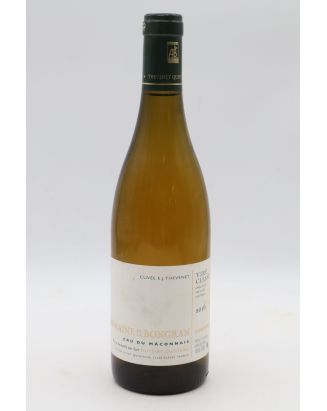
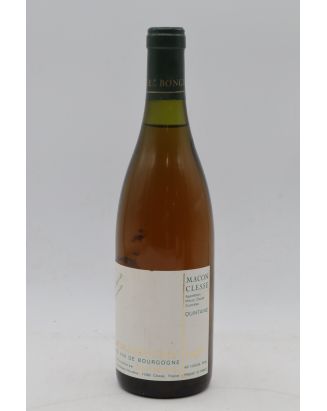
Domaine de la Bongran is an atypical and cult reference in the Mâconnais, in the south of Burgundy, nestled in the hamlet of Quintaine, in Clessé. The Thévenet family — Jean and then his son Gautier — crafts Viré-Clessé Chardonnays of incomparable richness and minerality, harvested at perfect maturity long after all other winemakers have finished their harvest. Certified in organic farming, the estate ages its wines at length in tank, with no oak aging, allowing the white marl terroir to express itself with purity. Dry wines with a slight sweetness, medium-sweet or luscious cuvées depending on the vintage: Bongran perpetuates a rare tradition of residual sugar wines.
Domaine de la Bongran, whose name derives from the corruption of bon grain — land that yields fine grapes — is a family property passed down from generation to generation since its origins under the name Gillet. The Thévenet family name appeared in 1904 with Philémon, then his son Émile developed the estate. It is Jean Thévenet, heir to the family tradition since 1972, who gave the estate its modern identity and worked tirelessly to perpetuate the tradition of wines with residual sugar in this part of Burgundy.
His son Gautier joined the estate in 1996 and took the reins of the cellar in 2000, perpetuating this know-how with respect for the soil, winemaking traditions and the long passage of time. The family today manages a group of three complementary estates in the Quintaine area — la Bongran, Domaine Émilian Gillet and Domaine de Roally in Viré — all certified organic since 2008. Each expresses a singular facet of the Chardonnay of Viré-Clessé, with la Bongran remaining the historic and emblematic heart of this heritage.
The vines flourish on the hamlet of Quintaine, at an altitude of 250 to 300 metres, on the white marls typical of the area. This clay-limestone terroir, similar in nature to that of great whites such as Corton-Charlemagne, retains a lively acidity even at full maturity and imparts depth, elegance and a remarkable capacity for ageing to the wines. The estate also benefits from a privileged microclimate that, in certain years, encourages the development of noble rot.
The sole grape variety is Chardonnay, planted on very old vines reaching up to 80 or 85 years of age, a guarantee of concentration and complexity. The soils are ploughed, the vines farmed without chemicals in respect of nature, and Ecocert certification ensures this organic approach. Yields are deliberately very low, in the order of 35 to 45 hectolitres per hectare — approximately three times less than what the appellation permits — in order to draw the very best from this generous terroir.
The house's signature lies first and foremost in the harvest. Picking is entirely manual and carried out as late as possible, when the grapes have reached extreme maturity, on the verge of over-ripening, sometimes enriched by noble rot for the most opulent cuvées. The decision to harvest is taken by tasting rather than by figures, when the grape is bursting with flavour. The clusters are then pressed slowly and gently.
After settling, fermentation takes place with indigenous yeasts alone — no commercial yeast or bacteria — and proceeds so slowly that it can last up to two years, often leaving a few grams of residual sugar. Unusually for Burgundy, ageing takes place exclusively in tank, with no passage through barrel, in order to preserve the soul of the wine and the purity of the fruit, followed by several years of bottle ageing. True to the philosophy of Jean Thévenet — for whom the terroir is to wine what the composer is to music, and the winemaker merely the conductor — intervention in the cellar is kept to a minimum.
Viré-Clessé Cuvée E.J. Thévenet: the estate's flagship wine, this dry cuvée pays tribute to Émile and Jean Thévenet and comes from the old Chardonnay vines of Quintaine. Retaining only 2 to 4 grams of residual sugar, it reveals a brilliant golden robe and an opulent nose of candied pineapple, white flowers, honey and dried fruits. The palate, ample, rich and concentrated, combines the slight sweetness characteristic of the estate with a taut minerality and a dazzling length. A great white fine wine from Burgundy, built for very long cellaring, which accompanies white meats, fish in sauce and cheeses, notably blues.
Viré-Clessé Cuvée Levroutée: produced only in the finest years, this off-dry cuvée with approximately 18 grams of residual sugar is born from grapes harvested at extreme over-ripeness, at the very limit, sometimes touched by noble rot. The term levrouté was indeed coined by Jean Thévenet himself. The nose, honeyed, blends candied fruits, peach and a sharp citrus note, while the palate, fine and never cloying, is perfectly held together by a vibrant acidity. A gastronomic wine endowed with the depth and ageing potential of a truly great white.
Cuvée Botrytis: the estate's rarest jewel, this sweet wine in the spirit of a sélection de grains nobles is produced only in a handful of exceptional vintages, from fully botrytised grapes. Of a dazzling richness of candied pineapple, honey and yellow fruits, it retains a remarkable purity and balance despite its sweetness, rivalling the greatest sweet wines. Depending on the year and the rules of the appellation, it may be marketed under the Mâcon appellation. A collector's bottle, magnificent at the table with desserts as well as in bold food pairings.
COLLECTION NEAR PARIS & VAT REFUND FOR TOURISTS
Free collection in our warehouse near central Paris (92)