Ostertag

Wines from Domaine Ostertag: buy at the best price

Located in the town of Epfig in the Bas-Rhin, the estate now run by André Ostertag is one of the essential addresses in the Alsatian wine region. Founded in 1960 by Adolphe Ostertag, it was from the 1980s onwards that his son, André Ostertag, began to shape the vineyard as we know it today. With a planted area of 14.5 hectares, of which 13.8 are white varieties (45% Riesling, 17% Gewurztraminer, 15% Pinot Gris, 15% Sylvaner, 6% Pinot Blanc and 2% Muscat) and 0.7 in red (100% Pinot Noir). The hectares of vines are spread across 5 villages, with 63% in Epfig, 30% in Nothalten, 4% in Ribeauvillé, 2% in Itterswiller and 1% in Albé, some of which are located on named plots such as Zellberg, Fronholz, Heissenberg, the Grand Cru Muenchberg and the Clos Mathis on the Hagel de Ribeauvillé. 

Read more
See more
Filters

Price

€20.00 - €120.00

Volume

Parker WA rating

88 - 97

Burghound rating

No choice available on this group

Revue du Vin de France rating

No choice available on this group

Bettane & Desseauve rating

17 - 18

Prices drop

No choice available on this group

Download this list
There are 6 products.
Download this list
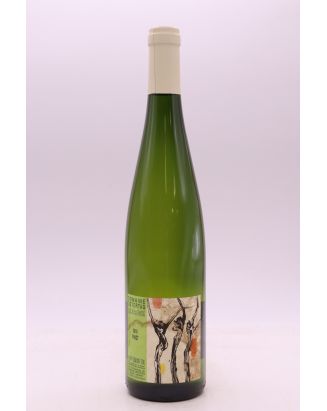
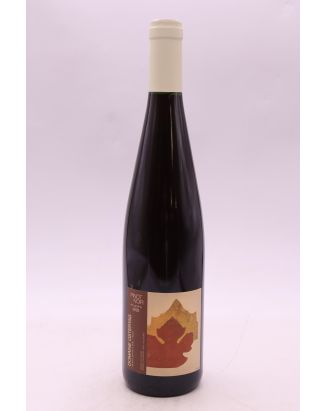
Ostertag Alsace Pinot 2018
Last one !
1 in stock
119903
White
75cl
Slightly Damaged
Add to cart
Alsace | Alsace

Ostertag Alsace Pinot 2018

€24.00 inc-VAT per bottle
€20.00 ex-VAT
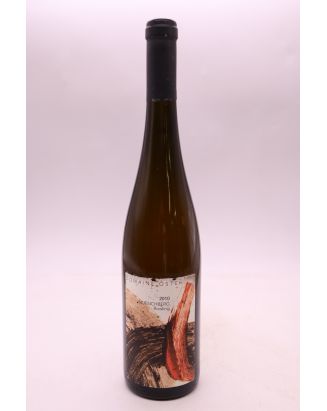
Ostertag Alsace Grand Cru Riesling Muenchberg 2010
1 in stock
127633
White
75cl
Very slightly damaged
93/100
91/100
18.5/20
Add to cart
Alsace | Alsace Grand cru

Ostertag Alsace Grand Cru Riesling Muenchberg 2010

€102.00 inc-VAT per bottle
€85.00 ex-VAT
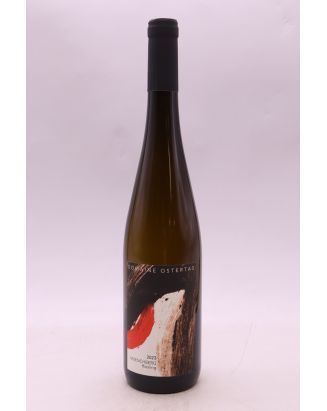
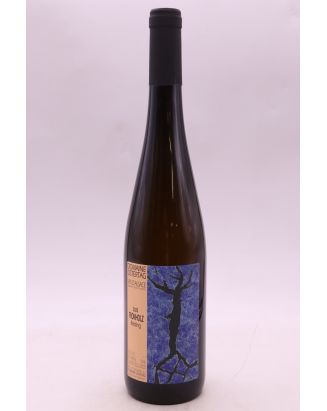
Ostertag Alsace Riesling Fronholz 2023
Bio
11 in stock
129265
White
75cl
Add to cart
Alsace | Alsace

Ostertag Alsace Riesling Fronholz 2023

€48.00 inc-VAT per bottle
€40.00 ex-VAT
Ostertag Alsace Grand Cru Riesling Muenchberg 2023
Bio
8 in stock
129266
White
75cl
Add to cart
Alsace | Alsace Grand cru

Ostertag Alsace Grand Cru Riesling Muenchberg 2023

€60.00 inc-VAT per bottle
€50.00 ex-VAT
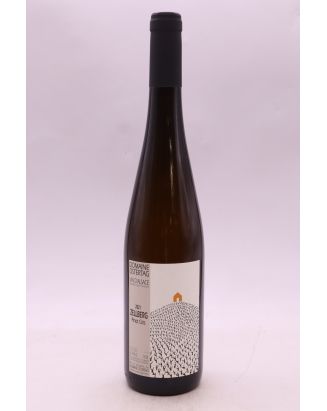
Ostertag Alsace Pinot Gris Zellberg 2021
Bio
10 in stock
129267
White
75cl
Add to cart
Alsace | Alsace

Ostertag Alsace Pinot Gris Zellberg 2021

€42.00 inc-VAT per bottle
€35.00 ex-VAT
Ostertag Alsace Pinot Noir Les Jardins 2025
Bio
12 in stock
129269
Red
75cl
Add to cart
Alsace | Alsace

Ostertag Alsace Pinot Noir Les Jardins 2025

€24.00 inc-VAT per bottle
€20.00 ex-VAT
The history of Domaine Ostertag

The estate was founded in 1966 in Epfig, an ancient Roman village some 40 kilometers south of Strasbourg. Adolphe Ostertag built up his vineyard by patiently acquiring plots on the finest terroirs of Epfig and neighboring villages. His son André was just 21 when he took over the cellar. Trained in Burgundy, he returned to Alsace with new ideas: drastically reducing yields, seeking the nuances of terroir rather than varietal typicity, aging wines from the pinot family in Vosges oak barrels, and vinifying the vast majority of his wines to dryness so they could truly be enjoyed at the table. Thanks to him, sylvaner, long relegated to the status of a simple bar wine, regained its standing.

Deliberately breaking with official classifications, André created his own framework and divided his production into three families: fruit wines, which express the flavor of the grape; stone wines, which tell the story of a terroir; and time wines, born of overripeness and noble rot. The estate adopted biodynamic practices in 1997, making it one of the region's pioneers. Christine Colin-Ostertag, André's wife and a visual artist, designs the labels, each one different, that give the estate its instantly recognizable visual identity. The name Ostertag means Easter Day, and the family coat of arms depicts the Paschal Lamb, the inspiration for the sheep that became the house's emblem. Arthur Ostertag joined the estate in 2015 after a formative stint at Comte Lafon in Meursault, and officially took over in 2018. La Revue du vin de France now ranks the estate at the top of its Alsace hierarchy.

The terroirs and vines of Domaine Ostertag

The vineyard covers approximately 14 to 15 hectares divided into nearly 88 plots, which André Ostertag likes to call his gardens. They lie across the villages of Epfig, Nothalten, Itterswiller, Ribeauvillé and Albé, on five broad soil types ranging from granite to clay and including pink Vosges sandstone, gneiss, quartz, marl, limestone and volcanic sediments. The vines average around 55 years of age. Riesling accounts for nearly half the vineyard area, followed by gewurztraminer, pinot gris, sylvaner, pinot blanc, pinot noir and muscat.

Fronholz, four hectares at the top and on the southwest slopes of the Epfig hill, has white sand, quartz, clay and marl soils. It produces mineral wines with firm acidity and elegant aromas, often understated in their youth. Heissenberg, the “hot mountain,” is a steep, south-facing slope in Nothalten with pink Vosges sandstone and gneiss, planted exclusively with riesling. Zellberg, halfway up a southeast-facing slope in the same village, combines clay, limestone and pink sandstone to produce full-bodied, sensual pinot gris. Clos Mathis, near Ribeauvillé at the foot of the Three Castles and beside Grand Cru Kirchberg, is a terraced granite slope. Finally, Grand Cru Muenchberg, whose name recalls the Cistercian monks who planted vines there in the 11th and 12th centuries, forms a south-facing amphitheater at the foot of the Vosges, on volcanic sediments, pink sandstone and a touch of limestone. The Pflanzer lieu-dit, once a vine nursery thanks to its fertility and good airflow, completes this mosaic.

Winemaking at Domaine Ostertag

All grapes are harvested by hand, and each plot is vinified on its own terms, without a uniform protocol. Pressing is gentle, fermentation begins spontaneously with indigenous yeasts and continues until the wines are completely dry, except for the gewurztraminers and sweet cuvées. This pursuit of dryness, rare in Alsace, makes the wines remarkably well suited to food.

Aging takes place in stainless steel tanks, traditional large oak casks and barrels made exclusively from Vosges oak. Wines from the pinot family gain depth through contact with wood, while the rieslings are usually aged on their lees in tanks for 12 months to preserve their crystalline tension. Some cuvées undergo very long aging, up to 20 months, with full malolactic fermentation. The skin-contact wines spend three weeks on their skins, with a proportion of whole bunches, followed by nine months of aging and six months of rest in bottle, without fining or filtration.

The cuvées of Domaine Ostertag

The fruit wines open the range. Sylvaner Vieilles Vignes, made from vines over 55 years old grown on clay, granite and gravel, is the estate's signature cuvée: supple, smooth and so pure that it proves a modest grape variety can reach great heights. The SylvaneR cuvée, made from red sylvaner vinified as a white wine, has a more unusual profile and is aged for a year in tanks after a nine-month fermentation. L'Exutoire SVV3 is a special cuvée made from old sylvaner vines in Nothalten, harvested earlier, fermented for 18 months and aged for 20 months in stainless steel; it is utterly distinctive. Riesling Les Jardins, a blend of several plots of gravel, sand and silica, embodies the estate's saline precision. Pinot Blanc Les Jardins, aged for nine months in 228-liter barrels, is rounded and crisp, with white-fruit notes. Pinot Gris Les Jardins offers yellow-fruit flavors and measured sweetness, while Gewurztraminer Les Jardins, grown on gravel and clay, unfolds floral and spicy aromas without heaviness. The Pinot cuvée, made by co-fermenting pinot blanc and pinot gris, is produced in low-yielding vintages. Pinot Noir Les Jardins, made from 100% destemmed grapes and aged for a year in tanks, charms with its vibrant red fruit. Les Aventures de l'Agneau Masqué, a series of skin-contact wines created by Arthur in tribute to the Aventures du Mouton Masqué wines his father began making in the 1990s, changes its name, label and sometimes its blend with each vintage. Gewurztraminer often makes up the majority of the blend; the wine is always dry and never filtered.

The stone wines form the heart of the estate's range. Riesling Heissenberg, grown on south-facing pink sandstone and gneiss, combines richness, minerality and generous, almost exotic aromas. Riesling Fronholz is more austere in its youth, firm and long, built for aging. Riesling Clos Mathis, from the granite terraces of Ribeauvillé, stands out for its finesse and soaring character. Riesling Le Berceau, from the Pflanzer lieu-dit, undergoes an 18-month fermentation and 20 months of aging, giving it a rare texture. Riesling Grand Cru Muenchberg, the estate's flagship wine from 1.7 hectares of volcanic sediments, offers definition, elegance and exceptional length, with an aging potential of 15 to 20 years. Among the pinot gris wines, Zellberg is rich and sensual with delicate aromas, Fronholz is more taut and saline, and Pinot Gris Grand Cru Muenchberg, named A360P after its cadastral plot, is aged for a year on its lees in barrels, 10 to 20% of which are new, yielding a wine of remarkable density and depth. Muscat Fronholz, made from muscat ottonel vines over 40 years old, remains dry and vibrant with floral freshness. Gewurztraminer Fronholz À l'Orient d'Eden, aged eight months on its lees, retains around 40 grams of residual sugar, perfectly balanced by the site's minerality. Pinot Noir Fronholz, from Epfig's finest plot, is aged for a year in used barrels and has a silky texture reminiscent of Burgundy.

The time wines complete the range, appearing only in vintages that allow for them. Gewurztraminer Fronholz Vendanges Tardives expresses overripeness with restrained richness and preserved freshness. Gewurztraminer Sélection de Grains Nobles, from the gravel and clay plots, concentrates candied-fruit and spice aromas in a sweet wine of great purity. Gewurztraminer Fronholz Sélection de Grains Nobles takes this further still, with the lieu-dit's mineral tension providing a counterpoint. Muscat Fronholz Sélection de Grains Nobles, exceptionally rare and produced from just 0.3 hectares, remains one of Alsace's most distinctive sweet wines, balancing white flowers, candied citrus and crystalline acidity.

WHAT THEY SAY ABOUT US

5 good reasons to buy wines on V&M

...

EXPRESS DELIVERY

In a secure polystyrene packaging

...

INTERNATIONAL SHIPPING

Find out more about VAT-EX sale for outside EU deliveries

...

COLLECTION NEAR PARIS & VAT REFUND FOR TOURISTS

Free collection in our warehouse near central Paris (92)

...