


 Sign in
 Cart
0
Cart
0


Champagne Grape Varieties: Pinot Noir, Chardonnay, Meunier

Champagne grape variety: complete guide to the grape varieties of the Champagne region
Pinot Noir, Chardonnay, Pinot Meunier: these three names ring like a sacred trinity in the world of Champagne. Yet behind this apparent simplicity lies an extraordinarily subtle art — that of blending. Each grape variety brings its own personality, its terroir, its aromatic touch. Together, they compose the infinite palette that allows the great houses and independent growers to craft cuvées of a diversity and complexity unique in the world.
Key takeaway:
- Champagne uses 3 main grape varieties: Pinot Noir, Pinot Meunier and Chardonnay (more than 99% of the vineyard).
- Champagne is a blended wine, combining grape varieties, terroirs and often several vintages.
- Pinot Noir brings structure, power and red fruits.
- Pinot Meunier brings roundness, fruitiness and accessibility.
- Chardonnay brings finesse, freshness, minerality and aging potential.
How many grape varieties are authorized in Champagne?
The Champagne appellation officially authorizes 7 grape varieties for the production of its sparkling wines. Among them, three dominate the vineyard by a wide margin and together account for more than 99% of planted surfaces: Pinot Noir, Pinot Meunier and Chardonnay. Four other so-called "accessory" or "forgotten" grape varieties complete the list: Arbane, Petit Meslier, Pinot Blanc and Pinot Gris, to which Chardonnay Rose was added in 2025, freshly registered with the appellation.
The great specificity of Champagne is that it is a blended wine: the vast majority of champagnes are crafted from several grape varieties, several terroirs and often several vintages. It is this art of blending, mastered by the cellar master, that guarantees the consistency of a house's style from year to year.
Key takeaway: two of the three main grape varieties, Pinot Noir and Pinot Meunier, are black-skinned grapes. Yet champagne is a white wine! The secret: the bunches are pressed very gently and immediately, without prolonged contact between the juice and the skins, to obtain a perfectly clear juice.
The 3 main grape varieties of champagne: comparative table
|
Grape variety |
Color |
Area |
Key terroirs |
Main contribution |
|
Pinot Noir |
Black grape |
38 % |
Montagne de Reims, Côte des Bar |
Body, structure, power, red fruits |
|
Pinot Meunier |
Black grape |
31 % |
Vallée de la Marne |
Roundness, fruitiness, accessibility, yellow fruits |
|
Chardonnay |
White grape |
31 % |
Côte des Blancs, Montagne de Reims |
Freshness, elegance, finesse, minerality |
Pinot Noir: power and structure
With 38% of the Champagne vineyard, Pinot Noir is the most planted grape variety in Champagne. It is a black-skinned grape with colorless flesh, meaning only its skin is pigmented; its pulp yields a perfectly white juice when gently pressed.
Its preferred terroirs
Pinot Noir reigns supreme over the Montagne de Reims, and particularly in the grand villages of Ambonnay, Bouzy, Mailly and Verzenay, all classified as Grand Cru. It is also found in force on the Côte des Bar (in the Aube), where it produces generous and fleshy wines. It thrives in chalky and cool terroirs, which give it tension and minerality.
Its aromatic profile
Pinot Noir brings body, power and structure to champagne. Its aromas range across red fruits (cherry, raspberry, wild strawberry) and flowers (rose, violet), sometimes accompanied by spicy notes. With age, it develops nuances of undergrowth, leather and brown tobacco that make the complexity of great vintage cuvées.
Its role in the blend
It is what gives champagne its backbone and length on the palate. In cuvées dominated by Pinot Noir (or 100% Pinot Noir, known as Blanc de Noirs), the wine expresses itself with a beautiful aromatic generosity and a remarkable aging potential. Great houses such as Bollinger and Krug give it a central place in their blends.
Pinot Meunier: fruitiness and roundness
Derived from a natural mutation of Pinot Noir, Pinot Meunier is the second most planted grape variety in Champagne with approximately 31% of the vineyard. Its name comes from the fine whitish down that covers the underside of its young leaves, evoking a miller's flour. In German, it bears the evocative name of Müllerebe.
Its preferred terroirs
Pinot Meunier is the king grape variety of the Vallée de la Marne, where it sometimes occupies up to 80% of the surfaces in certain villages such as Charly-sur-Marne. Its great resistance to spring frosts, thanks to a later budburst than its two counterparts, makes it the ideal grape variety for the cold, clay terroirs of the valley floors, overlooked by Pinot Noir and Chardonnay.
Its aromatic profile
Fruity, indulgent and immediately accessible, Pinot Meunier offers aromas of yellow fruits (apple, peach, apricot), raspberry and redcurrant. It gives champagne roundness and suppleness, with an expressive fruitiness from a young age. On the other hand, it generally ages less well than Pinot Noir and Chardonnay.
Its role in the blend
Pinot Meunier plays the role of binder between the two other grape varieties, whose profiles are often opposed (power vs. finesse). It makes champagnes more accessible and more immediately enjoyable. Long overlooked by the great houses, it is today experiencing a spectacular revival: Krug uses it abundantly in its Grande Cuvée, and independent growers such as Francis Boulard offer 100% Meunier wines of the very highest caliber.
Chardonnay: elegance and minerality
Chardonnay is the only white grape variety among the three main grape varieties of champagne. It represents approximately 31% of the Champagne vineyard and embodies the finesse and class of champagne par excellence. It is the grape variety of Blanc de Blancs, those pure and airy cuvées that have earned the Côte des Blancs its worldwide reputation.
Its preferred terroirs
Chardonnay flourishes magnificently on the chalky soils of the Côte des Blancs, and particularly in the grand crus of Avize, Le Mesnil-sur-Oger, Cramant and Oger. The chalk, very present in these terroirs, retains water at depth while draining the surface, and gives Chardonnay its so characteristic mineral tension. It is also found on the Montagne de Reims, where it produces more structured wines.
Its aromatic profile
Chardonnay offers champagne its most delicate aromas: white flowers (acacia, hawthorn), citrus fruits (lemon, grapefruit, yuzu), white fruits (peach, green apple) and, with age, notes of brioche, butter, toasted hazelnut and honey. This grape variety has a remarkable aging potential and develops great aromatic complexity over time.
Its role in the blend
Chardonnay brings freshness, lightness and vivacity to blends. Vinified alone, it gives birth to the celebrated Blanc de Blancs, champagnes favored by lovers of finesse and elegance. Selosse, Salon, Krug Clos du Mesnil: the greatest Blanc de Blancs in the world were born from this terroir and this grape variety.
Blanc de Blancs, Blanc de Noirs, vintage: which grape varieties are in your glass?
The grape variety composition of a champagne largely determines its flavor profile. Here is how to find your way at a glance.
|
Type of champagne |
Grape variety composition |
Profile & examples |
|
Blanc de Blancs |
100% Chardonnay |
Finesse, lightness, citrus fruits, white flowers. Ideal as an aperitif or with seafood. E.g.: Salon, Krug Clos du Mesnil |
|
Blanc de Noirs |
100% Pinot Noir and/or Pinot Meunier |
Power, roundness, red fruits, generous body. E.g.: Krug Clos d'Ambonnay, Bollinger Vieilles Vignes |
|
Non-vintage Brut |
Blend of all 3 grape varieties (+ reserve wines) |
Balance and consistency of style. The most common. E.g.: Moët Impérial, Laurent-Perrier Brut |
|
Vintage |
A single vintage, often all 3 grape varieties |
Complexity, aging potential, reflection of terroir and vintage. E.g.: Dom Pérignon, Cristal de Roederer |
|
Rosé |
Made from black grapes (by saignée or blending with still red wines) |
Red fruits, freshness, indulgence. E.g.: Billecart-Salmon Rosé, Laurent-Perrier Rosé |
The rare or forgotten grape varieties: the other face of Champagne
Beyond the three main varieties, the Champagne appellation authorizes confidential grape varieties that cover less than 0.5% of the vineyard. Long neglected, they are experiencing a renewed interest among artisan growers in search of originality and identity.
Arbane
An extremely rare white grape variety, Arbane brings smoky, spicy aromas and a beautiful acidity. It can be found in a few plots in the Aube.
Petit Meslier
Small in bunch size, grand in personality: Petit Meslier offers a smoky nose and very frank citrus notes. Low-yielding and disease-prone, it is on the verge of disappearing, but a few passionate growers are preserving it.
Pinot Blanc
A cousin of Pinot Gris (and therefore of Pinot Noir), Pinot Blanc brings breadth and power to blends. More consistent than Pinot Gris in production, it ripens quickly.
Pinot Gris
Nicknamed "the smoky one" in Champagne due to its highly characteristic aromas of smoke and dried fruit, Pinot Gris is low in acidity but highly aromatic. It is sometimes used in very distinctive, character-driven cuvées.
Chardonnay Rose (new 2025)
Discovered in Champagne at the beginning of the 20th century, this grape variety was officially registered with the appellation in 2025. Its presence in the Champagne vineyard remains anecdotal for now, but its symbolic return marks the region's attachment to its viticultural biodiversity.
The cuvée "Les 7" by Laherte Frères is a rare example of a blend incorporating all seven grape varieties authorized in Champagne, a stylistic exercise as audacious as it is successful, with an absolutely unique Champagne typicity.
Champagne grape varieties and terroirs: who goes where?
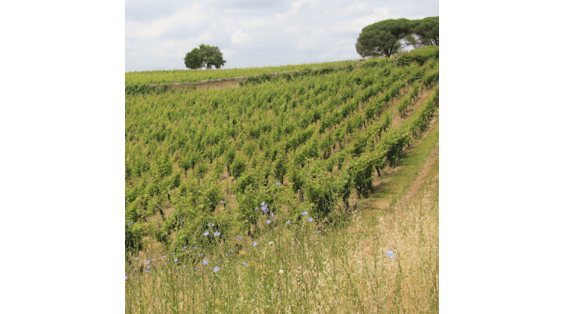
The geographical distribution of grape varieties in Champagne is no accident: each variety has settled where the soil and climatic conditions suit it best.
• Montagne de Reims: dominant Pinot Noir (Ambonnay, Bouzy, Verzenay, Mailly). Chalky and limestone soils. Powerful and structured Champagnes, ideal for aging.
• Côte des Blancs: Chardonnay in majesty (Avize, Le Mesnil-sur-Oger, Cramant, Oger). Pure chalk soils. Airy, mineral Champagnes, exceptional Blanc de Blancs.
• Vallée de la Marne: dominant Pinot Meunier. Cold clay soils, resistant to frost. Round, fruity, accessible Champagnes.
• Côte des Bar (Aube): Pinot Noir very prominent. Clay-limestone and Kimmeridgian soils. Full-bodied, generous Champagnes, close to the Burgundian style.
• Montagne de Reims (south-facing slope): Chardonnay and Pinot Meunier intermingled, with a few plots of Arbane and Petit Meslier.
Food and wine pairings by dominant grape variety
|
Dominant grape variety |
Recommended food & wine pairings |
|
Chardonnay (Blanc de Blancs) |
Oysters, caviar, sushi, lobster, scallops, delicate fish, fresh cheeses |
|
Pinot Noir (Blanc de Noirs) |
Roasted poultry, game, lamb, fine charcuterie, aged Comté, button mushrooms |
|
Pinot Meunier |
Aperitif buffet, canapés, goat's cheese, quiches, spring vegetables |
|
Brut blend (3 grape varieties) |
Foie gras, smoked salmon, risotto, carpaccio, delicate starters, Camembert |
|
Vintage / Prestige cuvée |
Truffle, aged Parmesan, aged Gouda, lobster, langoustines, gourmet dishes |


COLLECTION NEAR PARIS & VAT REFUND FOR TOURISTS
Free collection in our warehouse near central Paris (92)