


 Sign in
 Cart
0
Cart
0


Domaine de Trévallon!

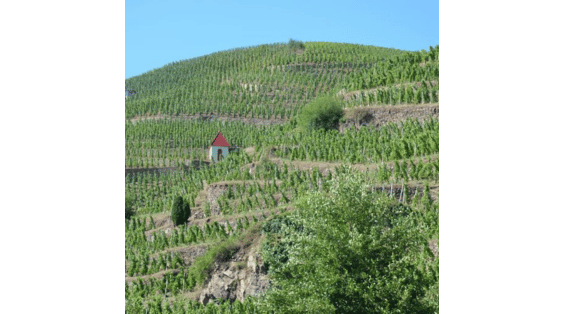
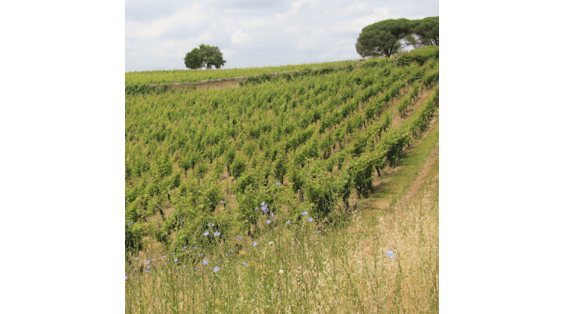
Located in Provence, in the commune of Saint Etienne-du-Grès, Domaine de Trévallon was created just 60 years ago, yet it is now one of the most recognized wines of its appellation.
It was indeed in 1955 that Etienne Dürrbach, a sculptor by profession, decided to purchase the Trévallon land. At the time, he acquired 60 hectares of garrigue: white limestone rock as far as the eye could see and not a single vine shoot. His son Eloi, passionate about viticulture, saw potential to exploit in the family estate and initiated gigantic works to transform what was at the time nothing but stones into a proper estate. It was in 1973 that he finally planted his first vines on 20 hectares: 15 of reds composed of equal parts Cabernet Sauvignon and Syrah, as well as 2 hectares of whites divided between Marsanne (45%), Roussanne (45%) and Chardonnay (10%).
In 1976, the first vintage of Domaine de Trévallon was born.
Beyond the grape varieties and terroir, one of the estate's distinctive features likely lies in its way of cultivating the vine: everything is entirely organic. Eloi Dürrbach refuses to use pesticides or insecticides, maintaining that the best way to make good wine is to let nature express itself: with patience. At the estate, plowing is also carried out, which promotes the vine's root development, and short pruning which helps limit yields while extending the vine's lifespan. As for the harvest, it is done when the grapes are fully ripe.
In the cellar, the philosophy is the same: no exogenous yeasts are used and no acidity correction is performed. Finally, the aging periods are long! More than 2 years for reds and one year for whites, to allow the micro-oxygenation provided by the barrel to occur slowly and the tannins to round out.
Domaine de Trévallon is now therefore one of the references in terms of Provence wine. As early as 1978, Aubert de Vilaine from Domaine de la Romanée Conti in Burgundy had been impressed by the quality of these wines. Thanks to him, the estate's name reached Robert Parker, who in 1984 revealed it with the 1982 vintage.
In 1993, the creation of the Baux de Provence appellation did not authorize more than 20% Cabernet Sauvignon in the wine blend, and the estate had to fall back on vin de pays.
This had no impact on the estate's sales, as customers were primarily buying Trévallon.
The wines need at least 10 years in bottle to refine and show their full aromatic complexity (black olives, candied fruits, graphite, floral aromas, game…), some old vintages are still marketed by the estate such as Trévallon 2004, alongside more recent vintages such as Trévallon 2011.
The estate's legendary vintages include Trévallon 1990, still "in very good form", or Trévallon 1998, which still has excellent aging potential. Even more modest vintages like 1993 are interesting for their aromatic complexity with noble animal notes and well-integrated tannins.


COLLECTION NEAR PARIS & VAT REFUND FOR TOURISTS
Free collection in our warehouse near central Paris (92)