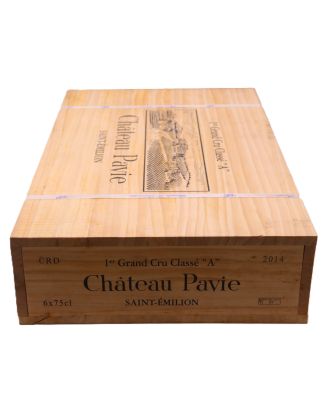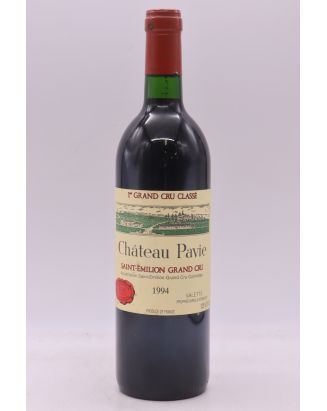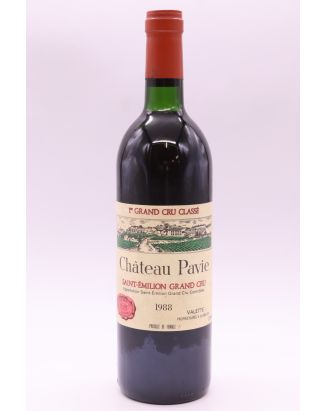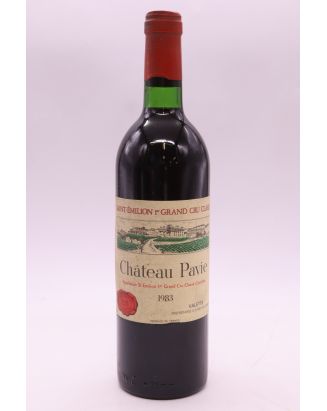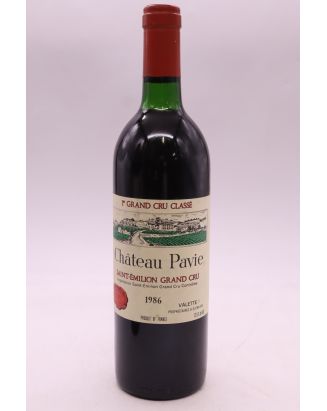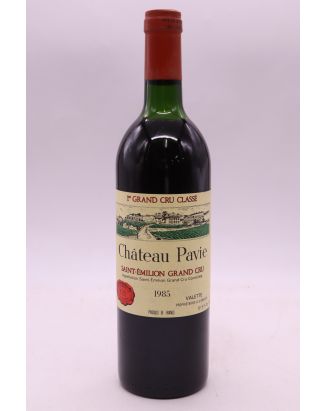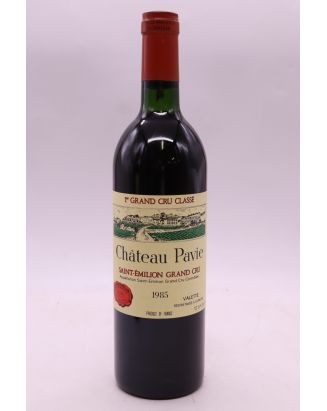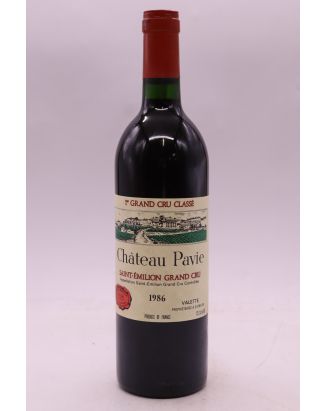
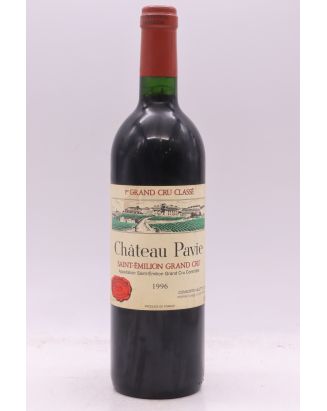
Château Pavie holds the status of Premier Grand Cru Classé A of Saint-Émilion, the highest distinction of the appellation, alongside Château Figeac. This exceptional classification is based on several criteria: the quality and age of the terroir, a vineyard planted on a particularly well-exposed clay-limestone hillside, as well as a winemaking tradition dating back to the Gallo-Roman era. Since the estate was taken over by the Perse family in 1998, the winemaking standards have been considerably raised, contributing to cementing the château's worldwide reputation.
Among the most celebrated historic vintages of Château Pavie, the 2000 and 2005 are often cited as absolute references. The 2000 vintage made a lasting impression with its concentration and imposing tannic structure, while the 2005, considered one of the great vintages of the century in Bordeaux, expresses the full power and complexity of the Pavie terroir. Lovers of age-worthy wines may also wish to explore the 2001, 2003, and 2009 vintages, each revealing a singular interpretation of the Pavie style according to the climatic conditions of the year.
To get the best out of a great vintage from Château Pavie, a few precautions are in order. It is recommended to take the bottle out of the cellar 24 hours before serving in order to gradually bring it to room temperature, ideally between 16 and 18 °C. The wine should be opened at least 2 to 3 hours before tasting, and decanting into a carafe is strongly advised for younger vintages such as the 2005 or the 2009. This step allows the wine to oxygenate, softens the still firm tannins, and lets the complex aromas of ripe fruit, liquorice, and mineral notes — so characteristic of the Pavie terroir — fully express themselves.
The Château Pavie vineyard is dominated by Merlot, which accounts for approximately 60% of the grape varieties, complemented by Cabernet Franc and a more modest share of Cabernet Sauvignon. This dominance of Merlot, typical of the great wines of Saint-Émilion, gives the château's wines their velvety texture, their aromatic richness and their remarkable ageing potential. Cabernet Franc, for its part, brings freshness, finesse and an elegant floral complexity that sets Château Pavie apart from the other great crus of the Right Bank.
Château Pavie stands out for a resolutely powerful and opulent style, often described as generous and modern, which sets it apart from the more classic profiles of some of its Saint-Émilion neighbours. Its unique terroir, composed of three distinct soil types — asteria limestone at the top of the slope, clay-limestone in the middle, and sandy clay at the bottom — offers an aromatic palette of great complexity. This geological diversity, combined with deliberately low yields and careful winemaking, produces wines of a depth and length on the palate rarely matched in the appellation.
Yes, Château Pavie offers a second wine called Arômes de Pavie, which allows enthusiasts to discover the aromatic and stylistic identity of the estate in a more accessible expression. Sourced from the same exceptional terroirs and crafted with the same care as the grand vin, Arômes de Pavie offers a beautiful introduction to the world of Château Pavie, with that signature richness and generosity characteristic of the estate. It is an excellent entry point for those who wish to explore the château's wines before moving on to the great cuvées.
Although today world-renowned for its wines, the Château Pavie estate has very ancient origins. Indeed, the slopes of the vineyard were initially dedicated to the cultivation of peach trees until late Antiquity. The name "Pavie" actually derives from the variety of peach that was once grown on these lands. It was not until much later, at the end of the 19th century, that the estate began to acquire the winemaking renown it holds today.
In 1873, Ferdinand Bouffard, a wine merchant, undertook to consolidate the surrounding plots to form a single contiguous vineyard. Despite this, each plot was operated independently until Bouffard's death. It was under the management of his successor, Albert Porte, that the name Château Pavie began to establish itself. In 1943, the Valette family took over the estate and enabled Château Pavie to attain the rank of Premier Grand Cru Classé B in 1955. However, the modern history of Château Pavie truly began in 1998, when Gérard Perse acquired the estate. Under his direction, the vineyard underwent a radical transformation. Gérard Perse invested massively and managed the estate with great rigour, enabling Château Pavie to climb the ranks to become Premier Grand Cru Classé A in 2012. This status symbolises the excellence and international recognition of the estate.
The 2000, 2010, 2009, 2005, and 2016 vintages of Château Pavie received a score of 100/100 from Robert Parker. The 2017 and 2018 vintages follow closely with 99/100, and the 2015 vintage is rated at 98/100.
One of Château Pavie's greatest assets is the diversity of its terroirs. Located on the south-east slopes of Saint-Émilion, the vineyard benefits from exceptional topography and exposure that favour high-quality viticulture. The estate covers 42 hectares, divided into three distinct main terroirs, each contributing to the richness and complexity of the wines produced.
The limestone plateau: This terroir reaches approximately 85 metres above the Dordogne. It is composed of clay-limestone soils resting on astéries limestone. This white, poor, and well-drained soil offers ideal conditions for vine cultivation, particularly for Merlot.
The hillside: At an intermediate altitude of 55 metres, the soils are primarily composed of fine clay-limestone earth, above the molasse du Fronsadais. Here, the combination of clay-rich soil and full south-facing exposure promotes grape ripeness, particularly well-suited to Cabernet Franc and Cabernet Sauvignon.
The foot of the hillside: At approximately 35 metres in altitude, this part of the estate is distinguished by colluvial brown soils, with fluvial sands at depth. This diversity allows Château Pavie to cultivate vines suited to each soil type, particularly late-ripening grape varieties such as Cabernet Sauvignon.
The vines, with an average age of 43 years, are carefully maintained. Pruning is meticulously controlled, with very low yields to encourage concentration of aromas in the grapes. The full south-facing exposure and the natural drainage of the slopes are decisive factors in the quality of the grapes, allowing optimal ripening even in the most challenging vintages.
Winemaking at Château Pavie is the result of meticulous craftsmanship and modern technology, adapted to each vintage to get the best out of the grapes. Everything begins with manual harvesting, where each bunch is carefully selected. A rigorous sorting process takes place, first in the vineyards and then on a double sorting table at the winery.
Once the grapes have been sorted, they are transported by conveyor belt to thermo-regulated wooden vats for a cold pre-fermentation maceration, which generally lasts between eight and nine days. This technique preserves the freshness of the aromas while preparing the grapes for fermentation. Malolactic fermentation then takes place in new barrels, a process that softens the wines and adds roundness and complexity.
Ageing takes place in French oak barrels for a period ranging from 18 to 32 months, depending on the vintage. The percentage of new wood used varies from 70 to 100% for the main cuvées. This particular attention paid to each stage of winemaking ensures wines of great complexity, with rich aromas and silky tannins.
Château Pavie produces several iconic cuvées, each expressing the unique character of its terroir.
Château Pavie
The estate's main wine, classified Premier Grand Cru Classé "A", is sourced from the oldest vines on the estate. This wine is composed primarily of Merlot (65%), with Cabernet Franc (25%) and Cabernet Sauvignon (10%). On the palate, it stands out for its power and intensity, with notes of ripe dark fruits, truffle, and liquorice. This wine is built for ageing, gaining in complexity over time. It generally requires 15 to 20 years to express its full potential.
Arômes de Pavie
The estate's second wine, which adopted this name from the 2005 vintage onwards, is sourced from young vines of less than 10 years old. Although less imposing than the first wine, Arômes de Pavie is nonetheless a wine of great quality. It is crafted with the same care, but is intended to be more approachable in its youth, with fruity aromas and a more supple texture.
Château Pavie Decesse
Sourced from distinct plots of the estate, this wine is also highly sought after for its depth and complexity. It particularly expresses the mineral and chalky characteristics of Saint-Émilion's limestone terroir.
Saint-Émilion, a jewel of the Bordeaux wine region, has over the years produced vintages of exceptional quality, delighting lovers of great wines. Among the legendary vintages, one can cite 1947, 1959, and 1961, true icons that have marked the history of Bordeaux wines. The celebrated 1982 remains an undisputed benchmark. The following decades were equally remarkable, with outstanding vintages such as 1990, 1995, 1998, 2000, 2001, 2003, and 2005, all acclaimed for their richness and ageing potential. More recently, the vintages 2008, 2009, 2010, 2012, 2014, 2015, 2016, 2018, 2019, and 2020 have shone for their balance and depth, reaffirming Saint-Émilion's reputation as one of the most sought-after appellations in Bordeaux, where each new year continues to captivate lovers of great wines with its consistent quality and elegance.
Discover the prestigious Premiers Grands Crus Classés A of Saint-Émilion, true jewels of the Right Bank vineyard. Among them, Château Pavie, promoted in 2012, continues to shine for the exceptional quality of its wines. More recently, in 2022, Château Figeac joined this exclusive circle, confirming its place among the elite. Other estates, although no longer part of this classification since 2022, continue to command the admiration of enthusiasts: Château Angélus, Château Ausone, and Château Cheval Blanc, all synonymous with tradition and excellence.
Château Pavie embodies the excellence of Saint-Émilion's terroir. Under the stewardship of Gérard Perse, the estate has managed to rise among the finest wines in the world, thanks to rigorous management, a constant pursuit of perfection, and great attention paid to the terroir. The wines of Château Pavie are powerful, complex, and of rare elegance, offering intense aromas and a tannic structure that gives them an immense ageing potential. Whether you are a lover of young wines or wines for long cellaring, the cuvées of Château Pavie will captivate you with their richness and depth.
COLLECTION NEAR PARIS & VAT REFUND FOR TOURISTS
Free collection in our warehouse near central Paris (92)