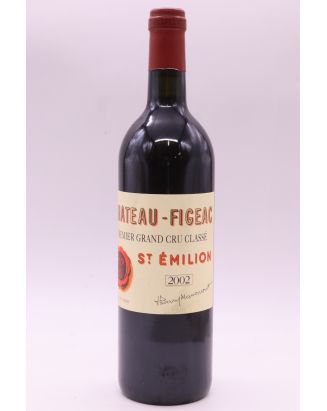
Figeac 2002
Personalise your experience
Change your country, language and currency here whenever you wish.
|
|
|
Must-See Châteaux |
|
|
|
|
|
|
A Médoc style in Saint-Émilion - Premier Grand Cru Classé A of Saint-Émilion
Château Figeac, located in the Saint-Émilion appellation, embodies elegance, tradition and innovation in the world of great Bordeaux wines. Classified as Premier Grand Cru Classé A since 2022, this historic estate, owned by the Manoncourt family since 1892, stands out for its exceptional terroir, its environmental commitment and its unique style, often described as "the most Médoc-like of the Saint-Émilions". With a history dating back to Gallo-Roman times and a vineyard of 54 hectares, 41 of which are dedicated to vines, Château Figeac produces wines of remarkable finesse and longevity, such as Château Figeac and its second wine, Petit Figeac.
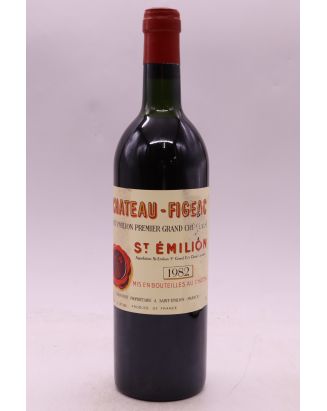
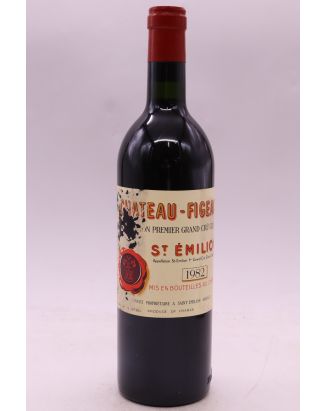
Château Figeac has produced exceptional vintages that deserve a prime place in any well-stocked cellar. The years 1947, 1964 and 1982 are unanimously celebrated by enthusiasts as absolute benchmarks of the estate. The 1982, in particular, embodies the quintessence of the Figeac style: a sumptuous texture, a rare aromatic complexity and a remarkable ageing capacity. The 1964, for its part, captivates with its balance and its surprising freshness for its age.
The philosophy of Château Figeac is rooted in a profound respect for terroir and meticulous parcel-by-parcel winemaking. Each parcel is vinified separately in order to preserve the unique expression of its gravelly soils. The estate favours gentle extractions and barrel ageing that preserve the finesse of the tannins, giving rise to wines that are both powerful and of great aromatic delicacy, with characteristic notes of black fruits, spices and cedar.
Food and wine pairings with Château Figeac naturally lean towards gastronomic cuisine with character. Red meats such as a rack of lamb with herbs, a beef Wellington or game birds pair elegantly with the wine's tannic structure and black fruit aromas. Hard, aged cheeses, such as a long-matured Comté, also make for remarkable combinations. For more mature vintages, a truffle-stuffed poultry will highlight the tertiary complexity of the wine.
Château Figeac holds a unique place in the Saint-Émilion Grand Cru Classé appellation thanks to an exceptional terroir: its gravelly soils, close to those of Pomerol, give it a rare singularity on the right bank of Bordeaux. The grape variety composition, dominated in nearly equal proportions by Cabernet Sauvignon, Cabernet Franc and Merlot, produces wines of aromatic complexity and structural elegance that few estates in the region can match.
A Château Figeac deserves particular attention when serving. It is advisable to serve it between 16 and 18°C and to decant it at least one to two hours before tasting for young vintages. For older vintages, such as a 2000 or a 2001, a gentle decantation of approximately 30 minutes is generally sufficient to open the wine without risking any alteration of its subtle aromas. A wide-bowled glass, such as a Burgundy style, allows the wine's floral and spiced complexity to be fully expressed.
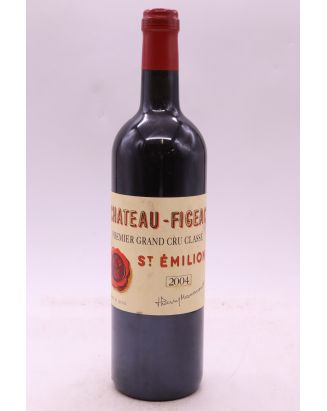
The great vintages of Château Figeac display a remarkable ageing potential. The 2005 vintage, praised for its concentration and balance, can be cellared for 20 to 30 years under good conditions. The 2009, considered one of the sunniest vintages of the decade, develops an exceptionally rich aromatic palette over time. These bottles reach their full expression after a decade of cellaring.
The history of Château Figeac is an epic spanning nearly two millennia, beginning in the 2nd century with the Figeacus family, whose name was given to the Gallo-Roman villa located on the current site of the estate. From the 15th century onwards, the de Cazes family laid the foundations of modern viticulture, followed by the Carle family in the 17th century, who developed the export of Figeac wines to Paris and Northern Europe. Despite economic setbacks in the 19th century, which fragmented the original 200-hectare estate, Château Figeac regained its lustre in 1892 thanks to its acquisition by the Manoncourt family.
Under the impetus of Thierry Manoncourt, a visionary agronomist and engineer, the estate experienced a renaissance from 1947 onwards. A pioneer in the use of temperature-controlled stainless steel vats as early as 1971 and in the creation of a second wine as early as 1945, he shaped the "Figeac style", characterised by an atypical grape variety composition dominated by the cabernets. Premier Jurat of Saint-Émilion for 23 years, he contributed to the worldwide renown of Bordeaux wines through the Union des Grands Crus de Bordeaux. Since his death in 2010, his wife Marie-France Manoncourt, his daughters Hortense Idoine Manoncourt and Blandine de Brier Manoncourt, along with general director Frédéric Faye, have perpetuated this legacy with undiminished passion. In 2022, Château Figeac's elevation to the rank of Premier Grand Cru Classé A consecrated its excellence and influence in the Bordeaux region.
The terroir of Château Figeac is a true geological exception within the Saint-Émilion appellation. Located in the Graves de Saint-Émilion zone, on the border with Pomerol, the estate extends over 54 hectares in a single block, of which 41 hectares are planted with vines. Three ridges of Günzian gravel, composed of quartz, flint and blue clay, form a unique relief reaching 38 metres at its highest point. This gravelly-sandy soil, combined with a high proportion of cabernets (35% Cabernet Sauvignon, 35% Cabernet Franc, 30% Merlot), gives the wines incomparable freshness, structure and elegance, often compared to the great crus of the Médoc.
The vines, with an average age of 35 years, include historic plots, such as Merlots planted in 1921, among the oldest in production. Each vine, numbering 275,000, is treated with individual attention, reflecting the estate's philosophy of sustainable viticulture. A 0.65-hectare plot dedicated to mass selection preserves the genetic heritage of the grape varieties, guaranteeing the continuity of the Figeac style. Soil management, with partial ploughing by horse, and the environmental commitment, with 12 hectares of natural spaces (meadows, pond, arboretum, hedgerows and rose bushes), make Château Figeac a model of biodiversity. Certified ISO 14001 since 2015 and labelled HVE level 3, the estate has also been classified as a Wildlife Reserve since 2013, reinforcing its role as the "green lung" of Saint-Émilion.
Vinification at Château Figeac combines tradition and innovation to bring out the full expression of its unique terroir. The harvests, exclusively manual, allow for rigorous selection of the grapes. Since 2021, the estate has benefited from an ultra-modern 5,000 m² winery, designed for plot-by-plot and intra-plot vinification. This new facility, semi-underground and gravity-fed, incorporates 40 truncated cone-shaped stainless steel vats and 8 bespoke French oak vats, offering unparalleled precision. A vat room dedicated to research and development bears witness to the scientific spirit that drives the estate, in collaboration with institutions such as INRA and the University of Dijon.
Alcoholic fermentation takes place in stainless steel and wood vats, followed by malolactic fermentation in barrels. Aging, carried out 100% in new French oak barrels for 15 to 18 months, refines the structure and complexity of the wines. Under the technical direction of Romain Jean-Pierre and with the advice of oenologist Michel Rolland, each vintage is a collective work, validated by the Manoncourt family to ensure fidelity to the "Figeac style": an alliance of freshness, finesse and power, with an exceptional aging potential.
Château Figeac produces several cuvées, each representing a different expression of its unique terroir.
Château Figeac - The Fine Wine
Château Figeac, the estate's flagship wine, is produced at approximately 120,000 bottles per year. The result of a variable blend but often dominated by the cabernets (approximately 35% Cabernet Sauvignon, 35% Cabernet Franc, 30% Merlot), this Premier Grand Cru Classé A is distinguished by its deep purple colour, its complex nose blending peony, infused fruits and graphite, and a satiny, vibrant palate with mineral notes on the finish. Its structure, driven by the cabernets, gives it remarkable longevity, often exceeding 40 years. Recent vintages, such as Château Figeac 2019 (98.38/100, Global Wine Score) or Château Figeac 2022 (97-100/100), are hailed as world references, combining accessibility in their youth with aging potential.
Petit Figeac - The Second Wine
The second wine, Petit Figeac, formerly La Grange Neuve de Figeac until 2011, is produced at approximately 40,000 bottles per year. Sourced from the same plots as the fine wine, it benefits from the same exacting standards of vinification and aging, offering an ideal introduction to the Figeac style. This elegant and structured wine seduces with its freshness and fruity aromas, with a silky texture that reflects the identity of the estate. Vintages such as Petit Figeac 2018 or Petit Figeac 2020 are particularly appreciated for their balance and accessibility.
The 2020 and 1949 vintages of Château Figeac were awarded 100/100 by Robert Parker, a recognition of the remarkable quality of this iconic Saint-Émilion cru.
Saint-Émilion, a jewel of the Bordeaux wine region, has produced over the years vintages of exceptional quality, delighting lovers of great wines. Among the legendary vintages, one can cite 1947, 1959 and 1961, true icons that have marked the history of Bordeaux wines. The famous 1982 also remains an undisputed reference. The following decades were no less impressive, with remarkable vintages such as 1990, 1995, 1998, 2000, 2001, 2003 and 2005, all acclaimed for their richness and aging potential. More recently, the vintages 2008, 2009, 2010, 2012, 2014, 2015, 2016, 2018, 2019 and 2020 have shone for their balance and depth, reaffirming Saint-Émilion's reputation as one of Bordeaux's most sought-after appellations, where each new year continues to captivate lovers of great wines with its consistent quality and elegance.
Discover the prestigious Premiers Grands Crus Classés A of Saint-Émilion, true gems of the right bank vineyard. Among them, Château Pavie, promoted in 2012, continues to shine through the exceptional quality of its wines. More recently, in 2022, Château Figeac joined this exclusive circle, confirming its place among the elite. Other estates, although no longer part of this classification since 2022, continue to draw the admiration of enthusiasts: Château Angélus, Château Ausone and Château Cheval Blanc, all synonymous with tradition and excellence.
Château Figeac is a symbol of elegance, history and innovation at the heart of Saint-Émilion. With its unique terroir, its environmental commitment and its exceptional wines such as Château Figeac and Petit Figeac, the estate embodies the quintessence of the Premier Grand Cru Classé A. Whether you are a collector in search of prestigious vintages such as Château Figeac 2015, 2019 or 2020, or an enthusiast wishing to discover the elegance of Saint-Émilion wine, Château Figeac offers an unparalleled sensory and cultural experience. Explore our selection of Château Figeac wines and let yourself be seduced by the heritage of a family devoted to excellence for over 130 years.
COLLECTION NEAR PARIS & VAT REFUND FOR TOURISTS
Free collection in our warehouse near central Paris (92)