Personalise your experience
Change your country, language and currency here whenever you wish.
|
|
|
Must-See Châteaux |
|
|
|
|
|
|
|
|
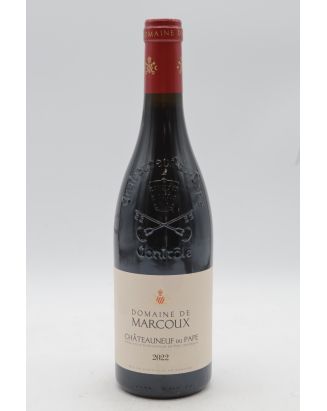
Domaine Marcoux, located in the Rhône Valley and founded in 1975, belongs to the Armenier family. The vineyards have been in the family for centuries, but it was Philippe Armenier who, on joining his father at the estate, encouraged him to create the Domaine Marcoux brand and stop selling the harvest to wine merchants. By the 1980s, Domaine Marcoux had built a substantial customer base abroad, leaving just a quarter of its production for the French market. Sophie Armenier joined her family at Domaine Marcoux in 1988 and began converting to organic and biodynamic farming in 1991. Philippe Armenier left Domaine de Marcoux in the late 1990s, and his two sisters, Sophie and Catherine, have since run the Marcoux house themselves, expanding the vineyard to 21 hectares. Sophie Armenier's son joined Domaine Marcoux in 2015 and devotes particular care to the estate's vines, spread across seven named vineyard sites in Châteauneuf-du-Pape.
The Armenier family's roots in Châteauneuf-du-Pape run deep: archives document their presence in the village as early as the 14th century, and the estate's origins may go back much further. For generations, Émile, then Élie and Philippe, passed down the vines and recorded the distinctive features of each vintage in their notebooks. In the late 1980s, Philippe Armenier steered the estate toward biodynamics, making Marcoux the first estate in the appellation to adopt this approach, before leaving to pursue his career in California in 1995.
His sisters, Sophie and Catherine Armenier, then took over: Sophie in the cellar and Catherine in the vineyards. Together, they raised the estate to the top tier of Châteauneuf-du-Pape producers, earning recognition from Robert Parker in 2003 as two of the wine personalities of the year. Also in 2003, the family crossed the Rhône to establish a presence in Lirac. Since 2015, Sophie's son Vincent Estevenin has joined the venture and now looks after the vineyards, ensuring the continuity of this exceptional family story.
The vineyards of Domaine de Marcoux cover around 28 hectares across more than 20 plots. Approximately 18 hectares lie in Châteauneuf-du-Pape, scattered across a mosaic of named sites with contrasting soils: Charbonnières on the edge of the La Crau plateau, Les Esqueirons, Beaurenard, Les Plagnes, l'Arnesque and Les Bousquets. Rounded stones, sand, clay and limestone create a range of terroirs that adds complexity to the blends. Grenache is by far the dominant grape variety, alongside Mourvèdre, Syrah and Cinsault, while Roussanne, Bourboulenc, Clairette and Grenache Blanc make up the whites. Some vines are over a century old.
On the Rhône's right bank at Saint-Laurent-des-Arbres, the estate farms around 7 hectares in the Lirac appellation, almost all in one block, amid the garrigue in the Balouvière valley. The limestone soils are covered with red clay and stones. A few hectares of Côtes du Rhône north of Châteauneuf and two alluvial plots beside the Rhône complete the holdings. The entire vineyard is farmed organically, with Ecocert certification, and according to biodynamic principles, with meticulous soil cultivation and bush-vine pruning.
At Domaine de Marcoux, winemaking continues the work begun in the vineyard with the same attention to detail. Grapes are harvested by hand into 50 kg crates and sorted twice, first in the vineyard and then at the winery. For the reds, the grapes are destemmed and fermented using only native yeasts, with temperature control and daily pump-overs or rack-and-returns to encourage gentle extraction over two to three weeks of maceration. Aging takes place mainly in concrete tanks, with some wines aged in 350-liter barrels and large Stockinger Austrian oak casks, preserving the vibrancy of the fruit without allowing oak to dominate.
The whites are gently pressed and settled, then fermented at around 17 °C before aging on fine lees in stainless steel tanks and demi-muids. For the white Châteauneuf-du-Pape wines, malolactic fermentation is deliberately prevented to preserve all their freshness and tension.
Châteauneuf-du-Pape Vieilles Vignes red: the estate's flagship cuvée and one of the finest wines of the southern Rhône Valley, it comes almost exclusively from old Grenache vines planted at Charbonnières, on the edge of the La Crau plateau, and Les Esqueirons. Made only in vintages when Grenache is both generous and complex, it offers a silky texture, impressive density, notes of black fruit, kirsch, spices and garrigue, and remarkable length. A wine built for long aging.
Châteauneuf-du-Pape red: a blend from a dozen plots across the appellation, dominated by Grenache and complemented by Mourvèdre, Syrah and Cinsault. Considered one of the appellation's finest “classic” Châteauneuf-du-Pape wines, it combines vibrant red fruit, sweet spices, fine tannins and freshness. It gains complexity after a few years in the cellar.
Châteauneuf-du-Pape white: rare, like the appellation's white wines, it comes mainly from Roussanne planted at Les Esqueirons and Bourboulenc from Les Bousquets, with a touch of Clairette and Grenache Blanc. Aged on fine lees without malolactic fermentation, it offers aromas of white flowers, yellow fruit and honey, with generous body and a fresh finish.
Lirac La Lorentine red: from the Saint-Laurent-des-Arbres vineyard, this blend of Grenache, Mourvèdre and Syrah is vinified like the estate's Châteauneuf wines, then aged in concrete tanks and large oak casks before bottling around 18 months after harvest. Deep, fresh and structured, it offers some of the best value in the range.
Côtes du Rhône red: produced from small plots north of Châteauneuf-du-Pape, this Grenache-based wine stands out for its freshness, crisp fruit and easy-drinking character. An inviting introduction to Domaine de Marcoux, ideal with everyday meals.
Raisin de Loup red (Vin de France): from two alluvial plots beside the Rhône that the family calls the “grand Rhône” and the “petit Rhône,” it blends Grenache, Syrah and Caladoc. Aged in concrete tanks and bottled around six months after harvest, this is a delicious, easygoing red, grown with the same care as the estate's finest wines.
Raisin de Loup white (Vin de France): made from white and pink Clairette grown as bush vines on the clay-limestone soils of Saint-Laurent-des-Arbres, this white is fermented in tanks with native yeasts and charms with its supple texture, floral and fruity notes, and thirst-quenching freshness.
COLLECTION NEAR PARIS & VAT REFUND FOR TOURISTS
Free collection in our warehouse near central Paris (92)