Personalise your experience
Change your country, language and currency here whenever you wish.
|
|
|
Must-See Châteaux |
|
|
|
|
|
|
|
|
Fifth Grand Cru Classé
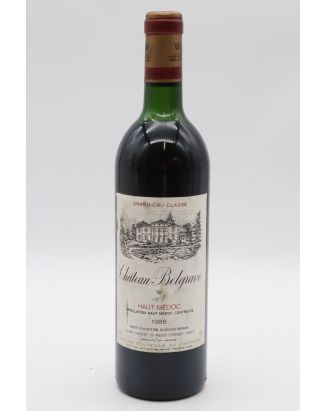
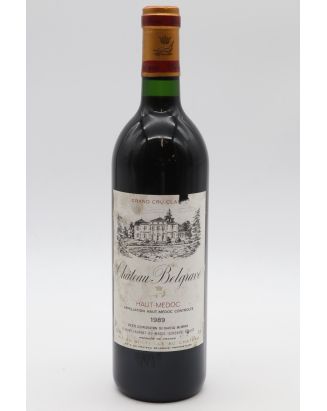
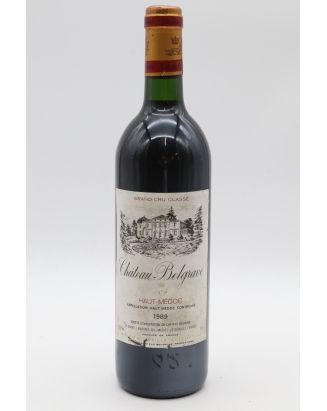
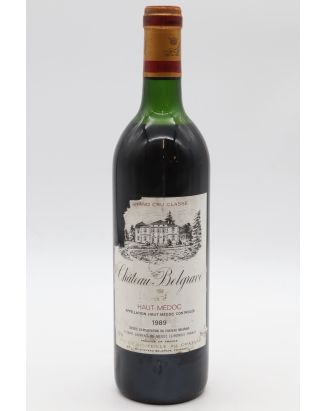
Taken over in 1979 by the Dourthe house, Château Belgrave is a 5th Grand Cru Classé in 1855 from the Haut-Médoc. Located 30 km north-west of Bordeaux (left bank of the Garonne), Château Belgrave neighbours the châteaux of La Tour Carnet, Camensac and Lagrange. The 59 hectares of vines, cultivated using sustainable farming methods, are rooted in a soil composed of 2 elevated ridges of deep gravel over clay and gravelly-sandy subsoils. With an average age of 25 years, the vineyard is made up of Cabernet Sauvignon (65%), Merlot (30%), Cabernet Franc (4%) and Petit Verdot (1%).
Before becoming a vineyard, Belgrave was a renowned hunting lodge during the reign of Louis XV, set amid the moors and forests of the Médoc. The expansion of the vineyard owes much to the Coutanceau family, whose name was first used to identify the estate's wines in broker Guillaume Lawton's 1815 Bordeaux classification.
The decisive turning point came in the mid-19th century. In 1851, Bordeaux wine merchant Bruno Devès completely restructured the property, strategically planting vines on the finest gravel terroirs. He built residences, vat rooms, and cellars, and erected the current manor house on the exact site of the former hunting lodge. During this period, the estate first appeared on the land registry under its new name, Bellegrave. Four years later, in 1855, on the occasion of the Paris Universal Exposition, the growth was classified as a Fifth Grand Cru Classé under the name Coutanceau; the name Belgrave was permanently adopted in the early 20th century. The property left an enduring mark on Médoc history: through former owner Marcel Alibert, the Crus Classés syndicate was founded in 1901. Since 1979, Maison Dourthe has managed the estate, undertaking extensive vineyard mapping, density work, and vinification upgrades, resulting in vintages consistently acclaimed by critics.
The name Belgrave, literally "fine gravels," says everything about its terroir. The estate forms a remarkable, contiguous 60-hectare property whose parcel boundaries have remained virtually unchanged for two centuries—a true heritage passed down through generations. The producing vineyard covers 50 hectares, planted to 30.5 hectares of Cabernet Sauvignon, 18.5 hectares of Merlot, and 1 hectare of Petit Verdot.
The soils consist of two high ridges of deep gravel resting on clay subsoils, complemented by sandy gravels and occasional clay outcrops. Offering perfect drainage, these pebbles deposited by the Garonne nearly two million years ago force the vines to root deeply, enabling the finest expression of Cabernet Sauvignon, the Médoc's signature variety. The proximity of the Gironde estuary moderates the climate and extends the growing season. Following in-depth soil and water-table studies, 75% of the vineyard is now planted at a high density of 10,000 vines per hectare on plateaus and ridge crests, compared to 6,700 vines on slopes. This precise mapping helps identify areas of uniform ripeness within each plot. Environmental commitment is tangible: nearly a third of the estate remains unplanted, 850 meters of hedgerows have been planted in partnership with the LPO (League for the Protection of Birds), a flock of Landes ewes manages the meadows, five hives of Médoc black bees were introduced in 2020, and a 2023 inventory recorded 54 bird species, 33 butterfly species, 7 amphibians, and 10 bats.
Achieving optimal grape quality is the top priority for the team, led by estate manager Bertrand Delavelle, supported by cellar master Guillaume Singier and vineyard manager Alex Blanchard. Harvesting is conducted plot by plot, timed according to observed ripeness, ensuring perfectly homogeneous vats.
The fully renovated vat room now features 33 stainless steel vats of varying capacities, including six small tronconical vats reserved for precise micro-lots. This tailored setup honors the character and diversity of each harvest parcel, allowing the gentlest processing possible with extractions calibrated batch by batch rather than following a rigid formula. After alcoholic and malolactic fermentation, the wines move to the semi-underground barrel cellar, which provides naturally stable temperature and humidity. Aging for the fine wine lasts around fourteen months in oak barrels, with 45 to 50% new oak adjusted each year to suit the vintage's structure. The resulting style has evolved markedly in recent years: gentler extractions, brighter fruit, velvety tannins, and assertive freshness on the finish.
Château Belgrave, Grand Cru Classé in 1855 (Haut-Médoc AOC): the estate's fine wine, member of the Union des Grands Crus de Bordeaux. It draws its identity from the deep gravel-over-clay terroir that earned the growth its 1855 classification. The blend is dominated by Cabernet Sauvignon (around 70 to 75%), complemented by Merlot and a touch of Petit Verdot, with roughly fourteen months of aging in French oak barrels (nearly half new). It shows a deep, dense violet color. The nose reveals complex notes of ripe black fruits, cedar, licorice, and sweet spices, lifted by a touch of menthol. Fleshy and balanced from the attack, the palate is juicy and distinguished, built on the breadth of a velvety tannic structure. Intense fruitiness persists throughout the tasting, carrying into a long, fresh, and elegant finish. Tasters frequently highlight its distinctly Saint-Julien character—natural given the immediate proximity to the appellation—alongside outstanding aging potential, typically ten to twenty years depending on the vintage.
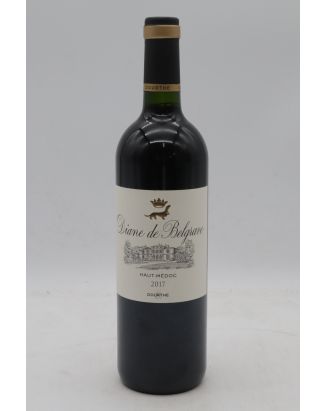
Diane de Belgrave (Haut-Médoc AOC): the estate's second wine, named in honor of Diana, mythological goddess of fertility and protectress of wildlife, echoing the property's past as a hunting lodge. It receives the exact same care as the grand wine, in vineyard and cellar alike, but comes from younger parcels. The blend highlights Merlot, giving it a rounder and more approachable profile. The nose opens with ripe fruits, plum, and spices, while the palate is fleshy, supple, and well supported by fine-grained tannins. This characterful wine can be enjoyed in its youth with grilled meats, duck breast, or aged cheeses, making it an excellent way to discover the classified growth's signature at a more accessible price point.
COLLECTION NEAR PARIS & VAT REFUND FOR TOURISTS
Free collection in our warehouse near central Paris (92)