
 Personalise your experience



 Sign in
 Cart
0
Cart
0


Best Cornas wines: estates, vintages, and prices

Best Cornas wines: estates, vintages, and prices
Cornas may be the least-known name in the northern Rhône. Less famous than Hermitage and less prominent than Côte-Rôtie, this small 145-hectare appellation, nestled in a granite amphitheater above the town of Cornas, nevertheless produces some of France’s most rugged, authentic, and sought-after Syrahs.
Here, there are no blends and no whites: exclusively single-varietal Syrah, grown on south-facing terraces of decomposed granite. The result is a wine of concentration and power that few appellations can match, provided you give it time to open up. This guide covers the best Cornas estates, the vintages to seek out, and market prices to help you make the right choice.
Key takeaways:
- Cornas is a red-only AOC made from 100% Syrah, the only permitted grape. No whites, no blends: Syrah finds one of its most rugged and powerful expressions here.
- The appellation covers just 145 hectares of amphitheater-like granite terraces, making it one of the smallest and rarest in the northern Rhône.
- The benchmark producers are Auguste Clape (the ultimate reference), Thierry Allemand, Domaine du Tunnel (Stéphane Robert), and Vincent Paris, all producing in very limited quantities.
- The 2010, 2015, and 2019 vintages are the most accomplished in recent years. Cornas is a wine built to age, coming into its own between 8 and 20 years.
- Prices range from 25–30 euros for entry-level wines to over 150 euros for single-vineyard cuvées from leading estates. Older Clape vintages often exceed 300–400 euros.
The Cornas appellation: Syrah at its most powerful
Geography and terroir
The Cornas AOC lies in Ardèche on the right bank of the Rhône, opposite Valence and a few kilometers south of Tournon-sur-Rhône. It covers only the municipality of Cornas, making it one of France’s few single-commune appellations.
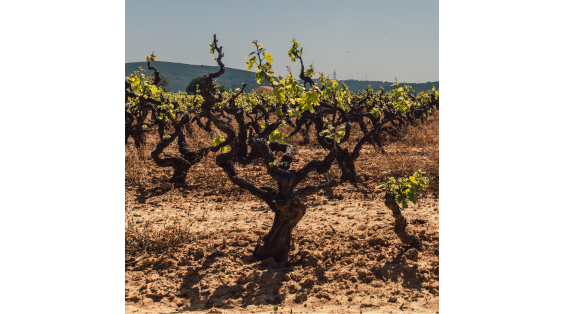
The vineyard is laid out in amphitheater-like terraces, sheltered from northerly winds by the Coiron massif and facing due south to maximize sunlight. The subsoil is entirely granite—a two-mica granite that gives the wines their characteristic minerality and distinctive tannic structure.
One grape variety: Syrah
What makes Cornas distinctive is that it is 100% red Syrah grown on granite. Syrah finds a radically different expression here than in Hermitage or Côte-Rôtie: darker, more austere, more earthy.
A young Cornas can seem impenetrable, almost forbidding. That is its nature. Give it 8 to 12 years and it becomes one of the Rhône’s most fascinating wines.
Why is Cornas underrated?
For decades, Cornas lived in the shadow of Hermitage and Côte-Rôtie. Prices long remained below what the quality warranted. That has changed since the 2000s, particularly with the rise of producers such as Thierry Allemand and Vincent Paris. But for those who know where to look, Cornas remains one of the Rhône’s best values for outstanding age-worthy wines.
The best Cornas estates: our selection
Cornas production is concentrated among around twenty estates. Here are the essential names, from the most legendary to the most accessible.
|
Estate |
Signature cuvée(s) |
Style and key strength |
|
Auguste Clape |
Cornas / Renaissance |
The ultimate benchmark: wines of unrivaled purity and longevity. Very limited production and waiting lists. |
|
Thierry Allemand |
Reynard / Chaillot |
Biodynamic farming, old vines, extreme intensity and minerality. Among the Rhône’s most sought-after wines. |
|
Domaine du Tunnel |
Vin Noir / Cornas Pur Granit |
Stéphane Robert: exceptionally expressive single-vineyard cuvées and excellent value for wines of this caliber. |
|
Vincent Paris |
Granit 30 / Granit 60 / La Geynale |
A young estate with a precise, technical approach. The Granit cuvées take their names from the steepness of the slope; the steepest plots are also home to the oldest vines. |
|
Jean-Luc Colombo |
Les Ruchets / La Louvée |
Modern, extracted style, approachable young. Les Ruchets is the appellation’s best-known cuvée internationally. |
|
Domaine Alain Voge |
Les Vieilles Vignes / Harmonie |
Old vines over 60 years of age, with tannins of rare finesse for Cornas. Wines that age exceptionally well. |
Auguste Clape: the ultimate benchmark
Domaine Auguste Clape is to Cornas what Romanée-Conti is to Burgundy: a legendary benchmark, with very limited production and wines that defy time. Auguste Clape died in 2018; the estate is now run by his son Pierre-Marie and grandson Olivier. It produces two cuvées: the classic Cornas and Renaissance. A Clape Cornas from an excellent year (2010, 2015, 2019) is, quite simply, one of France’s great red wines.
Thierry Allemand: the consummate artisan
If Clape is the historic benchmark, Thierry Allemand has been the revelation of the appellation since the 1990s. An iconoclastic winemaker who has practiced biodynamic farming, he makes two cuvées—Chaillot (from clay-limestone soils and younger vines) and Reynard (from old vines on granite soils)—in such small quantities that finding them at a wine shop is an achievement. His wines are among the most sought-after in the entire Rhône Valley.
Domaine du Tunnel, Stéphane Robert: single-vineyard precision
Stéphane Robert founded Domaine du Tunnel in 1994. His cuvées, notably Vin Noir and Cornas Pur Granit, show a precision and attention to individual vineyard plots reminiscent of Burgundy’s finest winemakers. Excellent value for wines of this caliber.
Vincent Paris: the appellation’s new guard
Vincent Paris represents a new generation in Cornas: precise, ambitious, and international in his approach. His Granit range (from 30-year-old and 60-year-old vines) offers a clear expression of the terroir. His La Geynale cuvée, made from the estate’s oldest vines, is his most accomplished expression.
Which vintages should you choose for a Cornas?
Cornas is a wine built to age. Choosing the right vintage—and knowing when to open it—makes all the difference to the tasting experience.
|
Vintage |
Overall rating |
Characteristics |
Current stage |
|
2019 |
Exceptional |
Sun-drenched, concentrated, ripe tannins, immense aging potential |
Wait at least another 5–8 years |
|
2017 |
Excellent |
Balanced and fruity, with good freshness for the vintage |
Drinking window: 2025–2035 |
|
2016 |
Exceptional |
Classic and fresh, with great precision, finely sculpted tannins, and lovely balance |
Still young; give it time and drink from 2027 to 2040 |
|
2015 |
Outstanding |
Power, opulence, maximum concentration |
Still closed; wait until 2027–2030 |
|
2013 |
Good |
Fresher and more mineral, with an elegant structure |
In a good drinking window now |
|
2012 |
Excellent |
Concentration and freshness, with remarkable consistency |
At or near its peak |
|
2010 |
Exceptional |
The vintage of the decade, with perfect balance |
Entering its peak; drink from 2025 to 2035 |
|
2009 |
Outstanding |
Warm and generous, with very ripe tannins |
Open and ready to drink now, or hold only briefly |
|
2007 |
Good to very good |
Fruity and approachable, with less aging potential than the great vintages |
Ready to drink |
The special case of the 2010 vintage
The 2010 vintage is widely considered Cornas’s greatest of the decade. It offers an exceptional balance of concentration, freshness, and tannic structure. The wines are now in their peak drinking window (2025–2035). If you find a 2010 Clape or Allemand at a reasonable price, it is a purchase not to miss.
2019: the vintage to watch
The 2019 vintage is a serious contender for the best vintage of the 2010–2020 decade. Sun-drenched and concentrated, it has ripe tannins of remarkable breadth. At this stage, the wines are still closed and restrained.
Cornas wine prices: what you need to know
Cornas remains less expensive than Hermitage or Côte-Rôtie at a comparable quality level, but prices have risen significantly since 2015.
|
Segment |
Price range |
Examples of estates |
|
Entry-level |
25–45 euros |
Durand Expression, Courbis Sauvageonne, Cave de Tain |
|
Mid-range |
45–80 euros |
Vincent Paris Granit 30, Domaine du Tunnel, Alain Voge VV |
|
Premium |
80–150 euros |
Thierry Allemand Chaillot, Vincent Paris La Geynale, Clape Cornas |
|
Prestige / single-vineyard |
150–300+ euros |
Thierry Allemand Reynard, Auguste Clape Cornas |
|
Older vintages |
200–500+ euros |
Auguste Clape 2010, 2009, and 2001 on the secondary market |
How prices have changed over the past decade
In 2012, a Thierry Allemand Reynard could be bought for around 40–50 euros at the estate. Today, the same bottle exceeds 200–250 euros on the secondary market. This dramatic price increase reflects the appellation’s international recognition.
How should you serve and decant a Cornas?
Decanting: essential for young wines
A Cornas under 10 years old is almost always closed and not very expressive when first opened. Decanting is not optional; it is essential. Allow at least 1½ to 2 hours of decanting for a wine aged 5–8 years. For a young wine (2–4 years), 3 hours is not too long.
Serving temperature
Serve Cornas at 16–18°C. Below that, the tannins seem even more austere and the aromas remain muted. Above 19°C, the alcohol dominates and the structure falls apart.
Food and wine pairings with Cornas
Classic pairings
• Grilled bone-in rib steak and ribeye: the classic pairing. Cornas’s tannins cut through the richness of the meat.
• Furred game (venison, wild boar, hare): the aromatic power of Cornas stands up to game’s strong flavors.
• Herb-roasted milk-fed lamb: a classic Rhône pairing. The lamb’s tenderness set against the structure of Cornas makes an elegant combination.
• Strong aged cheeses: aged Cantal, aged Saint-Nectaire, Fourme d’Ambert.
Unexpected pairings
• Black truffle (Tuber melanosporum): aged Cornas (15 years or more) develops tertiary aromas of truffle and forest floor, making it an ideal companion for truffle dishes.
• Intense dark chocolate (70% cacao or more): a surprising but successful pairing; the rich tannins of Cornas and the bitterness of chocolate complement each other against the odds.
Cornas vs. Hermitage vs. Côte-Rôtie: what are the differences?
• Hermitage: the most prestigious, the most expensive, and the most versatile (red AND white). Granite and loess soils yield wines of unique elegance and complexity.
• Côte-Rôtie: Syrah blended with up to 20% Viognier (a white grape), adding a distinctive floral note absent from Cornas. A more fragrant, more delicate style.
• Cornas: 100% Syrah, pure granite, the most rugged and earthy of the three. Less floral than Côte-Rôtie and less elegant than Hermitage, but with a power and minerality all its own.
If Hermitage is the king of the Rhône and Côte-Rôtie its most elegant courtesan, Cornas is the warrior: fierce, austere, untamable, and ultimately the most fascinating of the three.
Frequently asked questions about Cornas wines
What is the best Cornas wine?
Domaine Auguste Clape is widely considered the appellation’s ultimate benchmark. Its Cornas and Renaissance cuvées are the standards against which all others are judged. Thierry Allemand (Reynard and Chaillot) is its only serious rival in quality.
How much does a good Cornas cost?
Between 30 and 50 euros, the Durand and Courbis estates and Vincent Paris’s entry-level wines offer a solid introduction to the appellation. For top wines from the Clape, Allemand, or Tunnel estates, expect to pay 80 to 250 euros.
How long should you cellar a Cornas?
Entry-level wines can be drunk after 5–7 years. The top cuvées from benchmark estates come into their own between 10 and 25 years. A Clape or Allemand from an exceptional year can age for 30 years without losing its appeal.
Is there a white Cornas wine?
No. The Cornas AOC is exclusively red, and Syrah is the only permitted grape. There is no official white Cornas.
What is the difference between Cornas and Crozes-Hermitage?
Crozes-Hermitage is produced across a vast area (more than 1,600 hectares) with varied terroirs, yielding wines that are generally more approachable, fruitier, and less concentrated. Cornas, with its 145 hectares of pure granite, produces wines that are more austere, more mineral, and better suited to long aging.


COLLECTION NEAR PARIS & VAT REFUND FOR TOURISTS
Free collection in our warehouse near central Paris (92)