Cabernet Sauvignon: origins, aromas, regions and pairings
It is the world’s most widely planted wine grape. The most recognized, the most collected, the most imitated. Yet Cabernet Sauvignon remains a mystery to many: why is this wine so austere when young and so fascinating with age ? Why are a Pauillac and a Napa Valley wine, both built around the same grape variety, so radically different ? How do you choose, age and serve Cabernet Sauvignon to get the best from it ?
This comprehensive guide answers all these questions, from the grape's botanical origins and aromatic profile to its major growing regions, benchmark vintages, food pairings, and tips for serving it properly. Everything you need to know to understand and appreciate the king of red grapes.
Key takeaway:
● Cabernet Sauvignon is the world's most widely planted wine grape, with approximately 341,000 hectares. Grown on all five continents, it produces very different wines depending on the terroir, but they are always recognizable by their firm tannins, blackcurrant notes, and exceptional aging potential.
● Born in southwestern France from a spontaneous cross between Cabernet Franc and Sauvignon Blanc, it reaches its peak on the gravel soils of Bordeaux's Left Bank (Pauillac, Margaux, Saint-Estèphe) and in California's Napa Valley.
● Its signature aromas are blackcurrant, cedar, and green bell pepper in youth, followed by cigar, leather, truffle, and graphite with age. It is one of the few red grape varieties capable of aging for 30 to 50 years.
● When young, it is often austere and tannic: it needs time, or extended aeration in a decanter, to open up. At maturity, it becomes one of the world’s most complex and fascinating wines.
● The best recent Bordeaux vintages are 2016, 2018, 2019 and 2020; among the legends, 1945, 1961, 1982 and 1990 remain the definitive benchmarks. In Napa Valley, 2013, 2016 and 2019 are benchmark vintages.
What is Cabernet Sauvignon?
Origins and lineage
Cabernet Sauvignon arose from a natural cross between Cabernet Franc and Sauvignon Blanc, a lineage established through DNA analysis in 1997 by the University of California, Davis. The cross occurred spontaneously in southwestern France, probably in Guyenne, in the 17th century. It is one of the few major grape varieties whose parentage has been established with certainty.
This dual parentage sheds light on some of its traits without fully explaining them. From the Cabernet family, it inherits its black-fruit aromas and herbaceous notes; its pronounced acidity and tension recall Sauvignon Blanc. Its tannic power, however, is its own: it far exceeds that of Cabernet Franc.
Morphology: thick skins, the source of power
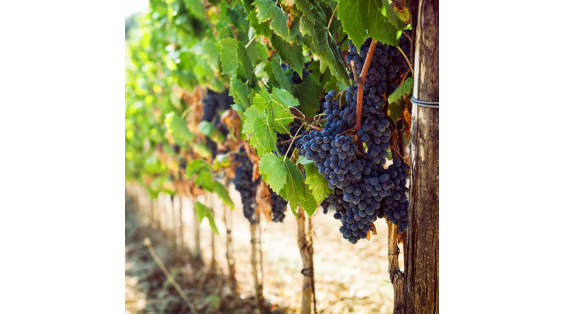
Cabernet Sauvignon has small berries, thick skins and numerous seeds. This morphology is the key to its character:
• Thick skins: rich in tannins, anthocyanins (color pigments) and aroma precursors. They give the wine its deep color, tannic structure and aging potential.
• Small berries: a high skin-to-juice ratio. For the same quantity of grapes, they yield proportionally more tannin and color than large, thin-skinned grapes.
• Numerous seeds: when ripe and properly extracted through controlled maceration, they add to the tannic structure. Underripe seeds, by contrast, produce green, harsh tannins.
A hardy but demanding grape variety
Unlike the temperamental, delicate Pinot Noir, Cabernet Sauvignon is a relatively hardy grape: its thick skin gives it good resistance to gray rot, its late budbreak largely protects it from spring frosts, and it adapts to many terroirs. This is partly why it has spread so easily around the world.
Its late ripening is its main constraint, however: in regions that are too cool, the grapes do not ripen sufficiently, and the wines remain green and herbaceous, with hard tannins. Cabernet Sauvignon needs warmth to express its full potential.
A fully ripe Cabernet Sauvignon from a great terroir can produce one of the world’s most extraordinary wines. Planted in the wrong place or vinified too hastily, it produces an austere, vegetal wine with little charm. It all comes down to terroir and patience.
Cabernet Sauvignon, rarely on its own: the Bordeaux blend
In Bordeaux, Cabernet Sauvignon is almost never vinified on its own. A Pauillac typically contains 60 to 80%, complemented by Merlot (roundness and body), Cabernet Franc (aroma and finesse) and Petit Verdot (color and spice).
This practice is not a compromise: it reflects the grape's late-ripening nature, which means it does not reach full maturity every year in Bordeaux's climate, and allows winemakers to adjust the wine's balance vintage after vintage. This is precisely what distinguishes a Bordeaux from a California or Chilean Cabernet, most often made with 90–100% Cabernet Sauvignon. Understanding this helps explain why two wines built around the same grape can be so radically different.
What does Cabernet Sauvignon taste like ? Aromas and flavor profile
The palate
Cabernet Sauvignon has several distinctive sensory characteristics:
• Color: deep garnet, almost opaque when young. Much darker than Pinot Noir or Gamay.
• Tannins: firm, tightly knit and often austere when young. Cabernet’s tannic signature is unmistakable: it dries the mouth and needs time to mellow.
• Acidity: moderate to high; it gives the wine structure and contributes to its longevity.
• Body: full to very full, with high alcohol content of 13 to 15% ABV, depending on terroir and vintage.
• Finish: long and persistent, sustained by a still-present tannic structure and notes of black fruit and spice. Great Cabernets easily exceed 10 to 15 caudalies—that many seconds of lingering flavor.
How aromas evolve over time
Cabernet Sauvignon is one of the grape varieties that evolves most dramatically in the bottle.
Stage | Dominant aromas | Pairing notes |
Youth (1–5 years) | Blackcurrant, black cherry, blueberry, green bell pepper, menthol | Oak-aging aromas: cedar, vanilla, toast, light smoke |
Development (5–15 years) | Jammy black fruit, plum, licorice, sweet spices | First tertiary aromas: graphite, tobacco, leather, cigar box, earthy notes |
Maturity (15–30 years and beyond) | Dried fruit, fig, date, integrated and subtle fruit notes | Pronounced tertiary aromas: black truffle, forest floor, coffee, dark chocolate, balsamic notes |
The green bell pepper note: understanding pyrazines
The green bell pepper note is Cabernet Sauvignon's most distinctive, and sometimes most polarizing, aroma. It comes from methoxypyrazines, compounds found throughout the Cabernet family: Cabernet Franc and Merlot contain them too. Their concentration depends mainly on grape ripeness and sun exposure, falling sharply as the berries ripen. In a wine made from fully ripe grapes, the note remains subtle and adds complexity. In a wine made from underripe grapes (due to an early harvest or a cool year), it dominates and throws the wine out of balance.
A Cabernet Sauvignon from a warm region (Napa Valley, Australia) will show little or none of this character. A Cabernet from a cooler region (Bordeaux in a difficult year, New Zealand) may show more. It is not a flaw in itself: it is an indicator of ripeness and terroir.
Where does Cabernet Sauvignon grow ? The major winegrowing regions
With approximately 341,000 hectares, or nearly 4% of the world's vineyard area, Cabernet Sauvignon is the most widely planted wine grape on the planet. Its expression varies considerably with climate and soil.
Region | Predominant style | Iconic appellations and estates |
Bordeaux Left Bank (France) | Elegant, structured, with great aging potential | Pauillac, Margaux, Saint-Estèphe, Saint-Julien, Pessac-Léognan |
Napa Valley (California) | Opulent, fruity, concentrated, high in alcohol | Rutherford, Oakville, Stags Leap District, Opus One, Caymus, Screaming Eagle |
Chile (Central Valley) | Fruity, supple, excellent value | Valle del Maipo, Colchagua, Almaviva, Don Melchor |
Australia | Powerful, with notes of mint and eucalyptus | Coonawarra, Margaret River, Wynns, Moss Wood |
Italy (Tuscany) | Structured, dry, herbaceous notes (Super Tuscans) | Bolgheri, Sassicaia, Solaia, Guado al Tasso |
Spain | Generous, fruity, well-structured | Ribera del Duero, Penedès |
Argentina | Warm, tannic, with spicy notes | Mendoza, Luján de Cuyo |
South Africa | Fruity, fresh, with maritime influence | Stellenbosch, Franschhoek |
Washington State (United States) | Fruity and structured, with supple tannins | Columbia Valley, Red Mountain, Quilceda Creek, Leonetti |
Bordeaux’s Left Bank: the historic heartland
Bordeaux's Left Bank is Cabernet Sauvignon's birthplace and historic benchmark. On the gravel soils of the Médoc and Graves, it produces wines whose elegance and longevity remain, for many enthusiasts, the standard against which all others are measured.
• Pauillac: three of the five 1855 first growths are located here (Lafite, Latour and Mouton-Rothschild). Powerful wines with a tightly knit structure and considerable aging potential.
• Margaux: the most floral and elegant, led by Château Margaux. Finer tannins, a more fragrant bouquet.
• Saint-Julien: consistent, elegant, and approachable, led by Léoville Las Cases and Ducru-Beaucaillou. Often considered the best value in the Médoc.
• Saint-Estèphe: the most tannic and austere when young. Calon-Ségur, Cos d’Estournel and Montrose require lengthy aging.
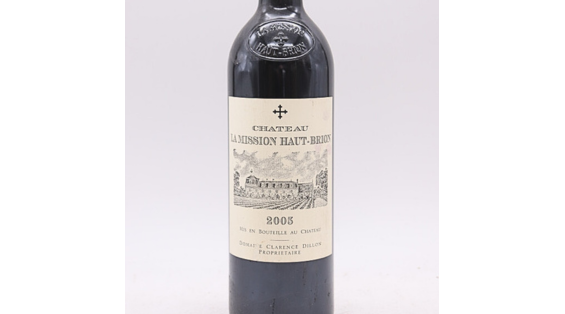
• Pessac-Léognan (Graves): different soils, with smokier, more tightly structured wines. Château Haut-Brion and Château La Mission Haut-Brion are its benchmarks.
Napa Valley: the New World benchmark
California’s Napa Valley is one of the few regions in the world to rival great Bordeaux wines in prestige and price. Its Mediterranean climate (hot, dry summers and cool nights) produces Cabernets with an opulence and concentration Bordeaux rarely achieves.
The Rutherford and Oakville sub-appellations, along with Stags Leap District, are the most renowned for this grape. Iconic estates (Opus One, Screaming Eagle, Harlan Estate, Caymus) command prices comparable to Bordeaux first growths. The style is more opulent, fruitier, and more approachable when young than Bordeaux, with comparable aging potential in great vintages.
Chile: value that’s hard to beat
Chile has established itself as a global benchmark for affordable Cabernet Sauvignon. The Valle del Maipo, at the foot of the Andes near Santiago, produces Cabernets of remarkable quality at prices often two to five times lower than comparable Bordeaux wines. Almaviva (a joint venture between Baron Philippe de Rothschild and Concha y Toro), Don Melchor (Concha y Toro), and Viñedo Chadwick (Errázuriz) show that Chilean Cabernet can rival Europe's great wines.
Italy: the Super Tuscans
In Tuscany, a few winemakers planted Cabernet Sauvignon as early as the 1940s, outside the DOC production rules then in force. These wines were not sold until the late 1960s, under the simple designation vino da tavola: the Super Tuscans were born. Sassicaia, in Bolgheri, was the pioneer: a Cabernet Sauvignon-dominant blend rounded out with Cabernet Franc that redefined the world’s perception of Italian wines. Ornellaia, Solaia and Guado al Tasso followed.
The best Bordeaux Cabernet Sauvignon vintages
Vintage is a decisive factor for Bordeaux Cabernet Sauvignon, more so than for grape varieties that better tolerate unpredictable weather. The table below covers recent vintages, followed by the great historic benchmarks of the Left Bank. The assessments summarize ratings from leading sources (Bordeaux’s ISVV, Bettane+Desseauve, Wine Spectator); they are intended as a guide and vary considerably from one château to another.
Vintage | Quality | Characteristics | Optimal stage |
2016 | Exceptional | Benchmark of the decade: structure, freshness, 40-year aging potential | Still closed: wait until 2028 or later |
2010 | Exceptional | Historic vintage: concentration, acidity and tannins of rare precision | Still young: 2028–2050 |
2009 | Outstanding | Warm, concentrated and powerful ; some find it excessively sun-drenched | At its peak now |
2005 | Exceptional | Classic structure and remarkable balance; the definitive benchmark | At its peak |
2000 | Exceptional | Vintage of the millennium, with remarkable consistency across the Left Bank | At its peak |
1996 | Exceptional | The great vintage for Médoc Cabernet: a cool September, with the Left Bank far outperforming the Right Bank | Ready to drink, at its peak |
1990 | Legendary | Warm and generous, with rare richness; closes out the 1988–1989–1990 trilogy | Ready to drink, at its peak |
1986 | Exceptional | A highly tannic vintage, tailor-made for Médoc Cabernet; long austere | Finally opening up |
1982 | Legendary | Unprecedented ripeness and opulence; the vintage that shook up wine criticism | At its peak; drink soon |
1961 | Iconic | Spring frost and poor fruit set: tiny yields, extreme concentration | The finest wines are still at their peak |
1945 | Iconic | Tiny harvest after the April frost, extraordinary concentration | Collector's bottles, still vibrant |
2016: the vintage of the decade, according to experts
The 2016 vintage is widely hailed as one of the greatest in Bordeaux's recent history ; some compare it to the legendary 1982. Yet its weather was paradoxical: the first half of the year was exceptionally wet, with around 850 mm of rain versus 400 in 2015. This put the vineyards under intense downy mildew pressure but replenished the soils' water reserves. From late June, warm, dry high-pressure weather set in for nearly three months, followed by a sunny late season with cool nights. The result: wines of extraordinary freshness, precision, and aging potential. The 2016 first growths remain very closed ; you should wait until at least 2028–2030 before opening them.
2010 and 2009: two contrasting styles, two great vintages
The 2010 vintage is all about precision: freshness, high acidity, and remarkably fine tannins. The 2009 is all about immediate pleasure: opulence, concentration, and sun-kissed charm. Both are historic wines, but for opposite reasons. Choose the 2010 for very long-term cellaring. To drink within the next five years, the 2009 is more generous.
Legendary vintages: 1945, 1961, 1982, 1990
Four vintages loom large in Bordeaux lore. The 1945 vintage, born of a tiny harvest after the April frost, remains the most iconic: that year’s Mouton-Rothschild, with its “Year of Victory” label, is one of the most famous wines ever produced. The 1961 vintage, marked by frost and poor fruit set, yielded tiny crops and a concentration few vintages have matched since; its great wines are still going strong.
1982 changed the history of wine criticism as much as wine itself: its then-unprecedented ripeness and opulence initially divided tasters before winning them over. 1990 closed out the 1988–1989–1990 trilogy with rare generosity, while Haut-Brion 1989 remains, for many, the decade's pinnacle.
Two vintages deserve particular attention in a guide to Cabernet Sauvignon. The 1986 produced wines of exceptional tannic power, long considered austere and now fully open. And 1996 is arguably the most distinctly “Cabernet” vintage of the late 20th century: a cool September brought the grape to perfect ripeness in the Médoc, while Right Bank Merlot struggled. In both years, the Left Bank clearly came out ahead.
How should you serve Cabernet Sauvignon ?
Serving temperature
Serve Cabernet Sauvignon at 16 to 18 °C. Below 16 °C, the tannins seem harsher and the aromas remain muted. Above 18 °C, the alcohol dominates, and the wine loses its freshness and tension. If your cellar is at 14–15 °C, take the bottle out one to one and a half hours before serving.
Aerating or decanting: two different techniques
The two are often confused. Aerating means exposing a young wine to air to soften its tannins. Decanting means separating an old wine from its sediment while exposing it to as little air as possible. Young Cabernet Sauvignon is one of the wines that benefits most from the first technique ; old Cabernets, by contrast, call for the utmost care with the second.
• Wines under 8 years old: aerate in a decanter for 1½ to 2 hours. For very young wines (under 3 years), 3 hours is not too long.
• Wines aged 8 to 15 years: 30 minutes to 1 hour. The wine is often still structured and benefits from opening up.
• Wines over 15 years old: decant briefly, for no more than 15 to 20 minutes, solely to separate the sediment. Tertiary aromas are delicate and fade quickly.
The right glass
Cabernet Sauvignon shines in a large Bordeaux-style glass: tall and elongated like a tulip, with a moderately narrow opening that concentrates the aromas without stifling them. It differs from the wider, balloon-shaped Burgundy glass, designed for Pinot Noir's more volatile aromas.
What should you serve with Cabernet Sauvignon ? The best food pairings
Cabernet Sauvignon's powerful tannins call for dishes that can stand up to them. This wine needs protein and fat to soften and balance its tannins.
Type of dish | Cabernet Sauvignon style | Specific examples |
Bone-in rib steak, grilled ribeye | Bordeaux red aged 8 to 15 years (Left Bank) | Haut-Médoc, Moulis, Saint-Julien |
Herb-roasted milk-fed lamb | Great Bordeaux or Napa Valley wine | Pauillac classified growth, prestigious Napa Cabernet |
Herb-crusted rack of lamb | Elegant Bordeaux (Margaux, Saint-Julien) | Château Margaux, Léoville-Barton |
Furred game (venison, wild boar) | Older Bordeaux (15 years or more) or Australian Cabernet | Aged Pauillac, Coonawarra |
Beef tenderloin with Bordelaise sauce | Classic Bordeaux aged 10 to 20 years | Pessac-Léognan, red Graves, Haut-Médoc |
Firm cheeses (aged Comté, mature cheddar) | Structured Cabernet, young to moderately aged | Médoc cru bourgeois, premium Chilean Cabernet |
Duck breast | Cabernet from southwestern France or Bordeaux | Bergerac, Pécharmant, Haut-Médoc |
Pasta with meat sauce, lasagna, loaded pizza | Affordable Chilean or Australian Cabernet | Concha y Toro, Jacob's Creek Reserve |
The classic pairing: Cabernet Sauvignon and lamb
The pairing of Bordeaux Cabernet Sauvignon and lamb is one of the great classics of French cuisine. Lamb’s delicate meat, natural herbal notes and melting fat complement Cabernet’s tannic structure, cedar aromas and vegetal notes. A 10- to 15-year-old Pauillac served with a rack of lamb crusted with herbes de Provence is a memorable experience.
Why tannins need protein
Cabernet Sauvignon’s tannins bind to proline-rich proteins in saliva. This explains why red meat, aged cheeses and fatty dishes more generally soften the perception of tannins in the mouth. The same sip of Cabernet will seem far more enjoyable with a slice of beef than on its own, on an empty stomach. This phenomenon underlies most successful pairings with great red wines.
What to avoid
• Fish and seafood: tannins were long blamed for the metallic aftertaste. Research by Tamura et al. (Journal of Agricultural and Food Chemistry, 2009) showed that the real culprit is the iron naturally present in wine: it catalyzes the oxidation of unsaturated fatty acids in fish, producing aldehydes. That is why some low-iron red wines can still pair well with seafood.
• Highly acidic dishes (raw tomatoes, sharp vinaigrette): the acidity clashes with the tannins, creating an impression of excessive harshness. Tomatoes that have been cooked slowly until sweeter and more concentrated are much less of a problem.
• Sweet desserts: sweetness heightens the harshness of the tannins and throws the pairing off balance.
• Very spicy dishes (strong curry, hot chili peppers): the spices intensify the sensation of alcohol and overwhelm the wine’s aromas.
How do you choose a Cabernet Sauvignon for your budget ?
Under 15 euros: reliable entry-level wines
At this price point, quality Bordeaux becomes hard to find. Look instead to:
• Chilean Cabernet Sauvignon: at 6 to 14 euros, fruity and supple, offering excellent value. Casillero del Diablo Reserva, Santa Rita 120.
• Entry-level Australian Cabernet Sauvignon: Wolf Blass and Jacob’s Creek: affordable and generous, without great complexity but enjoyable.
• Pays d’Oc (IGP): several Languedoc producers offer decent Cabernets for under 12 euros.
15 to 35 euros: good-value Bordeaux
• Médoc crus bourgeois: Château Poujeaux (Moulis) and Château Chasse-Spleen often surpass their ranking in quality.
• Bordeaux Supérieur and Haut-Médoc: several estates offer excellent wines for aging at under 25 euros. Château Sociando-Mallet, an unclassified Haut-Médoc that voluntarily left the cru bourgeois classification, is the best-known example, at the upper end of this range.
• Pessac-Léognan: a smokier, more tightly structured style than the Médoc. A good introduction to Graves.
35 to 100 euros: second wines and affordable classified growths
• Second wines of classified growths: Sarget de Gruaud-Larose, La Réserve de la Comtesse (Pichon Comtesse), Les Pagodes de Cos and Le Petit Lion du Marquis de Las Cases offer the style of the great growths at an accessible price. Note that second wines of the first growths (Carruades de Lafite, Les Forts de Latour, Pavillon Rouge du Château Margaux) are well above this price range, typically selling for 200 to 500 euros.
• Saint-Estèphe and Saint-Julien classified growths: some fourth and fifth growths offer excellent value and aging potential.
• Entry-level Napa Valley: Stag's Leap Wine Cellars Artemis, Robert Mondavi Napa Valley: California style at a modest price.
Over 100 euros: great growths and icons
Above €100, you enter the realm of Bordeaux classified growths and California icons. Pauillac's first growths (Lafite, Latour, Mouton-Rothschild) sell for between €500 and €1,000 in good vintages. Opus One, Screaming Eagle, and Harlan Estate command similar prices.
Frequently asked questions about Cabernet Sauvignon
Is Cabernet Sauvignon a good wine ?
It is one of the world’s great red grape varieties. At its best (Pauillac, Napa Valley), it produces some of the most complex wines, with the longest finishes. Its quality depends entirely on terroir, producer and vintage: an ordinary Cabernet can be austere and ungenerous, while a great, well-aged Cabernet remains an unforgettable experience.
When should you open a Cabernet Sauvignon ?
An everyday Bordeaux or affordable Chilean wine is best drunk within 3 to 7 years. A Médoc cru bourgeois benefits from 8 to 12 years of aging. Classified growths only reveal their full character after 15 to 20 years and can last 40 to 50 years in the best vintages. If you open one too early, give it plenty of air in a decanter: at least two hours.
What is the difference between Cabernet Sauvignon and Cabernet Franc ?
Cabernet Franc is one of Cabernet Sauvignon's two parent grapes. It produces lighter, more herbaceous wines (violet, graphite, pencil lead), with finer tannins and earlier ripening. In Bordeaux, it complements blends and takes a leading role on the Right Bank: Cheval Blanc, in Saint-Émilion, is made largely from it. On its own, it shines in the Loire Valley (Chinon, Bourgueil, Saumur-Champigny).
Does “white Cabernet Sauvignon” exist ?
No, it does not exist, and the question almost always stems from confusion with Sauvignon Blanc, a distinct white grape variety that happens to be one of Cabernet Sauvignon’s two parents. There is also a grape variety called Cabernet Blanc, a resistant hybrid developed from Cabernet Sauvignon in 1991 and grown on a very small scale in Germany, Switzerland and Belgium. Cabernet Sauvignon itself, however, is exclusively a red grape variety.
How much does a bottle of Cabernet Sauvignon cost ?
From €5 for an entry-level Chilean or Australian Cabernet to several thousand euros for Bordeaux first growths and California icons. The best value lies between €15 and €40, the range for Médoc crus bourgeois and premium Chilean Cabernets.
Can you serve Cabernet Sauvignon as an aperitif ?
It's not ideal. Cabernet Sauvignon's powerful tannins are hard to appreciate without food: without protein and fat, they can seem harsh and drying. If you'd like a red wine as an aperitif, a Pinot Noir, Gamay, or light Cabernet Franc will be easier to enjoy. Save the Cabernet Sauvignon for the meal.

 Personalise your experience



 Sign in
 Cart
0
Cart
0