
 Personalise your experience




 Sign in
 Cart
0
Cart
0


Pinot Noir: A Complete Guide to the Grape Variety

Pinot Noir: A complete guide to the grape variety—origins, aromas, regions, and pairings
Pinot Noir is probably the most fascinating and perplexing grape variety in the wine world. Temperamental to grow and difficult to vinify, it can, in the right hands and on the right soil, produce wines of a complexity and finesse few grapes can match. But when poorly handled or grown in the wrong place, it can also yield bland, diluted wines with no character.
This complete guide answers all the essential questions about Pinot Noir: its origins and characteristics, its aromas and flavor profile, the regions where it shows at its best, how to serve and age it, and which dishes to pair it with. Whether you’re a beginner or a seasoned enthusiast, you’ll find the essential pointers here to understand and choose a Pinot Noir.
Key takeaway:
- Pinot Noir is one of the world’s oldest and most temperamental grape varieties. It is highly sensitive to terroir, climate, and the winemaker’s touch, which explains the vast difference between an ordinary Pinot Noir and a great Burgundy.
- Its signature aromas are cherry, strawberry, and raspberry when young, followed by forest floor, truffle, leather, and sweet spices with age. It is one of the few great red grape varieties to retain so much finesse and freshness even when fully ripe.
- In France, it is the sole grape variety used in the great red wines of Burgundy (Gevrey-Chambertin, Chambolle-Musigny, Vosne-Romanée), one of the three principal grape varieties of Champagne, and the source of Alsace’s rare red wines.
- Internationally, Oregon (Willamette Valley), New Zealand (Marlborough, Central Otago), and parts of California (Sonoma Coast) produce Pinot Noir of the highest caliber.
- Serve it slightly cool (14–16°C), avoid decanting older vintages for too long, and respect the time it needs to open up—never too young, and rarely too old in the case of grands crus.
What is Pinot Noir? An introduction to the grape variety
A grape variety with an exceptionally long history
Pinot Noir is one of the oldest grape varieties cultivated by humans. Recent genetic analyses have shown that it arose from the domestication of wild grapes (Vitis sylvestris) more than 2,000 years ago, probably in northeastern France or Germany. It is mentioned in Roman texts, and Burgundy’s monks have cultivated it since at least the Middle Ages.
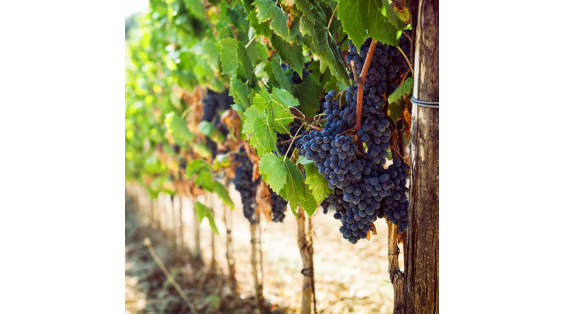
Its name comes from the Latin pinus (pine), referring to the shape of its grape cluster, dense and compact like a pine cone.
A technically demanding grape variety
Pinot Noir is universally recognized as one of the most difficult grape varieties to grow. It presents a host of challenges:
• Thin skin: It has little natural protection against fungal diseases (downy mildew, powdery mildew, botrytis). It requires constant attention in the vineyard.
• Early budbreak: It ripens before Cabernet Sauvignon or Syrah, making it vulnerable to late frosts and sudden summer heat spells.
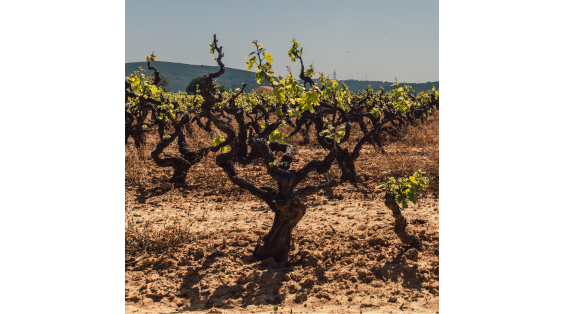
• Highly sensitive to terroir: More than any other grape variety, Pinot Noir faithfully expresses its soil, exposure, and microclimate. This is the very principle behind the Climats of Burgundy.
• Low yields: To produce quality wines, yields must be strictly controlled. Excessive yields dilute the aromas and structure.
Pinot Noir is like a mirror: it perfectly reflects the terroir and the winemaker who works with it. There is nowhere to hide.
What does Pinot Noir taste like? Aromas and flavor profile
The palate profile
Pinot Noir stands out among great red wines for its distinctive profile: relatively light color (bright ruby), light to medium tannins (never aggressive), pronounced acidity that gives it energy and freshness, and a remarkably complex range of aromas.
Aromas at each stage of maturity
|
Stage |
Primary and secondary aromas |
Tertiary aromas (with age) |
|
Youth (1–5 years) |
Cherry, raspberry, strawberry, violet, rose, peony |
Predominantly floral notes, with few tertiary aromas yet |
|
Developing (5–15 years) |
Black cherry, plum, cinnamon, forest floor, mushroom |
Leather, fallen leaves, humus; the bouquet begins to gain complexity |
|
Maturity (15–30 years) |
Dried fruit, fig, date; subtle, integrated fruitiness |
Truffle, game, coffee, tobacco, dark chocolate, balsamic notes; the bouquet takes center stage |
How can you identify a Pinot Noir in a blind tasting?
1. Color: Light ruby to garnet, always translucent. Never opaque.
2. Aromas: Red fruit (cherry, raspberry) on the first nose, followed by floral notes (rose, violet).
3. Palate: Silky texture, soft tannins that are never rough, and invigorating acidity.
4. Finish: Long and delicate, with red fruit, spice, or earthy notes depending on age.
Where does Pinot Noir grow? The major producing regions
|
Region |
Predominant style |
Appellations / Examples |
|
Burgundy (France) |
Elegant and mineral, with great finesse |
Gevrey-Chambertin, Chambolle-Musigny, Vosne-Romanée, Pommard, Volnay |
|
Alsace (France) |
Fruity and light, with soft tannins |
AOC Alsace Pinot Noir, approachable and versatile |
|
Champagne (France) |
Used in blends (sparkling wines) |
Blanc de Noirs (100% black grapes: Pinot Noir and/or Meunier), blends with Chardonnay and Pinot Meunier |
|
Oregon (United States) |
Fruity, acidic, fresh, close to Burgundy in style |
Willamette Valley, Domaine Drouhin Oregon, Penner-Ash |
|
New Zealand |
Intensely fruity and structured |
Central Otago, Marlborough, Felton Road, Clos Henri |
|
California (United States) |
Riper and more opulent |
Sonoma Coast, Russian River Valley, Williams Selyem, Kosta Browne |
|
Germany |
Light, fruity, low in tannins (Spätburgunder) |
Baden, Ahr, Georg Breuer, Knipser |
|
Northern Italy |
Structured and fresh (Alto Adige, Lombardy) |
Alto Adige Pinot Nero, Hofstatter, Franz Haas |
|
Chile and Argentina |
Fruity, approachable, good value for money |
Casablanca Valley, Patagonia |
Burgundy: The birthplace and ultimate benchmark
Burgundy is to Pinot Noir what Bordeaux is to Cabernet Sauvignon: its natural home, its historic proving ground, and its global benchmark. The Côte d’Or (Côte de Nuits to the north, Côte de Beaune to the south) is the heart of this production.
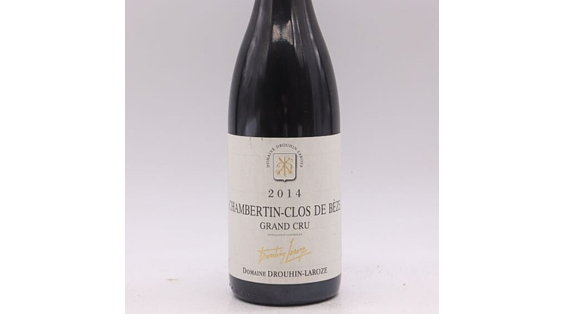
• Gevrey-Chambertin: Power and structure, firmer tannins, and Burgundy’s most masculine Pinot Noir. Grand cru: Chambertin, Clos de Bèze.
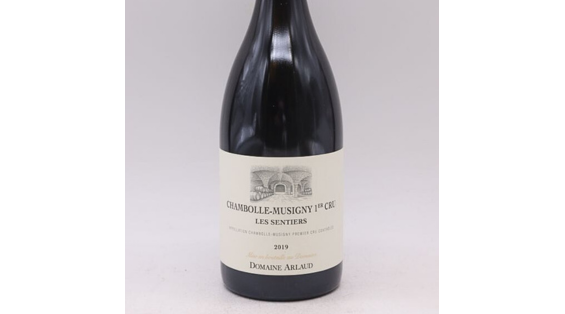
• Chambolle-Musigny: Finesse, elegance, and floral aromas. Pinot Noir at its most delicate. Grands crus: Musigny, Bonnes-Mares.
• Vosne-Romanée: The most famous village in the wine world. Romanée-Conti and La Tâche and Richebourg produce some of the most expensive and sought-after wines on the planet.
• Pommard and Volnay: Both from the Côte de Beaune. Pommard is more structured; Volnay is more elegant. Both offer excellent value compared with the grands crus of the Côte de Nuits.
Alsace: Approachable French Pinot Noir
Alsace produces the region’s only red wines under the Alsace Pinot Noir AOC. The style is radically different from Burgundy: lighter, fruitier, more approachable when young, and with very soft tannins. It is an excellent, versatile wine for everyday meals, particularly raclette and white meats.
Champagne: Pinot Noir with bubbles
Pinot Noir is one of the three principal grape varieties permitted in Champagne. The Blanc de Noirs cuvée, a white Champagne made exclusively from black grapes, showcases its richness and aromatic complexity to spectacular effect.
Oregon and New Zealand: New international benchmarks
With its cool, rainy climate, Oregon produces Pinot Noir wines whose elegance and freshness closely resemble the Burgundian style. New Zealand offers a fruitier, more structured expression with remarkable aromatic intensity.
What food goes with Pinot Noir? The best food and wine pairings
|
Type of dish |
Pinot Noir style |
Specific examples |
|
Roast poultry (chicken, guinea fowl, duck) |
Light- to medium-bodied Burgundy (Côte de Beaune) |
Volnay, Beaune, Savigny-lès-Beaune |
|
Mushrooms (risotto, cream sauce, velouté) |
Medium-bodied to structured Burgundy (Côte de Nuits) |
Village-level Gevrey-Chambertin, Chambolle-Musigny |
|
Tender red meat (filet, tournedos) |
Structured Burgundy or Oregon Pinot Noir |
Pommard, Nuits-Saint-Georges, Willamette Valley |
|
Game birds (pheasant, woodcock) |
Aged fine Burgundy (15+ years) |
Chambertin, Vosne-Romanée, Échezeaux |
|
Black truffle |
Mature fine Burgundy (15–25 years) |
Gevrey Premier Cru, Chambolle Grand Cru |
|
Fish in a red sauce (salmon, tuna) |
Light, fresh Pinot Noir (Alsace, New Zealand) |
Alsace Pinot Noir, Marlborough, New Zealand |
|
Soft cheeses (Brie, Coulommiers) |
Light, fruity Pinot Noir |
Regional Burgundy, Alsace Pinot Noir |
|
Raclette and fondue |
Light, versatile Alsace Pinot Noir |
Alsace Pinot Noir, a classic regional pairing |
The classic pairing: Pinot Noir and mushrooms
Pinot Noir and mushrooms are one of French cuisine’s most classic and successful pairings. A 10-year-old Gevrey-Chambertin with porcini in cream sauce, truffle risotto, or morels in sauce perfectly illustrates the affinity between great Burgundies and mushroom and truffle dishes.
The special case of raclette
Alsace Pinot Noir is a natural match for raclette. Its moderate richness, light tannins, and aromatic freshness stand up to the melted cheese without overpowering it or being overpowered.
How should you serve Pinot Noir?
Serving temperature
Pinot Noir should be served between 14 and 16°C. At this temperature, its floral and fruity aromas are more expressive, its tannins seem silkier, and its acidity brings freshness rather than harshness.
Should you decant Pinot Noir?
• Young Pinot Noir (1–5 years): A brief decant of 30 to 45 minutes can help it open up and reveal its aromas.
• Pinot Noir aged 5 to 15 years: Decanting is often unnecessary, or should be very brief (15–20 minutes). Pinot Noir is more delicate than Cabernet.
• Older Pinot Noir (15 years and up): Pour directly into the glass without decanting. Tertiary aromas are volatile and quickly fade on contact with air.
The ideal glass
Pinot Noir thrives in a Burgundy wine glass: very wide, shaped like a flattened balloon, with a tapered rim. This shape allows its aromas to concentrate and develop fully.
The best Burgundy Pinot Noir vintages
|
Vintage |
Quality |
Characteristics |
Optimal stage |
|
2023 |
Very good |
Fresh, fruity, approachable; a warm but balanced vintage |
2026-2035 |
|
2022 |
Excellent |
Concentration and warmth, ripe tannins, excellent aging potential |
2027-2040 |
|
2020 |
Outstanding |
One of the decade’s great vintages, with perfect balance |
2026-2038 |
|
2019 |
Exceptional |
Power, freshness, complexity, historic vintage |
2028-2045 |
|
2018 |
Good to very good |
Generous and full-bodied, approachable relatively early |
At its peak |
|
2017 |
Good |
Fruity, light, approachable; a vintage to enjoy young |
Drink now |
|
2015 |
Outstanding |
Rich and ripe, with mature tannins; an earlier generation |
At its peak |
|
2012 |
Excellent |
Elegance and freshness, remarkable structure |
Approaching its peak |
|
2010 |
Exceptional |
A benchmark vintage with exceptional balance and longevity |
Fully mature; drink from 2025 to 2035 |
2019 and 2020: The decade’s two standout vintages
The 2019 and 2020 vintages are considered the two greatest of the 2010–2020 decade for red Burgundy. The 2019 is exceptional for its combination of concentration and freshness. The 2020 matches it with elegance and vibrancy reminiscent of the great vintages of the 2000s.
How do you choose a Pinot Noir for your budget?
Under €15: Affordable entry-level wines
• Alsace Pinot Noir: At €8–€15, it is approachable, fruity, and ideal for everyday meals.
• New World Pinot Noir (Chile, entry-level New Zealand): Consistent quality and generous fruit; pleasant, though lacking complexity.
€15–€35: Good value from Burgundy
• Marsannay, Fixin: Often-overlooked Côte de Nuits villages and therefore among the most affordable. A style similar to Gevrey, but less expensive.
• Savigny-lès-Beaune, Monthélie: Elegant, approachable wines from the Côte de Beaune offering excellent value.
€35–€80: Premier crus and benchmark village wines
• Côte de Nuits villages (Gevrey, Chambolle, Vosne): A village-level Chambolle-Musigny from a good estate at €40–€50 often offers remarkable value for the pleasure it brings.
• Côte de Beaune premier crus (Volnay, Beaune, Pommard): Finesse and relative affordability for wines of this caliber.
Above €80: Prestigious grands crus and premier crus
Above €80, you enter the realm of the Côte d’Or’s premier crus and grands crus. Prices can reach several thousand euros for the most iconic wines (Romanée-Conti, La Tâche, Musigny).
Frequently asked questions about Pinot Noir
Is Pinot Noir a good wine?
It is one of the world’s great red grape varieties and, at its best (Burgundy, Oregon, New Zealand), makes some of the most fascinating wines there are. For a good Pinot Noir, expect to spend at least €12–€15, and favor estates with established reputations.
What is the difference between Pinot Noir and Burgundy?
Red Burgundy IS Pinot Noir: it is the only red grape variety permitted in Burgundy. Nearly all red Burgundies (Gevrey-Chambertin, Chambolle-Musigny, Vosne-Romanée, Pommard, etc.) are made from 100% Pinot Noir. But Pinot Noir can also be produced in Alsace, Champagne, Oregon, and New Zealand; those wines are not called Burgundy.
Pinot Noir or Pinot Gris: What’s the difference?
Pinot Gris is a genetic mutation of Pinot Noir. The two grape varieties share the same basic DNA, but Pinot Gris has gray-pink skin rather than black skin. Pinot Gris produces white wines (in Alsace and, under the name Pinot Grigio, in Italy), while Pinot Noir produces red wines.
How lon


COLLECTION NEAR PARIS & VAT REFUND FOR TOURISTS
Free collection in our warehouse near central Paris (92)