Cantillon Gueuze 100% Lambic Bio
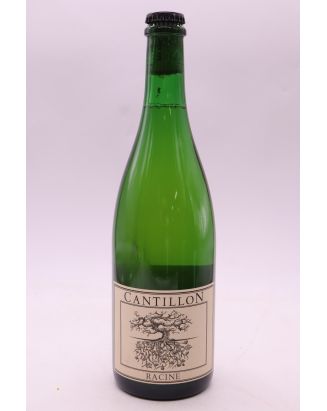
Cantillon Racine 2025
Personalise your experience
Change your country, language and currency here whenever you wish.
|
|
|
Must-See Châteaux |
|
|
|
|
|
|
Founded in 1900 in Anderlecht, in the heart of Brussels, Brasserie Cantillon is the last living witness of the great Brussels lambic brewing tradition. Run by the Van Roy family, heirs to the Cantillon legacy, this artisanal, family-run brewery produces exclusively spontaneously fermented beers: lambic, gueuze, kriek and faro, inoculated by the wild yeasts of the Brussels air, including the famous Brettanomyces bruxellensis. Aged for many years in oak barrels, blended like great wines and re-fermented in the bottle, Cantillon's cuvées (Gueuze 100% Lambic Bio, Fou' Foune, Saint-Lamvinus, Lou Pépé) rank among the most sought-after beers in the world.
The adventure begins in 1900, when Paul Cantillon and his wife Marie Troch settle in Anderlecht, in the neighbourhood of the Gare du Midi. Initially a gueuzier — that is, a blender of lambics purchased from other brewers — Paul Cantillon then began brewing his own worts. At the start of the 20th century, Brussels had around seventy lambic breweries: Cantillon would be the only one to survive the standardisation of tastes and the rise of industrial beers. In the 1970s, Jean-Pierre Van Roy, husband of Claude Cantillon, took over the family business and, in order to save the house, transformed it into a living museum: the Brussels Museum of Gueuze opened in 1978 and today attracts more than 40,000 visitors a year.
His son Jean Van Roy, who joined the brewery at the end of 1990, embodies the fourth generation. Under his leadership, Cantillon has become a world reference, celebrated by sour beer enthusiasts from the United States to Japan, while production remains deliberately artisanal and confidential. Nothing has changed in the old two-hundred-year-old building: the copper vats, the coolship beneath the rooftop and the oak barrels tell the story of more than a century of intact savoir-faire.
The true terroir of Cantillon is the air of Brussels and the Senne Valley. After brewing, the wort is cooled in the open air in a large copper coolship, where it is naturally seeded by the wild yeasts and bacteria of the place, including Brettanomyces bruxellensis. This spontaneous fermentation, impossible to control entirely, makes each batch a unique product, dependent on the vintage just like a wine. The ingredients are of an ancestral simplicity: unmalted wheat, malted barley and aged hops, left to mature so as to lose their bitterness, all certified organic since 1999.
The fruits that flavour the cuvées are chosen with the same exacting standards: Schaerbeek cherries for the kriek, fresh raspberries, Bergeron apricots from the Rhône originally offered by winemaker friends from Crozes-Hermitage, grapes from great estates (Merlot, Cabernet Franc, Muscat, Pineau d'Aunis), elderflowers or rhubarb. This permanent bridge between the world of wine and that of lambic is one of the house's signatures.
At Cantillon, brewing takes place only from October to March, approximately forty times per season, when cool nights guarantee a healthy seeding of the wort, as summer air contains too many unwanted bacteria. After passing through the coolship, the wort is transferred into second-hand oak barrels, often former French wine barrels, where it ferments and ages for one, two or three years to become lambic. Gueuze is then born from the harmonious blending of young and old lambics: the residual sugars of the one-year-old lambic allow refermentation in the bottle, according to a method akin to the Champagne méthode. The bottles then rest on their side in the cellar for a minimum of one year before commercialisation, and can improve over decades. No sugar, no flavourings, no excessive filtration: only fresh fruit, time and patience.
Gueuze 100% Lambic Bio: the house's calling card, a blend of one-, two- and three-year-old lambics refermented in the bottle. Dry, tangy, lemony and of great complexity, it is considered the archetype of traditional Brussels gueuze.
Kriek 100% Lambic Bio: a lambic in which real cherries macerate, without any added sugar. Fruity but by no means sweet, it combines the liveliness of lambic with the depth of morello cherry.
Rosé de Gambrinus: the equivalent of the kriek produced with fresh raspberries. Its bright pink colour and red fruit nose make it one of the most appealing beers in the range.
Grand Cru Bruocsella: a pure three-year-old lambic, not refermented, and therefore almost still. Often described as the missing link between wine and beer, it is enjoyed like a great dry oxidative white wine.
Fou' Foune: the cult cuvée made with Bergeron apricots, born in 1998 from a friendship with winemakers from the Rhône Valley. A blend of lambics aged 18 to 20 months macerated with 300 grams of fruit per litre, it has become the house's third fruit beer by volume and one of the most coveted in the world.
Saint-Lamvinus: a lambic refined on Merlot and Cabernet Franc grapes sourced from great Bordeaux terroirs. Vinous, deep and tannic, it is the most accomplished encounter between the barrel and the fruit of the vine.
Vigneronne: its white counterpart, produced with Muscat grapes (and depending on the year, Viognier), with superb floral and honeyed notes carried by the acidity of the lambic.
Iris: the singular beer of the range, brewed with 100% malted barley and raw-hopped with fresh hops. More amber in colour and slightly bitter, it pays homage to the yellow iris, the symbol of Brussels.
Mamouche: a two-year-old lambic in which elderflowers are infused, dedicated by Jean Van Roy to his mother. Delicate, floral and spring-like.
Nath: the rhubarb cuvée, created in homage to Nathalie, the brewer's wife. Its fruity acidity and vegetal freshness make it a much sought-after rarity.
Lou Pépé Gueuze, Lou Pépé Kriek and Lou Pépé Framboise: the prestige series dedicated to the grandfather, produced solely from two-year-old lambics sourced from the finest barrels, with a double dose of fruit for the fruit versions. Exceptional beers, produced in minute quantities.
Faro: the historic beer of Brussels's estaminets, a lambic sweetened with candy sugar, indulgent and thirst-quenching.
Cuvée Saint-Gilloise: a raw-hopped gueuze, a tribute to the Union Saint-Gilloise football club, dry and delicately bitter.
Zwanze: the annual experimental cuvée, different with each vintage, unveiled during the famous Zwanze Day celebrated simultaneously in a handful of bars around the world.
COLLECTION NEAR PARIS & VAT REFUND FOR TOURISTS
Free collection in our warehouse near central Paris (92)