Personalise your experience

Change your country, language and currency here whenever you wish.
|
|
|
Must-See Châteaux |
|
|
|
|
|
|
|
|
In the heart of Sologne, in Soings-en-Sologne, Domaine Les Cailloux du Paradis is a remarkable outlier in the Loire Valley wine scene. Founded by Claude Courtois, a farmer-winemaker and trailblazer of natural wine, it is now run by his son Étienne Courtois. On a farm of around twenty hectares combining vines, woods, meadows, grain fields, and orchards, only about twelve hectares are planted with vines—but with more than forty grape varieties, including nearly extinct ones such as Gascon, Romorantin, and Menu Pineau. No chemicals are used here, yields are around 20 hectoliters per hectare, and aging often exceeds two years.
Claude Courtois has never been a conventional winemaker. Originally from Burgundy, little attracted by the technologisation sweeping wine in the 1980s, he chose to learn from the old-timers and first set up a mixed-farming operation in Provence, already entirely chemical-free. A tragic fire destroyed everything in 1991. He then started from scratch in Sologne, at Soings, where he bought back a few plots of old vines on lieu-dits that would give the estate its name, Les Cailloux and Le Paradis. There, in a region of woodland, ponds and sands that no one associates with great viticulture, he patiently built a self-sufficient farm rich in biodiversity, with cows fed on the farm's own wheat, hedgerows, orchards and fallow land.
Determined to diversify the encépagement as much as possible, Claude planted over the years several dozen varieties, including forgotten grape varieties he helped save from extinction. His wines, often rejected by approval committees for being too atypical, are labelled as Vin de France, which has never dented their reputation: they have become a worldwide reference for natural wine. His two sons then took over. Julien runs his own estate a few hundred metres from the family farm, while Étienne gradually took over the management of Les Cailloux du Paradis from 2010. Claude retained for a time the vinification of the Racines and Nacarat cuvées, before handing the full range over to Étienne. Faithful to his father's very long ageing periods, Étienne brings a new precision and occasionally experiments with slightly shorter ageing, adding extra freshness and acidity.
Sologne is not wine country, and that is precisely what makes this estate so fascinating. The plots rest on clay-with-flint soils, the famous stones that gave the property its name, laid over an ancient limestone bedrock. The soil is extremely thin, poor and free-draining, forcing the roots to plunge deep and yielding wines of an immediately recognisable tension and minerality. Around the vines, fruit trees, hedgerows, meadows and woodland form a living mosaic that looks more like a farm than a conventional vineyard.
The encépagement is a true living conservatory. Alongside gamay, côt, cabernet franc, cabernet sauvignon, pinot noir, sauvignon, chenin and chardonnay, one finds here romorantin, menu pineau, pineau d'Aunis and above all gascon, an almost extinct grape variety of which the Courtois rows rank among the last hectares in the world. Cover cropping is almost systematic, except for young vines; the soils receive neither pesticide, herbicide, fungicide nor chemical fertiliser, and the estate is certified Nature et Progrès. Yields, deliberately minuscule, hover around 20 hectolitres per hectare, and the harvest is entirely picked and sorted by hand.
The cellar follows one simple and radical rule: nothing goes in, nothing comes out. Fermentations start spontaneously with indigenous yeasts, without added yeasts, enzymes, chaptalization, fining or filtration. Some grapes are pressed on the family's old hundred-year-old manual press, others macerate for several days or several weeks before pressing. The whites themselves sometimes undergo a long maceration, and the estate does not hesitate to work with slightly oxidative registers, in the tradition of ancient winemaking.
Ageing is the other hallmark of the house. It lasts a minimum of twenty-four months, sometimes thirty or forty months, even several years for certain cuvées, predominantly in barrels, with some experimentation in terracotta jars. The wines are bottled without added sulphur, which demands impeccable hygiene and patience. The result is as disconcerting as it is seductive: wines of rare energy, sapid, saline, frank, often austere in their youth and capable of unfolding magnificently after a few years in the cellar. Decanting is almost always recommended.
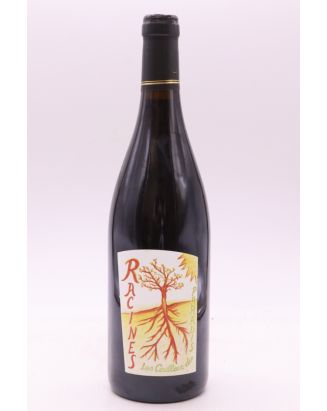
Racines rouge is the iconic cuvée of the estate, the one that encapsulates Claude Courtois's philosophy. It is a blend sourced from a plot planted with a great many varieties, sometimes more than fifteen or twenty, some of them now unidentified, harvested and vinified together. After destemming, a long maceration and several years of barrel ageing, the wine delivers a bewildering aromatic complexity, spanning red and black fruits, spices, garrigue and earthy notes, over a mineral backbone and remarkable length.
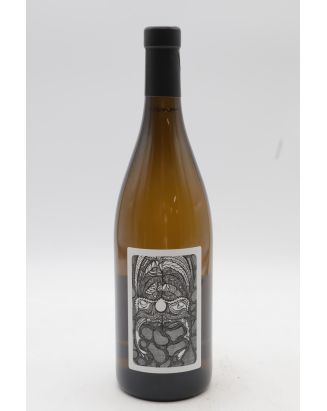
Racines blanc applies the same principle to the estate's white grape varieties, in a field-blended assemblage aged for a very long time in barrel. The wine, rich and textured, plays on ripe yellow fruits, beeswax, dried fruits and a persistent salinity, with that slightly oxidative character that is the house signature. A gastronomic white, to be decanted and served with poultry, a fish in sauce or a mature cheese.
Nacarat is the estate's historic gamay, long crafted by Claude himself. The name evokes an orange-red colour that aptly describes the light colour of this wine. Complex nose of red fruits, an airy and crunchy palate, a very fruity finish: this is the easy-drinking wine of Les Cailloux du Paradis, to be served slightly chilled with charcuterie or simple cuisine.
La Cuvée des Étourneaux is the other great gamay of the house, and the most spectacular illustration of the family's taste for interminable ageing: it can spend up to four years in barrel before bottling. The result is a red of astonishing finesse, with peppery notes, ripe red fruits and a marked stony minerality, of remarkable drinkability despite the depth of the material.
L'Icaunais is a heritage cuvée, made from gascon, a grape variety once widespread in the Yonne (from which its name derives, referring to the inhabitants of that département) and today on the verge of extinction. The estate's rows are among the very last in the world. The wine, red and slender, offers tangy fruit, spices, a fine structure and a freshness that make it a bottle as rare as it is fascinating.
Quartz is the estate's emblematic white, a blend of menu pineau and sauvignon from very old vines, some of them ungrafted. Vinified directly in barrel and aged for twelve to twenty-four months, it reveals itself as powerful, complex and taut, with citrus, white fruits, spices and a crystalline minerality that justifies its name. It can be enjoyed with pleasure in its youth after decanting and can be kept for a decade.
Plume d'Ange is made from sauvignon and worked in exactly the same way as Quartz, yet yields a very different wine: it is a true textbook case of the terroir effect. More airy, more floral, it plays on finesse and delicacy, with a saline palate and a lovely length, while retaining the texture and depth characteristic of the estate's whites.
Romorantin showcases the historic grape variety of Sologne, also known at Cour-Cheverny. Vinified without inputs and aged at length, it unfolds a register of quince, apple, honey and beeswax, supported by a sharp acidity and a mineral finish of fine persistence. An age-worthy white, unique in the Loire landscape.
Or'Norm is the estate's other take on romorantin, as its name announces: an exceptional cuvée, pushed further in maceration and in ageing duration. The wine gains an almost tannic texture, aromas of dried fruits, citrus peel and spices, with a controlled oxidative character. A bottle for curious enthusiasts, to be served with bold cuisine or aged cheeses.
Alkimya is the cuvée made from menu pineau, an ancient white grape variety from Touraine also known as arbois. It plays on richness and roundness, with liquorice notes, white fruits and a saline finish, in a balance that owes everything to the slowness of the work and the total absence of artifice.
Évidence lives up to its name: it is the cuvée that most simply illustrates the house style, focused on fruit, freshness and digestibility, with that mineral tension characteristic of Sologne's clay-with-flint soils. Produced in small quantities and often sold out upon release, it makes an excellent entry point into the estate's universe.
Camille is a skin-contact white cuvée aged for up to forty months in barrel, named after Étienne Courtois's son born in 2015. The long skin contact and extreme ageing yield a wine of impressive density and complexity, with fine tannins, aromas of candied fruits, tea and spices, capable of ageing for a very long time.
Secalaunia is one of the most confidential cuvées of the property, whose Latin name refers to the ancient roots of the place. Sourced from very small plots and subjected to a particularly long ageing, it concentrates everything that defines the identity of Les Cailloux du Paradis: frank fruit, stony minerality, salinity and energy, in a rare bottle that natural wine enthusiasts eagerly seek out.
COLLECTION NEAR PARIS & VAT REFUND FOR TOURISTS
Free collection in our warehouse near central Paris (92)