Personalise your experience
Change your country, language and currency here whenever you wish.
|
|
|
Must-See Châteaux |
|
|
|
|
|
|
|
|
Second Growth of Sauternes
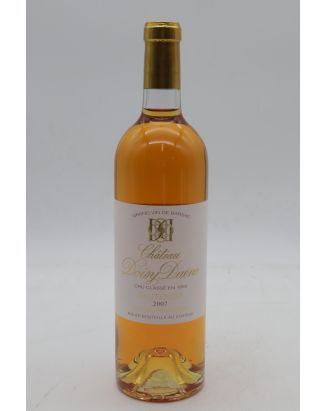
Owned by the Dubourdieu family since 1924, Château Doisy-Daëne is a Second Growth in Sauternes and Barsac under the 1855 classification. It is located 40 km southeast of Bordeaux (on the left bank of the Garonne), near the estates of Climens, Doisy-Dubroca and Caillou. The 18.2 hectares of vines grow on a thin layer of red sandy clay over limestone bedrock. They are cultivated using sustainable methods at a density of 7,000 vines per hectare. The vineyard, whose vines average 40 years of age, is planted with Sémillon (86%) and Sauvignon (14%)...
The growth's reputation predates the 1855 classification by many years. Doisy-Daëne already appeared in André Jullien's Topographie de tous les vignobles connus, published in 1832. In 1846, Charles Cocks placed it among Barsac's four leading growths alongside Coutet, Climens and Myrat, then, in 1850, among Bordeaux's eleven leading white-wine growths. The estate's name combines the Doisy growth with the surname of its owner, Bordeaux wine merchant Jean-Jacques-Emmanuel Daëne. Indeed, it appears in the 1855 classification under the name Doisy appartenant à Daëne.
In 1875, Jean-Jacques-Emmanuel Daëne's three sons inherited the property. That same year, they sold part of it to the Dubroca brothers, then sold Doisy-Daëne to Jean-Paul Billot in 1878. His only daughter, Pauline, wife of Parisian wine merchant Jean Lodoïs Juhel-Renoy, inherited it in 1884. Its modern history began in 1924, when Georges Dubourdieu acquired the growth. His son Pierre expanded it by buying part of Doisy-Dubroca and, in the early 1950s, created the Fine Wine Dry, making Doisy-Daëne the first estate in the Sauternes region to offer a dry white wine. Denis Dubourdieu later took over and ushered the property into a new era: L'Extravagant was born in 1990, while his academic research into aromas, yeasts and pressing transformed white-wine production worldwide. After his untimely death in 2016, his sons Fabrice and Jean-Jacques continued the family work and bought the neighboring Doisy-Dubroca growth, reuniting part of the former large Doisy estate. The family also owns Châteaux Reynon, Cantegril and Haura, and Clos Floridène: approximately 135 hectares in all, spread across Sauternes, Graves and Cadillac Côtes de Bordeaux.
The vineyard occupies the highest point of upper Barsac, bordered by growths classified in 1855, on the renowned clay-limestone plateau. This geological exception on Bordeaux's Left Bank, with red sands and clays over a foundation of limestone containing fossil starfish, has helped make the village of Barsac and its wines famous worldwide. Unlike the gravel soils of Sauternes, this limestone close to the surface gives the wines a saline acidity and a sense of verticality that define the Barsac style: less power, more tension and finesse.
The estate farms approximately 15 hectares of Sémillon for its sweet wines and around ten hectares of Sauvignon Blanc devoted exclusively to its dry white, all within the commune of Barsac. Planting density reaches 7,000 vines per hectare, and the vines average around 35 to 40 years old, the vineyard having been almost entirely replanted in the 1950s and 1960s. The nearby Ciron, whose cold waters generate autumn morning mists followed by sunny afternoons, creates the microclimate essential to the development of Botrytis cinerea, the noble rot that concentrates sugars and aromas. Continuing the environmental practices developed by their predecessors, the Dubourdieu brothers favor traditional soil cultivation and prohibit chemical herbicides.
Everything hinges on the harvest. The grapes are picked by hand in three to six successive passes, depending on the vintage, with each pass taking only perfectly botrytized berries at the precise moment of optimal concentration. This rigor accounts for the purity and consistency of the estate's wines.
For the sweet wines, slow pressing in stages is followed by careful settling, then fermentation in barrels. Aging continues for around twelve months in oak barrels, with a measured proportion of new oak, generally between 25 and 33%, chosen to support the wine's structure without ever masking the fruit. The estate aims less for sheer power than for a balance between sweetness and acidity, the hallmark of the Dubourdieu style. For the dry white, the techniques developed by Denis Dubourdieu have become a benchmark: harvesting at optimal ripeness, protecting the grapes from oxidation from the pressing stage onward, controlled skin maceration, temperature-controlled fermentation and aging on fine lees, which preserves the Sauvignon's aromatic intensity while adding body. This academic work, pursued alongside his winemaking, earned Denis Dubourdieu the nickname “the pope of white wines.”
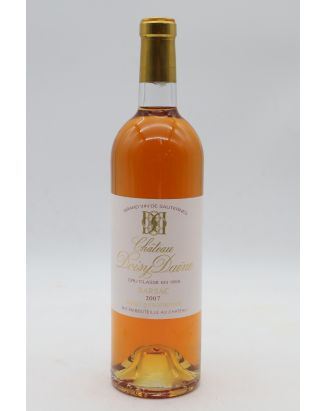
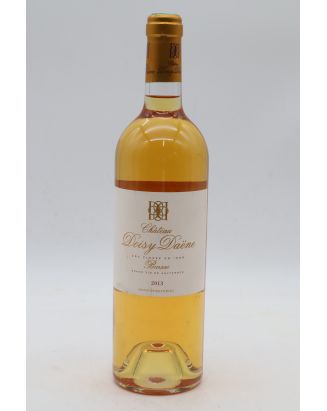
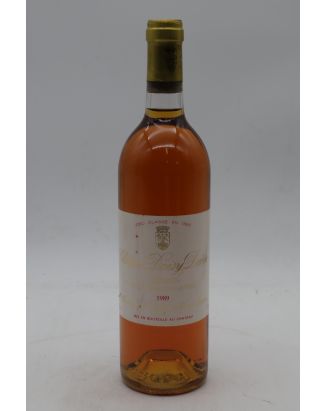
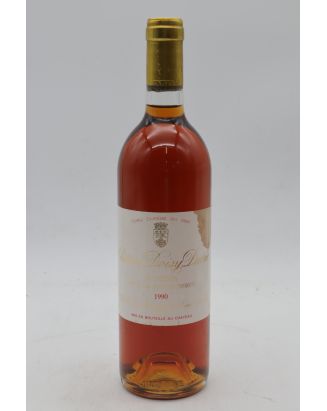
Château Doisy-Daëne, Barsac Second Growth: the estate's fine wine, predominantly Sémillon with some Sauvignon Blanc, made from botrytized berries picked in successive passes and aged for around twelve months in barrels. Its pale gold color heralds a captivating nose of candied fruit, citrus, pineapple, honey and white flowers, often accented by sweet spice and vanilla. The palate stands out for its remarkable balance between sweetness and vibrant acidity, with lasting freshness and a long, saline finish. This is a sweet wine with exceptional aging potential, capable of evolving over several decades and developing a mosaic of dried fruit, orange peel and saffron aromas. It pairs beautifully with foie gras, blue cheese, poultry in cream sauce or yellow-fruit desserts.
Fine Wine Dry from Château Doisy-Daëne (Dry White Bordeaux): created by Pierre Dubourdieu in the early 1950s, it was the first dry white wine made in the Sauternes region, long before the practice became widespread. Predominantly Sauvignon Blanc from dedicated plots in Barsac, it expresses the distinction of the terroir in a different style. Remarkably aromatic, it offers grapefruit, white peach and boxwood on the nose, followed by mineral notes, pear and spice on a taut, saline palate. Delicious when young, it also has genuine aging potential of five to ten years. A food-friendly white, perfect with seafood, grilled fish or citrus-based dishes.
L'Extravagant de Doisy-Daëne (Barsac Sauternes): the estate's legendary cuvée, conceived by Denis Dubourdieu and first made in the 1990 vintage. It has nearly twice the sugar content of the fine wine, yet often a lower alcohol level, thanks to an exceptionally selective harvest of candied berries. The blend varies considerably from year to year, generally ranging from 45 to 80% Sémillon and 20 to 55% Sauvignon Blanc, with rare versions made entirely from Sauvignon Blanc or, as in 1997, entirely from Sémillon. The nose is intense, refined, subtle, deep and noble; the palate is extraordinarily dense yet surprisingly light, with acidity that prevents any sense of heaviness. Production rarely exceeds a hundred cases, almost exclusively in 37.5-centiliter half-bottles, often presented in wooden cases. Made only in great vintages, it is one of the world's rarest and most sought-after Sauternes, ranked among the very finest.
COLLECTION NEAR PARIS & VAT REFUND FOR TOURISTS
Free collection in our warehouse near central Paris (92)