Personalise your experience
Change your country, language and currency here whenever you wish.
|
|
|
Must-See Châteaux |
|
|
|
|
|
|
|
|
A high-end white Burgundy wine merchant
Building on the success of the wines from his Burgundian estate in the Mâconnais, Jean Marie Guffens Heynen established a wine merchant business in the early 1990s: Maison Verget. Through it, he markets Pouilly Fuissé, Macon, and Saint Véran wines that he has vinified with his team. He has also expanded into the Côte d’Or (Meusault, Puligny Monrachet, and Chassagne Monrachet), as well as Chablis. He takes the same approach in the Vaucluse, with white wines made from Chardonnay, Marsanne, Roussanne, or Viognier and reds made from Syrah. He draws inspiration from the work at his other property in Apt, Château des Tourettes, but makes single-varietal wines here.
It all began in 1976, when Maine and Jean-Marie Guffens-Heynen left their native Flanders to settle in Burgundy. She had studied fine arts; he had studied theater and architecture. The couple gave themselves a year to learn French and discover the world of wine, but the allure of Burgundy’s great white wines kept them there for good. Jean-Marie enrolled at the Mâcon-Davayé wine school while Maine worked for several local winegrowers. Together, they became managers of a small estate in Vergisson, leasing nearly five hectares of vines that nobody wanted, and learned to tend the vines and make wine. In 1979, they bought a few rows of vines on the slopes above Pierreclos: Domaine Guffens-Heynen was born. Their white wines soon attracted attention for their extraordinary character, combining richness, concentration and mineral purity. Robert Parker would go so far as to write that a genius had been born.
With the estate covering barely five to six hectares, Jean-Marie Guffens could not bring himself to limit his pursuit of fine wine to just a few plots. In 1990, he founded Maison Verget in Sologny, a négociant business conceived as a true laboratory, allowing him to explore the terroirs of the Mâconnais, the Côte de Beaune and the Chablis region. The principle was radical for its time: never buy finished wine or partially fermented must, but contract directly for grapes from partner winegrowers and vinify everything in a single cellar according to the house’s own methods. The adventure did not end there: in 1997, the couple acquired Château des Tourettes in the Luberon, near Apt, where the Tinus range was born, followed in 2017 by Château Closiot in the Sauternes area. Since 2012, Jean-Marie Guffens has been supported by Julien Desplans, an enologist trained at Romanée-Conti, who oversees Verget’s grape sourcing and winemaking.
Verget does not own its vineyards, but the house works with partner winegrowers on carefully selected plots, often forgotten or underestimated terroirs that Jean-Marie Guffens has worked to revive. At the heart of its work is the Mâconnais, around the Roche de Solutré and the Roche de Vergisson, where clay-limestone soils and very stony scree, sometimes exceptionally poor, give Chardonnay rare density and tension. The climats of Vergisson, Fuissé, Davayé, Prissé, Charnay and Pierreclos offer a mosaic of exposures and soil depths, with each nuance vinified separately.
The selection then extends to the Côte de Beaune, with grapes from Meursault, Puligny-Montrachet, Chassagne-Montrachet and several grands crus, and onward to Chablis, where Kimmeridgian soils lend their distinctive iodine-tinged salinity. Sologny was chosen precisely for its strategic location: close to the Mâconnais grapes, yet within reasonable reach of the Côte d’Or and the Chablis region. The range is deliberately selective: not every appellation or climat appears each year, as each bottling depends on the actual quality of the grapes obtained. The technical team has deliberately remained small for three decades to maintain close attention to each plot.
Jean-Marie Guffens starts from a simple principle: good wine requires excellent grapes. Everything therefore begins at harvest, allowing the grapes to reach full ripeness and picking them at the right moment. At pressing, the house selects the first pressings with great rigor, often using only these for its top cuvées. This is one of the secrets behind the wines’ freshness and precision. Fermentation begins with native yeasts and often continues until late November, a deliberate slowness that builds texture.
Aging is then tailored to each cuvée. Some, such as Mâcon-Charnay Clos Saint-Pierre, are vinified and aged entirely in horizontal stainless-steel tanks for eight months, with occasional lees stirring to preserve vibrant fruit. Others, particularly the Saint-Véran, Pouilly-Fuissé and Côte de Beaune wines, are fermented and aged entirely in barrels, generally with 25–30% new oak and frequent lees stirring when the vintage’s acidity and reductive character allow. Aging lasts from six to twelve months, depending on the wine, with blends assembled plot by plot. The result is an instantly recognizable style: dense, expansive white wines, structured without heaviness, marked by notes of white flowers, citrus, toast and fresh butter, and above all by vibrant minerality and remarkable length.
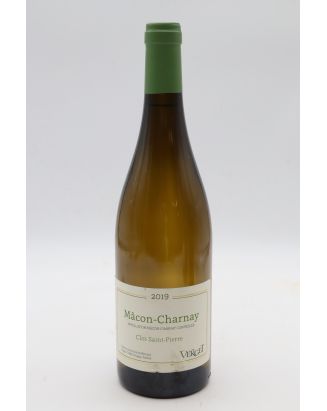
Mâcon-Charnay Clos Saint-Pierre comes from a south-facing plot with shallow clay soil, where the grapes reach excellent ripeness each year. Made exclusively from the first pressings and aged for eight months in horizontal stainless-steel tanks with occasional lees stirring, it charms with pronounced floral aromas, notes of fresh butter and a hint of reduction. The palate is dense and structured, with a wonderfully fresh finish.
Mâcon-Vergisson Sur la Roche comes from a plot at the very top of the Roche de Vergisson, surrounded by vines classified as Pouilly-Fuissé, on highly calcareous, east-facing soil. Vinified exclusively in barrels with 25% new oak, these first pressings yield a wine of great precision: lightly toasted on the initial nose, then citrusy and floral, with a long finish and remarkable purity and minerality.
Mâcon-Vergisson La Roche offers a broader, more sun-ripened expression of the same terroir, while the Mâcon-Pierreclos, Mâcon-Cruzille, Mâcon-Lugny and lieu-dit Mâcon-Villages cuvées explore the diversity of southern Burgundy’s soils, in styles ranging from crisp fruit to a richer, more mineral texture.
Saint-Véran Lieu Interdit comes mainly from the La Côte Rôtie lieu-dit in the commune of Davayé, supplemented by a small portion from Terres Noires, one of the village’s finest terroirs. Terres Noires brings richness and a full texture; La Côte Rôtie brings tension and minerality. Made exclusively from the first pressings and vinified in barrels with 30% new oak, this cuvée shows exceptional density, a complex nose of ripe fruit, toast and fresh butter, and a remarkably precise finish.
Saint-Véran Vignes de Saint-Claude comes from a plot in the commune of Prissé, very close to the Pouilly-Fuissé vines of Vergisson, planted around 50 years ago on very stony clay-limestone soil. Fermented exclusively in barrels with 25% new oak, then aged for a further six months, it offers aromas of toast, fresh grapes and white flowers. The palate is very dense, precise and long, with well-balanced, tangy notes.
Pouilly-Fuissé Grands Terroirs Oubliés brings together outstanding climats from Vergisson, La Côte and Les Croux, and the Vernays plot in Fuissé. Each lot is vinified separately before the finest blend is selected. Fermentation finishes in late November, followed by seven months of aging entirely in barrels with 25% new oak and frequent lees stirring. The result is a complex, fruity and floral wine, expansive, rich and dense, with great length.
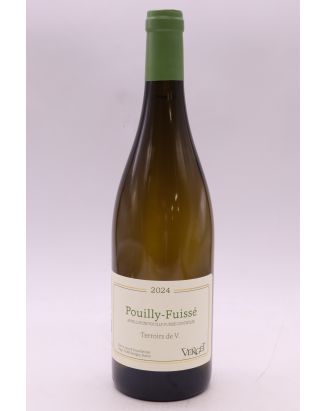
Pouilly-Fuissé Terroirs de Vergisson concentrates the village’s taut, limestone-driven character, while Pouilly-Fuissé La Roche expresses the mineral power of the scree at the foot of the rock. The single-plot cuvées Pouilly-Fuissé Le Clos, Pouilly-Fuissé Les Crays, Pouilly-Fuissé En Bourdon and Pouilly-Fuissé Les Combes Vieilles Vignes complete the collection, each with its own character, ranging from sun-ripened richness to saline tension.
In the Côte de Beaune, the village-level Meursault and Meursault Les Clous illustrate the village’s buttery, hazelnut-rich roundness, balanced by the fine acidity prized by the house. The Meursault Les Tillets, Meursault Les Narvaux and Meursault Les Charmes cuvées offer another level of depth, with stony minerality and a pronounced, lingering finish.
The village-level Puligny-Montrachet emphasizes verticality and sharply defined citrus notes, while Puligny-Montrachet 1er Cru Sous le Puits, planted at high elevation, stands out for its chalky tension and floral finesse. The village-level Chassagne-Montrachet and its premiers crus bring greater roundness, with notes of pear and almond.
The house’s grands crus are produced in tiny quantities and only in vintages that warrant them: the opulent, saline Bâtard-Montrachet Grand Cru; the more lithe and floral Bienvenues-Bâtard-Montrachet Grand Cru; and Corton-Charlemagne Grand Cru and its Corton-Charlemagne Vieilles Vignes version, both offering exceptional mineral power and aging potential.
In Chablis, the village-level Chablis establishes the lively, saline Kimmeridgian style. The premiers crus Chablis 1er Cru Mont de Milieu, Chablis 1er Cru Vaillons, Chablis 1er Cru Les Lys, Chablis 1er Cru Les Forêts, Chablis 1er Cru Vaucoupin, Chablis 1er Cru Côte de Léchet and Chablis 1er Cru Fourchaume Vieilles Vignes de Vaulorent reveal the appellation’s full range of nuances, from the most taut to the most full-bodied.
The Chablis grands crus round out this collection: the powerful, full-bodied Chablis Grand Cru Bougros; the expansive, sun-drenched Chablis Grand Cru Vaudésir; the finely floral Chablis Grand Cru Blanchot; the deep, chalky Chablis Grand Cru Valmur; and Chablis Grand Cru Les Clos, the pinnacle of the appellation, saline and structured, built to age for several decades.
COLLECTION NEAR PARIS & VAT REFUND FOR TOURISTS
Free collection in our warehouse near central Paris (92)