Personalise your experience
Change your country, language and currency here whenever you wish.
|
|
|
Must-See Châteaux |
|
|
|
|
|
|
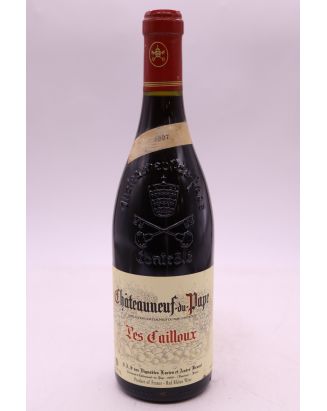
Established in Châteauneuf-du-Pape since the 17th century, the Brunel family is among the oldest winemaking lineages in the appellation. Under the Les Cailloux label, Domaine André Brunel produces wines recognized for a very personal balance, combining the sunny generosity of the South with a rare finesse of tannins and freshness. The Cuvée Centenaire, made from grenache vines planted in 1889, has been awarded a perfect score of 100 out of 100 by international critics. The estate also offers a wide range of Côtes du Rhône, Rasteau, and regional wines.
The Brunel family's viticultural tradition dates back to the 17th century, when they acquired from the bishopric of Avignon a first parcel of vines to the north of what is now the Châteauneuf-du-Pape appellation. From generation to generation, the Brunels followed one another in these vineyards born around the summer residence of the Avignon popes, without however commercializing their production under their own name. It was in 1954 that Lucien Brunel created the name Les Cailloux, in homage to the large rounded oval galets that cover the plots and constitute the geological signature of the cru.
In 1971, his son André Brunel took over the reins of the domaine and transformed it profoundly. His relentless pursuit of quality led to a continuous expansion of the vineyard, with acquisitions in the Côtes du Rhône and selected plots in the Vaucluse. As early as the 1970s, he was regarded as a visionary: he pioneered the technique of aging in concrete tanks at Châteauneuf-du-Pape, with the aim of preserving aromatic purity and fruit, at a time when new oak dominated the cellars of the appellation, and he very early on banned herbicides and pesticides from his vines, being among the first in the appellation to work with appropriate cover crops. In 1989, he launched the Cuvée Centenaire, made from his oldest grenache vines, which quickly became one of the most sought-after bottles in the southern Rhône Valley. Since 2012, his son Fabrice Brunel, the eighth generation, has joined and then succeeded him, continuing the house's innovative approach, notably with the construction of a new cellar.
The estate farms around twenty hectares within the Châteauneuf-du-Pape appellation, complemented by around forty hectares in the Côtes du Rhône and thirty hectares in vin de pays, offering a remarkably varied palette of terroirs. At Châteauneuf, the plots combine the famous rounded galets, which store the heat of the day and release it at night, deep brown and red clays, and sandier sectors. An emblematic three-hectare plot, in the south-east of the appellation, carries grenache and mourvèdre vines of over sixty years of age, producing small grapes with a pronounced character of slightly jammy black fruits.
For the Châteauneuf-du-Pape blanc, the estate has three distinct plots, one planted with roussanne, another with clairette, and the last with grenache blanc, whose blend produces a lively, taut, and mineral wine. In the Côtes du Rhône, the single contiguous plot of Sommelongue, north of Orange, benefits from optimal sun exposure that allows grenache to reach perfect maturity, with controlled cover cropping tempering the vigor of the grape variety. Other terroirs, located in the Gard, bring together vines of twenty-five to fifty years of age planted with grenache, cinsault, mourvèdre, and syrah, on ferruginous red sands resting on a clay-limestone subsoil, a combination that allows both good rainfall penetration and low susceptibility to drought. Throughout, viticulture is chemical-free and respectful of the soils.
The cellar philosophy rests on a simple but demanding idea: to produce wines that are as pleasurable upon bottling as they are after aging. The harvests are sorted with meticulous care and destemming is adjusted according to the cuvée, often around 80%. A short cold maceration of twenty-four hours precedes the fermentation, conducted at high temperature for approximately four weeks, with regular punchdowns and rack-and-returns designed to gently extract color and substance.
Malolactic fermentation then takes place in enameled tanks, sometimes over an entire year. Herein lies one of the great distinguishing features of the estate: André Brunel was one of the first at Châteauneuf-du-Pape to favor aging in concrete tanks, in order to preserve aromatic purity and the vibrancy of the fruit, at a time when new oak dominated the cellars of the appellation. The notions of purity and finesse, sometimes set aside in this very sun-drenched cru, are central here. The great cuvées benefit from long aging and patient bottling, for a style that always combines generosity, richness of constitution, finesse of tannins, and a pronounced freshness on the palate.
Châteauneuf-du-Pape Les Cailloux Rouge: the estate's flagship cuvée, produced in around 40,000 bottles, a blend dominated by grenache and complemented by syrah, mourvèdre, and the other historic grape varieties of the appellation. The nose blends black cherry, candied raspberry, garrigue, leather, and spices; the palate is ample, savory, and silky, with melted tannins and a final freshness that is the hallmark of the house. A complete Châteauneuf, relatively accessible young but built for ten to fifteen years of aging.
Châteauneuf-du-Pape Les Cailloux Blanc: produced in only around 5,000 bottles, it is born from three distinct plots planted with roussanne, clairette, and grenache blanc. The profile is deliberately light, lively, taut, and mineral, far from the opulent whites sometimes associated with the appellation. It drinks very well young, in its freshness, but ages magnificently, developing notes of dried fruits, honey, and fennel.
Châteauneuf-du-Pape Les Cailloux Cuvée Centenaire: the estate's fine wine, created in 1989, made from the property's oldest grenache vines, planted at the end of the 19th century. The yield is minuscule and the concentration exceptional. The nose is rich and expressive, blending leather and undergrowth with blackcurrant and blackberry; the palate is dense, deep, and of remarkable length, with tannins of a rare finesse for a wine of this power. Rated up to 100 out of 100 by critics for the 2007 vintage, and regularly above 95, it is produced only in great years: in less favorable vintages, its entire harvest is integrated into the classic cuvée.
Châteauneuf-du-Pape Cuvée Réservée: a complementary selection from the estate at Châteauneuf, sourced from plots chosen for their maturity and balance. More immediately approachable than the Centenaire but more structured than the classic cuvée, it offers an excellent compromise between early pleasure and aging potential.
Côtes du Rhône Cuvée Sommelongue: from a single contiguous plot situated north of Orange, where grenache reaches optimal maturity thanks to ideal sun exposure and yields kept in check through cover cropping. The harvest is 80% destemmed, followed by a cold maceration of twenty-four hours, then a four-week fermentation at high temperature with punchdowns and rack-and-returns, and finally malolactic fermentation in enameled tanks over one year. The wine is generous, powerful, and silky, with supple tannins, hints of spice and liquorice, and a beautiful length.
Côtes du Rhône Est-Ouest: a blend of grenache, cinsault, and syrah from the sandy terroirs of the Gard, designed to be drunk young. All fruit, supple and thirst-quenching, it pairs perfectly with grilled meats, salads, pasta dishes, or pizza. The house's most convivial entry-level wine.
Côtes du Rhône Rouge and Cuvée Réservée: the estate's regional range, produced with the same rigor as the Châteauneufs. The classic Côtes du Rhône plays on the indulgence of the fruit and its suppleness, while the more selective Cuvée Réservée gains in density, spiced structure, and aging potential. Two excellent value-for-money wines.
Côtes du Rhône Rosé: the estate's rosé produced from the sandy terroirs of the Gard, made from grenache, cinsault, and syrah. Fresh, fruity, and perfectly dry, it is suited to aperitifs and summer Mediterranean cuisine.
Domaine de la Becassonne Côtes du Rhône Blanc: the house's regional white wine, under its own label. A blend of southern white grape varieties, it seduces with its notes of white flowers, pear, and citrus fruits, its round palate, and its fresh finish. Ideal with fish, seafood, and goat's cheese.
Côtes du Rhône Villages Cuvée Sabrine: a dedicated cuvée a step above the generic Côtes du Rhône, sourced from selected plots within the Villages appellation. It offers more substance, black fruits, and spices, with a denser tannic framework, while remaining very approachable.
Rasteau Les Sambiches: the estate also expresses its expertise in the Rasteau cru, where grenache takes on a more powerful and sun-drenched dimension. Ripe black fruits, garrigue, cocoa, and spices compose a fleshy and generous wine with a beautiful length.
Les Rives d'Alcion and Le Pont: complementary cuvées in the range, produced from identified terroirs of the estate. They favor the direct expression of fruit and drinkability, in an indulgent and immediate register, at particularly attractive prices.
COLLECTION NEAR PARIS & VAT REFUND FOR TOURISTS
Free collection in our warehouse near central Paris (92)