Puy de L'Ours Savigny les Beaune 1er cru Les Lavières 2023 rouge
Personalise your experience
Change your country, language and currency here whenever you wish.
|
|
|
Must-See Châteaux |
|
|
|
|
|
|
At the heart of the Côte de Beaune, in Savigny-lès-Beaune, the Domaine Le Puy de l'Ours emerges as a revelation for fine wine enthusiasts. Founded in 2021 by Jean Orsoni and Juliette Puyperoux, this young wine estate spans approximately 5 hectares of vines, cultivated using organic farming. Here, respect for the terroir guides every gesture: from minimalist viticultural practices to low-interventionist winemaking, producing wines that express with finesse the richness of Pinot Noir and Chardonnay. Elegant, airy and crafted for gastronomy, these wines are tremendously vibrant!
The adventure of Domaine Le Puy de l'Ours began with a chance encounter in Paris nearly 20 years ago between Jean Orsoni and Juliette Puyperoux, two Burgundian souls exiled in the capital. Juliette, descended from a Burgundian wine-growing lineage dating back two centuries, grew up surrounded by family vineyards. After studying at ESCA Angers business school, she launched into wine and spirits distribution for Rothschild France group, while completing a Professional Agricultural Certificate (BPREA) remotely. Her internships took her to French estates and even to South Africa, refining her eye for living terroirs. Jean, originally from Corsican agricultural roots, followed a brilliant academic path at Paris Dauphine and ENA before joining the Public Investment Bank, allowing him fluid back-and-forth travel between Paris and Beaune.
From 2017, the idea of returning to their Burgundian roots took hold. In 2020, they took the leap: Juliette took over the 5 hectares of family vineyards, leased out since 2004 by her grandparents, and the couple settled fully in Savigny-lès-Beaune. The estate's name? A playful fusion of their surnames: Puyperoux and Orsoni, symbolizing their union and their boldness. The first vintage, 2021, came to life with only 5,000 bottles, marking the beginning of an odyssey dedicated to revitalizing these parcels. Today, with an expansion to 7 hectares, Jean and Juliette perpetuate a legacy while innovating, driven by resilience forged through challenging vintages.
Le Puy de l'Ours is anchored in the emblematic clay-limestone soils of Savigny-lès-Beaune, under a continental climate with temperate influences, favoring slow and balanced ripening. The initial 5 hectares, complemented by 2 additional hectares in Hautes-Côtes de Beaune replanted in 2022, are distributed precisely: 1.5 hectares in Côte de Beaune Les Monsnières, perched at 350 meters altitude on the steep slopes of the Montagne de Beaune, with rocky soil and west exposure for saline freshness. In Savigny, 3.5 hectares dominate, including 1 hectare in Premier Cru Les Lavières (planted in 1968 and 1970 by Juliette's grandparents), 2.7 hectares in Savigny-lès-Beaune red including Clos des Godeaux (1.6 hectares planted in 1968, nestled between the 1ers Crus Aux Serpentières and Talmettes), and 0.3 hectares in Savigny Blanc Les Goudelettes, a dense limestone terroir with bright citrus notes.
The flagship grape varieties, Pinot Noir and Chardonnay, thrive on vines aged 50 to 60 years for the oldest (1960s-1970s), with targeted replantings in 1992, 2015 or 2016 to preserve vitality. Planting density reaches 10,000 vines per hectare, with traditional simple Guyot pruning, or Cordon Royat to limit vigor in Clos des Godeaux. Certified organic since 2023 or in third year of conversion (C3), these vines benefit from rigorous manual work: late debudding against spring frosts, controlled yields at 40-45 hl/ha, and cover crop trials for increased biodiversity.
True to a minimalist philosophy, Jean and Juliette favor low-intervention winemaking to let the terroir express itself without artifice. Grapes arrive at the cellar after draconian selective sorting, with spontaneous fermentations and minimal SO2 addition, only if necessary, for naturally pure wines low in sulfur. Whites undergo whole-cluster pressing, followed by cold settling for 24 to 48 hours. Fermentation begins in stainless steel tanks before transfer to barrels (228L or 400L) for finishing, with complete malolactic fermentation for Chardonnays and partial (50-66%) for Blanc de Noirs, to preserve bright acidity. Aging lasts 9 to 15 months, with occasional bâtonnage, and discreet use of new wood (20% maximum for Les Monsnières).
For reds, macerations last 16 to 24 days, with 0 to 100% whole clusters depending on the parcel (50% for Les Folettes, 100% for Les Lavières), light daily pigeage and two manual pumpovers at the end of fermentation. Barrel aging extends 10 to 12 months, without fining, with occasional light filtration. New oak remains moderate (20% for Les Folettes, 10% for Les Lavières, none for Clos des Godeaux). This respectful approach, combined with carbon analysis to minimize ecological footprint, produces fresh, textured and aerial wines.
Le Puy de l'Ours offers six emblematic cuvées, three whites and three reds, each sculpted to reveal a unique facet of Savigny-lès-Beaune terroir. These wines, limited in production, are distinguished by their finesse.
Whites:
L'Absurde Blanc de Noirs (Vin de France, Pinot Noir): From a 0.24-hectare micro-parcel in Clos des Godeaux (planted in 1968 on white marl), this bold Blanc de Noirs offers peppery aromas of spices and white flowers, with crisp pear flesh and a gripping finish with peach accents. Direct pressing, fermentation in stainless steel tank for 6 months then 10 months in old barrels with 50% malo and sporadic bâtonnage, a tactile and fresh cuvée.
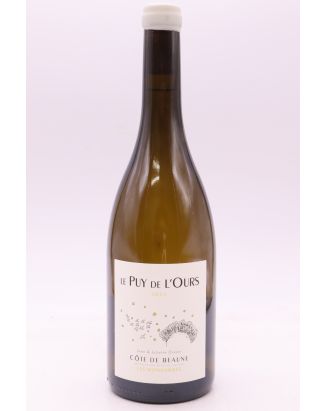
Côte de Beaune Blanc Les Monsnières (Chardonnay): From 1.49 hectares at 350m altitude (1992 and 2015/2016), this wine exudes honeysuckle and orange, with a fleshy mouthfeel of stone fruits and saline purity. Mixed fermentation in tank and barrels (20% new), complete malo and 10-12 months aging with bâtonnage, vibrant and mineral.
Savigny-lès-Beaune Blanc Les Goudelettes (Chardonnay): On 0.33 hectares of limestone from the 1990s, north of Savigny, it displays notes of orange blossom and stony minerality, with a supple and persistent yellow/orange texture. Malo in 300L barrels (without new wood), 12 months aging then 2 months in tank, pure, unfiltered, for a zesty and harmonious finish.
Reds:
Savigny-lès-Beaune Clos des Godeaux (Pinot Noir): From a 1.61-hectare walled vineyard planted in 1968, this gourmet wine with jammy red fruits and silky tannins is made without whole clusters, with neutral barrel aging. A juicy, velvety expression of Savigny's central terroir.
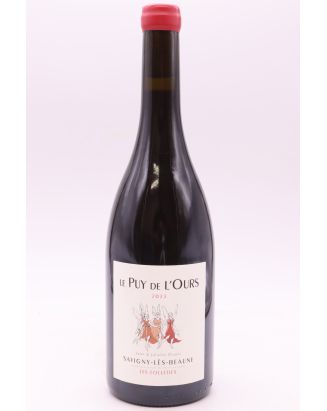
Savigny-lès-Beaune Les Folettes (Pinot Noir): On 0.78 hectares (1960 and 1979), with 50% whole clusters and 20% new wood, it seduces with its florality and refined texture, deep and aerial, a charming red for the table.
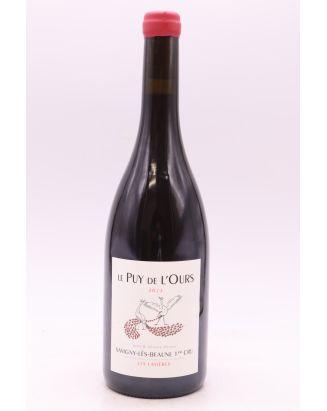
Savigny-lès-Beaune 1er Cru Les Lavières (Pinot Noir): From 0.78 hectares Premier Cru (1968-1970), 100% whole clusters and 10% new wood, it offers fruity intensity, fine tannins and structured elegance.
Le Puy de l'Ours is an invitation to rediscover Burgundy in a fresh and personal light. With organic wines of exceptional purity, choose a purchase that elevates your cellar and your meals. Order Le Puy de l'Ours cuvées now and let yourself be seduced by this estate for discerning connoisseurs!
COLLECTION NEAR PARIS & VAT REFUND FOR TOURISTS
Free collection in our warehouse near central Paris (92)