Vougeot

All wines from the Vougeot appellation in Burgundy

Vougeot is the smallest village appellation in the Côte de Nuits, in Burgundy, and one of the few on this slope to produce both red and white wines. Pinot noir yields wines with a ruby color, a bouquet of cherry, blackcurrant, dried rose, and violet, with a supple palate, fine texture, and delicate tannins, very close in style to neighboring Chambolle-Musigny. Chardonnay, cultivated on a handful of historic plots, produces extremely rare whites — ample and mineral — considered among the finest in the Côte de Nuits. Four premier cru climat classifications, including two monopoles, structure this minuscule appellation, which lives in the shadow of the legendary Clos de Vougeot.

Read more
See more
Filters

Price

€60.00 - €240.00

Parker WA rating

91 - 93

Burghound rating

87 - 93

Revue du Vin de France rating

No choice available on this group

Bettane & Desseauve rating

No choice available on this group

Prices drop

Download this list
There are 10 products.
Download this list
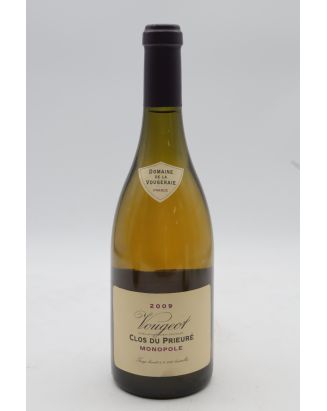
La Vougeraie Vougeot Clos du Prieuré Monopole 2022
4 in stock
110716
Red
75cl
Add to cart
Burgundy | Vougeot

La Vougeraie Vougeot Clos du Prieuré Monopole 2022

€78.00 inc-VAT per bottle
€65.00 ex-VAT
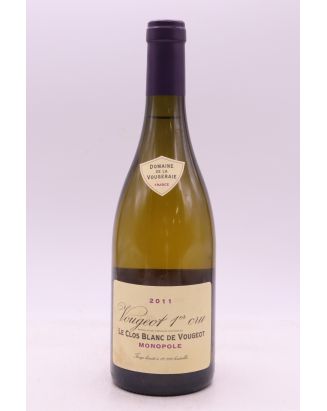
La Vougeraie Vougeot 1er cru Clos Blanc de Vougeot Monopole 2011
2 in stock
119863
White
75cl
Very slightly damaged
15.5/20
Add to cart
Burgundy | Vougeot 1er cru

La Vougeraie Vougeot 1er cru Clos Blanc de Vougeot Monopole 2011

€144.00 inc-VAT per bottle
€120.00 ex-VAT
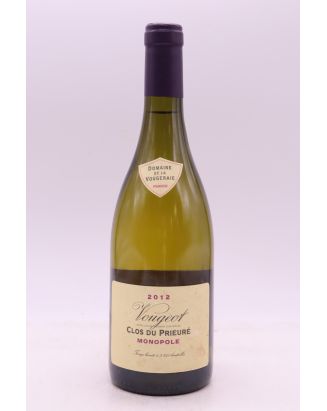
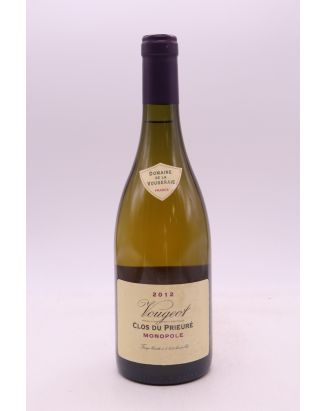
La Vougeraie Vougeot Clos du Prieuré Monopole 2012 blanc
3 in stock
119866
White
75cl
91/100
Add to cart
Burgundy | Vougeot

La Vougeraie Vougeot Clos du Prieuré Monopole 2012 blanc

€108.00 inc-VAT per bottle
€90.00 ex-VAT
La Vougeraie Vougeot Clos du Prieuré Monopole 2012 blanc
2 in stock
119865
White
75cl
Very slightly damaged
91/100
Add to cart
Burgundy | Vougeot

La Vougeraie Vougeot Clos du Prieuré Monopole 2012 blanc

€108.00 inc-VAT per bottle
€90.00 ex-VAT
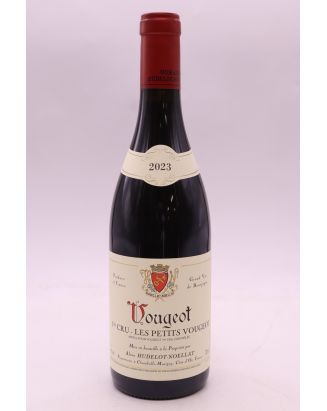
Hudelot Noellat Vougeot 1er cru Les Petits Vougeot 2023
10 in stock
125875
Red
75cl
91-93/100
90-93/100
Add to cart
Burgundy | Vougeot 1er cru

Hudelot Noellat Vougeot 1er cru Les Petits Vougeot 2023

€156.00 inc-VAT per bottle
€130.00 ex-VAT
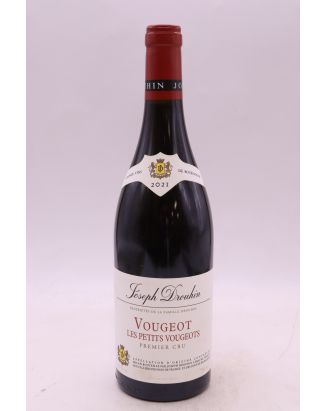
Joseph Drouhin Vougeot 1er cru Les Petits Vougeots 2021
1 in stock
128731
Red
75cl
Add to cart
Burgundy | Vougeot 1er cru

Joseph Drouhin Vougeot 1er Cru Les Petits Vougeots 2021

€114.00 inc-VAT per bottle
€95.00 ex-VAT
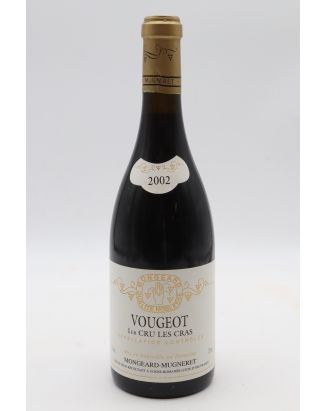
Mongeard Mugneret Vougeot 1er cru Les Cras 2002
2 in stock
129775
Red
75cl
84-87/100
Add to cart
Burgundy | Vougeot 1er cru

Mongeard Mugneret Vougeot 1er Cru Les Cras 2002

€192.00 inc-VAT per bottle
€160.00 ex-VAT
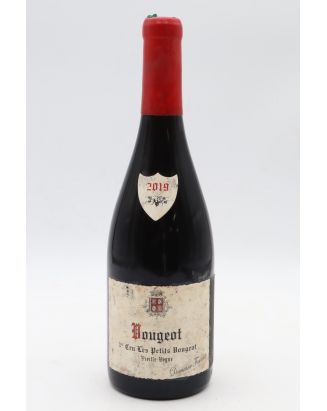
Fourrier Vougeot 1er cru Les Petits Vougeots 2019 - PROMO -5% !
New
-5%
1 in stock
129968
Red
75cl
Slightly Damaged
91-93/100
91-93/100
Add to cart
Burgundy | Vougeot 1er cru

Fourrier Vougeot 1er Cru Les Petits Vougeots 2019 - PROMO -5% !

€194.94 inc-VAT per bottle €205.20 inc-VAT -5%
€162.45 ex-VAT
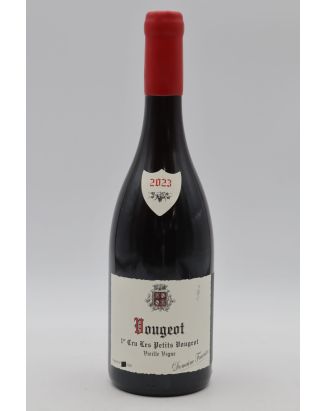
Fourrier Vougeot 1er Cru Les Petits Vougeots Vieilles Vignes 2023
New
2 in stock
130908
Red
75cl
Add to cart
Burgundy | Vougeot 1er cru

Fourrier Vougeot 1er cru Les Petits Vougeots Old Vines 2023

€234.00 inc-VAT per bottle
€195.00 ex-VAT
La Vougeraie Vougeot 1er Cru Clos Blanc de Vougeot Monopole 2008 White
New
0 in stock
131235
White
75cl
Out of stock
Burgundy | Vougeot 1er cru

La Vougeraie Vougeot 1er Cru Clos Blanc de Vougeot Monopole 2008 White

€108.00 inc-VAT per bottle
€90.00 ex-VAT

Where is the Vougeot appellation located?

The appellation is located in the Côte-d'Or, in the commune of Vougeot, at the heart of the Côte de Nuits vineyard, in Burgundy, some fifteen kilometres south of Dijon and a few kilometres north of Nuits-Saint-Georges. The village, one of the smallest on the côte, takes its name from the Vouge, the modest stream that descends from the hillside and joins the plain. The appellation area is framed by prestigious neighbours: Chambolle-Musigny and its Les Amoureuses climat to the north, the grand crus Musigny and Grands-Échezeaux to the west, Vosne-Romanée and Flagey-Échezeaux to the south, while the grand cru Clos de Vougeot occupies the heart of the finage.

The surface area is tiny: around fifteen hectares in total for the village appellation and its premiers crus, of which just under twelve hectares are classified as premier cru, compared with the more than fifty hectares of the Clos de Vougeot alone. In other words, nearly three-quarters of the commune's vineyard falls within the grand cru, making this one of the rarest appellations in all of Burgundy. The vines are spread between the lower slopes and the piedmont, around the château, at an altitude of approximately 240 to 280 metres, on very gentle east-facing slopes.

History of the Vougeot appellation

The history of this vineyard is intertwined with that of the monks of Cîteaux, whose abbey was founded in 1098 on the neighbouring plain. From the early 12th century, the Cistercians received donations of vines and set about delimiting their plots, giving birth to the Clos de Vougeot but also to the Petit Clos Blanc de Cîteaux, ancestor of the Clos Blanc de Vougeot, whose white wine long served in the offices of the abbey. The monks progressively raised the wall encircling the grand clos and built the château in the 16th century, with its cellars and monumental presses still visible today.

Confiscated as national property during the Revolution and sold at auction in 1791, the estate remained intact until the end of the 19th century, before being divided among several buyers and then, through successive inheritances, among dozens of owners. In 1934, the Confrérie des Chevaliers du Tastevin was founded in Nuits-Saint-Georges; it installed its headquarters at the château a few years later and contributed powerfully to the worldwide renown of these wines. On the regulatory front, the village appellation was recognised by the decree of 8 December 1936, in the great wave of Burgundian appellation creation, with the Clos de Vougeot obtaining its own grand cru status the following year. The four climates entitled to carry the premier cru designation were identified in 1943, and the specifications were updated when the appellation transitioned to protected designation of origin status.

What are the terroirs of the Vougeot appellation?

The terroirs rest on the Jurassic limestone of the Côte de Nuits, but with a distinctive feature: the plots of the village appellation and its premiers crus occupy sharply contrasting positions, from the upper slopes to the piedmont. In the upper part, against the Musigny and the wall of the Clos, the soils are thin, stony and perfectly draining, over hard limestone beds that yield taut and mineral wines. Further down, towards the village and the road, colluvium thickens, clay dominates and the slope eases, producing rounder, more generous and more immediately approachable cuvées.

Four climates are classified as premier cru. Le Clos de la Perrière, a monopole of just over two hectares nestled between le Clos de Vougeot and le Musigny, benefits from a very stony soil and a sheltered exposure that make it the earliest-ripening plot in the area, producing taut and thoroughbred wines. Les Petits Vougeots, the largest, extends the alluvial fan of Chambolle-Musigny and yields floral reds of a distinctly Chambolle-like elegance. Les Cras, backed against the north wall of the Clos, produce firmer, more telluric wines, as well as a highly regarded white. Finally, Le Clos Blanc, another monopole located just in front of the château on the lieu-dit La Vigne Blanche, is an island of white grape varieties planted nine centuries ago in the midst of an ocean of pinot noir. The climat Le Village, unclassified, completes the village appellation.

Which grape varieties are permitted in the Vougeot appellation?

The specifications designate pinot noir as the main grape variety for the reds, which may be complemented by up to 15% chardonnay, pinot blanc or pinot gris, a tolerance inherited from the ancient practice of mixed planting. This demanding variety, with its small, tight clusters and dark blue berries, expresses a brilliant red fruit and velvety tannins here, without the sometimes austere power found in the more northerly terroirs of the côte.

The whites, which represent the great originality of this vineyard, are made from chardonnay and pinot blanc, with pinot gris also potentially entering into certain historic blends from mixed-planted plots. Chardonnay contributes richness, volume, notes of pear, citrus and white flowers, and an ageing capacity unusual for a white from the Côte de Nuits. This production remains anecdotal on the scale of Burgundy, with only a few thousand bottles per year, which explains the rarity and the price of these cuvées.

What are the different styles of Vougeot wines?

This appellation produces two colours with very distinct profiles. The reds display an intense, limpid ruby colour, a nose of blackcurrant, black cherry, rose petal and violet, lifted by gentle spices and measured oak, before evolving with age towards undergrowth and leather. The palate is supple and silky, endowed with a fresh acidity and fine tannins reminiscent of Chambolle-Musigny, with a remarkable length for an appellation of this size. The whites are powerful and complex, with notes of pear, citrus and white flowers, underpinned by a saline texture and a fine mineral tension.

Vinification follows the practices of the Côte de Nuits: sorting of the harvest, partial destemming with often a proportion of whole clusters, cold pre-fermentation maceration, indigenous yeasts, manual punch-downs and a cuvaison of three to four weeks, followed by ageing for twelve to eighteen months in Burgundian pièces of 228 litres. The whites are slowly pressed, fermented in barrel and aged on lees with bâtonnage. In terms of food and wine pairings, the reds accompany duck, pigeon, veal, bœuf bourguignon and characterful cheeses, served between 14 and 16 °C, while the whites suit poultry in sauce, fine fish, scallops and Comté, served between 11 and 13 °C.

What are the best vintages of Vougeot?

The benchmark vintages of the last thirty years follow the general hierarchy of the Côte de Nuits. In red, 1999, 2002, 2005, 2009, 2010, 2015, 2016, 2019, 2020 and 2022 represent the safe choices, with 2005 and 2010 offering a structure built for long ageing, 2016 the finesse of a harvest reduced by frost, and 2019 and 2020 a solar ripeness combined with freshness. In white, 2002, 2010, 2014, 2017, 2019, 2020 and 2022 stand out as years in which the balance between richness and acidity proved optimal. The 2023 vintage, more abundant, yields fruity and immediately appealing wines.

Other years call for more discernment. The 2003 vintage, marked by the heatwave, saw certain very well-drained plots lose a large share of their crop and produce atypical, rich wines to be drunk without delay. 2000, 2004, 2007, 2011 and 2013 are lighter and are enjoyable now. 2021, cut short by a severe spring frost, delivered tiny volumes but fine, digestible wines from the best growers, while 2024 suffered from heavy mildew pressure and very reduced yields, making these cuvées even rarer than usual. For drinking now, look to 2013, 2014, 2017 and 2021; for the cellar, favour 2015, 2016, 2019, 2020 and 2022.

What are the best estates of the Vougeot appellation?

Two estates dominate this appellation through their historic monopoles. Domaine de la Vougeraie, created in the late 1990s by the Boisset family by bringing together their family vines and farmed biodynamically, holds the monopole of Le Clos Blanc de Vougeot, this plot planted with white grape varieties by the monks of Cîteaux nine centuries ago: the wine, aged in barrel then refined in tank, develops a nose of pear, citrus and white flowers on a rare mineral framework, and ranks among the most sought-after whites of the Côte de Nuits. The estate also produces a premier cru Les Cras of fine depth. Domaine Bertagna, situated at the heart of the village opposite the château, holds the monopole of Le Clos de la Perrière, a stony plot of 2.26 hectares wedged between the Clos de Vougeot and the Musigny, vinified with a proportion of whole clusters for a taut, spicy and floral wine. Taken over by the Reh family in the mid-1980s, it also offers one of the rarest whites in Burgundy from the climat Les Cras.

Château de la Tour occupies a unique position in the commune: it is the only estate built within the walls of the Clos de Vougeot and the largest owner of the grand cru, with a Vieilles Vignes cuvée made from century-old vines that serves as a benchmark for the grand cru appellation. Domaine Alain Hudelot-Noëllat, led by Charles van Canneyt, produces a premier cru Les Petits Vougeots that has become a cult wine among enthusiasts, often described as a disguised Chambolle-Musigny, so silky is its texture and so precise its fruit, with a very favourable quality-to-price ratio within a range that also includes Richebourg and Romanée-Saint-Vivant. Domaine Fourrier, based in Gevrey-Chambertin, also produces a Petits Vougeots of great clarity, marked by its old vines and deliberately restrained oak.

How long should a Vougeot wine be kept?

Ageing potential varies according to colour and appellation level. A red at village appellation level is generally drunk between five and twelve years after the harvest, with charming fruit from three or four years onward. A premier cru red requires five to eight years of patience and ideally reaches its peak between eight and eighteen years, with the finest vintages from Le Clos de la Perrière or Les Cras surpassing twenty years. The whites, despite their rarity, age remarkably well: allow five to ten years for most cuvées, and up to fifteen years for Le Clos Blanc in taut vintages. The neighbouring grand cru, for its part, demands at least ten years and easily crosses the twenty-five-year mark.

Proper storage requires a stable cellar, between 11 and 14 °C, dark, free from vibrations, with humidity close to 70% and bottles stored on their sides to keep the cork moist. Decanting should be practised with care: thirty minutes to one hour of aeration is appropriate for young reds that are still closed, while half an hour is sufficient for a recent white. For bottles over fifteen years old, opt for a gentle decantation just before serving, solely to separate the sediment, as these evolved wines quickly lose their bouquet when exposed to air.

WHAT THEY SAY ABOUT US

5 good reasons to buy wines on V&M

...

EXPRESS DELIVERY

In a secure polystyrene packaging

...

INTERNATIONAL SHIPPING

Find out more about VAT-EX sale for outside EU deliveries

...

COLLECTION NEAR PARIS & VAT REFUND FOR TOURISTS

Free collection in our warehouse near central Paris (92)

...