Château du Moulin à Vent

Château du Moulin-à-Vent wines: buy at the best price

Located in Romanèche-Thorins, at the heart of Beaujolais’s most prestigious cru, Château du Moulin-à-Vent is one of the appellation’s historic properties. Formerly known as Château des Thorins, it has around 30 hectares of old Gamay vines divided into nearly 100 plots, all on the cru’s finest granite slopes. Since the Parinet family took over in 2009, the estate has undergone a remarkable transformation in quality, with very low yields, a Burgundy-inspired plot-by-plot approach, and tailored aging methods. 

Read more
See more
Filters

Price

€20.00 - €80.00

Color

Vintage

Volume

Parker WA rating

90 - 90

Burghound rating

No choice available on this group

Revue du Vin de France rating

No choice available on this group

Bettane & Desseauve rating

No choice available on this group

Prices drop

Download this list
There are 2 products.
Download this list
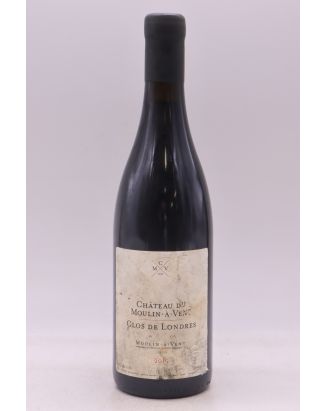
Château du Moulin à Vent Cuvée Clos de Londres 2015 -10% DISCOUNT !
-10%
9 in stock
112314
Red
75cl
Damaged
Add to cart
Beaujolais | Moulin à Vent

Château du Moulin à Vent Cuvée Clos de Londres 2015 -10% DISCOUNT !

€59.40 inc-VAT per bottle €66.00 inc-VAT -10%
€49.50 ex-VAT
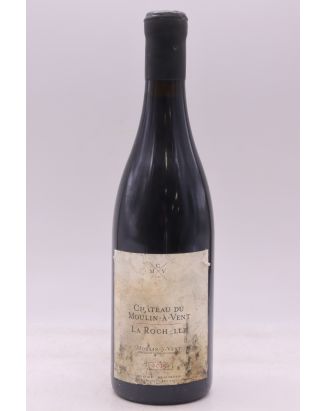
Château du Moulin à Vent Cuvée La Rochelle 2015 -10% DISCOUNT !
-10%
1 in stock
112315
Red
75cl
Damaged
Add to cart
Beaujolais | Moulin à Vent

Château du Moulin à Vent Cuvée La Rochelle 2015 -10% DISCOUNT !

€27.00 inc-VAT per bottle €30.00 inc-VAT -10%
€22.50 ex-VAT

History of Château du Moulin-à-Vent

The earliest written records of viticultural activity on the property date back to 1732, under the Pommier family. The estate was then known as Château des Thorins, after the hamlet where it stands, a fine 18th-century bourgeois residence planted at the geographical centre of today's appellation. Its hour of glory came in 1862: Philiberte Pommier, then ninety-nine years old, sent wines from the château's 1854 vintage to the London Universal Exhibition and won the gold medal. Ten years later, in 1872, Burgundian villages obtained the right to append to their name that of their finest terroir: Chambertin, Romanée and Montrachet were added to Gevrey, Vosne and Puligny, while Romanèche became Romanèche-Thorins. The château took its current name upon the creation of the Moulin-à-Vent appellation in 1936.

In 2009, Jean-Jacques Parinet acquired the property with the stated ambition of restoring it to its place among the region's greatest estates. The investments were considerable: construction of an entirely new winery, a return to soil cultivation, very short pruning, replanting of the rows removed by the previous owner, and the gradual abandonment of synthetic treatments. His son Édouard Parinet quickly took over operational management, supported by Brice Laffond, estate manager and cellar master. Their leitmotiv is clear: to produce great wines, every detail counts. In 2016, the family extended its activity to the Mâconnais by acquiring Domaine du Roc des Boutires and its Pouilly-Fuissé plots, extending in white the same quest for excellence.

Terroirs and Vines of Château du Moulin-à-Vent

The estate's exclusive focus on the Moulin-à-Vent appellation allows for a particularly refined understanding of its geological and climatic contexts. Of the twenty-three lieux-dits worked, six great terroirs have been identified and are cultivated individually: Le Moulin-à-Vent, Les Thorins, Aux Caves, Les Vérillats, Champ de Cour and La Rochelle. All are located within a radius of three hundred metres around the château, on the intermediate and upper part of the appellation, its most qualitative zone. The soils are weathered granites yielding the characteristic pink sands of the cru, particularly rich in iron oxide, manganese and copper, the legacy of a subsoil once mined for its manganese deposits at Romanèche-Thorins. This mineral signature is found in the wines in the form of ferrous notes and black cherry.

Each terroir has its own personality. Les Vérillats, at three hundred metres of altitude and right in the wind corridor, has very sandy and shallow soils of twenty-five to fifty centimetres, which yield wines full of charm and boldness. Champ de Cour, at two hundred metres and sheltered from the winds, offers soils with few stones and produces wines combining power and elegance. La Rochelle, neighbour of Les Vérillats and facing due south at two hundred and eighty metres, rests on granites rich in silica and clay that produce multidimensional, complete wines, sometimes austere in their youth. The vineyard is planted at high density, between nine thousand and ten thousand vines per hectare, with vines averaging fifty years of age, trained in gobelet and trellised. Yields remain very low, often below thirty-five hectolitres per hectare. The soils are entirely cultivated, sometimes with a draught horse, without herbicides, and the estate carries out massale selection to preserve its genetic heritage.

Vinifications of Château du Moulin-à-Vent

Harvesting is done by hand and collected in small containers to avoid any crushing of the berries and any premature oxidation of the juice. Depending on the richness and concentration of the grapes as well as the character of the terroir, the harvest is destemmed or vinified as whole clusters, with maceration durations, numbers and rhythms of pump-overs and punch-downs adjusted on a case-by-case basis. Vinifications take place in small-volume tanks, particularly for the single-vineyard selections, so as to respect the identity of each climat.

The ageing regimes are tailor-made and represent one of the great advances achieved since 2009. Le Couvent des Thorins sees virtually no oak, the château cuvée spends only part of its time there, while the single-vineyard selections are aged in barriques and demi-muids, with a measured proportion of new oak. The micro-cuvées benefit from the longest ageing, up to eighteen months, half of which in new oak for the Clos de Londres. This Burgundian vision applied to gamay was long debated within the appellation, but the wines have largely vindicated the Parinet family.

The cuvées of Château du Moulin-à-Vent

Le Couvent des Thorins opens the range. This blend comes from the La Delatte, Les Rouchaux and Les Maisonneuves terroirs, located at the foot of the historic windmill on its eastern slope, in sectors less exposed to the winds where ripening is rarely interrupted and the fruit is better preserved. The result is a fresh, fruity and immediately approachable moulin-à-vent, with a floral and spiced nose of carnation, a round and pulpy palate of black fruits, with a fine refreshing vegetal quality and delicate tannins. Aged almost entirely in tank, it is the finest possible introduction to the house style.

The Château du Moulin-à-Vent cuvée constitutes the estate's reference wine, the interpretation by Édouard Parinet and Brice Laffond of what a great moulin-à-vent is in a given vintage. It blends three great terroirs: Le Moulin-à-Vent, the most emblematic and most central in the appellation, surrounding the historic windmill and facing due east; Les Thorins, facing due south, the reference terroir on which the château stands; and Aux Caves, a shallow sector rich in silica where eighty-year-old vines grow. Partially aged in oak, it is structured, refined and elegant, with a nose of liquorice, cherry and tobacco, a dense palate with very fine tannins and a depth that calls for several years of cellaring.

Next come the three single-vineyard selections, the estate's emblematic triptych. Les Vérillats, also marketed under the name Croix des Vérillats, comes from 4.41 hectares perched right in the wind corridor: it is the most perfumed and seductive, with floral notes of black cherry, raspberry and dried herbs, complex and refined, with immediate charm. Champ de Cour, on 3.28 hectares sheltered at two hundred metres of altitude, embodies the elegance of the cru: denser and more austere in its youth, it offers an extraordinarily fine mouthfeel where the tannins are imperceptible, and reveals itself after five to ten years of cellaring. La Rochelle, on 4.21 hectares of siliceous and clayey granites facing south, is generally destemmed and carefully aged: it is the most complete and multidimensional of the three, balanced, deep, with a remarkable ageing potential.

At the summit reign two exceedingly rare micro-cuvées, produced only in the greatest vintages. Le Clos de Londres is born from a 0.56-hectare plot adjacent to the château, on the Le Moulin-à-Vent terroir, at the very foot of the windmill, on weathered granite. Vinified separately since 2009 and aged eighteen months in oak, half of which is new, it produces wines of exceptional energy and tension. Its name pays tribute to Philiberte Pommier and the gold medal won at the London Universal Exhibition of 1862. It is on this emblematic vine that the estate launched its most ambitious ventures, from the transition to organic farming to massale selection. The second micro-cuvée, Les Grands Savarins, comes from a 0.72-hectare plot located on the Aux Caves terroir, one of the most emblematic in the appellation: it yields wines of striking breed and depth. The estate has also produced, across various vintages, the cuvée Les Terrasses du Château, a complementary expression of the single-vineyard range. For whites, the Parinet family finally offers, under the label Domaine du Roc des Boutires, chardonnays from the Mâconnais and Pouilly-Fuissé, including the cuvée En Bertilionne, in the shadow of the Solutré rock: a taut and fleshy white, with notes of waxy yellow fruits, citrus and toasted wheat, with a stony minerality and a long, precise finish, to enjoy between three and ten years of ageing.

WHAT THEY SAY ABOUT US

5 good reasons to buy wines on V&M

...

EXPRESS DELIVERY

In a secure polystyrene packaging

...

INTERNATIONAL SHIPPING

Find out more about VAT-EX sale for outside EU deliveries

...

COLLECTION NEAR PARIS & VAT REFUND FOR TOURISTS

Free collection in our warehouse near central Paris (92)

...