Personalise your experience

Change your country, language and currency here whenever you wish.
|
|
|
Must-See Châteaux |
|
|
|
|
|
|
Romain Le Bars is one of the most striking and eagerly awaited revelations in viticulture from the Gard and southern Rhône. A former law student and Parisian restaurateur, he turned to winemaking after a sudden revelation while tasting a Tavel from the Domaine de l'Anglore by Eric Pfifferling. He then trained in viticulture and spent seven years learning his craft alongside Eric Pfifferling himself, one of the most admired winemakers of his generation for his benchmark Tavel and Lirac wines. In 2018, Romain launched his own venture in Tavel, in the Gard, with 1.20 hectares of vines under a lease and a garage in which to vinify. His first vintage, two exclusive cuvées, was immediately noticed by connoisseurs. Since 2019, he has devoted himself entirely to his estate, now extended to around ten hectares farmed organically, with a 200-square-metre cellar. He produces wines under the Tavel, Lirac and Vin de France appellations, principally from Grenache, Syrah, Mourvèdre and Carignan for the reds, and Ugni Blanc, Roussanne and Viognier for the whites. His cuvées, "in the vein of Pfifferling — infused, pure, carrying the fruit and floral notes with controlled acidity and admirable freshness", make him "a future great name in Tavel wines".
The story of Romain Le Bars is one of radical conversion and conquering passion. After studying law and a career as a restaurateur in Paris, Romain was struck by lightning during a tasting of a Tavel from the Domaine de l'Anglore: the revelation was total. He understood at that moment that his place was in a vineyard, making that kind of wine, in that corner of the Gard. He then undertook training in viticulture and knocked on the door of Eric Pfifferling, the winemaker at l'Anglore, to offer to work by his side. The latter accepted: Romain would spend seven full years at the Domaine de l'Anglore, learning every aspect of work in the vineyard and the cellar, absorbing Pfifferling's philosophy and forging his own vision.
In April 2018, Romain Le Bars acquired his first vines on a tenant-farming basis, 1.20 hectares in Tavel. He continued in parallel to work as an agricultural laborer at l'Anglore to make ends meet, while managing his own harvests and vinifying in his garage. His first 2018 vintage, two cuvées, immediately sparked keen interest among enthusiasts and specialist wine merchants. From 2019 onwards, he dedicated himself entirely to his own estate and began to expand it progressively, first going from one hectare to two, then to ten hectares within a few years. He left his garage for a better-suited 200-square-meter cellar. In 2022, the estate reached its current size of around ten hectares, covering the Tavel, Lirac and Vin de France appellations.
The vineyard of Romain Le Bars is primarily planted in Tavel and its surroundings, with plots in the Lirac appellation, in the Gard department, on the right bank of the Rhône. The terroirs are characteristic of the southern Rhône: sandy and rounded-pebble soils, typical of the Rhodanian alluvial plain, as well as clay-limestone soils on the higher-lying sectors. The vines, the oldest of which are over 40 years old, are planted with Grenache Noir (dominant), Syrah, Mourvèdre and Carignan for the reds, and Ugni Blanc, Roussanne, Vermentino, Viognier and Grenache Gris for the whites. The presence of Ugni Blanc in the vine composition is a remarkable singularity of the estate: a grape variety usually reserved for the production of Cognac or Pineau des Charentes, it yields here, under Romain's hand, wines of remarkable freshness and originality.
Like his mentor Pfifferling, Romain Le Bars places paramount importance on knowledge of the soils. The cover crop is carefully tended, and soil work is meticulous. The vineyard is managed using organic farming, in keeping with the values passed down by l'Anglore. Harvesting is done by hand, with naturally very low yields, in line with the artisanal philosophy of the estate.
Romain Le Bars's cellar philosophy is directly inherited from seven years alongside Eric Pfifferling: little or no intervention, low doses of sulfur (sometimes none), spontaneous fermentation with indigenous yeasts. For the reds and rosés, vinification is carried out mainly by carbonic maceration with direct pressing and fruit infusion, a technique that favors aromatic extraction by infusion rather than by pressure, yielding pure and generous wines with a beautiful freshness. Aging takes place in multi-vintage barrels (old casks and demi-muids), for durations adapted to each cuvée.
For the whites, direct pressing of whole bunches is used, followed by fermentation in large barrels and casks. Le Clau Blanc (Ugni Blanc) is vinified by direct pressing of whole bunches and then aged in demi-muids. The natural sparkling wines (Pet Nat) are bottled before the end of fermentation, without any additions, to capture the natural bubble. The style of Romain Le Bars's wines is highly recognizable: pure, fresh wines, infused with fruit and floral notes, with controlled acidity providing a very welcome freshness in a part of the Gard often marked by heat.
Tavel (AOC Tavel): Iconic rosé cuvée from the Tavel appellation, the only one in France to produce exclusively rosés. Made from a blend of Grenache (dominant), Syrah, Mourvèdre and complementary grape varieties. Carbonic maceration to preserve the fruit, direct pressing and infusion. A rosé wine of great freshness and aromatic purity in the direct lineage of Pfifferling at l'Anglore: red fruit, flowers, light spiced notes, fresh and sapid palate. "A future great name in Tavel wines" according to specialists. The first 2018 vintage of this cuvée immediately drew admiration from connoisseurs.
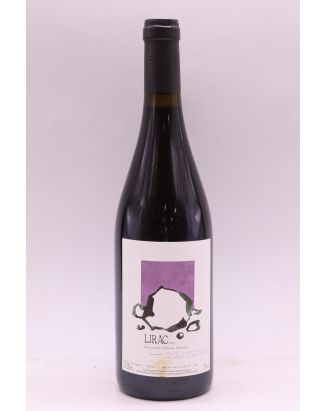
Lirac (AOC Lirac): Red cuvée from Lirac made from a blend of Grenache, Mourvèdre, Syrah and Carignan on the pebble and clay terroirs of the right bank of the Rhône. Carbonic maceration, aged in old barrels. A generous and fruity red wine, with aromas of red and black fruits, spices and garrigue, with a supple and fresh palate. A pleasurable red Lirac, approachable and easy-drinking, which reveals the quality of the terroir of this still-too-confidential appellation.
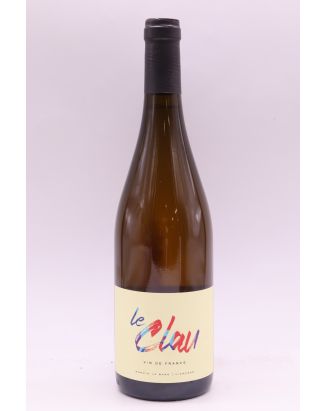
Le Clau Blanc (Vin de France): A confidential and singular white cuvée, made from 100% Ugni Blanc, old vines of more than 40 years on sandy and pebbly soils. Direct pressing of whole bunches, fermentation in large barrels and casks, aged in demi-muids. A white wine of remarkable freshness and originality: "at once sun-drenched and exquisitely fresh". Nose of white flowers, citrus and fruits, lively and generous palate, saline finish. One of the rare natural wine cuvées made from 100% Ugni Blanc, demonstrating that this often-underestimated grape variety can produce remarkable wines on the sandy terroirs of Tavel.
Le Clau Rouge (Vin de France): A confidential red cuvée made from a blend of the estate's finest plots, principally Grenache and Syrah. Carbonic maceration, aged in barrels. A precise and infused red wine, with aromas of red fruits, flowers and soft spices, light and fresh palate, silky tannins. The red signature of Romain Le Bars in Vin de France, in the direct and generous style that characterizes his entire range.
L'Homme de la Roche (Vin de France): Red or rosé cuvée depending on the vintage, made from Grenache, Syrah and complementary grape varieties. A wine of fine expressiveness and great drinkability, in the vein of the estate's more approachable cuvées. Crunchy fruit, alpine freshness despite the southern terroir, light and easy-drinking finish.
Pousse Cailloux (Vin de France): A red cuvée whose name evokes the stony soils of the rounded-pebble plots where these vines are planted. Made from Grenache and/or Mourvèdre on these pebble terroirs characteristic of the Rhodanian Gard. A fruity and full-bodied red wine, with aromas of black fruits and southern spices, an ample and generous palate.
A 2 C'est Mieux (Vin de France): A playful and convivial cuvée whose mischievous name reflects the winemaker's spirit. Made from a blend of two grape varieties or two complementary plots depending on the vintage. A thirst-quenching and sharing wine, fruity, light and easy-drinking, to be enjoyed as a pair, as the name suggests.
Pet Nat Carignan (Vin de France): Natural sparkling wine made from Carignan, bottled before the end of fermentation to capture the natural bubble without any additions. Light and festive bubbles, nose of red fruits and spices characteristic of Carignan, lively and thirst-quenching palate. An original and regional sparkling wine, rare in this part of the Gard.
Pet Nat Roussanne (Vin de France): Natural sparkling wine made from Roussanne, a white grape variety characteristic of the Rhône. Fine bubbles, nose of white flowers and white-fleshed fruits, fresh and lightly aromatic palate. A sparkling white wine of great elegance, typical of Roussanne on these southern terroirs.
Pet Nat Ugni Blanc (Vin de France): Natural sparkling wine made from Ugni Blanc, in the same vein as the Clau Blanc but in an effervescent version. Light bubbles, fruity and floral nose, fresh and thirst-quenching palate. An original and offbeat sparkling wine, once again demonstrating the potential of Ugni Blanc in the hands of Romain Le Bars.
COLLECTION NEAR PARIS & VAT REFUND FOR TOURISTS
Free collection in our warehouse near central Paris (92)