Personalise your experience

Change your country, language and currency here whenever you wish.
|
|
|
Must-See Châteaux |
|
|
|
|
|
|
|
|
Located in Scherwiller, at the foot of the Château de l'Ortenbourg and in the heart of the Alsace wine route, Domaine Achillée represents one of the most accomplished expressions of Alsatian biodynamic viticulture. Across 18 hectares of vineyards farmed organically since 1999 and Demeter-certified since 2003, the Dietrich family (Yves and his two sons, Jean and Pierre) crafts living, precise and unadorned wines, vinified in a unique straw bioclimatic winery in Europe.
The history of the Dietrich family begins in Dambach-la-Ville in 1620, a date carved in the stone of the old cellar that has never left the village. For centuries, life there was one of mixed farming: a few cows, horses, a farmyard, orchards and a few rows of vines. Wine was sold in barrels, often shipped northward through Europe via the Rhine. From generation to generation, the plots were divided between brothers and sisters until they became tiny parcels, fragmenting the grand crus while preserving the soul of each hillside. In the 1960s, Yves Dietrich's father chose to devote himself entirely to wine and direct sales from the cellar door. In 1990, Yves took over, intending to do so for only ten years, before ultimately dedicating his entire life to it.
The true founding act of the estate took place in 2016. Yves, at that time a cooperative member, decided to reclaim his independence with his two sons: Jean, trained in viticulture and oenology, took charge of the winemaking, while Pierre, a business school graduate, devoted himself to sales and marketing. The name chosen is not without meaning: yarrow (achillée millefeuille) is a central plant in biodynamic preparations, used to regulate potassium inputs. Construction of the cellar began in July 2016, just in time to receive the first harvest in September. As early as 2020, the Bettane et Desseauve guide distinguished this young estate as one of the two producers of the year in Alsace, confirming a meteoric rise.
The vineyard spreads across five villages on the Vosges foothills, forming a mosaic of terroirs that accounts for all the richness of the wines. Some of the vines thrive on sandy-gravelly soils, poor and well-drained, which force the plant to push its roots deep into the ground. The Blienschwiller and Dambach-la-Ville sectors, more clay-rich, offer sylvaner a remarkable aromatic expression. Sandstone dominates on the Hahnenberg and imparts finesse and minerality. The Schieferberg, literally the schist mountain in Alsatian, is located in Bernardvillé: this singular terroir magnifies riesling and endows it with a striking salinity. Finally, the grand crus Frankstein and Rittersberg, sitting on deep granitic soils and subsoils, produce straight wines with structured acidity and affirmed elegance.
All seven Alsatian grape varieties are represented: riesling, pinot gris, pinot blanc, pinot noir, gewurztraminer, sylvaner and muscat, to which are added a few chasselas vines from old mixed-variety plots. Work is manual, yields are deliberately low, the soils are living and tilled (sometimes with a draught horse), enriched with compost and biodynamic preparations. The estate also farms six hectares of orchards planted with cherry, quetsch plum and mirabelle plum trees, a guarantee of biodiversity that nourishes the balance of the vineyard and feeds into certain sparkling cuvées.
The winemaking takes place in a building that has become iconic: a bioclimatic cellar built from wood, earth and straw, with nearly 100 tonnes of self-supporting straw, making it the largest construction of this type in Europe. Entirely passive, it naturally maintains a constant temperature of approximately 13 to 14 degrees throughout the year, without heating or air conditioning. This natural thermal regulation provides ideal conditions for slow ageing and for the preservation of the wines.
The winemaking philosophy is one of minimal intervention. Fermentations start spontaneously thanks to indigenous yeasts and starter cultures elaborated exclusively from the estate's own grapes, without any additives or inputs. Sulphite is used only in homeopathic doses, solely when necessary at bottling. Each vessel contributes its own signature: stainless steel tanks for purity of fruit, oak foudres and barrels for the terroir cuvées. The maceration wines benefit from seven to ten days of skin contact, while the sparkling wines are produced using the traditional method, sometimes without dosage or according to a solera system.
The Éveil des sens range brings together the wines for easy drinking and immediate pleasure. The Alsace cuvée is a blend of sylvaner, pinot blanc and various Alsatian grape varieties, lively and easy to drink, a true calling card of the estate. Its variant, Alsace rond, more full-bodied and enveloping, appeals to lovers of fruity roundness. The Riesling expresses the citrus-driven directness and mineral structure characteristic of the king grape variety. The Sylvaner, from clay soils, combines suppleness, generosity and increasing salinity. The Pinot Blanc is full-bodied and fruity, the Pinot Gris denser and smokier, the Muscat exuberant on fresh grapes and white flowers. The Gewurztraminer, for its part, unfolds lychee, rose and gentle spices without ever losing its balance.
Macerations are the estate's most original signature. Alsace Macéré combines a directly pressed sylvaner with a blend of white grape varieties macerated for eight to ten days: the nose reveals gentle spices and candied citrus peel, the palate unfolds a silky body with discreet tannins, of remarkable drinkability. Alsace Hespéridé takes the exercise further with macerated gewurztraminer, a sun-drenched orange wine with aromas of exotic fruits, ginger and blood orange, endowed with a noble bitterness and a beautiful acidity. Among the reds, the Pinot Noir plays on the indulgence of crunchy red fruit, while the Pinot Noir Libre, vinified with whole bunches and blended directly with press juice, without any additives or added sulphites, displays a wild and spicy character that calls for meat in sauce and game.
The Expressions de terroir range gives full expression to the individual plots. Scherwiller is a riesling from granite and sand, taut, crystalline and made for the table. Hahnenberg comes from a magnificently exposed sandstone plot: aromatic generosity, an ample structure and an ageing potential of ten to twenty years. Schieferberg, on the schists of Bernardvillé, offers one of the most saline and complex rieslings in the range, of striking mineral depth. Ganzeracker showcases sylvaner in majesty on clay soils, with notes of exotic fruits and toasted bread. The Rittersberg complanté, from old vines planted as a field blend on granite, offers a vibrant and vinous reading of the terroir, complemented by a single-variety Riesling Rittersberg with structured acidity and chiselled elegance.
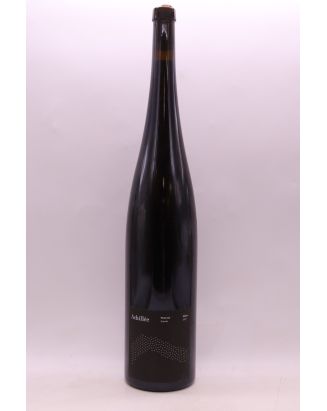
The Magic range finally brings together the estate's rarest bottles. The Pinot Noir Granite, aged with patience and vinified in a traditional manner, stands out for its tannic finesse, its aromas of black cherry and its chalky minerality, also available in 1.5-litre magnums alongside the Schieferberg, the Hahnenberg, the Rittersberg complanté and the Crémant Zéro Dosage. The Riesling Frankstein, from the granitic grand cru of Dambach-la-Ville, embodies verticality and length, with a structural acidity that promises many long years of ageing. The Paille cuvée, a nod to the cellar in which these wines are housed, remains the most confidential of all, produced in tiny quantities and reserved for the curious who wish to taste Alsatian biodynamics in its most liberated expression.
COLLECTION NEAR PARIS & VAT REFUND FOR TOURISTS
Free collection in our warehouse near central Paris (92)