Marchesi Antinori

Wines from Marchesi Antinori: buy at the best price

A Florentine house founded in 1385, Marchesi Antinori has belonged to the same family for twenty-six generations, making it one of the oldest wine-producing companies in the world still in the hands of its founders. Rooted in Tuscany, it transformed the history of Italian wine with the birth of the Super Tuscans — Tignanello in 1971 and then Solaia in 1978 — two cuvées that redefined the potential of sangiovese and Bordeaux grape varieties on the hills of Chianti Classico. The group now brings together a constellation of estates, from Tenuta Tignanello to Guado al Tasso in Bolgheri, from Pian delle Vigne in Montalcino to Castello della Sala in Umbria.

Read more
See more
Filters

Price

€160.00 - €520.00

Color

Parker WA rating

87 - 97

Burghound rating

No choice available on this group

Revue du Vin de France rating

No choice available on this group

Bettane & Desseauve rating

No choice available on this group

Prices drop

Download this list
There are 4 products.
Download this list
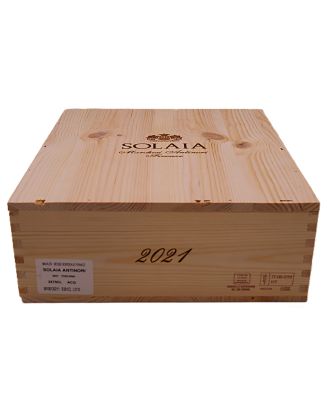
Antinori Solaia 2021
6 in stock
124150
Red
75cl
Original wood case - Sold by 3
97/100
98/100
Add to cart
Outside France | Italie - Toscane

Antinori Solaia 2021

€348.00 inc-VAT per bottle
€290.00 ex-VAT
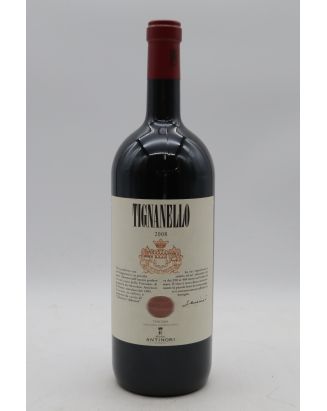
Marchesi Antinori Toscana Tignanello 2008 Magnum
New
1 in stock
132606
Red
150cl
94/100
92/100
Add to cart
Outside France | Italie - Toscane

Marchesi Antinori Toscana Tignanello 2008 Magnum

€504.00 inc-VAT per bottle
€420.00 ex-VAT
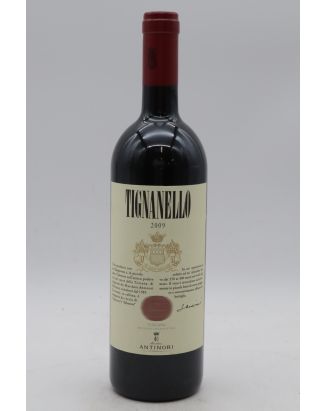
Marchesi Antinori Toscana Tignanello 2009
New
5 in stock
132607
Red
75cl
94/100
92/100
Add to cart
Outside France | Italie - Toscane

Marchesi Antinori Toscana Tignanello 2009

€240.00 inc-VAT per bottle
€200.00 ex-VAT
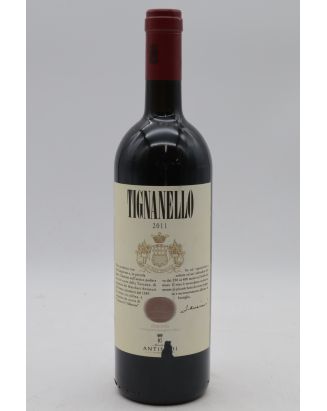
Marchesi Antinori Toscana Tignanello 2011 - SALE -5% !
New
-5%
1 in stock
132608
Red
75cl
Slightly Damaged
93/100
92/100
Add to cart
Outside France | Italie - Toscane

Marchesi Antinori Toscana Tignanello 2011 - SALE -5% !

€176.70 inc-VAT per bottle €186.00 inc-VAT -5%
€147.25 ex-VAT

History of Marchesi Antinori

It all began in 1385 when Giovanni di Piero Antinori joined the Arte Fiorentina dei Vinattieri, Florence's wine merchants' guild. Originating from a Mugello family of silk merchants and bankers, the house established its headquarters at Palazzo Antinori in the heart of the city and early on expanded its wine trade across the Alps. In the 18th century, the family was granted the title of Marquis, hence the name Marchesi Antinori.

The modern turning point came in 1966 with Marchese Piero Antinori taking the helm, supported by enologist Giacomo Tachis. In 1971, he dared to remove the white grapes then mandated by Chianti regulations, aged Sangiovese in barriques, and blended it with Cabernet: Tignanello was born, declassified to a simple table wine yet instantly hailed as a revolution. Solaia followed in 1978, and its 1997 vintage became the first Italian wine voted Wine of the Year by Wine Spectator in 2000. These cuvées paved the way for the Super Tuscan movement and the renaissance of Italian winemaking. The house acquired Badia a Passignano in 1987, developed Guado al Tasso, Pian delle Vigne, and Castello della Sala, and in 2012 opened the spectacular Antinori nel Chianti Classico winery in Bargino, buried beneath the vineyards. The company has been led since 2017 by Albiera Antinori alongside her sisters Allegra and Alessia, with Piero Antinori serving as Honorary President.

Terroirs and Vineyards of Marchesi Antinori

The family's winegrowing heritage spans over a thousand hectares across highly contrasting terroirs. The historic heart remains Tenuta Tignanello, nestled between the Greve and Pesa valleys in Chianti Classico: 127 hectares of vines on calcareous marl, albarese, and galestro soils, between 350 and 400 meters of altitude. Here lie the two legendary vineyards: Tignanello and the adjacent southwest-facing Solaia parcel. Just a few kilometers away, the domaine de Pèppoli and the Vallombrosan abbey of Badia a Passignano, surrounded by hills forming a protective amphitheater, complete the Chianti estate holdings.

On the coast, Tenuta Guado al Tasso covers over 300 hectares within the Bolgheri amphitheater on alluvial and sandy soils cooled by Tyrrhenian Sea breezes, planted to Cabernet Sauvignon, Merlot, Cabernet Franc, Syrah, Petit Verdot, and Vermentino. In Montalcino, Pian delle Vigne cultivates its Sangiovese Grosso on clay-limestone soils rich in galestro. Finally, in Umbria, Castello della Sala presides over 500 hectares near Orvieto on clay-limestone soils packed with fossil shells—a cool, high-altitude terroir ideal for Chardonnay, Grechetto, Procanico, Sauvignon, Sémillon, and Pinot Noir. This mosaic of terroirs is the house's true signature.

Winemaking at Marchesi Antinori

The house philosophy blends continuous technical innovation with deep respect for natural balances. The vineyards are managed with precise parcel-by-parcel monitoring, manual harvesting, selective grape sorting, and separate vinifications by parcel and grape variety, even across large estates like Guado al Tasso.

In the cellar, fermentations take place in temperature-controlled stainless steel tanks, and occasionally in cement or oak, with macerations tailored to each lot's structure. Antinori pioneered the use of French oak barriques in Italy for both reds and whites: in 1985, Cervaro della Sala was among the very first Italian whites to undergo malolactic fermentation and aging in barriques. Aging spans from a few months in tank for fruit-forward wines to twelve or eighteen months in barrique for age-worthy cuvées, followed by bottle refinement. The medieval cellars at Castello della Sala, dug thirty meters underground, and those of the Badia a Passignano monastery provide naturally consistent temperature and humidity levels.

The Wines of Marchesi Antinori

Tignanello (Toscana IGT): the ultimate icon, born in 1971 from a single parcel at Tenuta Tignanello. A blend predominantly of Sangiovese with Cabernet Sauvignon and Cabernet Franc, aged for about twelve months in barriques and refined in bottle. Deep ruby in color, it reveals black cherry, tobacco, leather, and sweet spices over a silky tannic framework. It is produced only in favorable vintages.

Solaia (Toscana IGT): born in 1978 on a ten-hectare parcel neighboring Tignanello. Dominated by Cabernet Sauvignon and complemented by Sangiovese and Cabernet Franc, it is a wine of noble power, with notes of blackcurrant, graphite, and cedar, boasting exceptional cellaring potential. Its 1997 vintage was the first Italian wine voted Wine of the Year by Wine Spectator.

Marchese Antinori Chianti Classico Riserva DOCG: Tenuta Tignanello's grand reserve, crafted from Sangiovese complemented by a touch of Cabernet and aged in oak barrels. An aristocratic Chianti Classico—ample, structured, and long on the palate. Tenuta Tignanello Chianti Classico offers a more immediate expression of the same terroir.

Badia a Passignano Chianti Classico Gran Selezione DOCG: 100% Sangiovese from the vineyards surrounding the abbey, planted between 250 and 300 meters above sea level. Ripe cherry, orange peel, licorice, and chocolate mingle with a dense, velvety texture. The estate also crafts a Wine Santo del Chianti Classico, a meditation wine aged in caratelli.

Pèppoli Chianti Classico DOCG: sourced from the neighboring estate of Tignanello, whose northeast-facing slopes enjoy a unique microclimate. Sangiovese complemented by Merlot and Syrah, with short aging to preserve the fruit. A luscious, floral, easy-drinking Chianti to enjoy young.

Villa Antinori Rosso (Toscana IGT): a historic blend of Sangiovese, Cabernet Sauvignon, Merlot, and Syrah, created in 1928. Supple, spicy, and perfectly balanced, it embodies the house style at an accessible price. Villa Antinori Chianti Classico Riserva DOCG offers a more structured take, while Villa Antinori Bianco blends Trebbiano, Pinot White, Pinot Grigio, and other varieties into a fresh, floral white.

Guado al Tasso Bolgheri DOC Superiore: the great red of the coast, a blend of Cabernet Sauvignon, Merlot, Cabernet Franc, and Petit Verdot aged in new oak barrels. Dense, velvety, and Mediterranean, it stands out with aromas of dark fruits, aromatic herbs, and blond tobacco.

Matarocchio Bolgheri DOC Superiore: a rare cuvée from a single parcel of pure Cabernet Franc, harvested cluster by cluster and aged eighteen months in French barrels. A wine of ethereal finesse, with silky tannins and remarkable balsamic freshness.

Cont'Ugo Bolgheri DOC Rosso: 100% Merlot, paying homage to Count Ugo della Gherardesca. Round and fleshy, with notes of plum and sweet spices, it appeals through its volume and accessibility. San Walfredo, a single-parcel Cabernet Sauvignon, occasionally complements the estate's top tier.

Il Bruciato Bolgheri DOC Rosso: created in 2002, a blend of Cabernet Sauvignon, Merlot, and Syrah vinified in stainless steel and briefly aged in oak barrels. An intense, fruity, and immediately appealing red that has become one of Bolgheri's greatest values.

Scalabrone Bolgheri DOC Rosato: a saignée rosé made from Cabernet Sauvignon, Merlot, and Syrah harvested and fermented separately following a short low-temperature maceration. Fine, saline, and elegant, it takes its name from a famous Maremma bandit.

Vermentino Bolgheri DOC: Guado al Tasso's iconic white, vinified in stainless steel vats to preserve its aromas of citrus, white flowers, and sea spray. Its Camillo bottling offers the same grape variety in a more direct, fruit-forward style.

Brunello di Montalcino Pian delle Vigne DOCG: 100% Sangiovese Grosso from the estate acquired in 1995 southwest of Montalcino, aged in oak casks according to appellation regulations. Powerful and elegant, it marries black cherry, undergrowth, and spices. The Riserva Vigna Ferrovia offers its most accomplished single-vineyard expression, while the Rosso di Montalcino Pian delle Vigne provides a suppler, fruit-forward introduction.

Cervaro della Sala (Umbria IGT): the house's greatest white wine, created in 1985 under the leadership of Renzo Cotarella. Chardonnay blended with a small proportion of Grechetto, barrel-fermented and aged with malolactic fermentation. Mineral tension, notes of white fruit, candied citrus, and hazelnut, combined with remarkable aging potential.

Muffato della Sala (Umbria IGT): a rare Italian sweet wine crafted from botrytized grapes, blending Sauvignon, Grechetto, Traminer, and Riesling. Honey, candied apricot, and saffron achieve perfect harmony through vibrant acidity.

Conte della Vipera (Umbria IGT): a Bordeaux-inspired blend of Sauvignon White and Sémillon—crisp, aromatic, and savory. Bramìto della Sala Chardonnay, whose first vintage dates to 1994, is its more accessible counterpart, partially barrel-aged. San Giovanni della Sala Orvieto Classico Superiore showcases Procanico, the Umbrian clone of Trebbiano, in a dry, mineral white, while Pinot Nero della Sala, the estate's only red, offers a refined, fresh expression of the variety in Umbria.

Marchese Antinori Franciacorta DOCG: crafted at Tenuta Montenisa in Lombardy from Chardonnay, Pinot Noir, and Pinot White, using the traditional method with extended lees aging in bottle. The vintage Donna Cora cuvée represents its most refined expression, showing notes of brioche, almond, and citrus.

WHAT THEY SAY ABOUT US

5 good reasons to buy wines on V&M

...

EXPRESS DELIVERY

In a secure polystyrene packaging

...

INTERNATIONAL SHIPPING

Find out more about VAT-EX sale for outside EU deliveries

...

COLLECTION NEAR PARIS & VAT REFUND FOR TOURISTS

Free collection in our warehouse near central Paris (92)

...