Personalise your experience
Change your country, language and currency here whenever you wish.
|
|
|
Must-See Châteaux |
|
|
|
|
|
|
|
|
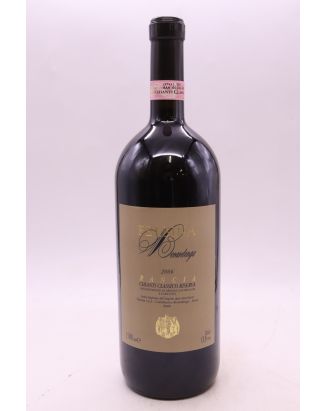
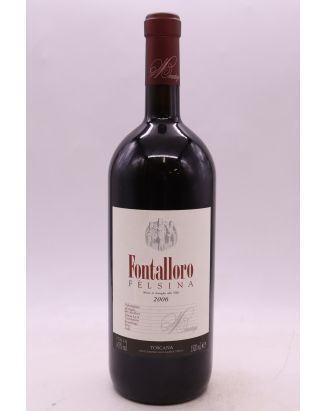
Located in Castelnuovo Berardenga, at the southernmost tip of Chianti Classico and just a few kilometres from Siena, Domaine Fèlsina is one of the great estates of Tuscany. On this frontier land where the Chianti hills meet those of the Colli Senesi, the Poggiali family has worked since 1966 to reveal the full potential of sangiovese, through pioneering work in mass selection and a parcel-by-parcel approach of remarkable rigour. Rancia and Fontalloro, both born in 1983, rank among the most emblematic expressions of the grape variety in Italy. Wines of classic purity, never over-extracted or over-oaked, built for long ageing.
The estate's name derives from Fèlsina, the Etruscan name for Bologna recorded by Pliny the Elder in his Natural History—a tribute to the family's Romagna roots and the likely former presence of an Etruscan settlement in Castelnuovo Berardenga. The site's history dates back to the 12th century, but its modern era began in 1966 when entrepreneur Domenico Poggiali acquired this former hunting reserve, recognizing its exceptional viticultural promise. During a challenging era for Italian wine, he chose to invest in quality over quantity.
Two figures played decisive roles. Giuseppe Mazzocolin, Domenico Poggiali's son-in-law and a literature graduate and philosophy teacher from the University of Florence, brought a cultural perspective to winemaking. Young enologist Franco Bernabei sought to move Tuscany beyond rustic traditions toward greater technical precision. In 1981, the family acquired Castello di Farnatella in the Colli Senesi, paving the way for the 1983 debut of two foundational wines: the single-vineyard Rancia and Fontalloro, a pure Sangiovese from plots straddling the appellation boundary. Since the 1990s, third-generation Giovanni Poggiali has carried this vision forward, backed by a major replanting initiative in the 2000s. Sixty years after the initial purchase, Fèlsina remains an Italian and international benchmark.
The property spans several hundred hectares, including roughly 75 hectares of vines at Fèlsina itself, alongside approximately fifty hectares at Castello di Farnatella. The parcels are located in the southeastern sector of Chianti Classico, mainly facing southwest at elevations ranging from 320 to 450 meters, while the historic winery sits lower at about 230 meters. The soils blend macigno sandstone and alberese limestone at higher elevations, with silt content increasing southward toward the Crete Senesi.
Castelnuovo Berardenga naturally yields a broader, more austere expression of Sangiovese than cooler areas of Chianti Classico, due to its clay soils and warm summers. It is precisely this robust raw character that the estate has learned to refine. Sangiovese—locally known by its historic name Sangioveto—lies at the heart of the varietal makeup, complemented by Cabernet Sauvignon, Chardonnay, and Pinot Noir. In the 1980s, the winery initiated an ambitious massal selection program using old Rancia vines to preserve a distinct genetic heritage. The flagship crus, Poggio a Rancia and Colonia, were identified parcel by parcel through detailed soil and exposure analyses.
The cellar philosophy is captured in a guiding principle often shared by the estate: never too much extraction, never too much oak, never too much aging. Working with naturally generous fruit, Franco Bernabei and Giuseppe Mazzocolin chose restraint over excess. Fermentations resemble infusion rather than heavy extraction, enabling the wines to retain concentration without unneeded weight or harshness. The grape variety itself, they note, sets a physiological threshold that every winemaker must honor.
Every parcel is vinified individually—an essential step for interpreting distinct crus. Aging occurs in French oak barrels and tonneaux with a restrained proportion of new oak, frequently utilizing second- to fourth-fill barriques, particularly for whites. Aging durations range from eight to ten months for I Sistri to several years for the Gran Selezione, followed by patient bottle conditioning. The estate also produces traditional-method sparkling wines, Wine Santo in customary caratelli, and four single-varietal olive oils, all sharing the same parcel-by-parcel philosophy.
Berardenga, Chianti Classico: the estate's calling card, predominantly Sangiovese from Castelnuovo Berardenga parcels. An authentic, direct reflection of the territory, offering cherry, violet, and tobacco notes over a clean palate with fine tannins and a lingering finish. Widely recognized by critics as a benchmark for quality-to-price ratio in the appellation.
Berardenga, Chianti Classico Riserva: a selection of the best vats, aged longer in wood. Deeper and more structured than the standard cuvée, it showcases ripe dark fruits, sweet spices, and a mineral framework, with cellaring potential of ten to fifteen years.
Rancia, Chianti Classico Gran Selezione: the estate's historic single-vineyard wine, created in 1983 and long bottled as a Riserva before entering the Gran Selezione category. It hails from the Poggio a Rancia vineyard, located on the eponymous hill once home to a Benedictine monastery, at 370 to 420 meters in altitude with a southwest exposure on alberese and galestro soils. Recent replantings use massal selections from the site's old vines. An austere, pedigreed Sangiovese in its youth that turns sumptuous after a decade in the cellar.
Colonia, Chianti Classico Gran Selezione: the house's second grand cru, sourced from a high-elevation vineyard around 450 meters, the culmination of site restoration spanning three generations of the Poggiali family. Tauter and more vertical than Rancia, it blends delicate floral and balsamic aromas with remarkably fine tannins. A flagship wine produced in limited quantities.
Fontalloro: 100% Sangiovese in Toscana IGT, also introduced in 1983, blending vineyards that straddle the appellation border—one in Chianti Classico and two in Colli Senesi. The former provides structure and tension, while the latter add lushness and flesh. Generous, layered bouquet of ripe cherry, red currant, black pepper, and toasted nuances with subtle floral undertones. One of Italian Sangiovese's great benchmarks.
Illo: an exceedingly rare, confidential cuvée produced through an extreme selection of the estate's finest grapes and exceptionally long aging. Offering extraordinary density and complexity, it marks the pinnacle of Fèlsina's production and is released only in standout vintages.
Maestro Raro: the estate's 100% Cabernet Sauvignon, classified as Toscana IGT and planted on the property's best-suited soils. Deep dark fruit, savory spices, and velvety tannins combine in a concentrated yet fresh wine, free of green notes, showcasing balanced Tuscan character.
I Sistri: the estate's Chardonnay, named after an ancient instrument used in the worship of Isis. Grown in the Colli Senesi sector, it is aged eight to ten months in second- to fourth-fill French oak barrels. Peach, citrus, tropical fruits, and a touch of vanilla create a full-bodied, concentrated white, kept fresh by balanced acidity.
Berardenga, Chianti Colli Senesi: an everyday cuvée from the sandier, alluvial soils of Castello di Farnatella. Supple, fruity, and approachable, it nonetheless displays the estate's signature style, with a savory, digestible finish.
Pepestrino and Nero di Nubi: two Toscana IGT cuvées crafted for everyday dining, featuring a crisp, floral white and a supple, fruit-forward red. They provide an approachable entry into the Fèlsina portfolio while maintaining pristine cellar precision.
Vin Santo del Chianti Classico: the region's sweet tradition, made from white grapes dried on straw mats and aged for years in caratelli barrels. Golden hue with copper tints, aromas of peach, apricot, pineapple, and dried tropical fruits, over an unctuous, elegant palate beautifully framed by oak.
Vin Santo del Chianti Classico Occhio di Pernice: the rarest and most sought-after edition, made from dried Sangiovese grapes that impart its signature partridge-eye tint. Following extensive years in wood, it achieves immense complexity with notes of fig, date, caramel, cocoa, and bitter orange peel, sustained by endless acidity. A true collector's bottle.
COLLECTION NEAR PARIS & VAT REFUND FOR TOURISTS
Free collection in our warehouse near central Paris (92)