Personalise your experience
Change your country, language and currency here whenever you wish.
|
|
|
Must-See Châteaux |
|
|
|
|
|
|
|
|
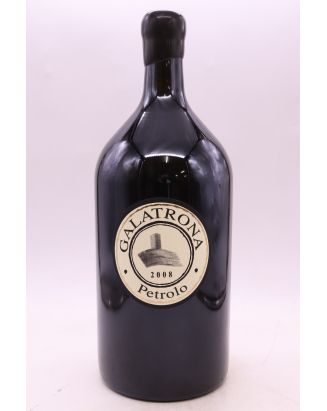
Nestled on the southeastern foothills of the Chianti mountains, in the Valdarno di Sopra appellation, Domaine Petrolo has become one of Tuscany’s most sought-after producers in a single generation. Its flagship wine, Galatrona, a pure Merlot from a single ten-hectare vineyard, has earned the estate comparisons to an Italian Pétrus or Le Pin, regularly scoring 98 to 100 points from leading international critics. But Petrolo is far more than a cult wine: the estate also produces an outstanding Sangiovese, Bòggina; a single-vineyard Cabernet Sauvignon, Campo Lusso; a historic blend, Torrione; and even an ambitious Trebbiano. Certified organic since 2016, the property uses native yeasts and works without irrigation or synthetic fertilizers to produce terroir-driven wines of remarkable purity.
Valdarno di Sopra is by no means a newcomer to viticulture: in 1716, Grand Duke Cosimo III de' Medici named it one of Tuscany's four great wine territories, alongside Chianti, Carmignano, and Pomino. As early as 1834, Giorgio Perrin, a Swiss-born agronomist who then owned Petrolo and was an honorary member of Florence's Accademia dei Georgofili, documented in the Giornale Agrario Toscano the local custom of planting French varieties alongside Sangiovese. The estate's villa was constructed between 1700 and 1750 by the sculptor Massimiliano Soldani Benzi.
Modern history began in 1947 when Gastone Bazzocchi purchased the property and planted the Bòggina vineyard, dedicated to Sangiovese. In the 1980s, his daughter Lucia Bazzocchi Sanjust began modernizing the estate alongside her son Luca Sanjust, a professional painter and scholar of Venetian Renaissance art, who left galleries in Milan, Rome, and Paris to devote himself to viticulture. Torrione was born in 1988 as the first wine of this new era, crafted with the help of legendary consultant Giulio Gambelli. Merlot was planted starting in the late 1980s, and the inaugural vintage of Galatrona debuted in 1994. Campo Lusso followed in 2001, San Petrolo that same year, Bòggina C in 2006, Bòggina A in 2011, and Bòggina B in 2014. The transition to natural practices began in 2004, leading to official organic certification in 2016.
The estate encompasses 272 hectares in total at Mercatale Valdarno in the municipality of Bucine, province of Arezzo, right in the center of the triangle formed by Florence, Siena, and Arezzo. Only 31 hectares are planted to vines, with the rest occupied by woodlands, olive groves, and meadows, ensuring a biodiversity that the estate intentionally preserves. The vineyard peaks at around 300 meters in altitude, with a southeastern exposure facing the Chianti hills natural park.
The soils represent Petrolo's true uniqueness: two geological plates meet here, generating an uncommon blend of clay, schist, marl, and sandstone. The clay retains moisture, helping Merlot navigate dry Tuscan summers without water stress, while stones and schists bring finesse and tension. Each parcel retains its distinct identity: Galatrona (10 hectares, nearly 50,000 vines trained in cordon Royat at the locality of Feriale), Bòggina, planted in 1947 and gradually replanted through massal selection from the original clones, Lecceta with its 45+ year-old vines—some possibly pre-phylloxera—Casariccio bordering a small regulating lake, Asilo, Campaccio nestled at the forest edge beneath Galatrona's medieval tower, and Campo Lusso, a natural terrace encircled by woods. Since 2004, there has been no irrigation, no synthetic fertilization, no tilling, complete grass cover with mulching, and a total elimination of synthetic pesticides.
The cellar philosophy focuses on minimal intervention to let the terroir shine. Harvesting is performed by hand in small crates, followed by additional sorting on a sorting table. Yields are kept deliberately very low, around 20 to 25 hectoliters per hectare, with a maximum of one kilogram of grapes per vine for Torrione.
Fermentations are conducted with indigenous yeasts in concrete or glass-lined vats, with gentle and frequent manual pump-overs. Malolactic fermentation occurs spontaneously in wood. Maturation varies by cuvée: roughly 18 to 20 months in French oak barriques (one-third new) for Galatrona, with continuous stirring of the fine lees for the first six months; 15 to 18 months in concrete vats, 40-hectoliter foudres, tonneaux, and barriques for Torrione. The white wines spend over fifteen months on their lees in selected tonneaux, without racking prior to bottling. Since 2011, the estate has also experimented with vinification and aging in Impruneta terracotta amphorae, an homage to Tuscany's Etruscan roots.
Galatrona (Val d'Arno di Sopra DOC, Vigna Galatrona): the estate's Grand Cru, 100% Merlot sourced exclusively from the eponymous vineyard planted between the late 1980s and mid-1990s with low-vigor Bordeaux clones. Vinified in concrete vats with indigenous yeasts, aged for 18 to 20 months in French barriques, one-third of which are new. Around 30,000 bottles of a wine with remarkable depth: plum, dark cocoa, roasted coffee, cedar, and fresh earth, with ripe tannins and vibrant acidity. First vintage in 1994.
Campo Lusso (Val d'Arno di Sopra DOC, Vigna Campo Lusso): the Grand Cru Cabernet Sauvignon, sourced from a parcel planted on September 11, 2001, on a natural terrace situated just below the ancient tower of Galatrona and completely bordered by woodland. A limited production yields an upright, refined wine with notes of blackcurrant, graphite, and aromatic herbs, elevated by high-altitude freshness and considerable aging potential.
Bòggina C Riserva (Val d'Arno di Sopra DOC, Vigna Bòggina): Petrolo's premier Sangiovese, honoring Gastone Bazzocchi's ambition to craft an exceptional red wine. Sourced from the historic vineyard planted in 1952—the very one selected by Giulio Gambelli in 1988 for Torrione—it is now vinified as a pure varietal wine under its own name and aged in French oak barrels. A classic, refined Sangiovese with notes of cherry, dried rose petals, and spices, supported by a fine, mouthwatering tannic structure.
Bòggina A (Val d'Arno di Sopra DOC, Vigna Bòggina): 100% Sangiovese vinified since 2011 in 300-liter Impruneta terracotta amphorae. Skin maceration in open air, managed simply by punching down the cap, lasts no more than two weeks, after which the amphora is hermetically sealed with the skins inside. Very limited production, around 1,500 bottles. An unadorned, crystalline, floral, and taut Sangiovese.
Bòggina B (IGT Toscana): 100% Tuscan Trebbiano, created in 2014 as a tribute to the renowned white wines of Valdarno that were sent to the Popes in Rome and the court of Florence as far back as the 14th century. Sourced from massal selections in the Poggio vineyard, vinified naturally in tonneaux using native yeasts, and aged for over fifteen months on the lees with decreasing bâtonnage and no racking. A gastronomic white, dense, saline, and remarkably lingering.
Torrione (Val d'Arno di Sopra DOC, Pietraviva): the estate's benchmark bottling, blending grapes from all vineyards, with approximately 80% Sangiovese, 15% Merlot, and 5% Cabernet Sauvignon. Conceived by Lucia Bazzocchi Sanjust in 1988, it embodies the historical identity of the area, where French grape varieties have always struck a balance with Sangiovese. Around 50,000 bottles, aged for 15 to 18 months across concrete, foudres, tonneaux, and barriques. A clean, deep, and beautifully balanced red.
Torrione Trebbiano (IGT Toscana): a white interpretation of the Torrione philosophy, 100% Trebbiano from the estate's young vines, selected in the same spirit as Bòggina B. Produced as a non-vintage wine by blending lots crafted with the same cellar approach, with each release identified by a lot number. Aged for about twenty months on the lees in French oak tonneaux, with a production of approximately 4,000 bottles.
Inarno (IGT Toscana): the most generous and accessible interpretation of Val d'Arno di Sopra Sangiovese. A convivial wine centered around crunchy red fruit and suppleness, serving as an ideal introduction to the estate.
San Petrolo (IGT Toscana Passito): the estate's meditation wine, crafted since the 1950s and renamed Sanpetrolo starting in 2001 as its characteristics exceeded the analytical parameters of Vinsanto del Chianti. An equal blend of White Malvasia and Tuscan Trebbiano from old 1960s rows, dried on mats until around Easter, whole-cluster pressed, then fermented and aged for nine years in 50-liter caratelli in the vinsantaia. Unfiltered, low in alcohol yet rich in residual sugar, with an output of around 600 half-bottles (375 ml).
COLLECTION NEAR PARIS & VAT REFUND FOR TOURISTS
Free collection in our warehouse near central Paris (92)