Thomas Pico - Pattes Loup

Wines from Domaine Pattes Loup by Thomas Pico: buy at the best price

Domaine Thomas Pico is also known as Domaine Pattes Loup. Thomas Pico took over the family vineyards in 2004 and swiftly converted the 8 hectares to organic farming. Domaine Pattes Loup by Thomas Pico is located in the village of Courgis (5 km southwest of Chablis), not far from Domaine JM Brocard (based in Préhy). Today, the vineyard extends over around ten hectares and encompasses the Chablis 1ers crus appellations (Beauregard, Butteaux, Côte de Jouan, Vaillons) and Chablis. The vines grow on Chablis's famous Kimmeridgian soil (where sediments composed of large quantities of small fossilized oysters, ostrea virgula, were deposited).

Read more
See more
Filters

Price

€20.00 - €120.00

Volume

Parker WA rating

88 - 96

Burghound rating

88 - 93

Revue du Vin de France rating

No choice available on this group

Bettane & Desseauve rating

No choice available on this group

Prices drop

No choice available on this group

Download this list
There are 8 products.
Download this list
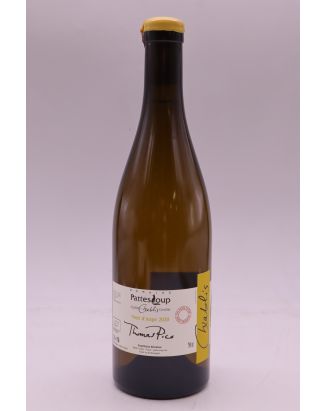
Pattes Loup Chablis Mise Tardive 2020
3 in stock
123111
White
75cl
Add to cart
Burgundy | Chablis

Pattes Loup Chablis Mise Tardive 2020

€60.00 inc-VAT per bottle
€50.00 ex-VAT
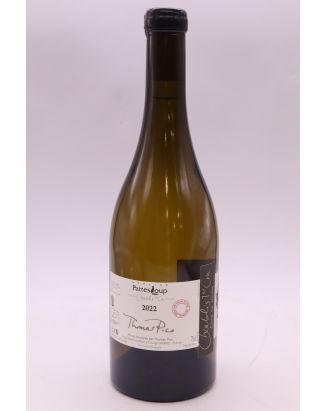
Pattes Loup Chablis 1er cru Côte de Jouan 2022
5 in stock
124212
White
75cl
Add to cart
Burgundy | Chablis 1er cru

Pattes Loup Chablis 1er cru Côte de Jouan 2022

€78.00 inc-VAT per bottle
€65.00 ex-VAT
Pattes Loup Chablis Vent D'Ange Mise Tardive 2022
51 in stock
124211
White
75cl
Add to cart
Burgundy | Chablis

Pattes Loup Chablis Vent D'Ange Mise Tardive 2022

€36.00 inc-VAT per bottle
€30.00 ex-VAT
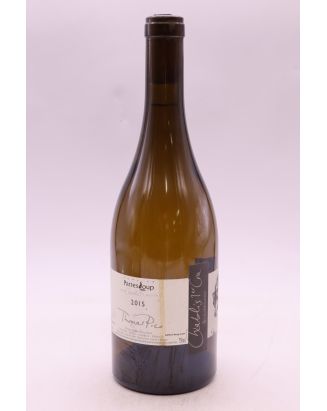
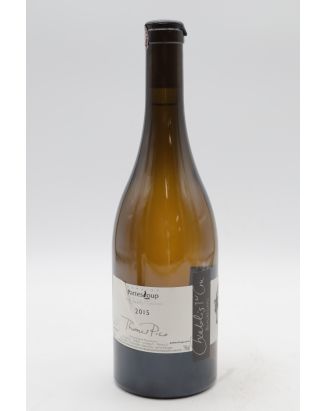
Pattes Loup Chablis Premier Cru Butteaux Mise Tardive 2015
Bio
10 in stock
126859
White
75cl
Very slightly damaged
Damaged wax caps
94-96/100
92/100
17.5/20
Add to cart
Burgundy | Chablis 1er cru

Pattes Loup Chablis Premier Cru Butteaux Late Bottling 2015

€114.00 inc-VAT per bottle
€95.00 ex-VAT
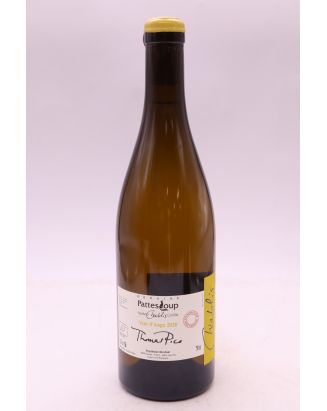
Pattes Loup Chablis Vent d'Ange Mise Tardive 2020
Bio
10 in stock
127751
White
75cl
Add to cart
Burgundy | Chablis

Pattes Loup Chablis Vent d'Ange Mise Tardive 2020

€60.00 inc-VAT per bottle
€50.00 ex-VAT
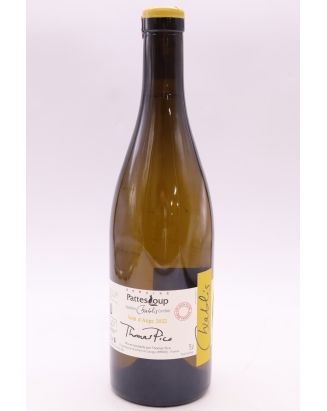
Pattes Loup Chablis Premier Cru Beauregard 2015
New
5 in stock
132322
White
75cl
94/100
89/100
16.5/20
Add to cart
Burgundy | Chablis 1er cru

Pattes Loup Chablis Premier Cru Beauregard 2015

€96.00 inc-VAT per bottle
€80.00 ex-VAT
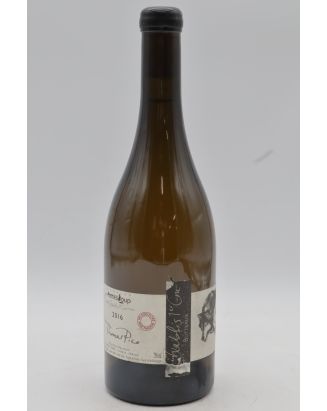
Pattes Loup Chablis Premier Cru Butteaux Mise Tardive 2016
New
1 in stock
132324
White
75cl
Very slightly damaged
17.5/20
Add to cart
Burgundy | Chablis 1er cru

Pattes Loup Chablis 1er cru Butteaux Mise Tardive 2016

€108.00 inc-VAT per bottle
€90.00 ex-VAT
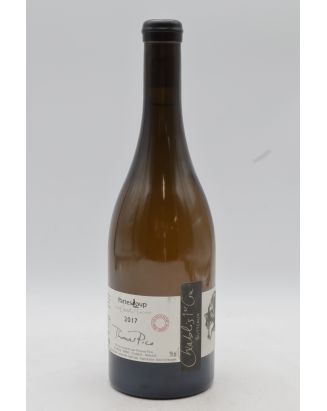
Pattes Loup Chablis Premier Cru Butteaux Mise Tardive 2017
New
1 in stock
132325
White
75cl
90-93/100
16/20
Add to cart
Burgundy | Chablis 1er cru

Pattes Loup Chablis 1er cru Butteaux Mise Tardive 2017

€108.00 inc-VAT per bottle
€90.00 ex-VAT

History of Domaine Pattes Loup

Originally from the small village of Courgis, Thomas Pico grew up among his family’s vines at Domaine de Bois d’Yver. After earning a vocational diploma in viticulture and enology in Beaune, he joined his father’s estate in 2004. Around that time, his grandfather, nearing the end of his life, told him something that would change everything: not to make the same mistakes he had. That warning, together with tastings of organic wines he discovered at wine fairs, led the young winemaker to pursue organic farming, against the prevailing practices in Chablis.

In 2005, he took over a few hectares of family vineyards and established his own operation. The name Pattes Loup comes from a lieu-dit near Montmain, planted by his grandfather in 1954, where Thomas Pico began replanting Chardonnay in 2006. His first bottles were produced that same year, with the encouragement of his neighbors and friends Alice and Olivier de Moor, pioneers of organic viticulture in Courgis. Organic certification followed in 2009 and biodynamic certification in 2021. Starting with two to three hectares worked entirely by hand, the estate gradually expanded to around ten hectares while maintaining very limited production and a sought-after distribution worldwide.

Terroirs and Vineyards of Domaine Pattes Loup

The vineyards lie on Chablis’s famous Kimmeridgian soils: Upper Jurassic clay-limestone marls studded with tiny fossilized oysters, Ostrea virgula, which give the wines their characteristic salinity and edge. On the left bank of the Serein, an area less sought-after than the grands crus of the right bank, the estate finds freedom of expression and a more linear style of Chablis, more austere in its youth and particularly well suited to aging.

The geology of Courgis and Préhy offers subtle variations from one climat to the next. Beauregard rests on white marls and compact, pale-colored white clay, producing precise, crystalline wines. Butteaux, an extension of Montmains, has brown clays: a more deeply colored, less marly soil that brings depth and substance. Côte de Jouan and Vaillons add still more dimensions, from citrus-driven tension to breadth. The premiers crus come from hillside vines thirty to sixty years old, while the village Chablis comes from vines often more than sixty years old. Yields are strictly controlled, and soil cultivation remains moderate, with as few inputs as possible.

Winemaking at Domaine Pattes Loup

Thomas Pico is among the few Chablis winegrowers—around five percent of the appellation—to harvest entirely by hand. It is a deeply held conviction. Sorting begins in the vineyard, where imperfect berries are removed directly from the vines, and continues on a vibrating sorting table at the winery. The harvest date is chosen by tasting the berries rather than relying on analyses, in pursuit of a fine balance between full ripeness and preserved acidity.

Since a new winery was built in 2014, each parcel has been vinified separately to preserve its identity. Fermentation begins only with indigenous yeasts, and no new oak is used. The village Chablis is fermented and aged in a combination of concrete eggs, accounting for nearly forty percent of the volume, old barrels and stainless steel tanks. The premiers crus spend a year in used barrels, then another two years in tanks or concrete vessels. Thomas Pico now ages his wines for at least thirty-six months, sometimes extending that to forty-eight months depending on the cuvée and vintage. This unusually long period for Chablis brings volume, texture and complexity. Sulfur use is kept to a strict minimum, and the wines are bottled without fining or filtration.

The wines of Domaine Pattes Loup

Petit Chablis: from the Portlandian limestone plateaus above the Kimmeridgian slopes, this Petit Chablis emphasizes liveliness and drinkability. The nose suggests lime, green apple and damp chalk; the palate stays focused, saline and refreshing. An excellent aperitif white, ideal with oysters and shellfish, and a fine introduction to the estate’s wines.

Chablis: made from vines over sixty years old planted in the village appellation, it is fermented and aged in a combination of concrete eggs, neutral barrels and stainless steel tanks. With no oak influence, it shows remarkable aromatic purity, with citrus, white flowers and flint. The palate combines a dense texture with incisive minerality and the saline, iodine-like character that defines the house style.

Chablis Vent d’Ange: the estate’s signature cuvée, whose name plays on its similar sound to the French word vendange, meaning grape harvest. It comes from village-appellation parcels tended with premier cru-level care. The fruit is vibrant even in its youth, with pear, candied lemon and fresh almond; the mineral backbone remains lively, and the saline finish lingers. One of the most sought-after Chablis wines in its category.

Chablis Vent d’Ange Mise Tardive: from the same source as the preceding wine, but bottled after considerably longer aging, often three years or more. The additional time on the lees brings volume, a richer texture and greater complexity, with notes of honey, hazelnut and smoke enriching its mineral character. A more fully developed version, ready for ten years in the cellar.

Chablis 1er Cru Côte de Jouan: high above Courgis, this east-facing climat gives the range its most taut, linear expression. The crystalline nose combines lemon zest, acacia blossom and oyster shell. The palate is finely etched, almost linear, driven by bright acidity and a long, chalky finish. A remarkably pure premier cru that gains much from a few years of aging.

Chablis 1er Cru Beauregard: grown on very compact, pale white marls, it is initially reserved but remarkably precise. Lemon zest, pear and wet stone form a restrained bouquet, while the structured palate has a juicy vitality that extends the finish. A sculpted wine built for aging, it calls for patience or a good decanter.

Chablis 1er Cru Beauregard Mise Tardive: a version of the same climat given extended aging. The extra time rounds off the edges without diminishing its tension, adding a creamy dimension, notes of toasted hazelnut and greater mid-palate depth. A richer, more complex interpretation of Beauregard.

Chablis 1er Cru Vaillons: one of the historic climats of the left bank, known for its balance of generosity and freshness. It offers aromas of ripe white fruit, citrus and flowers, with a broad, supple palate brought promptly into focus by minerality. More approachable in its youth than the estate’s other premiers crus, it still has excellent aging potential.

Chablis 1er Cru Vaillons Mise Tardive: an extended-aging version, denser and more textured, with added richness and a broader aromatic range of honey, wax and gentle spice. Minerality remains the common thread, expressed through a broader, more enveloping palate.

Chablis 1er Cru Butteaux: within the larger Montmains climat, on brown clays with less marl, Butteaux is the pinnacle of the range. The wine gains depth, concentration and breadth, with vibrant fruit, notes of flint and candied citrus, and an extraordinary mineral backbone. The long, saline finish reveals a restrained power rarely found at this appellation level.

Chablis 1er Cru Butteaux Mise Tardive: arguably the estate’s most accomplished expression, aged for up to four years. The wine combines impressive density, a silky texture and aromatic complexity, with stone fruit, hazelnut, smoke and oyster shell. Its tension remains intact and the finish seems endless—a rare bottle capable of aging for fifteen years or more.

WHAT THEY SAY ABOUT US

5 good reasons to buy wines on V&M

...

EXPRESS DELIVERY

In a secure polystyrene packaging

...

INTERNATIONAL SHIPPING

Find out more about VAT-EX sale for outside EU deliveries

...

COLLECTION NEAR PARIS & VAT REFUND FOR TOURISTS

Free collection in our warehouse near central Paris (92)

...