
 Personalise your experience




 Sign in
 Cart
0
Cart
0


Top Meursault estates: Comtes Lafon, Coche-Dury, Roulot

Meursault’s best estates: Comtes Lafon, Coche-Dury, Roulot and exceptional Premiers Crus
The very name Meursault evokes a certain vision of Burgundian greatness: a gleaming golden color, aromas of fresh hazelnut and butter, and a broad, silky palate threaded with unforgettable minerality. The undisputed capital of Burgundy white wines, this Côte de Beaune village is home to some of the world’s greatest winegrowers and Premiers Crus that rival the Grands Crus of its illustrious neighbors, Puligny and Chassagne.
Key takeaways:
- Meursault is the capital of Burgundy’s great white wines, with more than 95% of production from Chardonnay, no Grand Cru and legendary Premiers Crus.
- The three legendary estates: Coche-Dury (ultra-rare and iconic), Comtes Lafon (the definitive benchmark), and Roulot (master of the named vineyard sites and mineral purity).
- The finest terroirs are the Premiers Crus “Perrières,” “Genevrières” and “Charmes”, with Perrières considered the most refined and closest to the Grands Crus.
- The Meursault style is unique: broad, buttery and hazelnut-scented, yet always underpinned by mineral tension, especially on the finest limestone and marl terroirs.
- Some village-level named vineyard sites (Tillets, Narvaux, Luchets) reach exceptional heights, particularly at Roulot, sometimes rivaling Premiers Crus.
Meursault: the capital of Burgundy white wines
Located in the heart of the Côte de Beaune, between Volnay to the north and Puligny-Montrachet to the south, the Meursault appellation covers around 390 hectares under production (449 ha classified), including 104 ha of Premiers Crus. It has a distinctive place in Burgundy: although it has no Grand Cru, unlike its prestigious neighbors, it is home to one of the region’s greatest concentrations of talented winegrowers and exceptional Premiers Crus.
Production is dominated by white wines, which account for more than 95% and are made exclusively from Chardonnay. The few red wines (Pinot Noir) come from plots bordering Volnay and are often sold under the Volnay Premier Cru Santenots appellation. The village produces an average of 18,000 to 22,000 hectoliters a year, including 4,500 to 5,600 hl of Premiers Crus, depending on the vintage.
Meursault’s unofficial motto could be: “No Grand Cru, but Premiers Crus that can stand alongside the greats.” Indeed, Perrières from the best estates—Comtes Lafon, Coche-Dury and Roulot—regularly command more admiration and higher prices than many Côte d’Or Grands Crus.
Meursault’s terroir: “a delicate tapestry of marl and limestone”
The Meursault vineyard stretches from 230 to 360 meters above sea level on an east- to southeast-facing slope. Its terroir belongs to the Jurassic geological sequence (Bathonian to Oxfordian) and consists mainly of calcareous marl and marly limestone. Its varied subsoils account for the range of styles found from one climat to another.
The mid-slope marls: the heart of the appellation
Meursault’s finest terroirs are concentrated mid-slope, where calcareous marl retains enough water for the vines while the gradient provides natural drainage. The most renowned Premiers Crus—Perrières, Genevrières and Charmes—are planted on these soils. Chalk deeper down gives the wines their characteristic mineral tension.
A diversity of exposures
The Premiers Crus in the north of the appellation (Genevrières, Poruzots, Bouchères) benefit from a cooler exposure that preserves natural acidity and finesse. Charmes, farther south and with a more open exposure, yields more opulent, generous wines. Perrières, on well-drained, stony limestone, produces wines of incomparable tension and minerality.
The village of Meursault marks a crucial geological boundary in the Côte de Beaune: here, the production of truly great white wines begins. Its finest Premiers Crus, particularly Perrières, are the jewels of an appellation that needs no Grand Cru to command worldwide respect.
The best Meursault estates
|
Estate |
Prestige level |
Style & strengths |
|
Domaine Coche-Dury |
⭐⭐⭐⭐⭐ Legend |
“One of the greatest winegrowers on the planet,” according to critics including Parker. Extremely limited production, intense and concentrated wines. Exceptionally rare allocations. |
|
Domaine des Comtes Lafon |
⭐⭐⭐⭐⭐ Benchmark |
Dominique Lafon, Meursault’s leading producer. Burgundy’s deepest cellars. Remarkable depth and balance. |
|
Domaine d'Auvenay |
⭐⭐⭐⭐⭐ Legendary |
Lalou Bize-Leroy. Among the richest, most complex and best suited to aging of all white Burgundy wines. Five stars. Tiny production. |
|
Domaine Jean-Marc Roulot |
⭐⭐⭐⭐⭐ Pioneer |
The definitive benchmark for village-level named vineyard sites (Tillets, Luchets, Tesson). Organic farming. A pure, mineral style. |
|
Domaine Arnaud Ente |
⭐⭐⭐⭐⭐ Exclusive |
Extremely limited production. Wines snapped up with every release. Exceptionally rare older vintages. A precise, profound style. |
|
Domaine P.-Y. Colin-Morey |
⭐⭐⭐⭐½ Modern |
Pierre-Yves Colin-Morey. An elegant contemporary style: expressive fruit, mid-palate minerality and a fresh finish. |
|
Domaine Rémi Jobard |
⭐⭐⭐⭐½ Classic |
Superb interpretations of all the Premiers Crus (Charmes, Poruzot, Genevrières). Classic, well-structured wines. |
|
Château de Meursault |
⭐⭐⭐⭐ Historic |
67 hectares, 20 Premiers Crus, six Grands Crus. 100% organic farming. Exclusively owned Clos des Grands Charrons. |
|
Bouchard Père & Fils |
⭐⭐⭐⭐ Wine merchant |
A major Beaune house. Its Meursault Perrières ranks among the benchmarks. Consistent vintages that are readily approachable. |
|
Maison Louis Jadot |
⭐⭐⭐⭐ Wine merchant |
A historic Beaune wine merchant and producer. An impressive range of Meursault Premiers Crus, particularly Genevrières. |
Profiles of the essential estates
Domaine Coche-Dury: The holy of holies
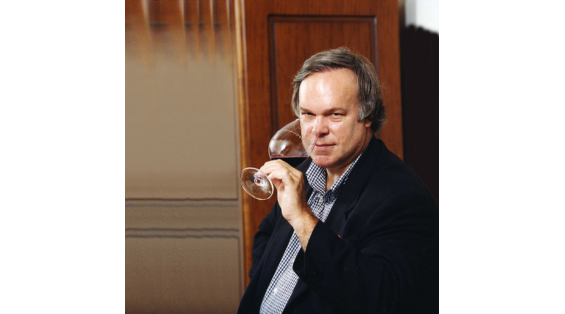
International critics, notably Robert Parker, have described him as “one of the greatest winegrowers on planet Earth.” Jean-François Coche-Dury, now joined by his son Raphael, produces wines of an intensity and concentration rarely achieved in white Burgundy, while retaining a freshness and precision that defy comparison. His Meursault Premiers Crus, Rougeots and Perrières, are among the world’s most sought-after wines. Production is so limited that bottles are snapped up as soon as they are released.
Domaine des Comtes Lafon: The definitive benchmark
Dominique Lafon is considered Meursault’s leading producer. His estate has Burgundy’s deepest and coldest cellars, allowing slow aging on the lees that lends the wines incomparable finesse. His Premiers Crus—Perrières, Genevrières and Charmes—as well as his village-level Clos de la Barre wines have a depth and balance that carry them gracefully through the decades.
Domaine Jean-Marc Roulot: Pioneer of the named vineyard sites
Domaine Roulot is now an undisputed benchmark not only for its Premiers Crus, but above all for having revolutionized the approach to village-level named vineyard sites. Jean-Marc Roulot transformed Meursault Villages plots into single-vineyard cuvées of remarkable identity and precision: Tillets, Luchets, Tesson and Meix-Chavaux have become benchmarks in their own right, sometimes selling for more than certain Premiers Crus. A pure, mineral, taut style.
Domaine Arnaud Ente: A rare hidden gem
Extremely limited production, with wines regularly praised by international critics. Arnaud Ente practices meticulous viticulture and precise winemaking, producing wines of striking depth and complexity. His Meursault La Sève du Clos wines, particularly in magnum, are collector’s bottles whose rarity drives their price. He releases his wines only when they reach maturity, which explains the scarcity of recent vintages
Domaine d'Auvenay: Lalou’s genius
Owned by Lalou Bize-Leroy, sister of the iconic Domaine Leroy, Domaine d'Auvenay produces biodynamic wines from tiny but extraordinary plots. Robert Parker awarded it five stars in his Wine Buyer's Guide. According to international critics, including Robert Parker, its wines are “among the richest, most complex and best suited to aging of all white Burgundy.” Its Meursault Premiers Crus, particularly Gouttes d'Or, inspire devotion among enthusiasts worldwide.
Château de Meursault: The great historic estate
The largest estate by area, with 67 hectares certified organic, Château de Meursault produces an impressive range: 38 different appellations, including 20 Premiers Crus and six Grands Crus from neighboring appellations (Corton, Bâtard-Montrachet…). Its exclusively owned Clos des Grands Charrons is one of the appellation’s few curiosities. The estate welcomes visitors for tours and tastings, making it an ambassador for wine tourism in Meursault as well.
Meursault’s Premiers Crus: a hierarchy of terroirs
Meursault has 19 Premiers Crus (climats), representing around 132 hectares of vines. Six stand out for their reputation and consistently high quality.
|
Premier Cru |
Area |
Character & aromatic profile |
|
Les Perrières |
~13.7 ha |
Meursault’s supreme Premier Cru. Intense minerality, fine structure and great tension. Rivals the Grands Crus of Puligny. The best estates’ wines can age for 20–25 years or more. |
|
Les Genevrières |
~16 ha |
Great nobility and remarkable aromatic complexity (hazelnut, fresh butter, white flowers). Slightly less mineral than Perrières, but exceptionally refined. |
|
Les Charmes |
~31 ha |
The largest (23% of the Premier Cru vineyard area). An opulent, enveloping style with aromatic richness, approachable young. Quality varies greatly by plot location and producer. |
|
Les Gouttes d'Or |
~5 ha |
A rich, honeyed style, with pear, peach and hazelnut cream. Dense and expressive in its youth, with 10–15 years of aging potential. Benchmark: Domaine d'Auvenay. |
|
Les Poruzots |
~11 ha |
Dense, expressive wines that are more approachable young than the Perrières. Luscious fruit and impressive breadth. A terroir close to the village. |
|
Les Bouchères |
~5 ha |
Close to Puligny-Montrachet, with a more elegant, taut style. Lovely minerality and floral finesse. Often underestimated. |
|
Les Santenots (white) |
~11 ha |
A distinctive feature: the red wines are Volnay Premier Cru, the whites Meursault 1er Cru. A full-bodied, powerful style for the whites. |
The Perrières exception: considered the “Premier of Meursault’s Premiers Crus.” In the best vintages, from the finest estates (Comtes Lafon, Coche-Dury, Roulot), a Meursault Perrières can hold its own against a Chevalier-Montrachet or a Bâtard-Montrachet. An exceptionally rare achievement for a Premier Cru.
Village-level named vineyard sites: another side of Meursault
One distinctive feature of Meursault is its village-level named vineyard sites not classified as Premier Cru, which sometimes produce wines of exceptional quality. Jean-Marc Roulot played a pioneering role in bringing these often-overlooked terroirs to prominence.
• Les Tillets: at high elevation, above Genevrières. A taut, citrusy, mouthwatering style. Now a benchmark at Roulot.
• Les Narvaux: an elevated site above Genevrières. Fresh, floral wines, sometimes with minerality approaching that of the finest Premiers Crus.
• Les Luchets: a fruity, floral style that is readily approachable. A Domaine Roulot classic.
• Le Tesson: close to the village, with aromatic richness and roundness. A fine expression of opulent Meursault.
• Les Vireuils, Les Chevalières, Clos de la Barre (Comtes Lafon): named vineyard sites that contribute to the richness and diversity of the village appellation.
Meursault’s best vintages
|
Vintage |
Profile of Meursault’s white wines |
|
2023 |
A highly promising recent vintage. Lovely freshness and preserved natural acidity, with precise, clear aromas. One to watch. |
|
2022 |
A warm, sunny vintage producing generous, opulent wines. Expressive ripe fruit and impressive aromatic richness. Good aging potential. |
|
2020 |
A very hot vintage. Rich but well-balanced wines. Satisfactory aging potential from the best estates. |
|
2019 |
An excellent vintage, producing wines with lovely concentration and freshness. A balance of richness and mineral tension. |
|
2017 |
An elegant, classic vintage. Well-balanced, refined and aromatic wines. Aging potential of 10–15 years. |
|
2014 |
A vintage marked by freshness and tension. Excellent natural acidity. One of the favorites among collectors looking to age their wines. |
|
2012 |
Exceptional mineral character after an austere phase. The Premiers Crus are opening up beautifully now. |
|
2010 |
A great classic. Remarkable structure, freshness and minerality, with 20–30 years of aging potential. Highly sought-after. |
How should you taste and pair a Meursault?
Serving temperature
Serve your Meursault between 12 and 14°C. Too cold (below 10°C), and the wine closes up, concealing its complex aromas. Too warm, and the alcohol dominates as the wine loses its freshness and tension. For older vintages or Premiers Crus, letting the temperature rise slightly to 13–14°C helps bring out tertiary aromas.
Decanting older vintages
An aged Meursault (10 years or older) may benefit from very brief decanting (10–15 minutes at most) to dispel any slight sulfur note and allow it to open up. Avoid leaving it in a decanter for too long: older white wines are delicate and can fade quickly.
Food and wine pairings
• Fine fish in creamy sauces: turbot, John Dory, monkfish à l’Armoricaine—a classic, timeless pairing
• Shellfish and seafood: lobster, spiny lobster, grilled prawns, scallops
• Pan-seared foie gras or foie gras terrine (slightly aged village wines)
• Blue cheeses: Roquefort, Bleu de Bresse
• Strong cheeses: Époisses de Bourgogne (washed rind), Langres
• Poultry in white sauce: Bresse chicken with cream, pike quenelles with beurre blanc
• Aged Meursault with white or black truffles, aged Parmesan: prestigious pairings



COLLECTION NEAR PARIS & VAT REFUND FOR TOURISTS
Free collection in our warehouse near central Paris (92)