Personalise your experience

Change your country, language and currency here whenever you wish.
|
|
|
Must-See Châteaux |
|
|
|
|
|
|
Nestled on the steep slopes of the Perno cru, in Monforte d'Alba in the Italian Piedmont, the Elio Sandri estate (also known as Cascina Disa) is one of the best-kept secrets of the Barolo appellation. A traditionalist and resolutely independent winemaker, Elio Sandri tends his 7.5 hectares of vines using organic farming with minimal intervention, perpetuating a family know-how passed down since the end of the 19th century. His confidential production, around 2,000 cases per year, includes great Barolos from old vines planted in 1937, as well as Dolcetto, Barbera and Langhe Nebbiolo of rare purity and elegance. Recently revealed to the world by critic Antonio Galloni, the wines of Cascina Disa have become among the most sought-after in Piedmont.
The history of Cascina Disa is rooted in the 15th century, when the first vines were planted on these steep hillsides by monks who passed on a deep respect for the land. The Sandri family settled on the estate at the end of the 19th century and has been cultivating the vine ever since. The modern turning point came in 1965, the year in which Giovanni Sandri, Elio's father, officially acquired Cascina Disa at the heart of the village of Monforte d'Alba, shortly after the birth of his son. For a long time, the family sold its grapes to other producers before making the transition to an independent estate.
Elio Sandri vinified his first harvest in 1981, thrust into the helm of the estate after his father's sudden illness. Discreet, almost secretive for decades, he quietly built an exceptional body of winemaking work, refusing the trends of modernist Barolo in the 1990s and remaining true to the purest Piedmontese tradition. International recognition came when critic Antonio Galloni discovered his wines and declared that they resembled the Barolos his father drank in his youth — wines that are no longer made today. Now supported by his children Luna and Riccardo, Elio Sandri carries on this family adventure with a philosophy he himself sums up in one phrase: to walk slowly through time.
The Cascina Disa vineyard extends over 7.5 hectares at the heart of the Perno cru, an east- and south-facing hill located to the east of the village of Monforte d'Alba, within the Barolo DOCG zone. The vines are planted between 300 and 500 metres in altitude, on particularly steep and cool hillsides, with soils composed of grey loams veined with sand, combining the characteristics of the Castiglione and Serralunga terroirs. This easterly exposure, cooler than the warmer west-facing slopes of their great neighbours, allows for late harvests and a ripeness that preserves the natural freshness of the grapes.
The grape varieties remain faithful to the great Piedmontese varietals: Nebbiolo (the king grape of Barolo, here partly planted in 1937), Barbera, Dolcetto, as well as a small plot of Merlot. The vines are planted very densely, approximately 70 centimetres apart, and viticulture is conducted organically without mechanical spraying or ploughing, as the slope is too steep for a tractor. Wild herbs and biodiversity thrive between the rows, creating a unique aromatic mosaic. The harvest is entirely manual, carried out at night to preserve the freshness of the grapes.
Winemaking at Elio Sandri is the absolute embodiment of Piedmontese tradition. Everything is conducted with minimal intervention, in the spirit of a winegrower who believes that nature, when respected, knows how to make the finest wines. Fermentations are spontaneous using the estate's indigenous yeasts, slow and gentle, spread over several months in cool underground cellars. The Barolo is vinified as whole clusters (without destemming); only the Nebbiolo and Dolcetto destined for other cuvées are destemmed. Fermentation takes place in stainless steel vats and then in concrete vats, before ageing.
Ageing takes place exclusively in very old large Slavonian oak casks; the estate owns only botti and no new barrels whatsoever. New oak is entirely banned, which preserves the pure expression of the terroir. The Barolo Perno therefore rests between 18 and 72 months in wood depending on the character of the vintage, followed by a long bottle ageing well beyond the regulatory three years. No racking is carried out, nor fining nor filtration, and minimal sulphuring is applied only at bottling. Each bottle of Barolo is even hand-wrapped in paper, the ultimate artisanal touch from Elio Sandri to his customers.
Dolcetto d'Alba is one of the rare Dolcetto cuvées produced within the Barolo zone, making it an absolute rarity. Aged in old Slavonian oak casks with no new wood, this wine offers aromas of candied blackberry, fresh herbs, mint, lavender and floral undergrowth. The palate reveals a refined texture, vibrant acidity and taut black-berry fruit, with a tonic and zesty finish. A pure, elegant and surprisingly age-worthy Dolcetto.
Barbera d'Alba Superiore is sourced from 1,200 densely planted Barbera vines on the summit of the Perno hill, on low-fertility ferruginous soils — arguably the only Barbera cultivated within the Barolo zone. This sophisticated and intense style of Barbera captivates with its notes of tender blackberries, flowers, cloves, minerality and dark plum, underlined by a hint of coffee. Vinified without new oak, it is a fine wine for gastronomy with a refined character.
Langhe Nebbiolo offers a masterful entry point into the world of Nebbiolo from Cascina Disa. Sourced from the vines of the Perno cru, sometimes from shadier plots that perform wonderfully in torrid vintages, this wine captivates with its aromas of crushed flowers, mint, tobacco, spices and cedar. Its ageing of a few months in concrete vats followed by twelve months in oak casks yields a classic, saline and perfumed Langhe Nebbiolo full of personality. A fine wine to decant or to tuck away in the cellar for a year or two.
Marakipa is an original and confidential cuvée, a blend of Dolcetto, Barbera and Nebbiolo sourced from the estate's younger vines and richer soils, as well as from overflow vats. This indulgent, generous and approachable wine beautifully expresses the spirit of Cascina Disa in a more immediate and joyful style. A perfect cuvée for discovering the house style without waiting many years in the cellar.
Barolo Perno DOCG is the estate's central cuvée, produced from 100% Nebbiolo sourced from the Perno cru, a portion of which was planted in 1937. Vinified as whole clusters and aged between 18 and 36 months in very old Slavonian oak casks depending on the vintage, this Barolo is classic and austere in its youth, revealing aromas of red cherry, mint, tobacco, spices, leather and dried flowers, with a saline thread that extends the finish. A very long-ageing Barolo, to be left to mature for at least a decade to reveal its full depth.
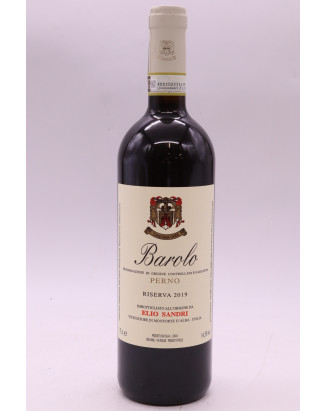
Barolo Perno Riserva is the estate's great flagship cuvée, produced only in the finest vintages following a stringent selection. Sourced from the oldest Nebbiolo plots of the Perno cru, it benefits from an extended ageing of up to 72 months in oak casks, followed by several years in bottle before release. The result is a majestic Barolo, deeply floral and spiced, blending black cherry, lavender, sweet tobacco, liquorice and menthol, with a restrained power and a refined elegance built to cross several decades in the cellar.
Barolo Perno Vigna Disa is the estate's rarest and most singular single-vineyard cuvée, sourced from the oldest vines of Vigna Disa, planted in 1937. More tannic, denser and more energetic than the estate's other Barolos, it expresses a resolutely old-school character with notes of leather, espresso, spices, black cherry and mint. This rustic and taut Barolo overflows with class and personality, a perfect reflection of an intact Piedmontese tradition.
COLLECTION NEAR PARIS & VAT REFUND FOR TOURISTS
Free collection in our warehouse near central Paris (92)