Ulysse Collin

Champagne Ulysse Collin: the passion for single-vineyard wines 

Wines from Champagne Ulysse Collin: purchase at the best price

Based in Congy, in the Coteaux du Petit Morin, away from the grand crus classés, Champagne Ulysse Collin has become in twenty years one of the most coveted names in the entire region. Olivier Collin applies a unique principle in Champagne: producing only single-lieu-dit cuvées, each vinified in barrels with indigenous yeasts, very lightly dosed and kept on the lees for many long years. Les Pierrières, Les Roises, Les Enfers, Les Maillons and Le Jardin d'Ulysse form a collection of vinous, textured wines of rare depth. 

Read more
See more
Filters

Price

€320.00 - €340.00

Appellation

Vintage

Volume

Parker WA rating

93 - 100

Burghound rating

No options available for this group

Revue du Vin de France rating

No options available for this group

Bettane & Desseauve rating

No options available for this group

Prices drop

No options available for this group

Download this list
There is 1 product.
Download this list
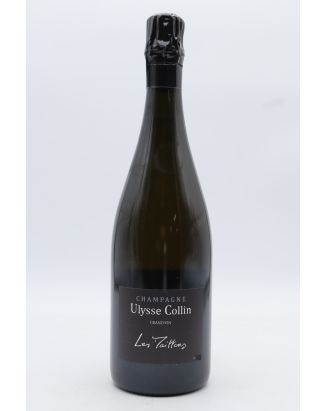
Ulysse Collin Les Maillons (2018 base vintage - Disgorged in 2022)
New
12 in stock
133806
White
75cl
Disgorged in 2022
Add to cart
Champagne | Champagne

Ulysse Collin Les Maillons (2018 base - Disgorged in 2022)

€324.00 inc-VAT per bottle
€270.00 ex-VAT

History of Champagne Ulysse Collin

The Collin family has grown vines in the Coteaux du Petit Morin since 1812. In 1930, Georges Collin became the first grower-producer in the village of Congy and received several honors from the Ministry of Agriculture. After World War II, his son René, Olivier’s grandfather, expanded the estate to eighteen hectares, made his own blends and served on the Club des Viticulteurs Champenois, since renamed the Club Trésors de Champagne. Then came a long hiatus: the family vineyards were leased to the Pommery house, and their harvest disappeared into the blends of larger producers.

Olivier Collin, meanwhile, was planning a career in law. A pivotal meeting with Anselme Selosse and a harvest spent working alongside him in the early 2000s changed the course of his life. In 2003, when part of the lease with Pommery ended, he took back the first portion of the family vineyards and founded his estate, naming it after his great-grandfather. His first wine, Les Pierrières, was made from the 2004 vintage. Les Maillons followed in 2006, Les Roises in 2008, Les Enfers in 2010, the Les Maillons saignée rosé in 2011 and Le Jardin d'Ulysse in 2015. Top scores from international critics, including the 100 points awarded to Les Enfers on several occasions, have cemented its cult status.

Terroirs and Vineyards of Champagne Ulysse Collin

Today the vineyard covers approximately 8.7 hectares and produces around 50,000 bottles. It is divided between two very different areas. The Coteaux du Petit Morin, west of the Côte des Blancs, are the estate’s birthplace: a long-overlooked area with no Grand Cru or Premier Cru vineyards, where soft Campanian chalk lies close to the surface beneath thin clay soils studded with black flint. Here, Les Pierrières occupies a 1.2-hectare east-facing parcel on a cool site whose surface chalk is rich in carbonates and flint, a hallmark of the Petit Morin slopes.

In Congy itself, two historic estate parcels that have belonged to the family for two centuries face each other. Les Roises, a 0.6-hectare parcel facing due south, is planted with seventy-five-year-old massal-selection Chardonnay vines affected by fanleaf disease. They yield just 35 to 42 hectoliters per hectare—yields worthy of Burgundy. Les Enfers, also 0.6 hectares but facing east toward the rising sun, lies on iron-rich red clay, with 80 centimeters of clay-loam soil above soft chalk containing flint nodules. It produces more open, fruitier wines. Finally, Les Maillons comprises 2.5 hectares of Pinot Noir in Barbonne-Fayel, in the Côte de Sézanne, on warmer, more generous iron-rich brown soils. The more recent Le Jardin d'Ulysse is a parcel interplanted with Chardonnay, Pinot Noir and Meunier just behind the house and fermentation room.

Winemaking at Champagne Ulysse Collin

The approach is Burgundian in both spirit and practice. Each named vineyard site is harvested and vinified separately, fermented and aged in old oak barrels, never new ones, using only the native yeasts found on the grapes. Yields are deliberately low, the grapes are brought to a high level of ripeness, and the wines rest for a long time on their fine lees before bottling for the second fermentation. Year after year, Olivier Collin has also patiently built up a reserve of older wines, whose share of his blends is gradually increasing—a considerable financial commitment for an estate of this size.

Time, however, remains his true signature. Going against the trend in a region that releases its wines ever earlier, he keeps extending their time on the lees in bottle, convinced that this is where aromatic complexity develops. There is just one bottling for the second fermentation each year, in July, and one disgorgement, in March. Les Maillons spends thirty-six months on the lees in bottle; Les Pierrières has gone from thirty-six to forty-eight months; Les Roises and Les Enfers have progressed from thirty-six to forty-eight and then sixty months; and some experimental bottles have been disgorged after ninety-six or even one hundred and twenty-four months. Dosage remains minimal, between 1.7 and 3 grams per liter depending on the cuvée, and all are labeled Extra Brut. In recent years, a version number preceded by the letter V has indicated the base vintage on the label.

The Cuvées of Champagne Ulysse Collin

Les Pierrières Blanc de Blancs Extra Brut: the estate’s founding cuvée, first produced from the 2004 vintage, and one of the two cuvées that account for most of its production. This 100% Chardonnay comes from a 1.2-hectare east-facing, single-owner parcel on a cool site with thin clay soils and chalk rich in black flint. The wine is finely etched, energetic and remarkably elegant, with precise citrus notes, a smoky undertone and a long saline finish. Aged in old barrels, then on the lees in bottle for thirty-six to forty-eight months. The ideal introduction to the house.

Les Roises Blanc de Blancs Extra Brut: a 0.6-hectare single-owner parcel in Congy, planted with massal-selection Chardonnay vines now seventy-five years old. Fanleaf disease and the age of the vines limit yields to Burgundian levels, while the due-south exposure ensures full, balanced ripeness. The result is a champagne of exceptional structure, depth and mineral tension, with just over two thousand bottles produced each year. Aged on the lees for forty-eight to sixty months.

Les Enfers Blanc de Blancs Extra Brut: a historic family parcel for two centuries, neighboring Les Roises and the same size, but facing east toward the rising sun. The fifty-year-old vines grow in iron-rich red clay over soft Campanian chalk mixed with flint. The wine is more open and fruitier than Les Roises, while gaining remarkable completeness after at least sixty months on the lees. This cuvée has received a perfect 100-point score from The Wine Advocate on several occasions.

Les Maillons Blanc de Noirs Extra Brut: the range’s only Pinot Noir, sourced from 2.5 hectares in Barbonne-Fayel, in the Côte de Sézanne, on iron-rich brown soils. First produced in 2006, this cuvée is more robust, fleshy and savory than the estate’s blancs de blancs, with ripe red fruit, spice and an almost tannic texture. Aged on the lees in bottle for thirty-six months. Together with Les Pierrières, it accounts for around 70% of total production.

Les Maillons Rosé de Saignée Extra Brut: made since 2011 from Pinot Noir grown on the same Barbonne-Fayel terroir, using the saignée method. Deep in color, with intense red fruit and a vinous structure, it is a wine for the table, far removed from aperitif rosés. Serve it in a wine glass with roast poultry or white meats.

Le Jardin d'Ulysse Extra Brut: the newest and rarest cuvée, first produced in 2015, comes from a parcel interplanted with Chardonnay, Pinot Noir and Meunier just behind the house and fermentation room. It brings Champagne’s three classic grape varieties together in one bottle. Aged on the lees for at least sixty months, it captures the estate’s terroirs and style, combining depth, texture and energy. Production is tiny, with bottles reserved for its most loyal enthusiasts.

Late disgorgements: from time to time, Olivier Collin releases a few bottles from his named vineyard sites after exceptionally long aging periods—up to ninety-six or even one hundred and twenty-four months on the lees in bottle. These limited releases show just how far time can take his wines: the bubbles soften, the texture turns creamy and the aromas develop remarkable tertiary complexity. Collectors’ bottles for lovers of aged champagnes.

WHAT THEY SAY ABOUT US

5 good reasons to buy wines on V&M

...

EXPRESS DELIVERY

In a secure polystyrene packaging

...

INTERNATIONAL SHIPPING

Find out more about VAT-EX sale for outside EU deliveries

...

COLLECTION NEAR PARIS & VAT REFUND FOR TOURISTS

Free collection in our warehouse near central Paris (92)

...