Arretxea Irouléguy Cuvée Haitza 2017
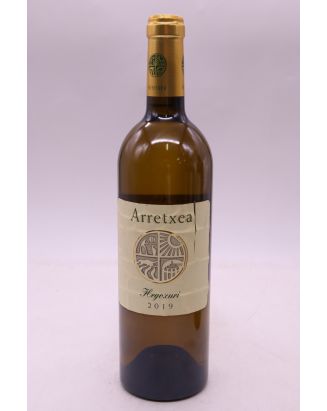
Arretxea Irouléguy Hegoxuri 2019
Personalise your experience
Change your country, language and currency here whenever you wish.
|
|
|
Must-See Châteaux |
|
|
|
|
|
|
Domaine Arretxea is the undisputed flagship of the Irouléguy appellation, the only PDO in the French Basque Country and one of the leading references of the South-West. Established on the heights of Irouléguy, the Riouspeyrous family cultivates nearly 9 hectares of terraced vines on steep hillsides, under certified organic farming since 1998 and biodynamics. Its name means "stone house" in Basque, reflecting the schist, red sandstone and ophite terroirs that the estate strives to reveal with rare precision. Tannat, Cabernet Sauvignon and Cabernet Franc for the reds and rosés, Petit Manseng, Gros Manseng and Petit Courbu for the whites make up a range of great complexity, built for ageing.
The story of Domaine Arretxea is a wonderful family adventure. In 1989, Thérèse and Michel Riouspeyrous — a social worker and a teacher at the time — decided to return to the family farm in the heart of the mountains to save it from abandonment and dedicate themselves to the vine. They thus took over Michel's grandfather's estate in the village of Irouléguy, where the vine was first planted in the 12th century by monks from the Abbey of Roncesvalles to supply wine to pilgrims on the Way of Saint James. Michel had taken his first steps in winemaking a few years earlier alongside Peio Espil, today at the helm of the neighbouring estate Ilarria.
At the outset, an enormous amount of terracing and high-density replanting awaited the couple, on slopes nestled between 200 and 400 metres in altitude, with gradients of up to 40%. The first vintage was born in 1993, followed by the first white, Hegoxuri, in 1997. Drawing on the work of geopedologist Yves Hérody, the Riouspeyrous family decoded the complex geology of Irouléguy and gradually elevated the estate to the top of the region. Today, their two sons, Iban and Téo, who trained with the finest winemakers, have joined the venture and are writing the next chapter of an estate that has become the driving force of Basque wines.
The Arretxea vineyard extends over narrow terraces and steep hillsides at the foot of Mount Jara, bathed by the dual Atlantic and mountain influence. The soils, poor and well-draining, are primarily divided between schists and red sandstones, with the addition of an ophite bedrock — a volcanic earth that brings a smoky and spicy mineral signature. This geological mosaic, studied corner by corner, is the key to the identity and complexity of the estate's wines.
The management of the vineyard is strictly organic and biodynamic — a genuine challenge under the humid climate of the Basque Country. In winter, a flock of sheep tends the vines and provides natural manure. Harvesting is done by hand, with sorting carried out both in the vineyard and in the winery. This pursuit of harmony with nature, and a deep understanding of the interactions between the soil, the vine, and its environment, have led the family to progressively isolate single-plot micro-cuvées, each expressing a precise terroir.
In the cellar, the estate favours a natural winemaking approach that respects the raw material. The grapes are destemmed, then the reds ferment with indigenous yeasts and macerate for around three weeks to gently extract the structure of the Tannat. Ageing is tailored to each cuvée: in concrete tanks to preserve the purity of the fruit, in oak barrels and demi-muids for wines intended for cellaring, and also in foudres and 600-litre barrels for the whites.
The new generation has also introduced ageing in dolias — terracotta jars from the Goicoechea pottery — for fascinating experimentation. This refined approach yields red wines of a distinguished complexity, whites that are unique in their fresh balance, structure, and dynamism, and an indulgent rosé. All faithfully reflect the harshness of the Irouléguy climate and the rarity of these mountain terroirs.
Irouléguy Blanc Hegoxuri: the estate's flagship white cuvée, whose name means "the white of the south." A blend of Gros Manseng, Petit Manseng, and Petit Courbu, sourced from sandstone and schist terroirs, it is vinified and aged for around ten months in 600-litre foudres and barrels. It captivates with its floral and smoky bouquet, juicy fruits (citrus, mango, peach), and a refined complexity that allows it to age gracefully over the years.
Irouléguy Blanc Schistes: a single-plot cuvée from schist terroir, dominated by Petit Manseng. Expressive and concentrated, it is full-bodied and bursting with yellow fruits (pear, peach, mango, pineapple), with a sleek power and a spicy minerality that is the hallmark of the soil. An absolute rarity.
Irouléguy Blanc Grès: the counterpart to the previous wine, this single-plot expression born on sandstone highlights Petit Manseng complemented by Gros Manseng. Vertical and tonic, with a lean body and a saline finish, it offers a precise and mineral reading of the terroir.
Irouléguy Blanc Pantxuri (Ophite): a singular cuvée from a volcanic ophite terroir, blending Gros and Petit Manseng. Exclusive and hard to find, it expresses a mineral signature that is both smoky and spicy, entirely typical of this rare soil.
Irouléguy Rosé: crafted with a predominance of Tannat complemented by the two Cabernets, this gastronomic rosé stands out for its structure, freshness, and straightforwardness — far removed from light and anonymous rosés.
Irouléguy Rouge Tradition: the estate's emblematic red cuvée, a blend of Tannat, Cabernet Franc, and Cabernet Sauvignon, macerated for three weeks and then aged for around ten months in concrete tanks. The indulgent nose combines red fruits (strawberry, cherry, blackcurrant), pepper, and liquorice, while the palate offers freshness, suppleness, and a fluid, flavoursome texture. A wine to enjoy now or to cellar for 8 to 10 years.
Irouléguy Rouge Haitza: a prestige cuvée from old vines planted on red sandstone, with a strong predominance of Tannat complemented by Cabernet Sauvignon. Vinified in concrete tanks and then aged for 18 months in oak barrels, it unfolds aromas of morello cherry, blackcurrant, liquorice, and caramel, with a palate that is initially lush before developing a restrained roundness. A great wine for cellaring.
Irouléguy Rouge Burdin Harria: a single-plot cuvée blending Tannat and the two Cabernets in balanced proportions. Its name evokes "iron stone," and it reflects the ferruginous minerality of its terroir in a deep, dense, and structured red.
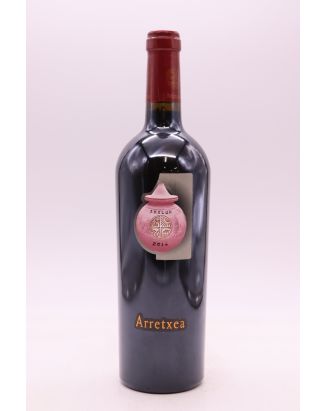
Irouléguy Rouge Dolia: an exceptional cuvée aged in terracotta jars (dolias), with a predominance of Tannat. This singular ageing process preserves the fruit and purity while lending a silky texture, resulting in a wine of decidedly original character.
Vin de France Punpa: an ode by the Riouspeyrous sons to the solidarity of their vineyard, this red marks the rebirth and momentum of the estate's new generation. With indulgent notes of blackcurrant and eucalyptus, it is a free-spirited, fresh, and thirst-quenching wine.
COLLECTION NEAR PARIS & VAT REFUND FOR TOURISTS
Free collection in our warehouse near central Paris (92)